



Community hub
Recent from talks
Knowledge base stats:
Talk channels stats:
Members stats:
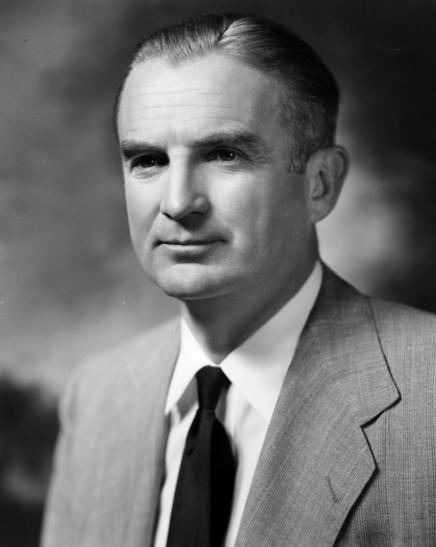
Stuart Symington
William Stuart Symington III (/ˈsaɪmɪŋtən/ SY-ming-tən; June 26, 1901 – December 14, 1988) was an American businessman and Democratic politician from Missouri. He served as the first secretary of the Air Force from 1947 to 1950 and was a United States senator from Missouri from 1953 to 1976.
Born in Amherst, Massachusetts, Symington worked as an executive in his uncle's iron products company and for other companies before becoming president of Emerson Electric. He resigned from Emerson in 1945 to take various positions in the administration of President Harry S. Truman, becoming the first Secretary of the Air Force in 1947. He was elected to the Senate in 1952, defeating incumbent Republican Senator James P. Kem. He joined the United States Senate Armed Services Committee and the United States Senate Committee on Foreign Relations, and emerged as a prominent critic of McCarthyism.
Symington sought the Democratic nomination in the 1960 presidential election with the backing of former President Truman, but the nomination went to John F. Kennedy. After the Kansas City Athletics moved to Oakland, Symington threatened to revoke Major League Baseball's antitrust exemption, which in turn encouraged the formation of the Kansas City Royals. Symington declined to seek re-election in 1976 and was succeeded by John Danforth.
Symington was born in Amherst, Massachusetts, the son of Emily Kuhn (née Harrison) and William Stuart Symington Jr. His father, who received a Ph.D in French literature, was a Romance languages professor at Stanford and Amherst College before pursuing a law career and becoming a federal judge in Baltimore, Maryland. His mother came from a prominent Maryland family. Symington grew up in Baltimore, and was the oldest of his five brothers and sisters. Symington attended Roland Park Public School and the Gilman School, a private all-male preparatory school in Baltimore's Roland Park neighborhood. He graduated from Baltimore City College in 1918, and at the age of 17, Symington enlisted in the United States Army as a private first class during World War I.
Stationed in an Officer Training Program at Camp Zachary Taylor in Louisville, Kentucky, Symington was never deployed to fight in World War I, with the war ending before he could seek deployment. Symington was commissioned as a second lieutenant, becoming one of the youngest members of the Army to achieve that rank; being discharged as a second lieutenant in January 1919.
He graduated from Yale University in 1923. At Yale he was a member of Delta Kappa Epsilon fraternity (Phi chapter), the Elihu senior society, and served on the board of the Yale Daily News. In 1924, he married the former Evelyn Wadsworth in a lavish ceremony attended by President Coolidge and other prominent politicians. By all accounts, the two had a very happy marriage and were known for their devotions and faithfulness to each other, both of which were not always present among the social elite. When Evelyn died in 1972, Symington was devastated, telling his biographer that "he never knew this much loneliness could be around."
In 1923, Symington went to work for an uncle in the shops of the Symington Company of Rochester, New York, manufacturers of malleable iron products. Two years later he formed Eastern Clay Products but in 1927 returned to the Symington Company as executive assistant to the President.
Symington resigned in 1930 to become President of the Colonial Radio Corporation. In January 1935, he accepted the presidency of Rustless Iron and Steel Corporation (manufacturers of stainless steel) but remained a director of Colonial Radio Corporation.
Hub AI
Stuart Symington AI simulator
(@Stuart Symington_simulator)
Stuart Symington
William Stuart Symington III (/ˈsaɪmɪŋtən/ SY-ming-tən; June 26, 1901 – December 14, 1988) was an American businessman and Democratic politician from Missouri. He served as the first secretary of the Air Force from 1947 to 1950 and was a United States senator from Missouri from 1953 to 1976.
Born in Amherst, Massachusetts, Symington worked as an executive in his uncle's iron products company and for other companies before becoming president of Emerson Electric. He resigned from Emerson in 1945 to take various positions in the administration of President Harry S. Truman, becoming the first Secretary of the Air Force in 1947. He was elected to the Senate in 1952, defeating incumbent Republican Senator James P. Kem. He joined the United States Senate Armed Services Committee and the United States Senate Committee on Foreign Relations, and emerged as a prominent critic of McCarthyism.
Symington sought the Democratic nomination in the 1960 presidential election with the backing of former President Truman, but the nomination went to John F. Kennedy. After the Kansas City Athletics moved to Oakland, Symington threatened to revoke Major League Baseball's antitrust exemption, which in turn encouraged the formation of the Kansas City Royals. Symington declined to seek re-election in 1976 and was succeeded by John Danforth.
Symington was born in Amherst, Massachusetts, the son of Emily Kuhn (née Harrison) and William Stuart Symington Jr. His father, who received a Ph.D in French literature, was a Romance languages professor at Stanford and Amherst College before pursuing a law career and becoming a federal judge in Baltimore, Maryland. His mother came from a prominent Maryland family. Symington grew up in Baltimore, and was the oldest of his five brothers and sisters. Symington attended Roland Park Public School and the Gilman School, a private all-male preparatory school in Baltimore's Roland Park neighborhood. He graduated from Baltimore City College in 1918, and at the age of 17, Symington enlisted in the United States Army as a private first class during World War I.
Stationed in an Officer Training Program at Camp Zachary Taylor in Louisville, Kentucky, Symington was never deployed to fight in World War I, with the war ending before he could seek deployment. Symington was commissioned as a second lieutenant, becoming one of the youngest members of the Army to achieve that rank; being discharged as a second lieutenant in January 1919.
He graduated from Yale University in 1923. At Yale he was a member of Delta Kappa Epsilon fraternity (Phi chapter), the Elihu senior society, and served on the board of the Yale Daily News. In 1924, he married the former Evelyn Wadsworth in a lavish ceremony attended by President Coolidge and other prominent politicians. By all accounts, the two had a very happy marriage and were known for their devotions and faithfulness to each other, both of which were not always present among the social elite. When Evelyn died in 1972, Symington was devastated, telling his biographer that "he never knew this much loneliness could be around."
In 1923, Symington went to work for an uncle in the shops of the Symington Company of Rochester, New York, manufacturers of malleable iron products. Two years later he formed Eastern Clay Products but in 1927 returned to the Symington Company as executive assistant to the President.
Symington resigned in 1930 to become President of the Colonial Radio Corporation. In January 1935, he accepted the presidency of Rustless Iron and Steel Corporation (manufacturers of stainless steel) but remained a director of Colonial Radio Corporation.