



Community hub
Recent from talks
Knowledge base stats:
Talk channels stats:
Members stats:
Sungrazing comet
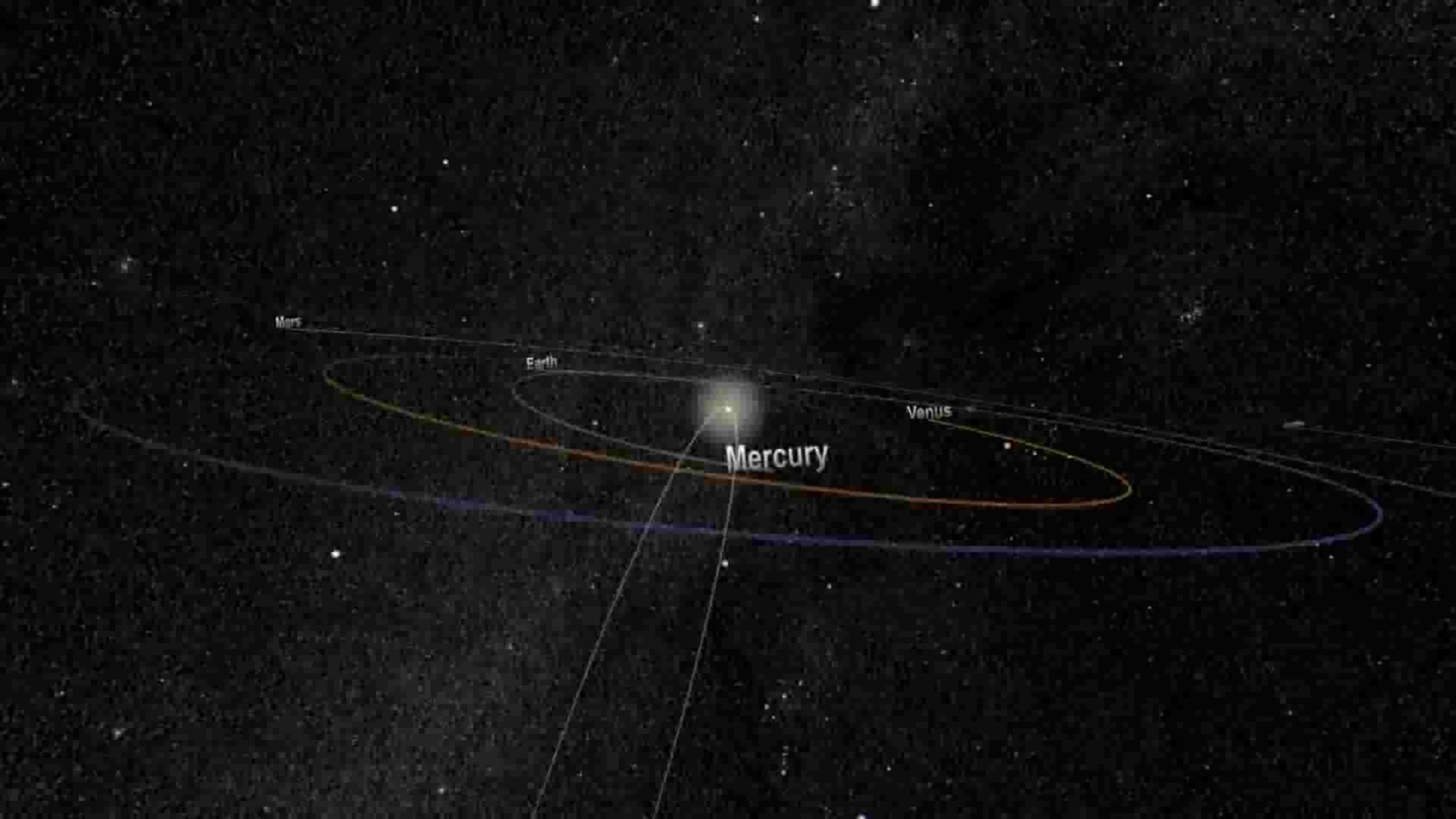
A sungrazing comet is a comet that passes extremely close to the Sun at perihelion – sometimes within a few thousand kilometres from the Sun's surface. Although small sungrazers can completely evaporate during such a close approach to the Sun, larger sungrazers can survive many perihelion passages. However, the strong evaporation and tidal forces they experience often lead to their fragmentation.
Up until the 1880s, it was thought that all bright comets near the Sun were the repeated return of a single sungrazing comet. Then German astronomer Heinrich Kreutz and American astronomer Daniel Kirkwood determined that, instead of the return of the same comet, each appearance was a different comet, but each was related to a group of comets that had separated from each other at an earlier passage near the Sun (at perihelion). Very little was known about the population of sungrazing comets until 1979, when coronagraphic observations allowed the detection of sungrazers. As of February 2025, there are 1501 known comets that come within ~12 solar radii (~0.055 AU). This accounts for one third of all comets. Most of these objects vaporize during their close approach, but a comet with a nucleus radius larger than 2–3 km is likely to survive the perihelion passage with a final radius of ~1 km.
Sungrazer comets were some of the earliest observed comets because they can appear very bright. Some are even considered great comets. The close passage of a comet to the Sun brightens the comet not only because of the reflection from the comet nucleus when it is closer to the Sun, but the Sun also vaporizes a large amount of gas from the comet, and the gas reflects more light. This extreme brightening might allow naked-eye observations from Earth, depending on how volatile the gases are and whether the comet is large enough to survive perihelion. These comets provide a useful tool for understanding the composition of comets from the observed outgassing activity. They also offer a way to probe the effects that solar radiation has on other Solar System bodies.
One of the first comets to have its orbit computed was the sungrazing comet (and great comet) of 1680, now designated C/1680 V1. It was observed by Isaac Newton, who published the orbit results in 1687. Later, in 1699, Jacques Cassini proposed that comets could have relatively short orbital periods and that C/1680 V1 was the same as a comet observed by Tycho Brahe in 1577, but in 1705 Edmond Halley determined that the difference between the perihelion distances of the two comets was too great for them to be the same object.[full citation needed] However, this marked the first time that it was hypothesized that great comets were related or perhaps the same comet. Later, Johann Franz Encke computed the orbit of C/1680 V1 and found a period of approximately 9000 years, leading him to conclude that Cassini's theory of short-period sungrazers was flawed.[citation needed] C/1680 V1 had the smallest measured perihelion distance until the observation in 1826 of comet C/1826 U1.
Advances were made in understanding sungrazing comets in the 19th century with the great comets of 1843, C/1880 C1, and 1882. C/1880 C1 and C/1843 D1 had very similar appearances and also resembled the Great Comet of 1106, therefore Daniel Kirkwood proposed that C/1880 C1 and C/1843 D1 were separate fragments of the same object. He also hypothesized that the parent body was a comet seen by Aristotle and Ephorus in 371 BC because there was a supposed claim that Ephorus witnessed the comet splitting after perihelion.
Comet C/1882 R1 appeared only two years after the previously observed sungrazer, so this convinced astronomers that these bright comets were not all the same object. Some astronomers theorized that the comet might pass through a resisting medium near the Sun, and that would shorten its period. When astronomers observed C/1882 R1, they measured the period before and after perihelion and saw no shortening in the period, which disproved the theory. After perihelion this object was also seen to split into several fragments, and therefore Kirkwood's theory of these comets coming from a parent body seemed like a good explanation.
In an attempt to link the 1843 and 1880 comets to the comet in 1106 and 371 BC, Kreutz measured the fragments of the 1882 comet and determined that it was likely a fragment of the 1106 comet. He then designated that all sungrazing comets with similar orbital characteristics as these few comets would be part of the Kreutz Group.
The 19th century also provided the first spectrum taken of a comet near the Sun, which was taken by Finlay and Elkin in 1882. Later the spectrum was analyzed and Fe and Ni spectral lines were confirmed.
Hub AI
Sungrazing comet AI simulator
(@Sungrazing comet_simulator)
Sungrazing comet
A sungrazing comet is a comet that passes extremely close to the Sun at perihelion – sometimes within a few thousand kilometres from the Sun's surface. Although small sungrazers can completely evaporate during such a close approach to the Sun, larger sungrazers can survive many perihelion passages. However, the strong evaporation and tidal forces they experience often lead to their fragmentation.
Up until the 1880s, it was thought that all bright comets near the Sun were the repeated return of a single sungrazing comet. Then German astronomer Heinrich Kreutz and American astronomer Daniel Kirkwood determined that, instead of the return of the same comet, each appearance was a different comet, but each was related to a group of comets that had separated from each other at an earlier passage near the Sun (at perihelion). Very little was known about the population of sungrazing comets until 1979, when coronagraphic observations allowed the detection of sungrazers. As of February 2025, there are 1501 known comets that come within ~12 solar radii (~0.055 AU). This accounts for one third of all comets. Most of these objects vaporize during their close approach, but a comet with a nucleus radius larger than 2–3 km is likely to survive the perihelion passage with a final radius of ~1 km.
Sungrazer comets were some of the earliest observed comets because they can appear very bright. Some are even considered great comets. The close passage of a comet to the Sun brightens the comet not only because of the reflection from the comet nucleus when it is closer to the Sun, but the Sun also vaporizes a large amount of gas from the comet, and the gas reflects more light. This extreme brightening might allow naked-eye observations from Earth, depending on how volatile the gases are and whether the comet is large enough to survive perihelion. These comets provide a useful tool for understanding the composition of comets from the observed outgassing activity. They also offer a way to probe the effects that solar radiation has on other Solar System bodies.
One of the first comets to have its orbit computed was the sungrazing comet (and great comet) of 1680, now designated C/1680 V1. It was observed by Isaac Newton, who published the orbit results in 1687. Later, in 1699, Jacques Cassini proposed that comets could have relatively short orbital periods and that C/1680 V1 was the same as a comet observed by Tycho Brahe in 1577, but in 1705 Edmond Halley determined that the difference between the perihelion distances of the two comets was too great for them to be the same object.[full citation needed] However, this marked the first time that it was hypothesized that great comets were related or perhaps the same comet. Later, Johann Franz Encke computed the orbit of C/1680 V1 and found a period of approximately 9000 years, leading him to conclude that Cassini's theory of short-period sungrazers was flawed.[citation needed] C/1680 V1 had the smallest measured perihelion distance until the observation in 1826 of comet C/1826 U1.
Advances were made in understanding sungrazing comets in the 19th century with the great comets of 1843, C/1880 C1, and 1882. C/1880 C1 and C/1843 D1 had very similar appearances and also resembled the Great Comet of 1106, therefore Daniel Kirkwood proposed that C/1880 C1 and C/1843 D1 were separate fragments of the same object. He also hypothesized that the parent body was a comet seen by Aristotle and Ephorus in 371 BC because there was a supposed claim that Ephorus witnessed the comet splitting after perihelion.
Comet C/1882 R1 appeared only two years after the previously observed sungrazer, so this convinced astronomers that these bright comets were not all the same object. Some astronomers theorized that the comet might pass through a resisting medium near the Sun, and that would shorten its period. When astronomers observed C/1882 R1, they measured the period before and after perihelion and saw no shortening in the period, which disproved the theory. After perihelion this object was also seen to split into several fragments, and therefore Kirkwood's theory of these comets coming from a parent body seemed like a good explanation.
In an attempt to link the 1843 and 1880 comets to the comet in 1106 and 371 BC, Kreutz measured the fragments of the 1882 comet and determined that it was likely a fragment of the 1106 comet. He then designated that all sungrazing comets with similar orbital characteristics as these few comets would be part of the Kreutz Group.
The 19th century also provided the first spectrum taken of a comet near the Sun, which was taken by Finlay and Elkin in 1882. Later the spectrum was analyzed and Fe and Ni spectral lines were confirmed.