
Recent from talks
Supervillain
Knowledge base stats:
Talk channels stats:
Members stats:
Supervillain
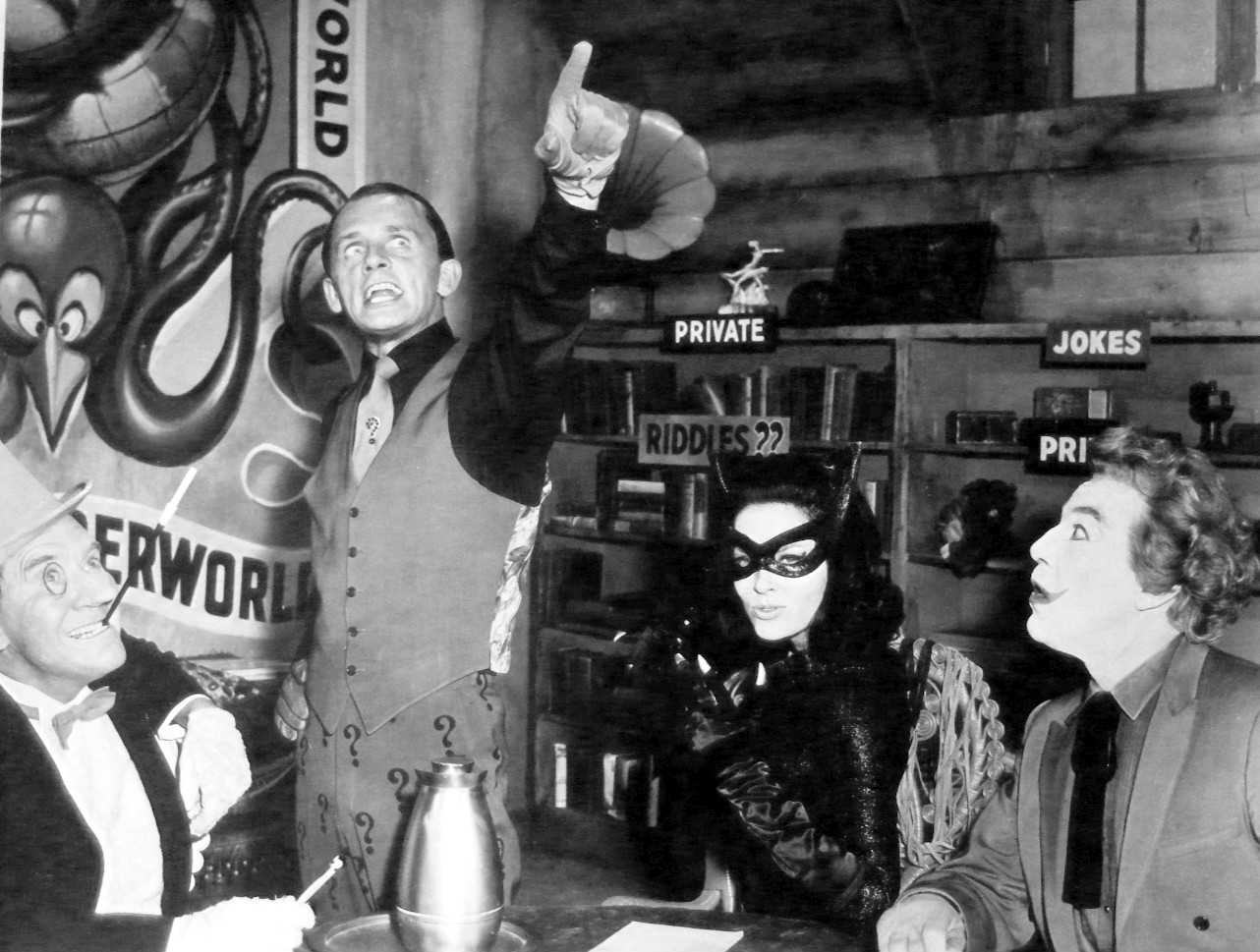
A supervillain, supervillainess or supercriminal is a variant of the villainous stock character who possesses superpowers. The character type is sometimes found in comic books and is often the primary adversary of a superhero in the same story.
Supervillains are often used as foils to present a daunting challenge to a superhero. In instances where the supervillain does not have superhuman, mystical, or alien powers, the supervillain may possess a genius intellect or a skill set that allows them to draft complex schemes or commit crimes in a way normal humans cannot. Other traits may include megalomania and possession of considerable resources to further their aims. Many supervillains share some typical characteristics of real-world dictators, gangsters, mad scientists, trophy hunters, warlords, corrupt businesspeople, serial killers, and terrorists, often having an aspiration of world domination.
The Joker, Lex Luthor, Doctor Doom, Magneto, Brainiac, Deathstroke, the Green Goblin, Loki, the Reverse-Flash, Sinestro, Ultron, Thanos, and Darkseid are some notable male comic book supervillains that have been adapted in film and television. Some notable female supervillains are Catwoman, Harley Quinn, Poison Ivy, Mystique, Hela, Viper, and the Cheetah.
Just like superheroes, supervillains are sometimes members of groups, such as the Injustice League, the Sinister Six, the Legion of Doom, the Brotherhood of Mutants, the Suicide Squad, and the Masters of Evil.
In the documentary A Study in Sherlock, writers Steven Moffat and Mark Gatiss said they regarded Professor James Moriarty as a supervillain because he possesses genius-level intelligence and powers of observation and deduction, setting him above ordinary people to the point where only he can pose a credible threat to Sherlock Holmes.
One of the earliest examples is John Devil, created by Paul Féval, père, in 1862, followed by the Machiavellian Colonel Bozzo-Corona, leader of the criminal organization Les Habits Noirs, also by Féval, in 1863.
Another example of a pioneering villain is Zigomar, a character created by Léon Sazie in 1909 for the Le Matin newspaper. Zigomar is a masked criminal wearing a red hood, leader of the "Gang of Z," who terrorized Paris with his ingenious crimes. The character's success was so great that Victorin Jasset directed three films based on his adventures between 1911 and 1913: Zigomar, roi des voleurs, Zigomar contre Nick Carter and Zigomar, peau d'anguille.
In 1911, Fantômas emerged, created by Marcel Allain and Pierre Souvestre. A master of disguise and crime, Fantômas became an iconic figure in French popular culture. Filmmaker Louis Feuillade further solidified his fame by directing five silent serials starring the character: Fantômas (1913), Juve contre Fantômas (1913), Le Mort Qui Tue (1913), Fantômas contre Fantômas (1914), and Le Faux Magistrat (1914). After the success of the first Fantômas serial, Feuillade had been criticized for glorifying outlaws, his next serial for Gaumont, Judex, starred this time a positive hero, a mysterious avenger conceived as an honest version of Fantômas. Judex was himself featured in various adaptations, sequels and remakes. The original Judex serial was released in the United States and appears to have been an inspiration for the American pulp character The Shadow, who was himself an inspiration for Batman.
Hub AI
Supervillain AI simulator
(@Supervillain_simulator)
Supervillain
A supervillain, supervillainess or supercriminal is a variant of the villainous stock character who possesses superpowers. The character type is sometimes found in comic books and is often the primary adversary of a superhero in the same story.
Supervillains are often used as foils to present a daunting challenge to a superhero. In instances where the supervillain does not have superhuman, mystical, or alien powers, the supervillain may possess a genius intellect or a skill set that allows them to draft complex schemes or commit crimes in a way normal humans cannot. Other traits may include megalomania and possession of considerable resources to further their aims. Many supervillains share some typical characteristics of real-world dictators, gangsters, mad scientists, trophy hunters, warlords, corrupt businesspeople, serial killers, and terrorists, often having an aspiration of world domination.
The Joker, Lex Luthor, Doctor Doom, Magneto, Brainiac, Deathstroke, the Green Goblin, Loki, the Reverse-Flash, Sinestro, Ultron, Thanos, and Darkseid are some notable male comic book supervillains that have been adapted in film and television. Some notable female supervillains are Catwoman, Harley Quinn, Poison Ivy, Mystique, Hela, Viper, and the Cheetah.
Just like superheroes, supervillains are sometimes members of groups, such as the Injustice League, the Sinister Six, the Legion of Doom, the Brotherhood of Mutants, the Suicide Squad, and the Masters of Evil.
In the documentary A Study in Sherlock, writers Steven Moffat and Mark Gatiss said they regarded Professor James Moriarty as a supervillain because he possesses genius-level intelligence and powers of observation and deduction, setting him above ordinary people to the point where only he can pose a credible threat to Sherlock Holmes.
One of the earliest examples is John Devil, created by Paul Féval, père, in 1862, followed by the Machiavellian Colonel Bozzo-Corona, leader of the criminal organization Les Habits Noirs, also by Féval, in 1863.
Another example of a pioneering villain is Zigomar, a character created by Léon Sazie in 1909 for the Le Matin newspaper. Zigomar is a masked criminal wearing a red hood, leader of the "Gang of Z," who terrorized Paris with his ingenious crimes. The character's success was so great that Victorin Jasset directed three films based on his adventures between 1911 and 1913: Zigomar, roi des voleurs, Zigomar contre Nick Carter and Zigomar, peau d'anguille.
In 1911, Fantômas emerged, created by Marcel Allain and Pierre Souvestre. A master of disguise and crime, Fantômas became an iconic figure in French popular culture. Filmmaker Louis Feuillade further solidified his fame by directing five silent serials starring the character: Fantômas (1913), Juve contre Fantômas (1913), Le Mort Qui Tue (1913), Fantômas contre Fantômas (1914), and Le Faux Magistrat (1914). After the success of the first Fantômas serial, Feuillade had been criticized for glorifying outlaws, his next serial for Gaumont, Judex, starred this time a positive hero, a mysterious avenger conceived as an honest version of Fantômas. Judex was himself featured in various adaptations, sequels and remakes. The original Judex serial was released in the United States and appears to have been an inspiration for the American pulp character The Shadow, who was himself an inspiration for Batman.
Recent media