


Community hub
Swingfire
View on Wikipedia
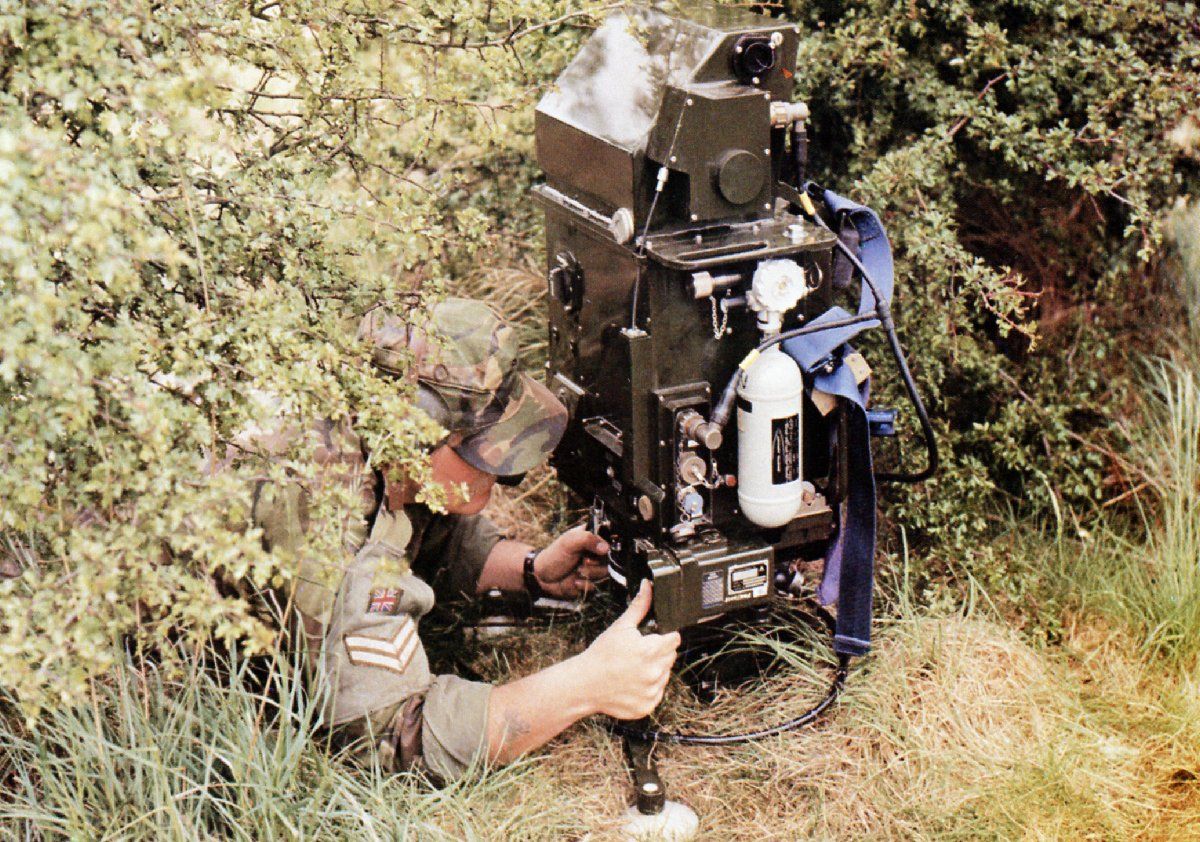
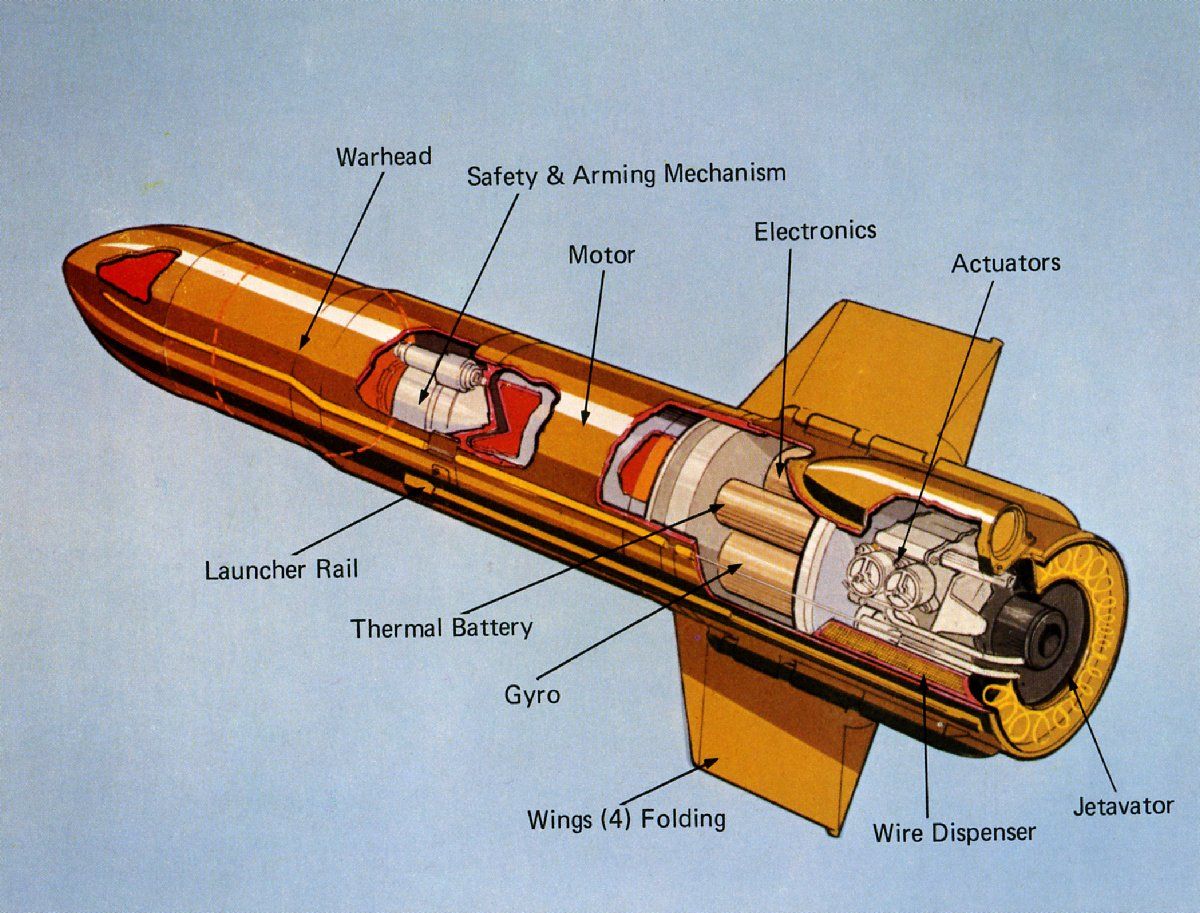
Swingfire was a British wire-guided anti-tank missile developed in the 1960s and produced from 1966 until 1993.[2] The name refers to its ability to make a rapid turn of up to ninety degrees after firing to bring it onto the line of the sighting mechanism. This means that the launcher vehicle could be concealed and the operator, using a portable sight, placed at a distance in a more advantageous firing position.
Key Information


Swingfire entered operational service in 1969 and underwent several major upgrades during its time in service. It was used on a number of vehicles including the FV438, FV102 and several truck mountings including the Land Rover and Ferret armoured car. Concepts adapting it to helicopters, tanks and even hovercraft went nowhere. Swingfire remained in service on the FV102 Striker until 2005 when they were retired in favour of man-portable missiles.
Development
[edit]Earlier efforts
[edit]The British Army was among the first to introduce a heavy anti-tank missile when they introduced the Malkara in 1958. The Malkara had a number of problems, among them that the missiles had to be raised into the line of sight for firing, and left a line of smoke from its rocket motor that lingered long enough to point directly back to the launcher. Additionally, the guidance system was difficult to use and had limited performance against moving targets. Malkara was nevertheless purchased for the airborne infantry to allow them to deal with Soviet armour at long range.[3]
Desiring a more capable weapon, the Ministry of Supply funded the Orange William development at Fairey Engineering Ltd beginning in 1954. The idea behind Orange William was that the launcher and guidance systems were separated by up to 2 kilometres (1.2 mi), allowing the launcher to remain far behind the front line while the small and heavily camouflaged guidance vehicle moved forward where it could see the enemy. Unfortunately, testing demonstrated the selected guidance system was easily blocked by smoke and dust, making it ineffective on the battlefield. Through this same period, the Army was developing the Royal Ordnance L11 120 mm gun for the Chieftain tank, as development continued it appeared it would be able to defeat any Soviet tank design. The need for a heavyweight missile was less pressing and development of Orange William was cancelled in September 1959.[3]
Through the same period, a much lighter man-portable weapon was also being developed, the Vickers Vigilant. Based on the experience with Malkara, Vigilant introduced a much improved guidance system. While it was still manual, requiring the gunner to watch the missile approach the target, it used a new method of sending corrections to the missile that was far easier for the gunner to use, especially against moving targets. Vigilant went on to see widespread use in several nations including the United States.[4]
Swingfire and TOW
[edit]The basic idea of under-cover fire remained of interest to the Army after the cancellation of Orange William, and the Royal Armament Research and Development Establishment (RARDE) was given £250,000 a year to continue research into the basic concepts.[a] As part of the resulting Project 12, they developed two basic concepts, Quickfire and Swingfire. The former appears to be a fast-action weapon, but few details have been made public. The latter was designed to allow it to be fired from under cover, like Orange William. As the company already had experience in the indirect fire role, and fearing it would otherwise lead to the breakup of their missile team, Fairey was issued a new development contract in October 1959.[3]
The basic idea of the Swingfire concept was that thrust vectoring of the rocket exhaust allowed the missile to make extreme maneuvers, including a right-angle turn immediately after launch. This was especially useful in urban settings like Berlin; the gunner could take the sight up to 100 metres (330 ft) from the launcher and position themselves along potential lines of approach, while the launcher parked down a side street or alleyways. The crew would then dial in the distance to the main line of fire and its angle relative to the launcher, and the missile would travel that distance and then turn, flying past the gunner and into his sights. The missiles could be fired without the launcher ever exposing itself to the enemy, and the gunner could remain hidden in a foxhole or building. While the rocket smoke would still give away the rough location of the launcher, the enemy would be unable to return fire against the hidden launcher and would have no idea where the gunner was located.[5]
As the Warsaw Pact greatly increased its number of tanks during the 1960s, the long-range missile was once again considered important. The Soviet plan was to simply overrun NATO forces using sheer numbers, so a weapon that could attrit these forces before they reached friendly forces was highly desirable. The US Army was equally interested in such a system, and in July 1961 the two countries signed the Rubel-Zuckerman Agreement for further development. Under this plan, the US would concentrate on short-range rapid-fire weapons, while RARDE would continue Swingfire development for the long-range role. Of the several concepts studied in the US, the BGM-71 TOW was ultimately selected.[3] TOW used a semi-automatic guidance system that was very easy to use and capable of easily tracking moving targets, but had limited accuracy in long-range use and had to fly directly at the target and thereby expose the gunner to attack.[6]
As TOW developed, it continued to grow larger and gain more range, ultimately emerging as a much larger design similar to the Swingfire. The US suggested the British adopt the TOW, but the necessity for the tracker to be inline with the missile throughout its flight was considered completely unacceptable to the British while the US saw this as irrelevant. Any plans to introduce TOW in British service ended.[6]
Prototype problems
[edit]During testing, the system proved to have a huge number of minor problems and continually failed. It was not until 1969 that the system was considered even partially usable and the missiles began to work reliably.[7]
A significant problem was due to the rocket's exhaust smoke. Previous missile designs like Malkara had left an exhaust trail pointing directly back to the launcher which could then be attacked. Swingfire didn't need to be concerned about the trail because the launcher itself would be hidden, so little effort was expended on using a lower-smoke fuel.[8] In testing, it was found that the exhaust cloud was thick enough to obscure the missile or the target. This was especially a problem at long range when the missile was being viewed through the entire column of exhaust. This made aiming at long range largely a matter of luck, and as a result the accuracy proved to be below specifications.[7]
The missile was initially presented to the Army for acceptance in July 1969. and on 28 July they initially rejected it until additional corrections were made. They also found the training systems were inadequate. The new owners of the system, British Aerospace, agreed to make several changes to the design, and the Army eventually accepted the design on a provisional basis in August.[7]
Hawkswing
[edit]As part of their studies on helicopter gunships, in March 1966 the General Staff issued GST.3334 for a new helicopter-launched missile to replace SS.11 starting around 1975. This led to a Swingfire development known as Hawkswing, and later after the BAC purchase, Air Strike Swingfire. When used with the Westland Lynx, the helicopter could carry six missiles, aimed using a sight projecting through the roof.[9]
Lynx XW839 was converted and began testing in September 1974.[10] Testing demonstrated several problems. Among these was a slow initial speed, which caused it to be blown downward by the rotor's downwash. A more serious concern was a lack of range, even with the improved "Somme" rocket motor. While the system worked, in head-to-head comparison with TOW and the Franco-German HOT, Hawkswing came in last. The role was ultimately given to TOW.[9]
Service
[edit]FV438 Swingfire
[edit]Initially, some consideration was given to adding four Swingfire missiles to the Chieftain. Their external mounting was a significant problem, and fitting them required changes to the sighting systems, none of which was inexpensive. As the L11 main gun underwent development it proved far more powerful than expected and the extra hitting power of the Swingfire was no longer seen as a benefit worth the cost.[8]
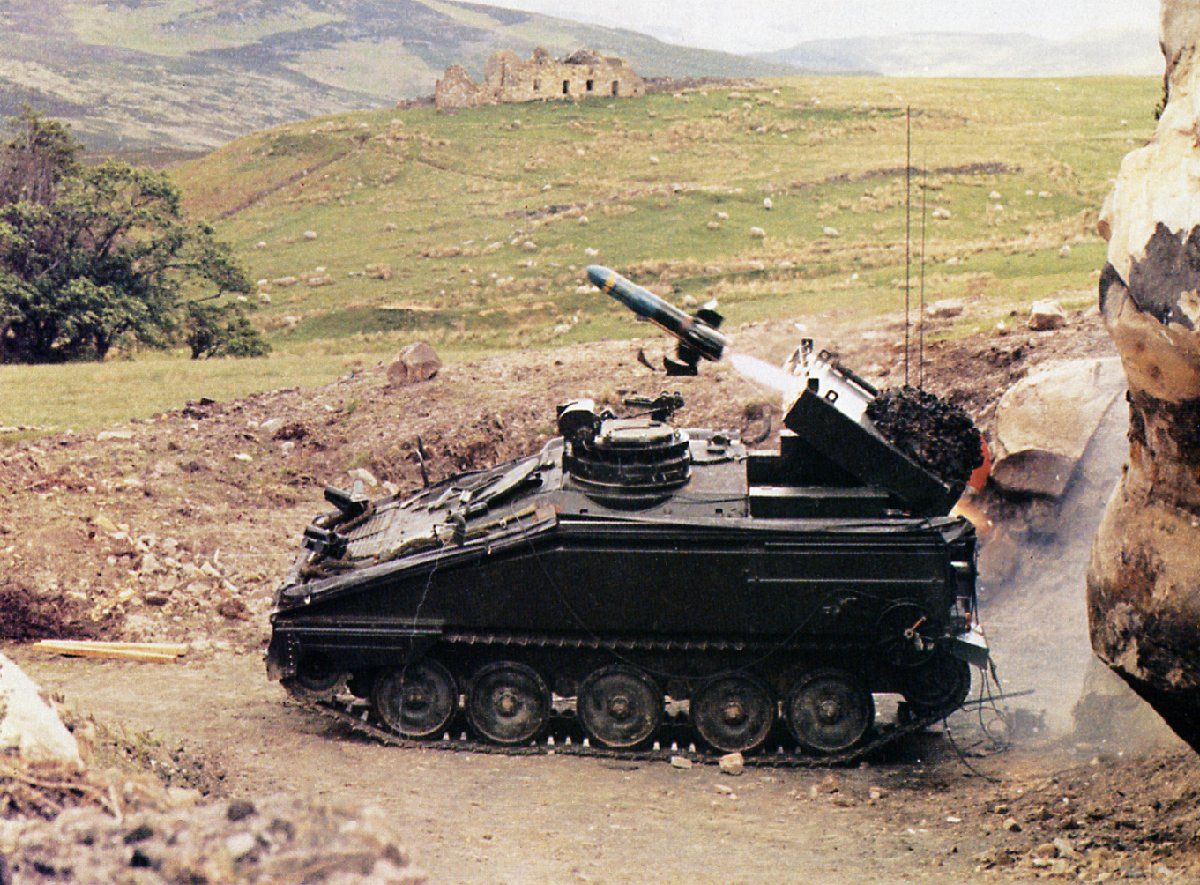
In November 1962, GOR.1174 was issued for a light vehicle to carry Swingfire instead, selecting the FV432 as its basis.[8] The original design called for a roof-mounted rack with two launcher tubes angled upward at about 30 degrees. This allowed the vehicle to be placed behind barriers or inside entrenchments and the missile would pop up above it to clear the barrier. Aiming was accomplished either by the remote sight or one permanently mounted on a periscopic extension on top of the vehicle that allowed it to see over any fortifications in front. The launchers were mounted on a hinge at the rear that allowed them to be lowered for reloading. It swung through an angle of 45 degrees so the front was pointed slightly downward when lowered to allow the loader easy access to the front of the tubes from inside the vehicle. On firing, the rocket exhaust was directed forward through the tube, thereby eliminating any danger to troops near the vehicle.[11]
The forward-firing rocket blast proved so powerful that it sometimes damaged the control wires or the missile itself. In one test, a simulated hangfire caused a fire that continued burning for three minutes and was believed it would have burned through the launcher and into the vehicle had it not been put out by a fire crew.[11] The forward-exhaust concept was abandoned and a new launcher with open ports at the end of each tube was adopted. On launch, the exhaust hit the rear section of the vehicle deck and was deflected and spread out to a degree. Another change was that the two tubes were now separately mounted, instead of sharing a common hinge, which allowed one to be lowered for reload while the other was still in firing position.[11]
FV102 Striker
[edit]In 1960, the Army launched the Armored Vehicle Reconnaissance (AVR) program for a light tracked reconnaissance vehicle. The initial concept called for a single turret mounting both a gun and missiles, presumably Swingfire. However, attempts to design such a turret for a vehicle light enough for the requirements proved impossible and the project was cancelled in 1964.[12]
In its place, an even lighter aluminium armoured vehicle was designed, the Combat Vehicle Reconnaissance (Tracked), or CVR(T). This differed from AVR primarily in abandoning the single turret concept and using mission-specific turrets on different vehicles. The most widely produced version was the FV101 Scorpion which mounted the 76 mm L23A1 gun firing HESH rounds capable of destroying most armoured vehicles, but not main battle tanks.[13]
For the heavy anti-tank role, the FV102 Striker was designed, initially with a rotating turret mounting two Swingfire missiles on either side of the optics in the centre. However, this concept was seen as flawed as there was no need to rotate Swingfire to point at the target, so a new version was designed with five launcher tubes in a box along the rear of the vehicle. Another five rounds are stored in the vehicle, and like FV438, the tubes can be reloaded by lowering the tubes but the rounds have to be inserted from outside the vehicle.[13]
Upgrades
[edit]The problem with the rocket exhaust became evident during the period in which new low-smoke solid rocket motors were being developed in the US and Canada, and the company agreed to develop a new motor for Swingfire to be available for 1972. Another lingering problem was that the gyro which kept the missile flying level tended to drift and in some cases this caused it to hit the ground in front of the launcher instead of levelling off. This problem was corrected simply by angling the launch tubes up more.[7]
A larger upgrade was the "Swingfire Improved Guidance", or SWIG. This added an infrared tracker to the vehicle optics that tracked the rocket motor exhaust and sent the correct commands to the missile to bring it inline with the sights. This was the same basic system used on the TOW. This makes missile guidance much easier as the gunner simply has to keep their sight pointed at the target and does not have to make any corrections themselves.[2]
Barr & Stroud introduced an infrared spotting scope that was evaluated by the Army in 1982. This led to a 1984 purchase of 3,500 sights. British Aerospace later introduced a thermal imaging sight that gave the missile much better night time performance.[2]
Swingfire was developed by Fairey Engineering Ltd and the British Aircraft Corporation, together with Wallop Industries Ltd[14] and minor subcontractors. It replaced the Vickers Vigilant missile in British service.
Besides its use on the FV438 Swingfire and the Striker armoured vehicles, Swingfire was developed to be launched from other platforms:
- FV712, Mk 5 Ferret with 4 missiles in use with the British Army
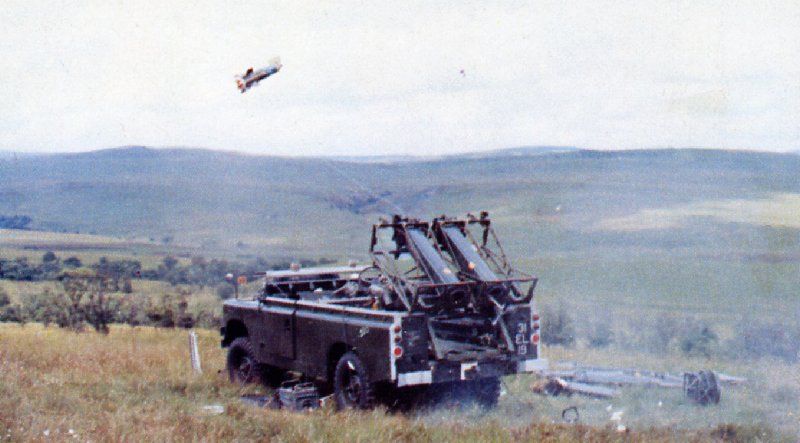
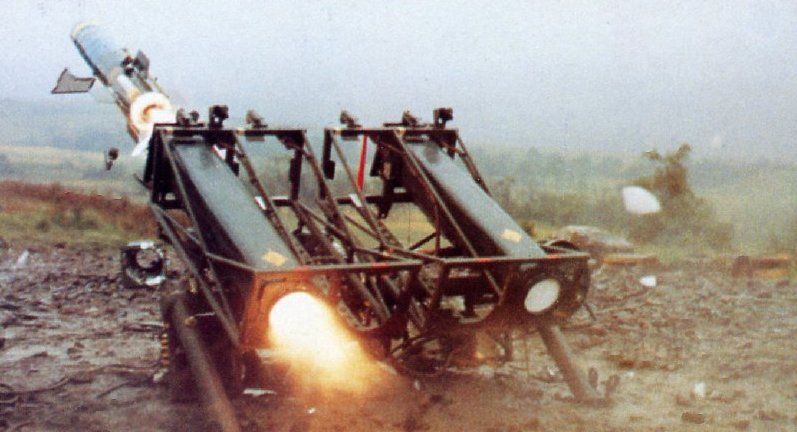
- Beeswing – pallet that can be mounted on a Land Rover or similar.
- Hawkswing – on a Lynx helicopter.[2]
- Golfswing – on a small trolley or Argocat vehicle.
Combat history
[edit]Replacement in British Army
[edit]After a lengthy debate, the Swingfire was replaced with the Javelin in mid-2005 to meet new and changing situational requirements. The British Army invested heavily in the Javelin, and it is now the main heavy anti-tank missile system in use by the British Army.[16][17][unreliable source?][needs update]
Specification
[edit]- Diameter: 170 mm
- Wingspan: 0.39 m
- Length: 1.07 m
- Weight: 27 kg
- Warhead: 7 kg HEAT
- Range: 150 m to 4000 m
- Velocity: 185 m/s [2]
- Guidance: Wire-guided, originally MCLOS, later upgraded to SACLOS, in which form the system is known as SWIG (Swingfire With Improved Guidance).[2]
- Steering: Thrust Vectored Control (TVC)
- Penetration: 800 mm RHA[18]
- Unit cost: £7,500 [19]
Operators
[edit]

Current operators
[edit] Egypt: Egyptian Army[20]
- Swingfire missiles were also produced in Egypt under license by Arab-British Dynamics.[21]
 Iraq[22]
 Kenya: Kenyan Army[2]
 Nigeria: Nigerian Army[23]
 Qatar[2]
 Saudi Arabia: Saudi Arabian Army[2]
Ferret Mk 5 armed with Swingfire at The Tank Museum, Bovington  Sudan: SPAF[22][24]


Former operators
[edit] Belgium: Belgian Army[2]
- FV102 Striker
 Pahlavi Iran : Imperial Guard (Iran) /
  Iran: Iranian Army[25]
 Portugal: Portuguese Army
- Used on the Chaimite armoured fighting vehicle, now retired.
 United Kingdom: British Army
- FV102 Striker – 5 in ready-to-fire bins.
- FV438 Swingfire – Two firing bins
- Ferret Mk 5 – Four firing bins


Decommissioning problems
[edit]In March 2002 20 warheads, removed for decommissioning, were washed into the Bristol Channel along with 8 anti-tank mines.[26] The warheads, with a total explosive weight equivalent to 64.2 kg of TNT,[27] were never located.[28]
See also
[edit]Notes
[edit]- ^ One source states this was 1958, but Orange William was still ongoing at that point. Others state this started in 1959.
References
[edit]Citations
[edit]- ^ Pattie, Geoffrey (10 July 1984). "Weapons and Equipment (Costs)". millbanksystems. Archived from the original on 17 June 2016. Retrieved 21 May 2016.
- ^ a b c d e f g h i j k "Swingfire". www.forecastinternational.com. Archived from the original on 13 May 2008.
- ^ a b c d Lister 2020, p. 163.
- ^ Forbat 2012, Chapters 5 & 6.
- ^ Lister 2020, p. 164.
- ^ a b Lister 2020, p. 165.
- ^ a b c d Lister 2020, p. 170.
- ^ a b c Lister 2020, p. 166.
- ^ a b Gibson & Buttler 2007, p. 82.
- ^ Gibson & Buttler 2007, p. 84.
- ^ a b c Lister 2020, p. 168.
- ^ Ogorkiewicz 1972, p. 24.
- ^ a b Ogorkiewicz 1972, p. 25.
- ^ Wallop Pyrotechnics Archived 28 November 2016 at the Wayback Machine, Flight International, 18/25 June 1977, p. 1854
- ^ "Britain's Small Wars". Facebook. Archived from the original on 29 June 2014. Retrieved 19 August 2015.
- ^ "New shoulder-launched missile enters service four months early" (Press release). Ministry of Defence. 28 July 2005. Archived from the original on 3 March 2008. Retrieved 8 February 2016.
- ^ "Javelin Portable Anti-Tank Missile". Army Technology. Archived from the original on 7 September 2015. Retrieved 19 August 2015.
- ^ Stephen Bull, Encyclopedia of military technology and innovation, 2004, Westport: Greenwood Press, p. 257. Other sources have noted the penetration as "up to 2ft thick" (~610-mm).
- ^ "Swingfire". Everything2.com. Archived from the original on 24 September 2015. Retrieved 19 August 2015.
- ^ John Pike. "Army". Globalsecurity.org. Archived from the original on 24 September 2015. Retrieved 19 August 2015.
- ^ John Pike. "Arab British Dynamics Co. ABD (AOI)". Globalsecurity.org. Archived from the original on 24 September 2015. Retrieved 19 August 2015.
- ^ a b [1] Archived 25 January 2007 at the Wayback Machine
- ^ "Nigeria Armee nigeriane forces terrestres equipements vehicules blindes militaires information descr - Nigeria - Africa - world army military military land forces". Armyrecognition.com. Archived from the original on 10 August 2015. Retrieved 19 August 2015.
- ^ "Sudan, Civil War since 1955". Acig.org. Archived from the original on 14 March 2009. Retrieved 19 August 2015.
- ^ Zarzecki, Thomas W. (2002). Arms Diffusion: The Spread of Military Innovations in the International System. Psychology Press. ISBN 9780415935142.
- ^ "Hansard". Publications.parliament.uk. Archived from the original on 29 June 2011. Retrieved 19 August 2015.
- ^ "Hansard". Publications.parliament.uk. Archived from the original on 29 June 2011. Retrieved 19 August 2015.
- ^ David Hencke (4 February 2003). "MoD gives up on lost warheads". the Guardian. Retrieved 19 August 2015.
Bibliography
[edit]- Gibson, Chris; Buttler, Tony (2007). British Secret Projects; Hypersonics, Ramjets and Missiles. Midland Publishing. ISBN 9781857802580.
- Lister, David (2020). The Dark Age of Tanks: Britain's Lost Armour, 1945–1970. Pen and Sword. ISBN 9781526755179.
- Ogorkiewicz, Richard (May–June 1972). "Scorpion, Stiker, Scimitar, Spartan". Armor. pp. 24–27.
- Forbat, John (2012). The Secret World of Vickers Guided Weapons. The History Press. ISBN 9780752487922.
External links
[edit]
Swingfire
View on GrokipediaOverview
Description
The Swingfire is a British wire-guided anti-tank guided missile (ATGM) developed in the 1960s for engaging armored vehicles from concealed positions.[1][2] It was manufactured from 1966 to 1993 by British Aerospace, with approximately 46,650 units produced.[4] A key innovative feature of the Swingfire is its ability to perform a 90-degree turn post-launch via thrust vector control (TVC), enabling firing from cover without exposing the launcher.[1][4] The missile employs a 7 kg high-explosive anti-tank (HEAT) warhead featuring a hollow charge design for armor penetration.[4][1]Guidance system
The Swingfire missile employs a wire-guided command to line-of-sight (CLOS) guidance system, distinguishing it from infrared-homing or laser-guided contemporaries by relying on electrical signals transmitted over trailing wires for precise control. In its initial configuration, the system used manual command to line-of-sight (MCLOS) guidance, requiring the operator to actively steer the missile with a joystick that sends pitch and yaw correction commands through twin copper wires, maintaining the weapon on the optical line-of-sight to the target.[4] A significant upgrade occurred in the 1980s with the Swingfire Improved Guidance (SWIG) program, transitioning to semi-automatic command to line-of-sight (SACLOS), also referred to as automatic CLOS (ACLOS), where the operator only tracks the target via optical sights while the system's auto-tracker computes deviations and transmits corrective signals over the wires.[4] This enhancement, contracted to British Aerospace in 1990 for deployment across British Army units, improved accuracy and reduced operator workload without altering the wire-based command link.[4] Propulsion is provided by a single-chamber solid-fuel rocket motor serving as both booster and sustainer, incorporating thrust vector control (TVC) via jet deflectors that enable sharp trajectory corrections, including up to 90-degree turns shortly after launch to support non-line-of-sight firing paths.[2] The missile achieves a velocity of 185 m/s, allowing for responsive adjustments during flight.[4] The launch sequence begins from sealed canisters or launch boxes elevated at approximately 35 degrees to clear obstacles, with the missile initially following a pre-programmed path generated by the guidance unit before full control is established; the wire spool unreels progressively to deliver command signals without interruption.[4] This design minimizes backblast effects and permits remote operation up to 100 meters from the launcher.[2] The system's effective range spans from a minimum of 150 m—to avoid wire tangling and ensure stable control—to a maximum of 4,000 m, balancing portability with standoff capability against armored targets.[2] The autopilot, featuring gyroscopes for roll stabilization and heading reference, processes incoming wire signals to execute TVC maneuvers, ensuring the missile adheres to commanded paths even in cluttered terrain.[4]Development
Precursors
Following World War II, the British Army sought to address the escalating threats posed by heavily armored Soviet tanks such as the T-54 and IS-3 during the early Cold War, prompting a transition from recoilless guns like the L6 57mm and L2 BAT to guided anti-tank missiles for greater range and precision.[5] This shift was driven by the need for standoff capabilities against massed armored formations, leading to several experimental programs in the 1950s.[6] The cancellation of key initiatives in 1959, including the Orange William project, created an urgent requirement for a new medium-range system, directly influencing the initiation of Swingfire development.[7] The Malkara, introduced in 1958 as the first British anti-tank guided missile, was a joint Anglo-Australian effort developed from 1952 at the Government Aircraft Factory.[8] Weighing approximately 98 kg with a range of up to 3 km, it employed manual wire guidance via joystick control but suffered from accuracy issues stemming from operator visibility challenges and the demanding skill required for effective use, achieving only modest hit rates in service despite 90% success in trials.[9] Deployed briefly by the British Army on air-portable Humber Hornet FV1620 vehicles for parachute units, around 1,000 units were procured after 1959 evaluations, but the system was withdrawn by the early 1960s due to its bulk and operational limitations.[8][10] The Orange William project, initiated in 1954 as an experimental wire-guided anti-tank system, explored advanced concepts including thrust vector control for improved maneuverability but was abandoned due to excessive technical complexity in its guidance and control mechanisms.[7] Intended as a longer-range alternative to Malkara with indirect fire capabilities, it utilized infrared links and radar guidance elements that proved unreliable under field conditions.[9] The Vickers Vigilant, entering service in 1958, represented a step toward man-portable solutions with its wire-guided command system, where operators used a joystick and optical sight to steer the missile in real time.[6] Limited to a 1.5 km range and requiring the operator to maintain line-of-sight exposure, it posed significant risks in combat and was produced until 1965 before replacement.[6] This system's emphasis on command guidance directly informed Swingfire's control principles, while its shortcomings highlighted the need for vehicle-mounted, longer-range designs.[7]Core development and testing
The development of Swingfire was initiated in 1960 by Fairey Engineering Ltd, in collaboration with British Aircraft Corporation and other subcontractors including Barr and Stroud for optics, under a British Army specification calling for a third-generation anti-tank guided missile (ATGM) with thrust vector control (TVC) to enable sharp maneuvers and offset targeting.[4][1] In July 1961, the United Kingdom and United States signed the Rubel-Zuckerman Agreement, establishing parallel development programs for medium anti-tank missiles; the US pursued the TOW system, while the UK continued with Swingfire to meet its specific requirements for vehicle-mounted operations.[11] The UK ultimately rejected adoption of TOW in 1965, citing the risks of operator exposure during its manual line-of-sight guidance, which required the firer to remain visible while tracking the missile to target; Swingfire's TVC system allowed launches from concealed positions up to 100 meters offset, enhancing crew survivability.[2][12] Prototype testing commenced in the mid-1960s, with trials conducted at the Fighting Vehicles Research and Development Establishment in Chertsey to validate TVC performance, wire guidance stability, and integration with armored platforms.[2] Early challenges included guidance inaccuracies and visible exhaust plumes that compromised launch stealth, which were progressively addressed through refinements to the autopilot gyros for pitch and yaw stability, improved command link optics, and motor redesigns.[1] Following successful resolution of these issues, Swingfire achieved provisional acceptance into British Army service in 1969, with initial deliveries to FV438 vehicles commencing in June of that year.[13][2] Full-rate production ramped up from 1970, enabling widespread deployment across mechanized units in the British Army of the Rhine by early in the decade; the core development and testing phase spanned 1960 to 1969, during which a planned medium-range variant was cancelled in 1964 after £234,000 in expenditures due to excessive weight and cost concerns.[2] Overall, approximately 46,650 Swingfire missiles were produced through 1993, primarily at facilities in the UK.[1] While Swingfire prioritized tactical flexibility through its concealed firing capability, TOW's similar velocity (approximately 188 m/s versus Swingfire's 185 m/s) and effective range influenced the US preference for it in open-terrain engagements.[2][12]Variants
Following the initial production of Swingfire, several upgrades were implemented to enhance its performance in various operational environments. In the early 1990s, the Swingfire Improved Guidance (SWIG) system was introduced, incorporating semi-automatic command to line of sight (SACLOS) guidance with an infrared tracker that followed the missile's exhaust plume, thereby improving accuracy in low-visibility conditions such as smoke or dust. This upgrade was part of a £35 million contract awarded to British Aerospace in June 1990 for integration into existing platforms. Additionally, thermal imaging sights were fitted to Swingfire launchers by the mid-1980s, extending operational effectiveness to nighttime and adverse weather scenarios. Experimental adaptations explored alternative launch platforms but met with limited success. The Hawkswing variant, a helicopter-launched version developed starting in 1972, was tested on the Westland Scout and Lynx helicopters as a potential successor to earlier systems like the SS.11. However, it was discontinued around 1974 due to performance shortcomings compared to competitors, including the BGM-71 TOW missile, which offered superior range and speed. Development costs for Hawkswing and related projects reached significant levels before cancellation, narrowing UK options to foreign systems like TOW or HOT for aerial anti-tank roles. Other adaptations focused on portability for non-vehicle use. A lightweight, infantry-transportable version was produced, mounted on a two-wheel trolley for deployment in open terrain and operable by a single person. This configuration, sometimes referred to as Golfswing, allowed for remote firing but saw limited adoption beyond basic trials. A related crew-portable pallet launcher, capable of holding four missiles and mountable on light vehicles like Land Rovers, was developed as the Beeswing variant but was also phased out in the mid-1970s. Efforts to create an even lighter man-portable system were explored but not widely pursued due to the emergence of more compact alternatives. Export variants incorporated minor modifications tailored to international operators, primarily in the Middle East and Africa. Production under license in Egypt by Arab British Dynamics (Heliopolis) from the 1980s to 1993 included an enhanced warhead developed by the Arab Organization for Industrialization, improving armor penetration against evolving threats. These tweaks were supplied to countries such as Belgium, Kenya, Nigeria, Qatar, Saudi Arabia, Sudan, and the United Arab Emirates, often integrated into local vehicle platforms like the FV102 Striker or Land Rovers.Platforms
FV438 Swingfire
The FV438 Swingfire was an armoured anti-tank guided missile carrier developed for the British Army as a conversion of the FV432 armoured personnel carrier, featuring a raised rear compartment to house the Swingfire missile system and storage for up to 14 missiles.[14] This adaptation retained the FV432's chassis, torsion bar suspension, and Rolls-Royce K60 multi-fuel engine, providing mobility while prioritizing the integration of the missile armament.[15] The vehicle entered service in 1975, with approximately 100 units produced through conversions of existing FV432 hulls.[14] It was operated by a crew of three: a driver, commander/gunner, and loader/radio operator.[15] The FV438's launch system consisted of two roof-mounted horizontal launchers positioned at the rear, employing thrust vector control (TVC) on the Swingfire missiles to enable post-launch redirection rearward or sideways, thus allowing indirect fire from concealed positions.[1] A hydraulic elevation mechanism adjusted the launchers through an arc from -10° to +35°, supporting engagements over varied terrain while the vehicle remained hull-down.[15] Secondary armament included a 7.62 mm L7 general-purpose machine gun and smoke grenade dischargers for self-defense and concealment.[14] Operational constraints arose from the missile's backblast, which posed a risk of damage to the vehicle's roof-mounted sensors and structure in early vertical-launch prototypes, necessitating a redesign to the horizontal configuration for safer deployment.[14] This setup emphasized static or semi-static defensive roles, limiting the vehicle's exposure in dynamic combat scenarios. The FV438 Swingfire remained in British Army service until 1993, primarily with Royal Artillery units before being phased out in favor of more advanced systems.[14]FV102 Striker
The FV102 Striker is a tracked armored vehicle developed as part of the British Army's Combat Vehicle Reconnaissance (Tracked) or CVR(T) family, serving as a mobile anti-tank guided missile carrier armed with the Swingfire missile system.[16] It features an aluminum armor hull and mounts five ready-to-fire Swingfire missiles in a rear-mounted basket launcher, with an additional five reloads stored internally, accommodating a crew of three (commander, gunner, and driver).[17] Approximately 90 units were produced for the British Army, with the vehicle entering service in 1975.[18] Designed for forward reconnaissance and ambush operations, the Striker emphasizes high mobility and a low silhouette to support rapid tactical maneuvers in contested environments.[19] Powered by a Jaguar 4.2-liter petrol engine, it achieves a maximum road speed of 50 km/h and has a combat weight of 8.15 tons, enabling quick deployment across varied terrain.[17] The missile launchers are mounted on a traversing post at the vehicle's rear, providing 360-degree manual rotation and elevation up to 30 degrees, allowing for flexible firing positions while keeping the hull concealed.[16] Its armor offers protection up to a maximum thickness of 12.7 mm, prioritizing speed over heavy defense.[17] Compared to the earlier FV438 Swingfire platform, the Striker's lighter weight facilitates faster battlefield repositioning and integration into mobile reconnaissance formations, though its thinner armor provides less protection against direct threats.[16] This design shift supported the British Army's emphasis on agile anti-tank capabilities during the Cold War era.[17] The FV102 Striker served as the primary Swingfire-equipped anti-tank missile carrier for the British Army from 1975 until its retirement in 2005, when it was phased out in favor of man-portable systems like the Javelin.[16] It was typically integrated into reconnaissance troops alongside FV101 Scorpion vehicles, enhancing forward-deployed units with long-range anti-armor fire support.[17]Other vehicles and adaptations
The Swingfire missile underwent experimental mounting on lighter scout vehicles during its early development in the 1960s and 1970s, notably the Ferret armoured car. This led to the FV712 Ferret Mk 5 variant, which incorporated a rear-mounted open turret housing four ready-to-fire Swingfire missiles along with space for four reloads, offering a compact and agile anti-tank platform suitable for reconnaissance units.[2][4] The configuration was adopted into British service and also employed by Belgian forces for enhanced mobility in armoured reconnaissance roles.[2] Export adaptations extended Swingfire's utility to international operators, including a 1979 sale to Kenya for integration into light force structures.[4] The Beeswing pallet system facilitated this by providing a four-missile launcher that could be readily fitted to utility vehicles like the Land Rover, allowing a single operator to control launches while maintaining high mobility across rough terrain.[4][1] This modular design emphasized quick setup and teardown, prioritizing anti-tank support for expeditionary or rapid-response units over fixed installations.[1] Helicopter trials explored airborne applications beyond ground vehicles, with the Hawkswing variant developed specifically for the Westland Lynx. Conducted in the 1970s, these tests evaluated the missile's wire-guidance compatibility from a hovering platform, aiming to equip the Lynx with a stand-off anti-tank weapon, though the system ultimately did not enter production due to evolving requirements for helicopter armaments.[2][4] Separate evaluations on the Westland Gazelle were limited to feasibility assessments and did not advance to operational integration.[2] For dismounted infantry applications, the Golfswing configuration enabled portable use via a compact trolley mount, supporting training exercises and occasional field deployment by small teams. Operable by one or two personnel in open environments, it retained the missile's core guidance system while emphasizing ease of transport over sustained combat use, serving primarily as a supplementary option rather than a standard infantry weapon.[2]Operational history
Combat use
The Swingfire anti-tank guided missile saw its first combat deployment during the 1982 Falklands War, though details on firings and success rates remain classified.[4] Its primary combat use occurred during the 1991 Gulf War, where British Army units equipped with FV102 Striker vehicles utilized it in ground operations against Iraqi forces.[1] These engagements marked the system's first significant use in a major conflict, providing long-range anti-armor support as part of coalition advances.[20] Swingfire also appeared in limited combat roles during the 2003 Iraq War, serving as a vehicle-mounted option for British forces in urban and open terrain scenarios, though details on specific firings remain sparse in declassified records.[1] Operators such as Belgium, which integrated Swingfire into their armored formations, reported no major combat engagements with the system.[4] Similarly, while Kenya acquired Swingfire for its military inventory in the 1980s, there are no verified instances of its use in border skirmishes or other conflicts during that period.[2] In terms of performance, Swingfire's high-explosive anti-tank warhead demonstrated effectiveness against 1980s-era armor, with penetration capabilities rated at up to 800 mm of rolled homogeneous armor (RHA), sufficient to defeat contemporary Soviet-designed tanks like the T-55 and T-72.[15] However, post-conflict evaluations noted potential vulnerabilities for wire-guided systems like Swingfire to modern active protection systems in simulated scenarios, though actual battlefield losses to such countermeasures were not reported.[16] Operator casualties involving Swingfire platforms were minimal across these operations, underscoring the system's remote firing advantages.[1]Peacetime service
During its peacetime service, Swingfire equipped Royal Artillery anti-tank guided missile batteries within the British Army of the Rhine (BAOR) in West Germany throughout the Cold War, performing garrison duties to maintain readiness against potential armored threats as part of NATO's forward defense posture.[19][2] British Army training programs for Swingfire operators focused on mastering Manual Command to Line of Sight (MCLOS) guidance techniques, with dedicated courses emphasizing operator proficiency in wire-guided control. In the 1980s, development of training simulators supported the transition to the Swingfire Improved Guidance (SWIG) upgrade, which shifted to Semi-Automatic Command to Line of Sight (SACLOS) for reduced operator workload and improved accuracy.[1][21] The system participated in major NATO exercises, including REFORGER drills during the 1980s, where Striker-mounted Swingfire units integrated with allied forces to simulate rapid reinforcement and armored engagements in European terrain. Joint maneuvers with Belgian forces, who also operated Swingfire on Striker vehicles, highlighted the missile's capability for concealed firing from remote positions to enhance crew survivability.[22][2] Routine deployments extended to export operators, with the United Kingdom providing training support to Kenyan forces following deliveries of Swingfire systems in the 1970s and 1980s. Logistical maintenance in field conditions posed challenges, particularly with wire spools and protective canisters, as the system's design required meticulous inspection to avoid tangling or damage during handling and storage.[1][4]Operators
Current operators
As of 2025, no major active operators of the Swingfire missile system have been confirmed in recent assessments. Legacy systems may remain in limited storage or training roles in countries such as Kenya, where 14 missiles were reported in inventory as of 2000, though operational status is unknown.[23] Incomplete data on global inventories indicates most remaining stocks are in non-combatant roles or limited readiness due to the system's obsolescence and lack of ongoing support. There has been no new production of Swingfire missiles since 1993, leading any potential operators to rely on spares from decommissioned or surplus stocks.[4]Former operators
The United Kingdom was the primary developer and operator of the Swingfire anti-tank guided missile system, introducing it into service in 1969 as a key component of its armored forces. Approximately 46,650 missiles were produced in total, including licensed production in Egypt, to equip various platforms such as the FV438 and FV102 Striker vehicles, supporting anti-tank regiments through the Cold War era.[4][2] The system was fully retired from all British Army platforms in 2005, replaced by man-portable systems like the Javelin to adapt to evolving tactical requirements and reduce logistical demands.[24] Belgium acquired Swingfire missiles for integration into its land forces, employing them on FV102 Striker platforms during the late Cold War period.[4] As a former operator, Belgium phased out the system in the early 2000s amid broader defense budget reductions and alignment with European Union standardization efforts in armored capabilities. Nigeria received a limited export batch of Swingfire missiles in the 1970s to bolster its anti-tank inventory, with integration into select armored units. The system saw peak usage in the late 20th century but was retired by the 1990s due to maintenance challenges and shifts toward lighter, more versatile weaponry; by 2011, it no longer appeared in active Nigerian Army inventories.[25] Overall, historical exports of Swingfire totaled around 9,000 units, primarily through licensed production in Egypt, contributing to its widespread but now largely discontinued global adoption.[4] Egypt produced Swingfire missiles under license through Arab British Dynamics for use by the Egyptian Army.[4] Iraq operated Swingfire systems, with use reported during conflicts.[2] Portugal used Swingfire on various platforms in the Portuguese Army.[2] Iran employed Swingfire with the Imperial Guard prior to 1979 and subsequently with the Iranian Army.[2]Retirement
Replacement programs
The British Army began phasing out the Swingfire missile in the early 2000s, completing the replacement with the man-portable FGM-148 Javelin system by mid-2005. This transition involved operating mixed fleets during the overlap period to maintain operational continuity while introducing the new capability. The Javelin, a fire-and-forget anti-tank guided missile (ATGM), provided a significant upgrade over Swingfire's wire-guided design, enabling operators to seek cover immediately after launch. The primary rationale for the replacement was to adapt to evolving battlefield requirements, emphasizing lighter, more deployable systems that enhance infantry mobility and reduce logistical burdens. Swingfire's vehicle-mounted platforms, such as the FV102 Striker, were divested as part of this shift, yielding cost savings through the elimination of maintenance for aging tracked vehicles. Javelin's top-attack profile and infrared guidance further improved effectiveness against modern armored threats without the vulnerabilities of wire guidance. In Belgium, which operated Swingfire on approximately 43 FV102 Striker vehicles with over 2,000 missiles in inventory, the system was retired around 2005 along with the CVR(T) fleet. The Belgian Army later adopted the Spike family of ATGMs starting around 2013 to replace the Milan in other anti-tank roles. Kenya, a long-term operator, continues to retain elements of its Swingfire inventory as of 2025. The Swingfire's wire-guided, non-line-of-sight launch principles influenced later UK developments, including the Brimstone missile, which was evaluated as a potential ground-launched successor in the 1990s before evolving into an air-to-surface role. No direct vehicle-mounted ATGM has fully succeeded Swingfire in British service until recent integration trials on the Ajax armored vehicle family, which entered initial operating capability on November 6, 2025, with ongoing evaluations for Brimstone integration.[26]Decommissioning challenges
During the decommissioning of Swingfire missiles in the United Kingdom, a significant logistical and safety incident occurred in March 2002 when a pallet containing 20 live warheads and eight anti-tank mines was lost overboard into the Bristol Channel during transport for disposal by sea.[27] The pallet, which also included plastic explosive charges, rolls of detonating cord, and 40 mine demolition units, was swept away by strong tides from a vessel operated under Ministry of Defence auspices.[28] These items were never recovered despite initial search efforts, highlighting the risks of maritime disposal methods for sensitive munitions and the challenges in securing hazardous materials during transit.[29] The lost warheads alone represented a substantial explosive hazard, with a combined force equivalent to 64.2 kg of TNT, underscoring the potential for catastrophic detonation if disturbed.[30] This event posed ongoing unexploded ordnance (UXO) risks to maritime navigation, fishing activities, and coastal ecosystems in the Bristol Channel, an area with heavy commercial traffic and environmental sensitivity.[27] The incident prompted parliamentary scrutiny and criticism of disposal protocols, revealing broader logistical hurdles in handling aging wire-guided systems, where secure containment and controlled demilitarization require specialized facilities to mitigate accidental release.[30] Environmentally, the unrecovered munitions raised concerns over potential contamination from high-explosive anti-tank (HEAT) residues leaching into marine sediments, as well as the disruption to benthic habitats if the items were to corrode or detonate.[31] Although the immediate search was abandoned due to low recovery probability and high costs, the legacy UXO threat persists, complicating seabed surveys and offshore developments in the region.[29] Such challenges in decommissioning illustrate the difficulties in safely neutralizing large stockpiles of legacy anti-tank systems, particularly when international environmental standards demand minimal ecological impact during disposal operations.[32] Export operators of Swingfire, including nations in the Middle East and Europe, have encountered analogous decommissioning issues, with combat-used remnants contributing to regional UXO legacies that require extensive clearance efforts post-service.[1] These global cases amplify the need for coordinated demilitarization strategies to address both stored inventories and battlefield remnants, though specific non-UK incidents remain underreported in public records.[4]Specifications
The Swingfire missile had the following characteristics:| Parameter | Value |
|---|---|
| Length | 1.067 m [1] |
| Diameter | 170 mm [1] |
| Wingspan | 0.39 m [2] |
| Launch weight | 27 kg [1] |
| Warhead | 7 kg high-explosive anti-tank (HEAT) shaped charge, penetrating approximately 800 mm of rolled homogeneous armour (RHA)[1] |
| Minimum range | 150 m [1] |
| Maximum range | 4,000 m [1] |
| Velocity | 185 m/s [2] |
| Propulsion | Solid-fuel rocket motor with thrust-vectoring control (TVC)[1] |
| Guidance | Wire-guided command to line of sight (CLOS); initially manual (MCLOS), upgraded to semi-automatic (SACLOS) with Swingfire Improved Guidance (SWIG) in 1990–1991[1] |