Recent from talks
Knowledge base stats:
Talk channels stats:
Members stats:
Swiss mercenaries
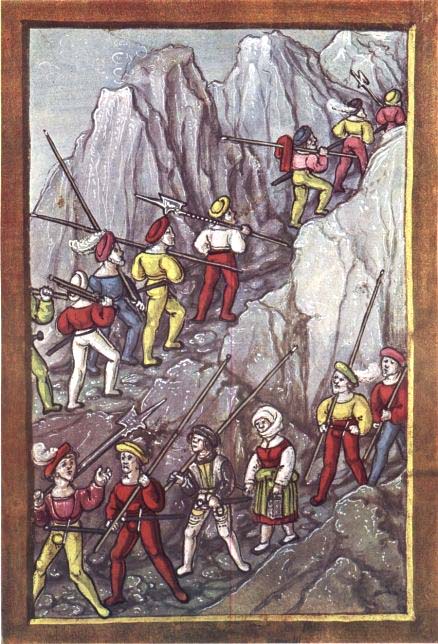
The Swiss mercenaries were a powerful infantry force of professional soldiers originating from the cantons of the Old Swiss Confederacy. They were notable for their service in foreign armies, especially among the military forces of the kings of France, throughout the early modern period of European history, from the Late Middle Ages into the 19th century.
Their service as mercenaries was at its peak during the Renaissance, when their proven battlefield capabilities made them sought-after mercenary troops. There followed a period of decline, as technological and organizational advances counteracted the Swiss' advantages. Switzerland's military isolationism largely put an end to organized mercenary activity; the principal remnant of the practice is the Pontifical Swiss Guard at the Vatican.
During the Late Middle Ages, mercenary forces grew in importance in Europe, as veterans from the Hundred Years War (1337–1453) and other conflicts came to see soldiering as a profession rather than a temporary activity, and commanders sought long-term professionals rather than temporary feudal levies to fight their wars. Swiss mercenaries (German: Reisläufer) were valued throughout the kingdoms and states of medieval Europe for the power of their determined mass attack in deep columns with the spear, the pike, and halberd. Hiring them was made even more attractive because entire ready-made Swiss mercenary contingents could be obtained by simply contracting with their local governments, the various Swiss cantons—the cantons had a form of militia system in which the soldiers were bound to serve and were trained and equipped to do so.
The warriors of the Swiss cantons had gradually developed a reputation across Europe as skilled soldiers, due to their successful defense of their liberties against their Austrian Habsburg overlords, starting as early as the late 13th century, including remarkable upset victories over heavily armoured knights at Morgarten and Laupen. This was furthered by later successful campaigns of regional expansion, mainly into the Italian Peninsula. By the 15th century, they were greatly valued as mercenary soldiers, particularly following their series of notable victories in the Burgundian Wars (1474–1477) in the latter part of the century. The standing mercenary army of the Hungarian king Matthias Corvinus, known as the "Black Army" (1458–1490), also contained Swiss pikemen units, who were held in high regard by the king. The native German term Reisläufer literally means "one who goes to war" and is derived from the Middle High German Reise, meaning "military campaign".
The Swiss mercenaries, with their head-down attack in huge columns with the long pike, refusal to take prisoners, and consistent record of victory, were greatly feared and admired—for instance, the Italian diplomat and political philosopher Niccolò Machiavelli addressed their system of combat at length in the twelfth chapter of his literary masterpiece, The Prince (1513–1532). Although often referred to as "pikemen", the Swiss mercenary units also contained halberdiers as well until several decades into the 16th century, as well as a small number of skirmishers armed with bows, crossbows, or early firearms to precede the rapid advance of the attack column.
The young men who went off to fight, and sometimes die, in foreign service had several incentives—limited economic options in the still largely rural cantons; adventure; pride in the reputation of the Swiss as soldiers; and what military historian Sir Charles Oman describes as a pure love of combat and warfighting in and of itself, forged by two centuries of conflict.
Until roughly 1490, the Swiss had a virtual monopoly on pike-armed mercenary service. After that date, the Swiss mercenaries were increasingly supplanted by imitators, chiefly the Landsknechts. Landsknechts were Germans (at first largely from Swabia) and became proficient at Swiss tactics, even surpassing them with their usage of the Zweihänder to crush opposing pike formations.[citation needed] This produced a force that filled the ranks of European armies with mercenary regiments for decades.
After 1515 the Swiss pledged themselves to neutrality, other than regarding Swiss soldiers serving in the ranks of the Royal French army. The Landsknecht, would continue to serve any paymaster, even, at times, enemies of the Holy Roman Emperor. Landsknechts at times even fought each other on the battlefield. The Landsknecht often assumed the multi-coloured and striped clothing of the Swiss.
Hub AI
Swiss mercenaries AI simulator
(@Swiss mercenaries_simulator)
Swiss mercenaries
The Swiss mercenaries were a powerful infantry force of professional soldiers originating from the cantons of the Old Swiss Confederacy. They were notable for their service in foreign armies, especially among the military forces of the kings of France, throughout the early modern period of European history, from the Late Middle Ages into the 19th century.
Their service as mercenaries was at its peak during the Renaissance, when their proven battlefield capabilities made them sought-after mercenary troops. There followed a period of decline, as technological and organizational advances counteracted the Swiss' advantages. Switzerland's military isolationism largely put an end to organized mercenary activity; the principal remnant of the practice is the Pontifical Swiss Guard at the Vatican.
During the Late Middle Ages, mercenary forces grew in importance in Europe, as veterans from the Hundred Years War (1337–1453) and other conflicts came to see soldiering as a profession rather than a temporary activity, and commanders sought long-term professionals rather than temporary feudal levies to fight their wars. Swiss mercenaries (German: Reisläufer) were valued throughout the kingdoms and states of medieval Europe for the power of their determined mass attack in deep columns with the spear, the pike, and halberd. Hiring them was made even more attractive because entire ready-made Swiss mercenary contingents could be obtained by simply contracting with their local governments, the various Swiss cantons—the cantons had a form of militia system in which the soldiers were bound to serve and were trained and equipped to do so.
The warriors of the Swiss cantons had gradually developed a reputation across Europe as skilled soldiers, due to their successful defense of their liberties against their Austrian Habsburg overlords, starting as early as the late 13th century, including remarkable upset victories over heavily armoured knights at Morgarten and Laupen. This was furthered by later successful campaigns of regional expansion, mainly into the Italian Peninsula. By the 15th century, they were greatly valued as mercenary soldiers, particularly following their series of notable victories in the Burgundian Wars (1474–1477) in the latter part of the century. The standing mercenary army of the Hungarian king Matthias Corvinus, known as the "Black Army" (1458–1490), also contained Swiss pikemen units, who were held in high regard by the king. The native German term Reisläufer literally means "one who goes to war" and is derived from the Middle High German Reise, meaning "military campaign".
The Swiss mercenaries, with their head-down attack in huge columns with the long pike, refusal to take prisoners, and consistent record of victory, were greatly feared and admired—for instance, the Italian diplomat and political philosopher Niccolò Machiavelli addressed their system of combat at length in the twelfth chapter of his literary masterpiece, The Prince (1513–1532). Although often referred to as "pikemen", the Swiss mercenary units also contained halberdiers as well until several decades into the 16th century, as well as a small number of skirmishers armed with bows, crossbows, or early firearms to precede the rapid advance of the attack column.
The young men who went off to fight, and sometimes die, in foreign service had several incentives—limited economic options in the still largely rural cantons; adventure; pride in the reputation of the Swiss as soldiers; and what military historian Sir Charles Oman describes as a pure love of combat and warfighting in and of itself, forged by two centuries of conflict.
Until roughly 1490, the Swiss had a virtual monopoly on pike-armed mercenary service. After that date, the Swiss mercenaries were increasingly supplanted by imitators, chiefly the Landsknechts. Landsknechts were Germans (at first largely from Swabia) and became proficient at Swiss tactics, even surpassing them with their usage of the Zweihänder to crush opposing pike formations.[citation needed] This produced a force that filled the ranks of European armies with mercenary regiments for decades.
After 1515 the Swiss pledged themselves to neutrality, other than regarding Swiss soldiers serving in the ranks of the Royal French army. The Landsknecht, would continue to serve any paymaster, even, at times, enemies of the Holy Roman Emperor. Landsknechts at times even fought each other on the battlefield. The Landsknecht often assumed the multi-coloured and striped clothing of the Swiss.
