Hubbry Logo
Tape ballTape ballMain
Open search
Tape ball
Community hub
Tape ball
logo
8 pages, 0 posts
0 subscribers
Be the first to start a discussion here.
Tape ball
Tape ball
from Wikipedia

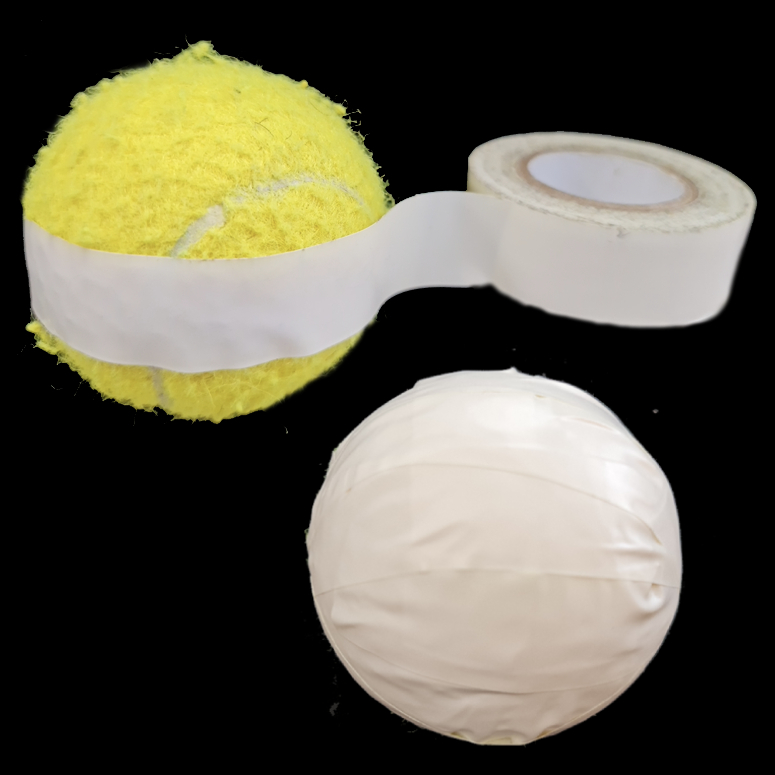
A tape ball (created by wrapping a tennis ball in electrical tape)

A tape ball is a tennis ball wrapped in electrical tape that is often used in informal games of cricket such as street cricket, also called tape ball cricket.a First pioneered in Karachi, Pakistan,[1][2] the tape ball acts as an improvised cricket ball with the tape stretched tightly over the fuzzy felt-like covering of a tennis ball to ensure a smooth surface that produces greater pace after bouncing.[3] The tape makes the ball heavier than a tennis ball, but not as hard or heavy as a cricket ball. As such, this modification seeks to reduce the risks to players, passers-by and property.[4]

Although most street games feature entirely covered varieties, tape balls may also be prepared such that only one side is taped to replicate reverse swing or they may have multiple layers of tape running down the middle to mimic the leather seam found on standard cricket balls.[5]

History

[edit]

The practice of using electrical tape to repurpose the ball originated in Karachi street cricket during the 1960s,[6] quickly spreading from neighbourhoods in Nazimabad and the Federal B. Area.[7] This approach of modifying the ball built on previous unsuccessful attempts implemented by local bowlers, such as constantly wetting shaved tennis balls to make them heavier and more conducive to skidding through quickly after bouncing. Partly introduced to include individuals who were unable to access pitches and protective equipment, the tape ball innovation also countered the prodigious amounts of spin that skilled bowlers could extract when playing with tennis balls.[8] One such exponent was former first-class cricketer Nadeem Moosa, who would squeeze the ball between his middle-finger and thumb before flicking it on release. The glossy surface of a tape ball would make this unorthodox, carrom-like grip difficult and bowlers focusing on speed, rather than turn, would start to find success.[9][10] For up-and-coming batsmen such as Javed Miandad, who was involved in the early tape ball scene in Gazdarabad, this new way of playing instilled determination and resolve against the quickest bowlers.[11]

this is a test
Tape ball traces its origins to residential Karachi streets, where youths played after school

In the 1980s, tape ball cricket circuits started to emerge across Pakistan where fiercely competitive games would be played in front of several hundred spectators and formal rules were drawn up. For example, the 'K2 Brother Cricket Tournament', referred to as a series of tape tennis matches, allowed for 8 players and 8 overs per side and also stipulated the use of the Japanese tape manufacturer, Netto, which was deemed to have the highest quality of available brands. Any batsman hitting the ball into a house would also immediately be declared out.[12] During this decade, the tape ball trend spread to affluent areas, such as Defence and Clifton and was now enjoyed by lower and upper classes alike.[13] In addition, the 'professional' tape ball player emerged. These were especially talented cricketers who would be hired to play in games for different teams in exchange for a small payment. Wasim Akram became a professional tape ball player in Lahore in 1983, a year before he would begin his test match career.[14]

By the early 1990s, tape ball cricket continued to enjoy popularity in practically every city and most of Pakistan's national side comprised the likes of Miandad, Akram and other cricketers who had grown up playing it. For children and young adults of the time, Pakistan's 1992 World Cup victory saw nationwide interest in the sport grow even more and tape ball was thriving amongst a new generation of fans who had been galvanised by their homeland's achievement.[15] Non-pecuniary rewards associated with amateur tape ball tournament performances now included the izzat (honour) amongst one's community and feelings of personal pride. The most successful players on the circuit would be garlanded with flowers, greeted with celebratory gunfire and paraded to grounds on horseback.[16]

Towards the end of the 20th century, tape ball games were widespread even in slums and on mountains and battlefields, as the previous novelty had long become an entrenched part of Pakistan's sporting culture.[17] In 1999, Tariq Ali wrote that "the gulli-danda days are over" [referring to a previously ubiquitous sport] and Ramzan tape ball cricket tournaments were celebrated annual events.[18] Held during the holy month of ramadan, the informal nature of these tournament games (which could last from 5 to 25 overs) would often be played late into the evenings for short periods of recreation before the commencement of daily fasting and morning prayers.[19][20]

Behaviour of the ball

[edit]

Any colour of tape can be used and its application means tennis balls face less air resistance and travel quickly. This allows bowlers to bowl at high speeds while also ensuring batsmen can hit shots that continue over longer distances.[21][8] On occasions where quick runs are needed, a lighter bat will be used to hit the ball even further by increasing the speed of bat-swing and scores over 20 runs per over or six sixes are not uncommon.[22][7][23] As they are both lighter and smaller, tape balls have been estimated to travel 20 per cent faster in the air than cricket balls and this encourages increased arm-speed.[24] Factors such as the style of bowling action, how evenly the tape is applied and which brand of tape is used may vary behaviours slightly and the bounce of the tape ball can often be unpredictable.[25][13] It has been suggested that the tendency for the ball to deviate as it hits the ground helps develop batting reflexes and encourages unorthodox styles. The tape ball also incentivises bowlers to work harder on their wrist technique due to the greater probability of swing.[18]

Given its history of being introduced to negate finger spinners, the smooth surface of a tape ball (with no seam) naturally offers less turn than a tennis ball or cricket ball. Due to this, spinners are necessitated to expand their range of skills, such as having to bowl faster or to mix googlies and offbreaks throughout their overs.[20] Shahid Afridi is one such bowler who developed a varied repertoire based on playing with a tape ball, as did Rashid Khan who learned the importance of experimentation when devising new variations in his youth.[26]

With the abrasive grounds this type of cricket is commonly played on, the tape is not particularly durable and quickly develops scratches and tears. Furthermore, loose pieces of ripped tape can alter how the ball behaves, such as making it swing appreciably late, making deviation from spinners unpredictable or resulting in even more uneven bounce. In certain cases (depending on the local rules or availability of more rolls of tape), the tape is left to wear naturally. When torn, however, the ball is usually immediately re-taped or replaced with a pre-taped ball as often as required before the specified number of overs are completed.[27] As late swing is relatively easy to achieve, tape balls have occasionally been utilised by professional test cricketers who have incorporated them as part of training drills, such as Yasir Hameed and Mohammad Rizwan.[28][29]

Taking inspiration from these properties, the concept has been adapted in wiffle ball where the perforated, plastic ball is covered in electrical or, rarely, duct tape to make it heavier and thereby act more like a baseball when pitched.[30] As with cricket, this has sometimes been used to ease children from a softer to harder ball.[31]

Impact and legacy

[edit]

Influence

[edit]

Tape ball cricket is considered an integral part of Pakistani cricket and sports culture, with virtually every cricket-playing youth being exposed to it in one form or another. Its introduction shifted the status of cricket in the country from an elite to a mainstream sport that could even be enjoyed by those living in abject poverty.[32] Aspirational cricketers born into difficult circumstances have since been able to rise from hardship and win selection for the national teams. For instance, Mohammad Yousuf, whose family were not able to afford tennis balls, honed his talent as a child by wrapping a ping-pong ball in tape and using a thaapi as a makeshift bat.[33][34] In 2005, it was estimated that, of all those who play some kind of organised cricket in Pakistan, 80 percent play with a tape ball, and 20 per cent with a standard cricket ball.[25] The inexpensive alternative has also been praised for its role in mitigating dangers associated with standard cricket balls, particularly head injuries in children that have previously been fatal.[35] Because of how widely it has always been played, this form of cricket continued to provide a steady stream of talented athletes that helped keep Pakistan's domestic cricket afloat when the national side were forced to play away from home for almost a decade, following the 2009 Lahore attack.[36]

Children playing cricket in the streets of Pakistan
Circumventing the need for facilities and equipment, tape ball has helped bring cricket to the masses

The popularity of tape ball is also credited with Pakistan's famous production of fast bowlers and, according to Shaheen Afridi,[37] may provide reasoning for Pakistani bowlers' effectiveness in bowling yorkers, particularly in the death overs of white ball cricket. As there is usually no leg before wicket (lbw) rule in tape ball games, bowlers are rewarded for bowling full and straight to target the stumps (aiming to bowl the opponent).[38] Umar Gul, one of Pakistan's most successful T20 bowlers and yorker exponents, did not transition from tape to cricket ball until he was 16.[20] Similarly, Haris Rauf worked as a professional tape ball player, freelancing for various clubs that required his services of 'hitting the blockhole ball after ball'.[39] Other notable pace bowlers picked based on their tape ball talent include Shoaib Akhtar,[25] who became the fastest bowler of all time and Mohammad Amir,[23] who was scouted during a tape ball tournament when he was 13 years old.

Despite not being officially recognised by cricket boards, contemporary tape ball tournaments have continued to become increasingly elaborate based on demand from prospective players and audiences. Local tournaments feature extravagant opening ceremonies (consisting of music, dance, fireworks etc.) and receive widespread media and commercial support in Pakistan. With Ramzan cricket alone said to be worth Rs (PKR) 100 million, there are numerous opportunities to provide substantial monetary value to participants.[40] In 2015, a 15 night tournament in Karachi offered prize money of Rs 300,000 and additional rewards, such as The Man of the Tournament receiving a motorbike.[9] The best of these professional players often receive additional gifts from adoring fans, employ unique pseudonyms that are emblazoned on their bats and are celebrated in hundreds of YouTube fan videos.[41][42] Most organised games involve branded team kits, are streamed online and have live commentary provided through pitch-side loud speakers.[16]

In 2020, Wisden named tape ball in their list of the ten greatest cricket inventions.[43] Such has been the impact, that in recent years specialised grounds have been set up for tape ball[44] and ball manufacturers have introduced specialised products designed to act like cricket balls, which have proven to be popular throughout Pakistan.[45][46] Similarly, in an attempt to remedy the inconvenience of constantly replacing tape, the windball has been used for informal games in England and the West Indies.[47] For batsmen, CA Sports produce 500,000 specialised tape ball bats per year which vary in length, width and weight as compared to regular cricket bats, and are more curved.[48]

Effects on player development

[edit]

Regarding skill development, tape ball tournaments have featured the paddle scoop since the 1970s and have been attributed as a key launchpad for the invention of reverse swing and the doosra, both also first conceived in Pakistan.[9][49][50] However, the potential benefits and drawbacks offered by this variety of cricket have sometimes been debated by former players and commentators. While some have theorised the lighter ball builds muscle[14] and improves control[24] for fast bowlers, others have suggested that too much tape ball can harm the development of good spin bowlers. Former leg spinner Danish Kaneria played in several Karachi tape ball tournaments as a boy in the 1990s but was later stopped from participating as his coach felt the softer, smaller ball would make it difficult for his pupil to master the hard cricket ball[13] In another case, Shadab Khan started as a fast bowler in tape ball cricket and only considered leg spin a viable option when he was introduced to the standard cricket ball.[51]

Tape ball is pure entertainment, however it can have an adverse affect on the technique of the batsmen as the challenges posed by a cricket ball are totally different to a taped one, professional cricketers can have the odd indulgence especially during Ramazan, however they should not play this version regularly

Mohsin Khan, former test cricketer[13]

From a batting perspective, former test captains Misbah-ul-Haq and Younis Khan have stated that tape ball experiences helped them play with a straight bat and improved their hitting ability during their youth.[52][7] Conversely, ex-cricketers including former national coach and selector Mohsin Khan have claimed that this version of cricket can have a detrimental effect on batting technique.[13] Consistently playing tape ball games has been cited as a reason for Pakistan's poor fielding in the past, specifically because playing on rough surfaces has developed an aversion to diving.[53]

Concerns have been voiced about how the increased ease of starting cricket and the pull of local tournament fame wrongly persuade impressionable children to drop out of school and pursue the sport.[54] It has also been pointed out that the draw of these lucrative opportunities is exacerbated by the pervasiveness of T20 leagues as they offer further reward, often through the same skills that are refined with tape ball experience.[55] This was particularly well illustrated in Pakistan when a talent-hunt programme launched by Lahore Qalanders found that approximately half of their 350,000 applicants were tape ball players.[56]

Expansion beyond Pakistan

[edit]

Test nations

[edit]

Since its inception, tape ball cricket has drawn interest from outsiders due to how the indigenous idea spread so quickly and achieved institutionalisation within Pakistan, as well as its longevity over decades and the impact it has had on the international game.[3][57] In neighbouring Afghanistan, tape ball cricket has perhaps had greatest influence among the other test-playing nations, helping produce players such as Taj Malik, Rashid Khan and Hazratullah Zazai.[58][59] In refugee camps housing Afghans following the Soviet–Afghan War, interest in cricket swelled and tape ball found popularity within the displaced community living in Peshawar and other areas close to the Afghanistan border.[60]

Although the timing of events indicates that the tape ball did not feature much in East Pakistan, the game has been enjoyed in Bangladesh for several years. Tournaments have been organised in multiple localities and have helped the nation consistently identify fast bowling prospects.[61] International cricketers to emerge from the tape ball circuit include Shakib Al Hasan, Mustafizur Rahman, Rubel Hossain and Elias Sunny.[62]

Aside from infrequent street games and occasional tournament appearances, there is comparatively less tape ball played in India and Sri Lanka, where tennis ball cricket tends to be more popular.[57][63] However, the idea has been harnessed in Sri Lankan school cricket competitions to facilitate children's transition towards a harder ball.[64] Previously, former cricketers from the Sri Lankan team including Russel Arnold and Upul Chandana have participated in a yearly tape ball tournament in the Maldives to help promote cricket in the nation.[65]

Away from Asia, the game has been advocated in other test nations where it can be enjoyed by locals and the Pakistani diaspora who have frequently helped establish it. Specifically, the tape ball concept has gained popularity with communities in England, Australia and the West Indies:

In 2005, hoping to capitalise on the enthusiasm created by England's win in the 2005 Ashes series, the London Community Cricket Association began organizing tape ball cricket teams for children on estates in inner-city London, where a lack of playing fields has led to a decline in popularity for traditional cricket.[66] The matches use a variant of the Twenty20 Cricket rules designed to make matches last a half-hour or less. This initiative was followed up with a National Cricket Day organised by Chance to Shine that held tape ball cricket competitions for thousands of children across London housing estates.[67] Partnering with the Yorkshire Cricket Board, the charity also launched the Chance to Shine Street Programme which has been praised for encouraging girls to take up the sport.[68] Also enjoyed informally, England captains Eoin Morgan and Moeen Ali both grew up playing tape ball.[69][70]

Since 2010, Australia has hosted an annual Tape Ball Cricket Cup which is based in Sydney.[71] Similarly, a group of Sri Lanka born Australians have promoted the idea across Victoria, however, with the popularity of backyard and indoor cricket in the country, tape ball is still mostly popular amongst the South Asian communities.[72]

In the West Indies, tape ball has been popular for many years, particularly in Barbados where games are played on the streets, as well as in more formal settings.[73] Evening games of tape ball have been organised to raise funds for various charities, with celebrities participating during nights that also include music from live DJs and other entertainment.[74] Bajan fast bowlers Tino Best and Jofra Archer started playing when at school and honed their ability to bowl at extreme pace during these competitions.[75][76] Furthermore, in Antigua and Guyana, interest in tape ball has steadily risen,[77] with different tournaments taking place amongst clubs from the islands.[78][79]

Associate nations

[edit]

Tape ball cricket has also had a degree of influence on nations that do not typically partake in much competitive cricket, such as in central Asia where games played in Tajikistan (through the Tajikistan Cricket Federation) and Kazakhstan (at the Almaty Cricket Club) have been credited with sparking interest in the sport and positively contributing to the community.[80][81] Additionally, tape ball leagues have been organised in parts of continental Europe, including Greece, Malta and The Netherlands.[82][83][84]

Although cricket is not as popular as other sports in the Americas, tape ball has been played in the United States, Canada and in parts of South America. At Princeton University, this type of cricket has been used to introduce the sport and eventually have local athletes switch to standard cricket.[85] In Houston, several clubs now offer children coaching in leather ball as well as tape ball.[86] Ali Khan, who grew up in Pakistan and played in various tape ball tournaments, represents the USA national team.[87] In several municipalities of the Greater Toronto Area, such as Mississauga, cricket tournaments are a common sight during ramzan nights.[88] A domestic tape ball league was started in Uruguay in 2012, with over 100 active players taking part.[89]

Due to historic international ties with Pakistan, it is perhaps unsurprising that the tape ball concept has flourished in the Middle East. In Dubai, many Pakistani and Indian expatriates play together in the mornings to evade the afternoon heat,[90] while in Sharjah workers play multiple tape ball games every Friday.[91] When working as bowling coach for the UAE team, former fast bowler Aaqib Javed stressed the importance of tape ball to improve the pace and quality of the nation's fast bowling resources.[92] Since then, the concept has gathered momentum and the UAE is home to the annual Chinar Super League (CSL) which has occasionally featured cricketers associated with the Pakistan Super League.[93]

See also

[edit]

Notes

[edit]

References

[edit]
Revisions and contributorsEdit on WikipediaRead on Wikipedia
from Grokipedia
Tape ball, also known as tape ball cricket, is an informal variant of cricket played primarily in street and backyard settings, using a tennis ball wrapped tightly in electrical tape to mimic the swing, bounce, and speed of a traditional leather cricket ball while remaining safer and more affordable. Originating in the urban neighborhoods of Karachi, Pakistan, during the 1960s and 1970s amid limited access to proper cricket grounds and equipment, it evolved as a grassroots adaptation that allowed play in confined spaces without the need for protective gear. The game's history traces its rapid rise in popularity through the , when organized street tournaments like the K-2 Bhai event in Karachi's area formalized basic rules and attracted large crowds, often under makeshift floodlights for nighttime play. By the late , tape ball had become a cultural phenomenon in , spreading to neighboring countries such as and , as well as diaspora communities in the , , and , where it serves as both recreation and a talent feeder for professional cricket. Notable Pakistani cricketers, including , , and , credit their early skills to tape ball, with high-scoring partnerships and competitive leagues—some offering prizes up to £3,500—highlighting its competitive edge. Tape ball matches typically feature 6 to 10 overs per side, with teams of 6 to 8 players on a shortened pitch measuring 15 to , emphasizing for swing and power hitting over boundaries that are often just 40-50 yards away. Key rules include no (LBW) dismissals in casual games, outs via , , or , and free hits for no-balls, fostering a fast-paced format that prioritizes aggressive play and minimal equipment like lightweight bats and improvised stumps. The tape wrapping—often using brands like Nitto—alters the ball's , enabling reverse swing and sharper bounces, which distinguishes it from plain and adds strategic depth. Today, international federations and leagues continue to promote tape ball as an accessible entry point to , blending tradition with modern organization.

Overview

Definition and characteristics

Tape ball is a variant of informal that utilizes a standard wrapped in layers of , which enhances its weight, hardness, and capacity for swing. This simple modification transforms the soft, low-bounce into one that more closely mimics the behavior of a professional , allowing for faster deliveries and greater control in . The primary purpose of tape ball cricket is to facilitate accessible, low-cost play in resource-limited environments, particularly urban streets where traditional equipment is unavailable or impractical. It enables participants to replicate the strategic elements of from professional matches without the need for expensive gear or formal , promoting widespread participation among youth and casual players. Key characteristics of the tape ball include its approximate weight of 70 grams (typically 65-80 grams after taping), making it heavier than an untaped but significantly lighter than a standard leather . The asymmetrical application of tape creates uneven , resulting in pronounced swing during flight, while the game is typically conducted on improvised surfaces like roads or vacant lots rather than groomed pitches. Tape ball cricket thrives in densely populated urban settings, where it is often played as street cricket at night under artificial lights to accommodate daily routines, involving teams of 6-8 players per side for quick, engaging matches.

Equipment and preparation

The core equipment for tape ball cricket consists of a standard as the base, which is wrapped with , typically red for daytime play or white for night matches to improve visibility. Typically starting with a heavy-duty tennis ball for enhanced bounce and durability. Bats, which can be wooden, , or lightweight improvised versions, while protective gear is minimal, often limited to gloves for fielders and wicketkeepers. This setup contrasts with formal by requiring no specialized helmets, pads, or stumps beyond improvised alternatives like sticks or bottles. Preparation involves tightly wrapping the with to increase its weight and durability, creating asymmetry that enables similar to a standard . The process starts by securing the tape at one pole of the ball and layering it evenly while stretching it slightly to promote later tearing for reverse swing; common techniques include the "fixed seam" method, where tape is aligned and twisted to form a raised seam for consistent seam-up delivery, or "cross-seam" wrapping for unpredictable movement off the pitch. Typically, one to multiple layers are applied for even coverage without overlaps exceeding 2 mm, ensuring no exposed ball surface or air bubbles. The low cost—around $3 for a pack of three balls and $0.30 per roll of tape—makes tape ball highly accessible, requiring no formal infrastructure and enabling play in urban streets or resource-limited areas worldwide. Maintenance is straightforward, with the lasting 4-5 overs before ; players re-wrap it after 6-7 overs or as needed to restore balance and weight, often using a fresh tape roll mid-game. This increased weight from the wrapping contributes to the 's swing potential, as explored in discussions.

History

Origins in Pakistan

Tape ball cricket emerged in the and in the urban slums and middle-class neighborhoods of , evolving from traditional gully as a response to the scarcity of leather s and limited access to proper playing fields. Young players in areas like and Akhtar Colony began wrapping tennis balls with to create a heavier, more durable projectile that mimicked the swing of a standard cricket ball, allowing games in confined street spaces without damaging windows or vehicles. This innovation addressed the economic barriers faced by children from low-income families, who could not afford expensive equipment during a period of rising costs. The game drew inspiration from Pakistan's professional cricket scene, particularly the swing bowling techniques popularized by legends like in the 1950s, which captivated urban youth eager to replicate those skills on makeshift pitches. In the , amid economic constraints, access to organized sports facilities was restricted, pushing children and young adults to adapt balls as an affordable alternative. These taped balls enabled bowlers to achieve reverse swing in narrow alleys, transforming casual play into a skill-building pursuit that echoed elite techniques despite the rudimentary setup. By the early 1980s, tape ball had spread through word-of-mouth from to other major cities like and , becoming a staple of Pakistani street culture among diverse youth groups. Rapid swelled city populations—'s grew from 1 million in 1951 to 3.5 million by 1972—creating dense neighborhoods where the game thrived in empty roads and backstreets as a low-cost outlet for energy and aspiration. This grassroots adoption solidified tape ball as an accessible sport, played evenings and holidays by boys navigating the challenges of limited resources and space.

Evolution and popularization

During the 1980s, tape ball cricket rapidly expanded from its origins in to become a nationwide phenomenon across , facilitated by its affordability and accessibility in urban and rural areas alike. This growth aligned with the rising popularity of professional during the late , encouraging the formation of competitive street leagues in major cities such as , , and . These leagues often featured informal circuits with hundreds of spectators, transforming casual games into structured competitions that mirrored professional matches. A key innovation during this period was the adaptation of tape balls for night games, where white was applied to enhance visibility under streetlights or during evening sessions, particularly popular in densely populated neighborhoods. By the , tape ball had entrenched itself as a cultural staple, symbolizing resilience and spirit amid socioeconomic challenges. It frequently appeared in Pakistani media, including films and television shows depicting street life, as well as songs celebrating urban , reinforcing its role as an emblem of and local ingenuity. Annual street tournaments in , such as those held during , became fixtures by the early 2000s, drawing large crowds and fostering rivalries that extended into organized events. In the 2010s, institutional support elevated tape ball's status, with local cricket clubs integrating it into community programs and the (PCB) launching initiatives to engage youth through school-based leagues. The PCB specifically introduced tape ball formats for women in 2018, involving over a dozen government and private schools to promote gender-inclusive participation and talent identification at the level. These efforts adapted the game for educational settings, emphasizing skill development without the need for expensive equipment. By 2025, tape ball's popularity has surged with digital streaming platforms broadcasting local matches on and , reaching global audiences and professionalizing informal circuits through sponsorships like the Jazz Tape-ball Cricket national tournament. Estimates suggest millions of casual players participate across , underscoring the game's enduring role in nurturing passion for among the masses.

Physics of the tape ball

Aerodynamics and swing

The of the tape ball revolve around asymmetric caused by the taped surface, which alters the separation on the ball's surface during flight. When a is partially wrapped with —typically covering one hemisphere—the resulting contrast in texture between the smooth taped side and the rough, furry untaped side creates uneven drag and distribution. This leads to a form of contrast swing, where the ball deviates laterally toward the taped (smooth) side due to delayed separation on that side from induced at the tape edges, while the rough side experiences earlier separation. The can further amplify this deviation if the ball is imparted with backspin or sidespin, generating a lateral force proportional to the spin rate and air density. Swing is most effective at moderate speeds of 70-90 km/h, common in tape ball games, where the remains transitional rather than fully turbulent. Key factors influencing tape ball swing include the thickness and placement of the tape, which not only increases the ball's weight to about 70-80 grams but also generates a differential: lower pressure develops on the taped side due to delayed separation, pulling the ball in that direction for conventional swing, while the opposite occurs for reverse swing on a worn or partially untaped ball where exposed areas mimic roughened seams. In reverse swing configurations, leaving a small untaped portion allows the ball to swing oppositely to the expected direction at higher speeds, as the rougher side experiences turbulent flow first, skewing the wake. This is enhanced by the tape's material, often , which provides a semi-smooth yet edged surface that promotes a turbulent without the need for a pronounced seam. Bowling techniques for tape ball swing typically involve seam-up delivery for conventional movement, where the tape's "seam" (the edge line) is angled at about 20 degrees to the flight path to maximize lateral deviation toward the taped side. Cross-seam , with the tape edge to the direction, produces a knuckleball-like dip and erratic movement due to reduced force and increased . Environmental factors, such as , can increase the tape's stickiness, improving bowler grip and allowing for sharper seam presentation, though conditions generally aid swing by reducing air density gradients. Experimental demonstrations, such as those using bowlers, have shown taped s deviating by up to 3 meters over a standard pitch length at moderate paces, highlighting the amplified effect of surface compared to an untaped .

Comparison to standard cricket ball

The tape ball, constructed by wrapping a tennis ball—typically weighing around 58 grams—with layers of electrical or insulating tape, results in a total weight of approximately 70 to 130 grams, making it lighter than the standard men's , which weighs between 155.9 and 163 grams and features a hard cork core encased in stitched . This softer rubber core in the tape ball contrasts with the rigid structure of the leather ball, leading to reduced bounce, particularly on surfaces common in street play, where the tape ball's rebound is lower and more variable depending on tape tension compared to the consistent, lower trajectory of a leather ball on similar pitches. In terms of performance, the tape ball exhibits more pronounced conventional swing due to the uneven created by the tape layers, which can mimic seam movement, especially when the tape is applied asymmetrically or becomes worn; however, it produces minimal reverse swing in its early stages, unlike the ball, where reverse swing becomes significant after 50 or more overs as the shiny side roughens. The tape ball's lighter weight and softer texture also make it safer for informal play, lowering the risk of injuries from high-speed impacts compared to the harder ball, though its smoother surface can make precise spin control more challenging than with the grippier seam. These differences influence playstyles, with the tape ball encouraging slingy actions and fuller-length yorkers to exploit its swerve on slower surfaces, diverging from the orthodox, high-arm techniques favored in professional with balls, where greater pace and bounce demand straighter lines. The tape ball exhibits noticeably lower and more variable bounce on compared to a ball under similar conditions, promoting adaptive, street-oriented tactics over the structured approaches of formal games. Regarding accessibility, the tape ball democratizes practice by allowing enthusiasts to experiment with movement using inexpensive materials, fostering skill development in resource-limited settings, though its durability is limited to 1-2 hours of intensive use before retaping or replacement, in contrast to the ball's multi-day lifespan in matches.

Rules and variations

Standard rules

Tape ball cricket follows a simplified set of rules designed for quick, accessible play, typically accommodating 6 to 8 players per side to suit informal settings with limited participants. Matches consist of a single per team, lasting 8 overs with 5 to 6 legal deliveries per over, resulting in games that usually span 20 to 30 minutes for efficiency and high energy. The batting order is predetermined at the start and remains fixed throughout the , with substitutes typically not permitted in casual play but allowed in organized tournaments with prior agreement to maintain fairness and simplicity in player management. Bowling in tape ball cricket permits both overarm and underarm styles to encourage participation across skill levels, though deliveries must avoid bouncers that rise above the batter's shoulder to prioritize player safety. Each bowler is restricted to a maximum of 2 overs per match to promote variety and prevent dominance by a single player. Wides and no-balls—defined as deliveries passing more than 2 feet outside the batter's stance or exceeding height on the full, respectively—are penalized with 1 run added to the batting team's score but do not count as extras beyond that, the delivery is re-bowled, and a is awarded on the following delivery. Wickets are set up using three stumps where available, or improvised markers such as stones, bottles, or drawn lines in street settings, adapting to the casual environment. Dismissals are limited to (ball hitting the stumps), (ball taken before touching the ground), (batter failing to reach the crease while the stumps are broken), and (wicketkeeper breaking the stumps with the ball while the batter is out of the crease), deliberately excluding (LBW) to streamline decisions without umpires. Scoring emphasizes straightforward accumulation, with runs earned through bat strikes and completed runs between wickets, plus boundaries awarding 4 runs if the ball reaches the boundary on the ground or 6 if it clears it in the air, often adjusted by field size in open areas. Extras from wides and no-balls contribute 1 run each as noted, while the tape wrapping on the can influence delivery behavior but adheres to these baseline scoring principles. In the event of a tie, matches are resolved via a super over, where each team bowls one over to determine the winner.

Common variations

Tape ball cricket's flexibility allows for numerous adaptations to suit available space, player numbers, and local conditions, often deviating from standard tournament formats to enhance accessibility and enjoyment. One common variation is the 6-a-side format, typically played over 5 to 6 overs per side, which accommodates smaller groups and confined areas like urban streets or backyards. This setup reduces the need for a full of 11 players and shortens match duration, making it ideal for casual play. Powerplay overs with fielding restrictions—such as limiting fielders outside a 30-yard circle for the first few overs—are also frequently incorporated to promote aggressive batting early in the innings. In urban , where games often occur on narrow streets or alleys, regional rules emphasize safety and space constraints, including limits on fielders positioned behind the stumps to prevent balls from entering or homes. Boundaries are commonly adjusted based on the playing area: shorter distances of 15 to 20 meters in street variants versus longer ones in parks, ensuring the game remains playable without excessive stoppages. For children's games, is sometimes mandated exclusively to prioritize safety and skill development over pace. Street variants may also feature specialized lightweight bats designed for tape ball, though some informal play involves wrapping bats with tape to increase hitting power and durability. Environmental factors prompt further tweaks, such as reducing overs to 4 or 5 in rainy conditions to complete matches before heavier downpours, with umpires assessing playability based on drizzle levels. Night games, popular in lit urban areas, occasionally use fluorescent or reflective tape on the ball for visibility under low light. To promote inclusivity, mixed-gender teams are emerging in settings, leveraging the tape ball's softer for safer co-ed participation. By 2025, app-based scoring has become a trend in informal leagues, enabling real-time tracking and live updates via platforms like CricHeroes and dedicated tape ball scorers.

Tournaments and competitions

Domestic tournaments in Pakistan

Domestic tape ball tournaments in Pakistan have become a staple of urban and community cricket culture, particularly in major cities like and , where they serve as platforms for local rivalries and talent display. The Karachi Tape Ball Premier League (KTPL), established in the early 2020s, organizes annual competitions that unite neighborhood teams in knockout formats, often featuring 9 squads competing over several weeks. Supported by former international cricketers such as , the KTPL emphasizes by drawing participants from diverse mohallas (neighborhoods) in , with seasons like the fourth edition in recent years showcasing structured matches on local grounds. In , tournaments like the Jazz Tape Ball Super League, launched in 2024, have elevated the street cricket scene with professional touches, including eight top teams from various regions vying in six-over matches. These events typically follow a format of 6 to 10 players per side—often 8-a-side in organized setups—playing 6 to 8 overs on concrete or matted pitches, with neutral umpires ensuring fair play; recent 2025 editions, such as the DHA Tape Ball Cricket Tournament in , incorporate live broadcasts via platforms like to reach wider audiences. Participation in these domestic tournaments spans thousands of teams nationwide, from areas and street sides to groups, fostering intense rivalries and inclusive play. For instance, the 2024 Pakistan Zindabad Tape Ball Cricket Tournament in attracted over 30 teams from government departments and private entities, highlighting the sport's broad appeal across socioeconomic lines. Entry fees remain accessible, typically ranging from PKR 1,500 to 2,000 per team, which lowers barriers for grassroots involvement and encourages widespread registration. Nationally, the Pakistan Tape Ball (PTPL) held its 2025 season in October, featuring expanded reach and live broadcasts. These tournaments play a vital cultural role by and nurturing local talent, often serving as feeder systems for semi-professional opportunities while promoting social cohesion in 's densely populated urban centers. Organized bodies like the Tape Ball Council of Pakistan oversee larger events with up to 40 teams, integrating tape ball into initiatives and reinforcing its status as an affordable, high-energy alternative to formal .

International and community events

Tape ball cricket has gained significant traction among South Asian diaspora communities in the , where annual national tournaments foster competitive play and cultural engagement. The (ECB) organizes tape ball competitions in core cities such as Birmingham, , , , , and , targeting multicultural participation since the . In 2024, Surrey's South London Capitals won the National Tapeball Finals at , highlighting the event's growing prestige and involvement of diverse teams from across the . The United Kingdom Tapeball Cricket organization further promotes these events through structured leagues, emphasizing accessibility for immigrant communities. In the United States, tape ball leagues have seen notable expansion, particularly in areas with large South Asian populations like , New York. The sport has seen notable expansion, particularly in areas with large South Asian populations like , New York. The Major League Tapeball network now spans 13 states, including events like the USA Tapeball National Championship, which underscores the format's role in community building among immigrants. Similarly, in the , tape ball tournaments are a staple in circles, with governing bodies like UAE Tapeball overseeing hybrid competitions in venues such as Sharjah and , blending local rules with traditional elements. Tournaments outside Pakistan often adopt 6- to 8-a-side formats with hybrid rules that incorporate local adaptations, such as shorter overs and simplified fielding to suit urban parks and indoor spaces. A 2025 highlight was the fifth Canadian International Tape Ball Cricket Championship in , —near —which attracted 26 teams from diaspora communities, showcasing the sport's vibrant community scene. In and , growth accelerated in the 2020s through online platforms and social media promotion, leading to regular park-based matches among immigrants and the rise of dedicated leagues in the . These international events play a key role in cohesion, with immigrants organizing casual games in parks and using apps like CricHeroes for real-time scoring and management, which supports and player analytics for tape ball matches. However, challenges persist due to varying rules across regions, hindering standardization; despite this, many s raise funds for youth cricket programs, as seen in initiatives that have supported inner-city development through charity tape ball events.

Impact and legacy

Influence on professional cricket

Tape ball cricket has significantly influenced techniques in professional , particularly through the transfer of wrist positioning and mechanics honed in street games. The taped ball's uneven surface and lighter weight allow bowlers to generate both conventional and reverse swing by manipulating the tape's edges or tears, fostering unorthodox actions such as low-arm slinging that emphasize snap for late deviation. This builds arm speed and muscle strength without the injury risks of hard balls, enabling faster transitions to elite levels. In the 1990s and , tape ball's role in developing aggressive pace contributed to Pakistan's dominance in on the international stage. Bowlers like , , and credited street tape ball sessions for refining their ability to produce vicious, late-swinging deliveries, creating an "assembly line" of fast bowlers who mastered reverse swing through repeated practice with taped balls. Similarly, later talents such as , , and developed their pace and control via tape ball, linking grassroots innovation to Pakistan's sustained prowess in seam movement. Tactically, tape ball has popularized variations like fast yorkers and slower balls, which have permeated T20 formats by simulating high-pressure scenarios with rapid scoring demands. The game's emphasis on late-swinging yorkers to counter aggressive batting mirrors tactics seen in limited-overs , where bowlers exploit tape-induced skid for deception. Coaching programs in increasingly incorporate tape ball drills to teach these elements, enhancing bowlers' adaptability in shorter formats. Broader effects include improved hand-eye coordination for batsmen facing unpredictable swing, as exemplified by Saeed Anwar's hours of practice against tape balls to sharpen reflexes against elite pacers. This has contributed to innovations in shorter-format play, with tape ball's high-scoring, wrist-driven aggression influencing aggressive finishing styles in T20 leagues.

Player development

Tape ball cricket provides an accessible entry point for underprivileged youth in , particularly in urban streets and informal leagues, where it builds foundational fitness, hand-eye coordination, and competitive skills before players transition to formal academies or structured training. This format, often played with minimal equipment, allows children from low-income backgrounds to develop athleticism through extended play sessions without the barriers of cost or access associated with hard-ball . A significant portion of 's pace bowlers, including many international stars, attribute their early skill acquisition to tape ball experiences, with estimates suggesting that the majority of emerging pacers begin in this environment. Several notable Pakistani cricketers credit tape ball for shaping their careers. honed his distinctive slingy action and raw pace during street games in in the , which propelled him to become one of the fastest bowlers in history. , discovered at age 13 in a Lahore tape ball league, refined his accuracy with yorkers and swing in these informal settings before entering professional ranks. Similarly, gained early exposure to reverse swing and aggressive bowling in Karachi's tape ball circuits, laying the groundwork for his legendary partnership with . The format's developmental mechanisms emphasize and mental resilience, as prolonged street matches—often lasting hours under varying conditions—enhance stamina and simulate high-pressure scenarios with enthusiastic crowds acting as impromptu selectors. Many professional cricketers in Pakistan's domestic and international setups have traceable roots in tape ball backgrounds, underscoring its role in talent pipelines. The (PCB) supports the progression of young talent through pathway programs that offer scholarships and stipends to promising players across 16 regions.

Global expansion

The global expansion of tape ball cricket has been propelled by the migration of South Asian communities, particularly , to countries across the , , Gulf states, and beyond since the , fostering its adoption within networks. By 2025, the sport has gained formal structure in at least 27 countries through organizations like the International Tapeball Council (ITC), which coordinates affiliates worldwide. In the , tape ball thrives among expatriate laborers in nations such as , UAE, , , and , often played in labor camps and supported by the Gulf Tapeball Council, providing a accessible outlet in resource-limited settings. North American suburbs, especially in the and , host vibrant suburban leagues that mirror street-style play from . Europe's growth has been boosted by the England and Wales Cricket Board's (ECB) tape ball initiatives, including national competitions in core cities like Birmingham and in 2025, targeting diverse urban populations to broaden participation. Adaptations for local contexts have aided integration, with inclusive programs and mixed-gender leagues promoting participation across cultural and ethnic lines in diaspora communities. In rainy climates like the , players use weather-resistant tapes and protective gear to maintain playability, ensuring the sport's appeal in varied environments. These efforts help bridge social divides, as seen in community tournaments that unite immigrants from and beyond. Looking ahead, tape ball's potential as a developmental tool is evident through the ITC's and bilateral series, which could pave the way for broader recognition in cricket ecosystems. Online platforms have amplified its reach, with match highlights on drawing thousands of views and building virtual communities among enthusiasts worldwide.

References

Add your contribution
Related Hubs
User Avatar
No comments yet.