



Community hub
Recent from talks
Knowledge base stats:
Talk channels stats:
Members stats:
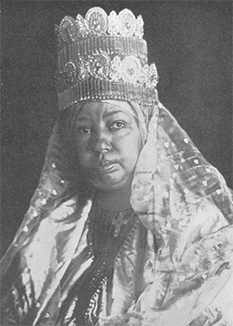
Taytu Betul
Taytu Betul (Amharic: ጣይቱ ብጡል Ṭaytu Bəṭul ; baptised as Wälättä Mikael; 1851 – 11 February 1918) was Empress of Ethiopia from 1889 to 1913 and the third wife of Emperor Menelik II. An influential figure in the anti-colonial resistance during the late 19th-century Scramble for Africa, she, along with her husband, founded the modern Ethiopian capital Addis Ababa in 1886.
According to Raymond Jonas, Taytu Betul (or Taitu) was born in Semien, North Gondar, Ethiopian Empire. Scholarly consensus is that she was born at about 1851.
Taytu's father, Ras Betul Haile Maryam, was part of the ruling family of Semien that claimed to be descendants of the Solomonic Dynasty through Emperor Susenyos I. Taytu's uncle was the Amhara warlord Wube Haile Maryam who governed the Semien and Tigray princedom.
There are no records indicating that Empress Taytu attended school; however, she was taught to read and write in Amharic and Ge'ez. This is a rarity, considering that it was unlikely for women to be educated at the time. It is believed that she was taught diplomacy, politics and economics. Additionally, she understood a language once exclusive to the Ethiopian Orthodox liturgy.
Empress Taytu was known to play the begena, which is a 10-string instrument. Her other activities included playing Senterej, Ethiopian chess, and an interest in writing poetry.
Of Lasta, Yejju and Tigray descent, her family is claimed to have a ruling foothold in the Northern region of the country. Such places include: Semien, Begemeder, Lasta, Yejju, Wello and Tigray. Her aristocratic lineage dates back to 1607–32, descending from the daughter of Emperor Susneyos. Her great-grandfather, Ras Gebre of Simien, ruled for 44 years during the period known as the Zemene Mesafint, or the "Era of the Princes". His fame was acknowledged through two measures. He was responsible for making the communities west of Gondar pay taxes in gold, as well as treating his subjects so well – providing an ample amount of food and drink so that they no longer needed to farm to sustain themselves. Her grandfather, Dejazmach Haile Maryam Gebre, also held a respected title. He governed Simien, where his children Wube, Betul and Merso were born. Additionally, her uncle Degazmach Wube followed in the family's footsteps by also acquiring a high position in the region. As the half-brother of Taytu's father, Degazmach Wube was responsible for ruling the Tigray province. Taytu had two brothers (Ras Welle Betul & Temru Betul) and two sisters.
In her fourth and final marriage, Taytu Betul married King Menelik of Shewa, who would later become Emperor of Ethiopia.
Taytu is acknowledged to have wielded considerable political power both before and after she and Menelik were crowned Emperor and Empress in 1889. She led the conservative faction at court that resisted the modernists and progressives who wanted to develop Ethiopia along western lines and bring modernity to the country. According to the historians, she was always consulted by the Emperor prior to making important decisions. Thus, Empress Taytu was a key player in the conflict over the Treaty of Wuchale with Italy, which she tore up. Empress Taytu was the first to motivate the hesitant Emperor and other men to stand up against the Italians. Deeply suspicious of European intentions towards Ethiopia, she was a key player in the conflict over the Treaty of Wuchale with Italy, in which the Italian version made Ethiopia an Italian protectorate, while the Amharic version did not do so. The Empress held a hard line against the Italians, and when talks eventually broke down, and Italy invaded the Empire from its Eritrean colony, she marched north with the Emperor and the Imperial Army, commanding a force of cannoneers at the historic Battle of Adwa that resulted in a humiliating defeat for Italy in March 1896. This victory was the most significant of any African army battling European colonialism. Menelik II and Taytu Betul were temporarily in possession of 4,000 prisoners of war. Menelik, who often prevaricated and postponed unpleasant decisions by answering "Yes, tomorrow" (Ishi, nega), found it useful to have his wife be in a powerful enough position to say "Absolutely not" (Imbi) to people and issues he just did not want to personally offend or refuse.
Hub AI
Taytu Betul AI simulator
(@Taytu Betul_simulator)
Taytu Betul
Taytu Betul (Amharic: ጣይቱ ብጡል Ṭaytu Bəṭul ; baptised as Wälättä Mikael; 1851 – 11 February 1918) was Empress of Ethiopia from 1889 to 1913 and the third wife of Emperor Menelik II. An influential figure in the anti-colonial resistance during the late 19th-century Scramble for Africa, she, along with her husband, founded the modern Ethiopian capital Addis Ababa in 1886.
According to Raymond Jonas, Taytu Betul (or Taitu) was born in Semien, North Gondar, Ethiopian Empire. Scholarly consensus is that she was born at about 1851.
Taytu's father, Ras Betul Haile Maryam, was part of the ruling family of Semien that claimed to be descendants of the Solomonic Dynasty through Emperor Susenyos I. Taytu's uncle was the Amhara warlord Wube Haile Maryam who governed the Semien and Tigray princedom.
There are no records indicating that Empress Taytu attended school; however, she was taught to read and write in Amharic and Ge'ez. This is a rarity, considering that it was unlikely for women to be educated at the time. It is believed that she was taught diplomacy, politics and economics. Additionally, she understood a language once exclusive to the Ethiopian Orthodox liturgy.
Empress Taytu was known to play the begena, which is a 10-string instrument. Her other activities included playing Senterej, Ethiopian chess, and an interest in writing poetry.
Of Lasta, Yejju and Tigray descent, her family is claimed to have a ruling foothold in the Northern region of the country. Such places include: Semien, Begemeder, Lasta, Yejju, Wello and Tigray. Her aristocratic lineage dates back to 1607–32, descending from the daughter of Emperor Susneyos. Her great-grandfather, Ras Gebre of Simien, ruled for 44 years during the period known as the Zemene Mesafint, or the "Era of the Princes". His fame was acknowledged through two measures. He was responsible for making the communities west of Gondar pay taxes in gold, as well as treating his subjects so well – providing an ample amount of food and drink so that they no longer needed to farm to sustain themselves. Her grandfather, Dejazmach Haile Maryam Gebre, also held a respected title. He governed Simien, where his children Wube, Betul and Merso were born. Additionally, her uncle Degazmach Wube followed in the family's footsteps by also acquiring a high position in the region. As the half-brother of Taytu's father, Degazmach Wube was responsible for ruling the Tigray province. Taytu had two brothers (Ras Welle Betul & Temru Betul) and two sisters.
In her fourth and final marriage, Taytu Betul married King Menelik of Shewa, who would later become Emperor of Ethiopia.
Taytu is acknowledged to have wielded considerable political power both before and after she and Menelik were crowned Emperor and Empress in 1889. She led the conservative faction at court that resisted the modernists and progressives who wanted to develop Ethiopia along western lines and bring modernity to the country. According to the historians, she was always consulted by the Emperor prior to making important decisions. Thus, Empress Taytu was a key player in the conflict over the Treaty of Wuchale with Italy, which she tore up. Empress Taytu was the first to motivate the hesitant Emperor and other men to stand up against the Italians. Deeply suspicious of European intentions towards Ethiopia, she was a key player in the conflict over the Treaty of Wuchale with Italy, in which the Italian version made Ethiopia an Italian protectorate, while the Amharic version did not do so. The Empress held a hard line against the Italians, and when talks eventually broke down, and Italy invaded the Empire from its Eritrean colony, she marched north with the Emperor and the Imperial Army, commanding a force of cannoneers at the historic Battle of Adwa that resulted in a humiliating defeat for Italy in March 1896. This victory was the most significant of any African army battling European colonialism. Menelik II and Taytu Betul were temporarily in possession of 4,000 prisoners of war. Menelik, who often prevaricated and postponed unpleasant decisions by answering "Yes, tomorrow" (Ishi, nega), found it useful to have his wife be in a powerful enough position to say "Absolutely not" (Imbi) to people and issues he just did not want to personally offend or refuse.