



Community hub
Recent from talks
Knowledge base stats:
Talk channels stats:
Members stats:
Technical Air Intelligence Unit
Technical Air Intelligence Units (TAIU) were joint Allied military intelligence units formed during World War II to recover Japanese aircraft to obtain data regarding their technical and tactical capabilities.
The first such unit, known later as Technical Air Intelligence Unit–South West Pacific (TAIU–SWPA), was formed in November 1942 by the United States Navy (USN), United States Army Air Forces (USAAF) and Royal Australian Air Force (RAAF) at Eagle Farm Airbase, Brisbane, Australia, in November 1942.
During 1943–44, three other TAIUs were formed in the other Allied theatres of the Pacific War.
A proposed joint U.S. Army-U.S. Navy research unit in the continental United States was never established, as neither service was prepared to work with the other. Some Japanese aircraft were tested in the US, at various bases, by pilots from the Naval Air Test Center, the USAAF Test Training Unit (which was established with the assistance of RAF technical intelligence units in Europe) and the National Advisory Committee for Aeronautics.
Crashed and captured aircraft were located, identified, and evaluated (often in or near the front lines), before being recovered for further tests. Aircraft that were not too badly damaged were rebuilt for test flights that revealed vulnerabilities that could be exploited. Examination of the materials used in the construction of aircraft allowed the Allies to analyse Japanese war production. The unit also absorbed a small team who developed the code name system for Japanese aircraft, and produced aircraft recognition charts and photographs.
After the attack on Pearl Harbor, several shot down aircraft were recovered from Hawaii and examined by the Naval Air Test Center and the USAAF Test Training Unit, who completed their own separate studies. A Mitsubishi A6M "Zero" of the Imperial Japanese Navy Air Service made a forced landing in June 1942 on Akutan Island, off Alaska. The aircraft (known later as the "Akutan Zero") was recovered by the USN and shipped to NAS North Island, California, where it was repaired and made a number of test flights to determine its performance and capabilities.
In late 1942, the Australian Army captured lightly damaged or incomplete examples of the Nakajima Ki-43 Hayabusa ("Oscar") – the main fighter used by the Imperial Japanese Army Air Force during the war – in Papua New Guinea. The Ki-43s were discovered nearly intact at Buna Airfield, after the Battle of Buna–Gona, and were shipped to Australia for examination.
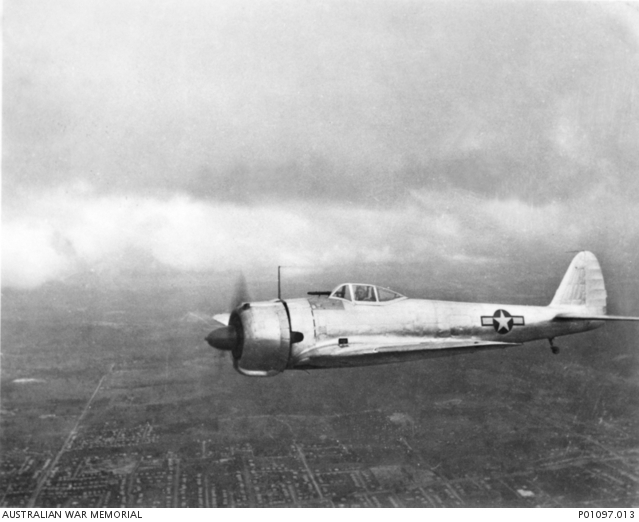
In order to consolidate and co-ordinate these different operations, the Technical Air Intelligence Unit was formed, based in Hangar 7 at the RAAF/USAAF Eagle Farm Airbase, in Brisbane, Australia, during November 1942. By early 1943 an "Oscar" had been built using parts from five different aircraft. Test flights included a mock dogfight against a Spitfire V. It was concluded that the "Oscar" was superior to the Spitfire below 20,000 feet. In late 1943 the aircraft was shipped to the United States aboard the escort carrier Copahee, and sent to Wright Field where it was flown and evaluated.
Hub AI
Technical Air Intelligence Unit AI simulator
(@Technical Air Intelligence Unit_simulator)
Technical Air Intelligence Unit
Technical Air Intelligence Units (TAIU) were joint Allied military intelligence units formed during World War II to recover Japanese aircraft to obtain data regarding their technical and tactical capabilities.
The first such unit, known later as Technical Air Intelligence Unit–South West Pacific (TAIU–SWPA), was formed in November 1942 by the United States Navy (USN), United States Army Air Forces (USAAF) and Royal Australian Air Force (RAAF) at Eagle Farm Airbase, Brisbane, Australia, in November 1942.
During 1943–44, three other TAIUs were formed in the other Allied theatres of the Pacific War.
A proposed joint U.S. Army-U.S. Navy research unit in the continental United States was never established, as neither service was prepared to work with the other. Some Japanese aircraft were tested in the US, at various bases, by pilots from the Naval Air Test Center, the USAAF Test Training Unit (which was established with the assistance of RAF technical intelligence units in Europe) and the National Advisory Committee for Aeronautics.
Crashed and captured aircraft were located, identified, and evaluated (often in or near the front lines), before being recovered for further tests. Aircraft that were not too badly damaged were rebuilt for test flights that revealed vulnerabilities that could be exploited. Examination of the materials used in the construction of aircraft allowed the Allies to analyse Japanese war production. The unit also absorbed a small team who developed the code name system for Japanese aircraft, and produced aircraft recognition charts and photographs.
After the attack on Pearl Harbor, several shot down aircraft were recovered from Hawaii and examined by the Naval Air Test Center and the USAAF Test Training Unit, who completed their own separate studies. A Mitsubishi A6M "Zero" of the Imperial Japanese Navy Air Service made a forced landing in June 1942 on Akutan Island, off Alaska. The aircraft (known later as the "Akutan Zero") was recovered by the USN and shipped to NAS North Island, California, where it was repaired and made a number of test flights to determine its performance and capabilities.
In late 1942, the Australian Army captured lightly damaged or incomplete examples of the Nakajima Ki-43 Hayabusa ("Oscar") – the main fighter used by the Imperial Japanese Army Air Force during the war – in Papua New Guinea. The Ki-43s were discovered nearly intact at Buna Airfield, after the Battle of Buna–Gona, and were shipped to Australia for examination.
In order to consolidate and co-ordinate these different operations, the Technical Air Intelligence Unit was formed, based in Hangar 7 at the RAAF/USAAF Eagle Farm Airbase, in Brisbane, Australia, during November 1942. By early 1943 an "Oscar" had been built using parts from five different aircraft. Test flights included a mock dogfight against a Spitfire V. It was concluded that the "Oscar" was superior to the Spitfire below 20,000 feet. In late 1943 the aircraft was shipped to the United States aboard the escort carrier Copahee, and sent to Wright Field where it was flown and evaluated.