
Recent from talks
Tecumseh
Knowledge base stats:
Talk channels stats:
Members stats:
Tecumseh
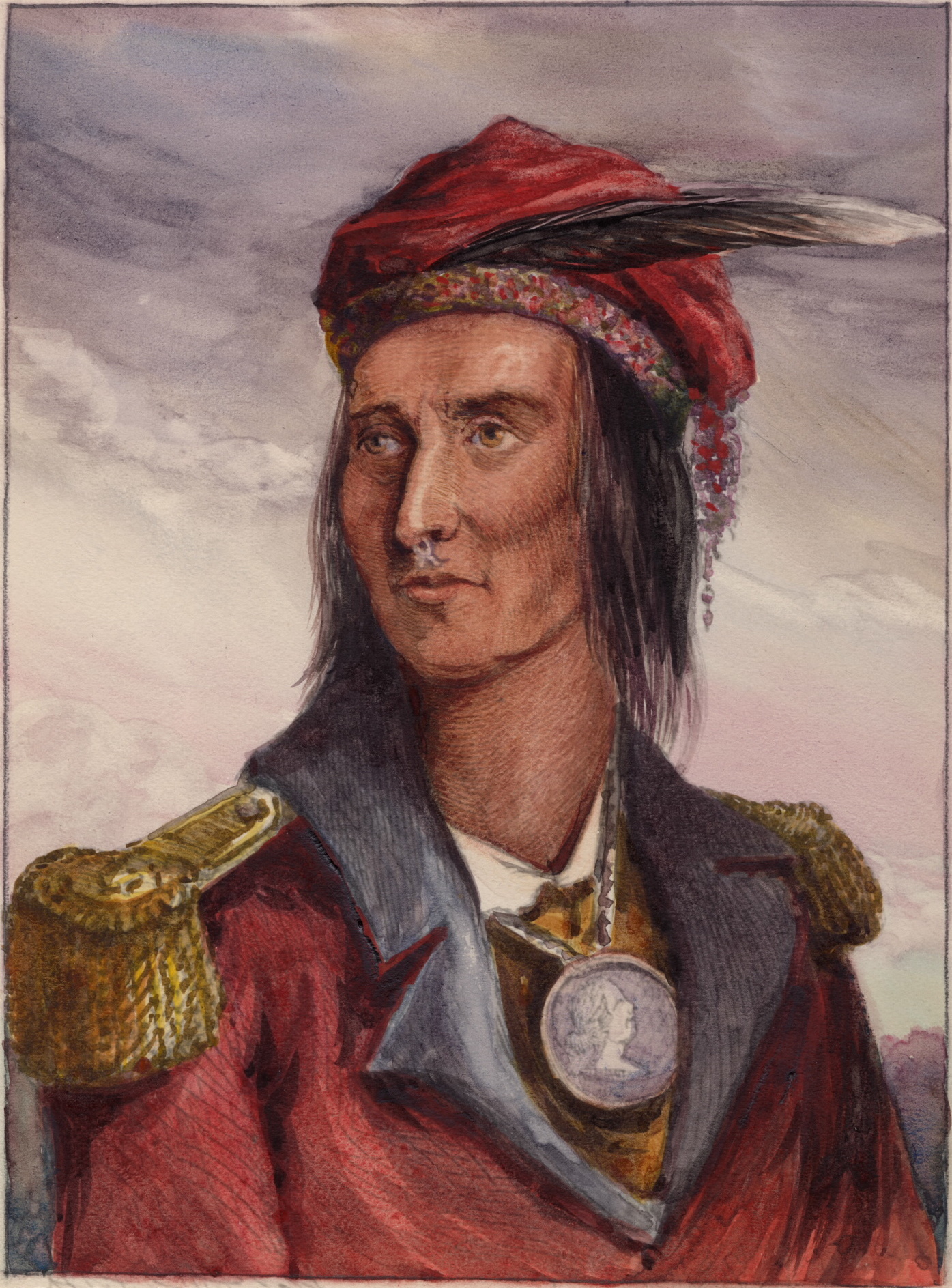
Tecumseh (/tɪˈkʌmsə, -si/ tih-KUM-sə, -see; March 9, 1768 – October 5, 1813) was a Shawnee chief and warrior who promoted resistance to the expansion of the United States onto Native American lands. A persuasive orator, Tecumseh traveled widely, forming a Native American confederacy and promoting intertribal unity. Even though his efforts to unite Native Americans ended with his death in battle during the War of 1812, he became a folk hero in American, Indigenous, and Canadian popular history.
Tecumseh was born in what is now Ohio at a time when the far-flung Shawnees were reuniting in their Ohio Country homeland. During his childhood, the Shawnees lost territory to the expanding American colonies in a series of border conflicts. Tecumseh's father was killed in the 1774 Battle of Point Pleasant. Tecumseh was thereafter mentored by his older brother Cheeseekau, a noted war chief who died fighting Americans in 1792. As a young war leader, Tecumseh joined Shawnee Chief Blue Jacket's armed struggle against further American encroachment, which ended in defeat at the Battle of Fallen Timbers in 1794 and with the loss of most of Ohio in the 1795 Treaty of Greenville.
In 1805, Tecumseh's younger brother Tenskwatawa, who came to be known as the Shawnee Prophet, founded a religious movement that called upon Native Americans to reject European influences and return to a more traditional lifestyle. In 1808, Tecumseh and Tenskwatawa established Prophetstown, a village in present-day Indiana, that grew into a large, multi-tribal community. Tecumseh traveled constantly, spreading the Prophet's message and eclipsing his brother in prominence. Tecumseh proclaimed that Native Americans owned their lands in common and urged tribes not to cede more territory unless all agreed. His message alarmed American leaders as well as Native leaders who sought accommodation with the United States. In 1811, when Tecumseh was in the South recruiting allies, Americans under William Henry Harrison defeated Tenskwatawa at the Battle of Tippecanoe and destroyed Prophetstown.
In the War of 1812, Tecumseh joined his cause with the British, recruited warriors, and helped capture Detroit in August 1812. The following year he led an unsuccessful campaign against the United States in Ohio and Indiana. When U.S. naval forces took control of Lake Erie in 1813, Tecumseh reluctantly retreated with the British into Upper Canada, where American troops led by Richard Mentor Johnson engaged them at the Battle of the Thames on October 5, 1813, in which Tecumseh was killed. His death caused his confederacy to collapse. The lands he had fought to defend were eventually ceded to the U.S. government. His legacy as one of the most celebrated Native Americans in history grew in the years after his death, although details of his life have often been obscured by mythology.
Tecumseh was born in Shawnee territory in what is now Ohio between 1764 and 1771. The best evidence suggests a birthdate of March 9, 1768.
The Shawnee pronunciation of his name has traditionally been rendered by non-Shawnee sources as "Tecumthé". He was born into the Panther clan of the Kispoko division of the Shawnee tribe. Like most Shawnees, his name indicated his clan: translations of his name from the Shawnee language include "I Cross the Way", and "Shooting Star", references to a meteor associated with the Panther clan.
Later stories claimed that Tecumseh was named after a shooting star that appeared at his birth, although his father and most of his siblings, as members of the Panther clan, were named after the same meteor.
Tecumseh was likely born in the Shawnee town of Chillicothe, in the Scioto River valley, near present-day Chillicothe, Ohio, or in a nearby Kispoko village. Tecumseh's father, Puckeshinwau, was a Shawnee war chief of the Kispoko division. Tecumseh's mother, Methoataaskee, probably belonged to the Pekowi division and the Turtle clan, although some traditions maintain that she was Muscogee. His mother may have been a blood relative of William Weatherford. Tecumseh was the fifth of eight children. His parents met and married in what is now Alabama, where many Shawnees had settled after being driven out of the Ohio Country by the Iroquois in the 17th-century Beaver Wars. Around 1759, Puckeshinwau and Methoataaskee moved to the Ohio Country as part of a Shawnee effort to reunite in their traditional homeland.
Hub AI
Tecumseh AI simulator
(@Tecumseh_simulator)
Tecumseh
Tecumseh (/tɪˈkʌmsə, -si/ tih-KUM-sə, -see; March 9, 1768 – October 5, 1813) was a Shawnee chief and warrior who promoted resistance to the expansion of the United States onto Native American lands. A persuasive orator, Tecumseh traveled widely, forming a Native American confederacy and promoting intertribal unity. Even though his efforts to unite Native Americans ended with his death in battle during the War of 1812, he became a folk hero in American, Indigenous, and Canadian popular history.
Tecumseh was born in what is now Ohio at a time when the far-flung Shawnees were reuniting in their Ohio Country homeland. During his childhood, the Shawnees lost territory to the expanding American colonies in a series of border conflicts. Tecumseh's father was killed in the 1774 Battle of Point Pleasant. Tecumseh was thereafter mentored by his older brother Cheeseekau, a noted war chief who died fighting Americans in 1792. As a young war leader, Tecumseh joined Shawnee Chief Blue Jacket's armed struggle against further American encroachment, which ended in defeat at the Battle of Fallen Timbers in 1794 and with the loss of most of Ohio in the 1795 Treaty of Greenville.
In 1805, Tecumseh's younger brother Tenskwatawa, who came to be known as the Shawnee Prophet, founded a religious movement that called upon Native Americans to reject European influences and return to a more traditional lifestyle. In 1808, Tecumseh and Tenskwatawa established Prophetstown, a village in present-day Indiana, that grew into a large, multi-tribal community. Tecumseh traveled constantly, spreading the Prophet's message and eclipsing his brother in prominence. Tecumseh proclaimed that Native Americans owned their lands in common and urged tribes not to cede more territory unless all agreed. His message alarmed American leaders as well as Native leaders who sought accommodation with the United States. In 1811, when Tecumseh was in the South recruiting allies, Americans under William Henry Harrison defeated Tenskwatawa at the Battle of Tippecanoe and destroyed Prophetstown.
In the War of 1812, Tecumseh joined his cause with the British, recruited warriors, and helped capture Detroit in August 1812. The following year he led an unsuccessful campaign against the United States in Ohio and Indiana. When U.S. naval forces took control of Lake Erie in 1813, Tecumseh reluctantly retreated with the British into Upper Canada, where American troops led by Richard Mentor Johnson engaged them at the Battle of the Thames on October 5, 1813, in which Tecumseh was killed. His death caused his confederacy to collapse. The lands he had fought to defend were eventually ceded to the U.S. government. His legacy as one of the most celebrated Native Americans in history grew in the years after his death, although details of his life have often been obscured by mythology.
Tecumseh was born in Shawnee territory in what is now Ohio between 1764 and 1771. The best evidence suggests a birthdate of March 9, 1768.
The Shawnee pronunciation of his name has traditionally been rendered by non-Shawnee sources as "Tecumthé". He was born into the Panther clan of the Kispoko division of the Shawnee tribe. Like most Shawnees, his name indicated his clan: translations of his name from the Shawnee language include "I Cross the Way", and "Shooting Star", references to a meteor associated with the Panther clan.
Later stories claimed that Tecumseh was named after a shooting star that appeared at his birth, although his father and most of his siblings, as members of the Panther clan, were named after the same meteor.
Tecumseh was likely born in the Shawnee town of Chillicothe, in the Scioto River valley, near present-day Chillicothe, Ohio, or in a nearby Kispoko village. Tecumseh's father, Puckeshinwau, was a Shawnee war chief of the Kispoko division. Tecumseh's mother, Methoataaskee, probably belonged to the Pekowi division and the Turtle clan, although some traditions maintain that she was Muscogee. His mother may have been a blood relative of William Weatherford. Tecumseh was the fifth of eight children. His parents met and married in what is now Alabama, where many Shawnees had settled after being driven out of the Ohio Country by the Iroquois in the 17th-century Beaver Wars. Around 1759, Puckeshinwau and Methoataaskee moved to the Ohio Country as part of a Shawnee effort to reunite in their traditional homeland.
Recent media