



Community hub
Recent from talks
Knowledge base stats:
Talk channels stats:
Members stats:
Ohio Country
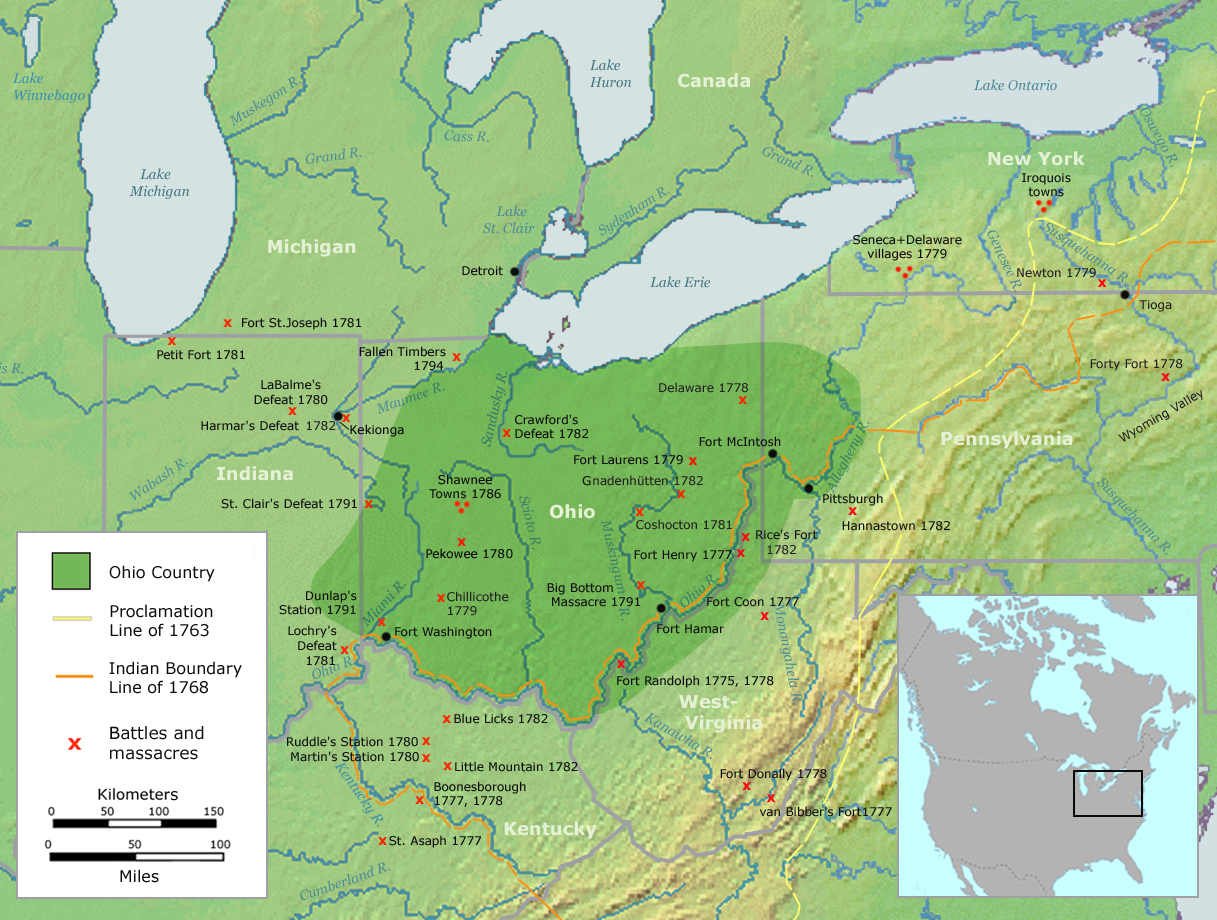
The Ohio Country (Ohio Territory, Ohio Valley) was a loosely defined region of colonial North America west of the Appalachian Mountains and south of Lake Erie.
Control of the territory and the region's fur trade was disputed in the 17th century by the Iroquois, Huron, Algonquin, other Native American tribes, and France. New France claimed this area as part of the administrative district of La Louisiane. France and Britain fought the French and Indian War over this area in the mid-18th century as the North American front of their Seven Years' War (1756–1763). Following the British victory, France ceded its territory east of the Mississippi River to the British Empire in the 1763 Treaty of Paris.
During the following decades, several minor frontier wars, including Pontiac's Rebellion and Lord Dunmore's War, were fought in the territory. In 1783, the Ohio Country became unorganized U.S. territory under the Treaty of Paris that officially ended the American Revolutionary War and became one of the first American frontier regions of the United States. Several of the original U.S. states had overlapping claims to portions of it, based on historical royal and colonial charters. The states' claims were largely extinguished after negotiations with the federal government by 1787, and it became part of the larger, organized Territory Northwest of the River Ohio. Most of the former areas north-west of the Ohio River were eventually organized as the state of Ohio, admitted to the Union in 1803.
In the 17th century, the area north of the Ohio River was occupied by the Algonquian-speaking Shawnee and some Siouan language-speaking tribes, such as the Omaha and Ponca. Around 1660, during a conflict known as the Beaver Wars, the Iroquois and allied tribes seized control of the Ohio Country, driving out the Shawnee and Siouan peoples. Those tribes mostly moved further northwest and west, with several eventually settling west of the Mississippi River. In the east, the Iroquois (or Haudenosaunee) conquered and absorbed the Erie (who also spoke an Iroquoian language) during this time. The Ohio Country, however, remained largely uninhabited for decades, used primarily as a hunting ground by the Iroquois peoples.
In the 1720s, a number of Native American groups began to migrate into the Ohio Country from the east, driven by pressure from encroaching European colonists. By 1724, Delaware Indians had established the village of Kittanning on the Allegheny River in present-day western Pennsylvania. With them came those Shawnee who had historically expanded further to the east. Other eastern bands of the scattered Shawnee tribe began to return to the Ohio Country in the decades that followed. A number of Seneca and other Iroquois peoples also migrated to the Ohio Country, moving away from the Anglo-French rivalries and warfare south of Lake Ontario. The Seneca were the westernmost of the original Five Nations of the Iroquois centered in western New York. In 1722, the Tuscarora, an Iroquoian-speaking tribe from the Carolinas, completed a migration to the area and were allowed to settle near the lands of the Oneida. They were considered cousins to the Iroquois and became the sixth nation in the confederacy.
In the late 1740s and the second half of the 18th century, the British and French angled for control of the territory. The English intended to gain control of the area by sheer number of settlers on the ground. In 1749, The Crown through the government of the Colony of Virginia granted the Ohio Company a beneficial deal on this territory on the condition that it be settled by colonists from the Thirteen Colonies.
With the arrival of Europeans to America, both Great Britain and France had claimed the territory and sent fur traders into the area to do business with the Ohio Country Indians. The Iroquois League also claimed the region by right of conquest. The rivalry among the two European nations, the Iroquois nations, and the Ohio valley Indian tribes for control of the region played an important part in the French and Indian War that lasted from 1754 through 1760. Having initially remained neutral, eventually the Ohio Country Indians largely sided with the French who were more interested in hunting in the region and were not actively settling the area as was their British colonial rivals. Armed with supplies and guns from the French, the Indians launched raids against their enemies via the Kittanning Path east of the Alleghenies. After they destroyed Fort Granville in the summer of 1756, Pennsylvania's Proprietary Governor John Penn ordered Captain John Armstrong to destroy the Shawnee villages west of the Alleghenies, hoping to put an end to their raiding activities. Meanwhile, other British and colonial forces drove the French from Fort Duquesne. They built Fort Pitt at the confluence of the Allegheny and Monongahela rivers that form the Ohio River. After being defeated by Britain, France ceded their claims to the entire Ohio Country in the 1763 Treaty of Paris. They had done so, however, without consulting their Native American allies who—in many cases—continued the fight against the colonial frontiersmen.
Colonies such as Pennsylvania, Virginia, New York, and Connecticut claimed some of the westward lands as had been granted by their original charters. The area, however, was officially closed to European settlement by the Royal Proclamation of 1763, an attempt to preserve the western lands as territory exclusively set aside for use by Native American peoples. By enacting the treaty, the British Crown no longer recognized prior claims that the colonies made on this territory. On June 22, 1774, Parliament in England passed the Quebec Act, which annexed the region to the Province of Quebec. Colonists in the Thirteen Colonies considered this one of the Intolerable Acts that contributed to the call for American Revolution the following year, which began in earnest the following year, in 1775.
Hub AI
Ohio Country AI simulator
(@Ohio Country_simulator)
Ohio Country
The Ohio Country (Ohio Territory, Ohio Valley) was a loosely defined region of colonial North America west of the Appalachian Mountains and south of Lake Erie.
Control of the territory and the region's fur trade was disputed in the 17th century by the Iroquois, Huron, Algonquin, other Native American tribes, and France. New France claimed this area as part of the administrative district of La Louisiane. France and Britain fought the French and Indian War over this area in the mid-18th century as the North American front of their Seven Years' War (1756–1763). Following the British victory, France ceded its territory east of the Mississippi River to the British Empire in the 1763 Treaty of Paris.
During the following decades, several minor frontier wars, including Pontiac's Rebellion and Lord Dunmore's War, were fought in the territory. In 1783, the Ohio Country became unorganized U.S. territory under the Treaty of Paris that officially ended the American Revolutionary War and became one of the first American frontier regions of the United States. Several of the original U.S. states had overlapping claims to portions of it, based on historical royal and colonial charters. The states' claims were largely extinguished after negotiations with the federal government by 1787, and it became part of the larger, organized Territory Northwest of the River Ohio. Most of the former areas north-west of the Ohio River were eventually organized as the state of Ohio, admitted to the Union in 1803.
In the 17th century, the area north of the Ohio River was occupied by the Algonquian-speaking Shawnee and some Siouan language-speaking tribes, such as the Omaha and Ponca. Around 1660, during a conflict known as the Beaver Wars, the Iroquois and allied tribes seized control of the Ohio Country, driving out the Shawnee and Siouan peoples. Those tribes mostly moved further northwest and west, with several eventually settling west of the Mississippi River. In the east, the Iroquois (or Haudenosaunee) conquered and absorbed the Erie (who also spoke an Iroquoian language) during this time. The Ohio Country, however, remained largely uninhabited for decades, used primarily as a hunting ground by the Iroquois peoples.
In the 1720s, a number of Native American groups began to migrate into the Ohio Country from the east, driven by pressure from encroaching European colonists. By 1724, Delaware Indians had established the village of Kittanning on the Allegheny River in present-day western Pennsylvania. With them came those Shawnee who had historically expanded further to the east. Other eastern bands of the scattered Shawnee tribe began to return to the Ohio Country in the decades that followed. A number of Seneca and other Iroquois peoples also migrated to the Ohio Country, moving away from the Anglo-French rivalries and warfare south of Lake Ontario. The Seneca were the westernmost of the original Five Nations of the Iroquois centered in western New York. In 1722, the Tuscarora, an Iroquoian-speaking tribe from the Carolinas, completed a migration to the area and were allowed to settle near the lands of the Oneida. They were considered cousins to the Iroquois and became the sixth nation in the confederacy.
In the late 1740s and the second half of the 18th century, the British and French angled for control of the territory. The English intended to gain control of the area by sheer number of settlers on the ground. In 1749, The Crown through the government of the Colony of Virginia granted the Ohio Company a beneficial deal on this territory on the condition that it be settled by colonists from the Thirteen Colonies.
With the arrival of Europeans to America, both Great Britain and France had claimed the territory and sent fur traders into the area to do business with the Ohio Country Indians. The Iroquois League also claimed the region by right of conquest. The rivalry among the two European nations, the Iroquois nations, and the Ohio valley Indian tribes for control of the region played an important part in the French and Indian War that lasted from 1754 through 1760. Having initially remained neutral, eventually the Ohio Country Indians largely sided with the French who were more interested in hunting in the region and were not actively settling the area as was their British colonial rivals. Armed with supplies and guns from the French, the Indians launched raids against their enemies via the Kittanning Path east of the Alleghenies. After they destroyed Fort Granville in the summer of 1756, Pennsylvania's Proprietary Governor John Penn ordered Captain John Armstrong to destroy the Shawnee villages west of the Alleghenies, hoping to put an end to their raiding activities. Meanwhile, other British and colonial forces drove the French from Fort Duquesne. They built Fort Pitt at the confluence of the Allegheny and Monongahela rivers that form the Ohio River. After being defeated by Britain, France ceded their claims to the entire Ohio Country in the 1763 Treaty of Paris. They had done so, however, without consulting their Native American allies who—in many cases—continued the fight against the colonial frontiersmen.
Colonies such as Pennsylvania, Virginia, New York, and Connecticut claimed some of the westward lands as had been granted by their original charters. The area, however, was officially closed to European settlement by the Royal Proclamation of 1763, an attempt to preserve the western lands as territory exclusively set aside for use by Native American peoples. By enacting the treaty, the British Crown no longer recognized prior claims that the colonies made on this territory. On June 22, 1774, Parliament in England passed the Quebec Act, which annexed the region to the Province of Quebec. Colonists in the Thirteen Colonies considered this one of the Intolerable Acts that contributed to the call for American Revolution the following year, which began in earnest the following year, in 1775.