
Recent from talks
The Boswell Sisters
Knowledge base stats:
Talk channels stats:
Members stats:
The Boswell Sisters
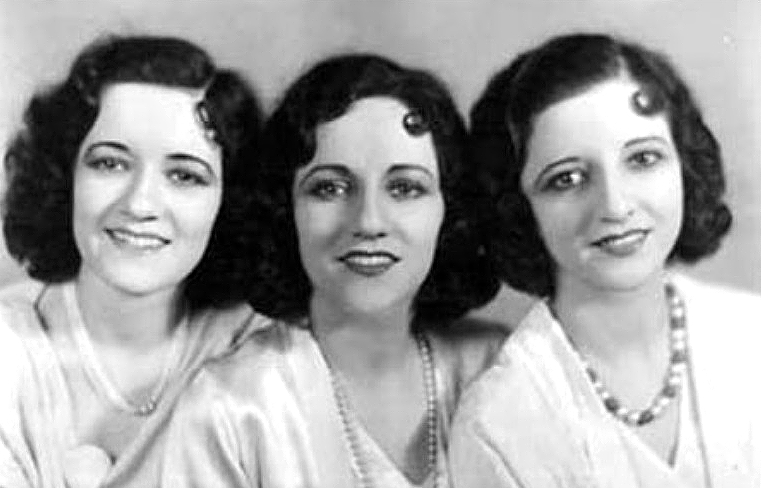
The Boswell Sisters were an American close harmony singing trio of the jazz and swing eras, consisting of three sisters: Martha Boswell (June 9, 1905 – July 2, 1958), Connie Boswell (later spelled "Connee", December 3, 1907 – October 11, 1976), and Helvetia "Vet" Boswell (May 20, 1911 – November 12, 1988). Hailing from uptown New Orleans, the group blended intricate harmonies and song arrangements featuring effects such as scat, instrumental imitation, ‘Boswellese’ gibberish, tempo and meter changes, major/minor juxtaposition, key changes, and incorporation of sections from other songs. They attained national prominence in the United States in the 1930s during the twilight of the Jazz Age and the onset of the Great Depression.
After the trio split in 1936, Connie continued as a solo vocalist in radio, film, and later television for an additional quarter century. The trio's "unique singing style and ground-breaking arrangements fused 'blackness' and 'whiteness' in music," and their collaborations with "the preeminent white swing musicians of their day—the Dorsey Brothers, Glenn Miller, Benny Goodman, Joe Venuti and Eddie Lang, Artie Shaw, Victor Young, Bunny Berigan—had a profound effect on the development of the big band sound in the 1930s." When assessing their legacy, scholars claim the Boswell Sisters "made 'real' jazz commercially viable, destigmatizing the music and opening its appreciation to the wider American public."
Martha and Connie were born in Kansas City, Missouri; Helvetia was born in Birmingham, Alabama. Their parents were manager and former vaudevillian from Indiana Alfred Clyde "A. C." Boswell (1877–1944) and his music-loving wife Meldania George Foore (1871–1947), originally from Missouri. The sisters—along with their 14-year-old brother Clyde Jr. (Clydie)—landed in New Orleans, Louisiana as children in 1914. They were raised in a middle-class family home at 3937 Camp Street. The sisters' parents, their Aunt Mattie, and their Uncle Charlie originally sang as a barbershop quartet. This love of music and singing was passed on to the children.
Martha, Connie, and Vet studied classical piano, cello, and violin, respectively, under the tutelage of Tulane University professor Otto Finck. They performed their classical repertoire in local recitals, often as a trio, but the city's jazz scene swiftly won them over, personally and professionally. "We studied classical music ... and were being prepared for the stage and a concert tour throughout the United States, but the saxophone got us," Martha said in a 1925 interview with the Shreveport Times.
In addition to providing the young Boswells with formal, classical musical education, Meldania Boswell took her children regularly to see the leading African–American performers of the day at the renowned Lyric Theatre. Although Black and White performers and audiences of the period normally were segregated, the Lyric Theatre offered a "Midnight Frolics" program for white-only audiences. There, young Connie heard Mamie Smith, whose "Crazy Blues" (1920), the first blues record performed by an African American, was a hit. Connie later imitated Smith's style on the Boswells' first record "I'm Gonna Cry (Cryin' Blues)," then settled into her own vocal style. Like many middle-class southern households, the Boswell family employed black house servants who, in this musical home environment, were welcome to sing while working, and the girls were known to join in with the singing. Helvetia in particular remembered that their housekeeper, named Aunt Rhea, sang traditional African-American lullabies to her at bedtime. In interviews, the sisters recalled driving around New Orleans listening for new and interesting sounds, which they often found when being outside African–American churches and barrooms of the French Quarter or when listening to street musicians at the French Market. Connie's other primary vocal influence was the legendary Italian opera tenor Enrico Caruso, whom she saw perform at the Athenaeum in New Orleans: "I used to sit and listen and be amazed by his breathing. Then I’d try and do what he was doing. I’d take a long breath and hit a lot of notes."
As their older brother Clydie began breaking away from classical music to study jazz, he introduced his sisters to the syncopated style and to many of the young jazz players in New Orleans. Leon Roppolo (clarinet, guitar), Monk Hazel (drums, cornet), Pinky Vidacovich (clarinet, saxophone), Nappy Lamare (guitar, banjo), Ray Bauduc (tuba, vocals), Dan LeBlanc (tuba), Leon Prima (trumpet), Louis Prima (trumpet, vocals), Wingy Manone (trumpet, vocals), Al Gallodoro (clarinet, saxophone), Chink Martin (bass, tuba, guitar), Santo Pecora (trombone), Raymond Burke (clarinet, saxophone), and Tony Parenti (clarinet, saxophone) were regular guests at the Boswell home. Norman Brownlee and his band were also regular participants in musical evenings at the Boswell home. Reportedly, father A.C. Boswell tried unsuccessfully to limit these visits to just one night per week—with little success. The sisters were particularly influenced by Brownlee's cornetist Emmett Louis Hardy, another friend of Clydie, whose well-documented talent and skill helped shape the sisters' knowledge of jazz harmony, syncopation, and improvisation. Hardy and Clydie both died young and unrecorded, Hardy of tuberculosis at age 22 and Clydie of Spanish flu-related complications at the age of 18.
After becoming interested in jazz, Vet took up the banjo and guitar, and Connie the saxophone and trombone. Martha continued playing the piano but focused on the rhythms and idioms of ragtime and hot jazz.
The sisters came to be well known in New Orleans while in their early teens, making appearances in local theaters and on the emerging medium of radio. By the early 1920s, they were performing regularly at local vaudeville theaters, with an act that combined classical, semi-classical, and jazz styles—though, as their popularity increased, the classics faded into the background.
Hub AI
The Boswell Sisters AI simulator
(@The Boswell Sisters_simulator)
The Boswell Sisters
The Boswell Sisters were an American close harmony singing trio of the jazz and swing eras, consisting of three sisters: Martha Boswell (June 9, 1905 – July 2, 1958), Connie Boswell (later spelled "Connee", December 3, 1907 – October 11, 1976), and Helvetia "Vet" Boswell (May 20, 1911 – November 12, 1988). Hailing from uptown New Orleans, the group blended intricate harmonies and song arrangements featuring effects such as scat, instrumental imitation, ‘Boswellese’ gibberish, tempo and meter changes, major/minor juxtaposition, key changes, and incorporation of sections from other songs. They attained national prominence in the United States in the 1930s during the twilight of the Jazz Age and the onset of the Great Depression.
After the trio split in 1936, Connie continued as a solo vocalist in radio, film, and later television for an additional quarter century. The trio's "unique singing style and ground-breaking arrangements fused 'blackness' and 'whiteness' in music," and their collaborations with "the preeminent white swing musicians of their day—the Dorsey Brothers, Glenn Miller, Benny Goodman, Joe Venuti and Eddie Lang, Artie Shaw, Victor Young, Bunny Berigan—had a profound effect on the development of the big band sound in the 1930s." When assessing their legacy, scholars claim the Boswell Sisters "made 'real' jazz commercially viable, destigmatizing the music and opening its appreciation to the wider American public."
Martha and Connie were born in Kansas City, Missouri; Helvetia was born in Birmingham, Alabama. Their parents were manager and former vaudevillian from Indiana Alfred Clyde "A. C." Boswell (1877–1944) and his music-loving wife Meldania George Foore (1871–1947), originally from Missouri. The sisters—along with their 14-year-old brother Clyde Jr. (Clydie)—landed in New Orleans, Louisiana as children in 1914. They were raised in a middle-class family home at 3937 Camp Street. The sisters' parents, their Aunt Mattie, and their Uncle Charlie originally sang as a barbershop quartet. This love of music and singing was passed on to the children.
Martha, Connie, and Vet studied classical piano, cello, and violin, respectively, under the tutelage of Tulane University professor Otto Finck. They performed their classical repertoire in local recitals, often as a trio, but the city's jazz scene swiftly won them over, personally and professionally. "We studied classical music ... and were being prepared for the stage and a concert tour throughout the United States, but the saxophone got us," Martha said in a 1925 interview with the Shreveport Times.
In addition to providing the young Boswells with formal, classical musical education, Meldania Boswell took her children regularly to see the leading African–American performers of the day at the renowned Lyric Theatre. Although Black and White performers and audiences of the period normally were segregated, the Lyric Theatre offered a "Midnight Frolics" program for white-only audiences. There, young Connie heard Mamie Smith, whose "Crazy Blues" (1920), the first blues record performed by an African American, was a hit. Connie later imitated Smith's style on the Boswells' first record "I'm Gonna Cry (Cryin' Blues)," then settled into her own vocal style. Like many middle-class southern households, the Boswell family employed black house servants who, in this musical home environment, were welcome to sing while working, and the girls were known to join in with the singing. Helvetia in particular remembered that their housekeeper, named Aunt Rhea, sang traditional African-American lullabies to her at bedtime. In interviews, the sisters recalled driving around New Orleans listening for new and interesting sounds, which they often found when being outside African–American churches and barrooms of the French Quarter or when listening to street musicians at the French Market. Connie's other primary vocal influence was the legendary Italian opera tenor Enrico Caruso, whom she saw perform at the Athenaeum in New Orleans: "I used to sit and listen and be amazed by his breathing. Then I’d try and do what he was doing. I’d take a long breath and hit a lot of notes."
As their older brother Clydie began breaking away from classical music to study jazz, he introduced his sisters to the syncopated style and to many of the young jazz players in New Orleans. Leon Roppolo (clarinet, guitar), Monk Hazel (drums, cornet), Pinky Vidacovich (clarinet, saxophone), Nappy Lamare (guitar, banjo), Ray Bauduc (tuba, vocals), Dan LeBlanc (tuba), Leon Prima (trumpet), Louis Prima (trumpet, vocals), Wingy Manone (trumpet, vocals), Al Gallodoro (clarinet, saxophone), Chink Martin (bass, tuba, guitar), Santo Pecora (trombone), Raymond Burke (clarinet, saxophone), and Tony Parenti (clarinet, saxophone) were regular guests at the Boswell home. Norman Brownlee and his band were also regular participants in musical evenings at the Boswell home. Reportedly, father A.C. Boswell tried unsuccessfully to limit these visits to just one night per week—with little success. The sisters were particularly influenced by Brownlee's cornetist Emmett Louis Hardy, another friend of Clydie, whose well-documented talent and skill helped shape the sisters' knowledge of jazz harmony, syncopation, and improvisation. Hardy and Clydie both died young and unrecorded, Hardy of tuberculosis at age 22 and Clydie of Spanish flu-related complications at the age of 18.
After becoming interested in jazz, Vet took up the banjo and guitar, and Connie the saxophone and trombone. Martha continued playing the piano but focused on the rhythms and idioms of ragtime and hot jazz.
The sisters came to be well known in New Orleans while in their early teens, making appearances in local theaters and on the emerging medium of radio. By the early 1920s, they were performing regularly at local vaudeville theaters, with an act that combined classical, semi-classical, and jazz styles—though, as their popularity increased, the classics faded into the background.
Recent media