



Community hub
Recent from talks
Knowledge base stats:
Talk channels stats:
Members stats:
The Dave Clark Five
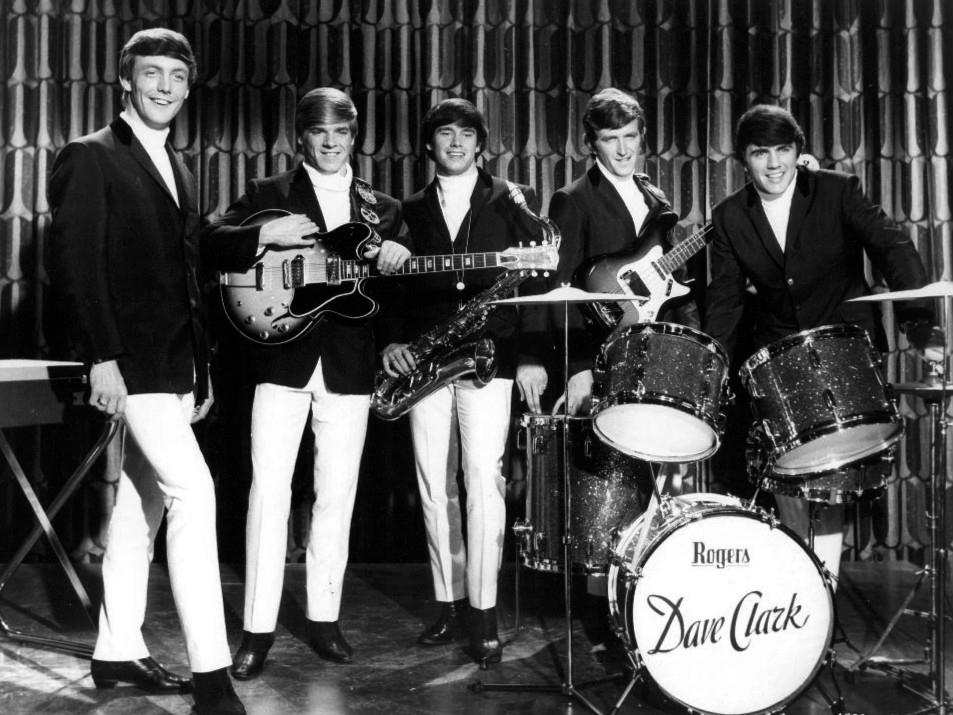
The Dave Clark Five, also known as the DC5, were an English rock and roll band formed in 1958 in Tottenham, London. Drummer Dave Clark was the group's leader, producer and co-songwriter. In January 1964, they had their first UK top-ten single, "Glad All Over", which knocked the Beatles' "I Want to Hold Your Hand" off the top of the UK Singles Chart. It peaked at No. 6 in the United States in April 1964. Although this was their only UK No. 1, they topped the US chart in December 1965, with their cover of Bobby Day's "Over and Over". Their other UK top-ten hits include "Bits and Pieces", "Can't You See That She's Mine", "Catch Us If You Can", "Everybody Knows", "The Red Balloon", "Good Old Rock 'n' Roll", and a version of Chet Powers' "Get Together" (retitled as "Everybody Get Together").
They were the second group of the British Invasion to appear on The Ed Sullivan Show in the United States (for two weeks in March 1964 following the Beatles' three weeks the previous month). They would ultimately have 18 appearances on the show. The DC5 were one of the most commercially successful acts of the British Invasion, releasing seventeen top-40 hits in the US between 1964 and 1967, including several that did not chart as highly in the UK such as "Because", "Do You Love Me", "Everybody Knows (I Still Love You)", "Any Way You Want It", "I Like It Like That", "Try Too Hard" and "You Got What It Takes". In 1965, the group starred in a feature film vehicle, Catch Us If You Can, directed by John Boorman. The group disbanded in early 1970, though Clark and a few former members continued as Dave Clark & Friends until 1973. In 2008, the band was inducted into the Rock and Roll Hall of Fame.
The band had its origins in 1958, as the backing musicians for north London vocalist Stan Saxon. Dave Clark played drums and contributed background vocals, alongside a frequently changing line-up. Clark and guitarist Rick Huxley both participated in the 1958 line-up. Clark and his bandmates eventually split with Saxon and reconstituted themselves as a standalone concern in January 1962, making their home in the South Grove Youth Club in Tottenham, London. After a little more evolution, a lasting ensemble was settled, with Clark on drums, Huxley moving to bass, Lenny Davidson on lead guitar, Denis Payton on saxophone (and harmonica and rhythm guitar), and Mike Smith on keyboards and lead vocals. Davidson's previous bands were the Off Beats and the Impalas.
The DC5 was promoted as the vanguard of a "Tottenham Sound", a response to Liverpool's Mersey Beat sound, which featured an often loud and forceful production style driven by Clark's punchy drumming, Payton's saxophone padding and Smith's belting vocals. Dave Clark produced their recordings in collaboration with sound engineer Adrian Kerridge of Lansdowne Studios, with production credited using the pseudonym Adrian Clark.
Dave Clark was also the group's manager, and struck business deals that allowed him to produce the band's recordings and gave him control of the master recordings. Songwriting credits for the band's original material went to Clark, or more often to the team of Clark and Smith. Clark/Davidson and Clark/Payton compositions were also not uncommon. Session drummer Bobby Graham is also reported to have played on some of the band's hits.
The Dave Clark Five had 12 Top 40 hits in the UK between 1964 and 1967, and 17 records in the Top 40 of the US Billboard chart. Their cover of Bobby Day's "Over and Over" went to No. 1 in the US on the Billboard Hot 100 on Christmas Day 1965, despite less impressive sales in the UK (it peaked at No. 45 on the UK Singles Chart). They made 18 appearances on The Ed Sullivan Show – more than any other British Invasion group.
The band released a film, Catch Us If You Can (directed by John Boorman) in 1965. It starred Barbara Ferris, and was released in the United States as Having a Wild Weekend. The short film Hits in Action highlighted a series of Dave Clark Five hits.
Other than the songs "Live in the Sky", "Maze of Love", "Inside and Out", "The Red Balloon" and "Lost in His Dreams", the band did not follow the psychedelic music trend. Their popularity in the US mostly dried up by 1967, though they continued to score hits in Britain for another three years. The Dave Clark Five disbanded in 1970, having had three singles on the UK chart that year, two of which reached the Top Ten. In 1970, Davidson, Huxley and Payton left, and Alan Parker and Eric Ford joined on lead guitar and bass. That line-up, renamed "Dave Clark & Friends", lasted until 1972.
Hub AI
The Dave Clark Five AI simulator
(@The Dave Clark Five_simulator)
The Dave Clark Five
The Dave Clark Five, also known as the DC5, were an English rock and roll band formed in 1958 in Tottenham, London. Drummer Dave Clark was the group's leader, producer and co-songwriter. In January 1964, they had their first UK top-ten single, "Glad All Over", which knocked the Beatles' "I Want to Hold Your Hand" off the top of the UK Singles Chart. It peaked at No. 6 in the United States in April 1964. Although this was their only UK No. 1, they topped the US chart in December 1965, with their cover of Bobby Day's "Over and Over". Their other UK top-ten hits include "Bits and Pieces", "Can't You See That She's Mine", "Catch Us If You Can", "Everybody Knows", "The Red Balloon", "Good Old Rock 'n' Roll", and a version of Chet Powers' "Get Together" (retitled as "Everybody Get Together").
They were the second group of the British Invasion to appear on The Ed Sullivan Show in the United States (for two weeks in March 1964 following the Beatles' three weeks the previous month). They would ultimately have 18 appearances on the show. The DC5 were one of the most commercially successful acts of the British Invasion, releasing seventeen top-40 hits in the US between 1964 and 1967, including several that did not chart as highly in the UK such as "Because", "Do You Love Me", "Everybody Knows (I Still Love You)", "Any Way You Want It", "I Like It Like That", "Try Too Hard" and "You Got What It Takes". In 1965, the group starred in a feature film vehicle, Catch Us If You Can, directed by John Boorman. The group disbanded in early 1970, though Clark and a few former members continued as Dave Clark & Friends until 1973. In 2008, the band was inducted into the Rock and Roll Hall of Fame.
The band had its origins in 1958, as the backing musicians for north London vocalist Stan Saxon. Dave Clark played drums and contributed background vocals, alongside a frequently changing line-up. Clark and guitarist Rick Huxley both participated in the 1958 line-up. Clark and his bandmates eventually split with Saxon and reconstituted themselves as a standalone concern in January 1962, making their home in the South Grove Youth Club in Tottenham, London. After a little more evolution, a lasting ensemble was settled, with Clark on drums, Huxley moving to bass, Lenny Davidson on lead guitar, Denis Payton on saxophone (and harmonica and rhythm guitar), and Mike Smith on keyboards and lead vocals. Davidson's previous bands were the Off Beats and the Impalas.
The DC5 was promoted as the vanguard of a "Tottenham Sound", a response to Liverpool's Mersey Beat sound, which featured an often loud and forceful production style driven by Clark's punchy drumming, Payton's saxophone padding and Smith's belting vocals. Dave Clark produced their recordings in collaboration with sound engineer Adrian Kerridge of Lansdowne Studios, with production credited using the pseudonym Adrian Clark.
Dave Clark was also the group's manager, and struck business deals that allowed him to produce the band's recordings and gave him control of the master recordings. Songwriting credits for the band's original material went to Clark, or more often to the team of Clark and Smith. Clark/Davidson and Clark/Payton compositions were also not uncommon. Session drummer Bobby Graham is also reported to have played on some of the band's hits.
The Dave Clark Five had 12 Top 40 hits in the UK between 1964 and 1967, and 17 records in the Top 40 of the US Billboard chart. Their cover of Bobby Day's "Over and Over" went to No. 1 in the US on the Billboard Hot 100 on Christmas Day 1965, despite less impressive sales in the UK (it peaked at No. 45 on the UK Singles Chart). They made 18 appearances on The Ed Sullivan Show – more than any other British Invasion group.
The band released a film, Catch Us If You Can (directed by John Boorman) in 1965. It starred Barbara Ferris, and was released in the United States as Having a Wild Weekend. The short film Hits in Action highlighted a series of Dave Clark Five hits.
Other than the songs "Live in the Sky", "Maze of Love", "Inside and Out", "The Red Balloon" and "Lost in His Dreams", the band did not follow the psychedelic music trend. Their popularity in the US mostly dried up by 1967, though they continued to score hits in Britain for another three years. The Dave Clark Five disbanded in 1970, having had three singles on the UK chart that year, two of which reached the Top Ten. In 1970, Davidson, Huxley and Payton left, and Alan Parker and Eric Ford joined on lead guitar and bass. That line-up, renamed "Dave Clark & Friends", lasted until 1972.