



Community hub
Recent from talks
Knowledge base stats:
Talk channels stats:
Members stats:
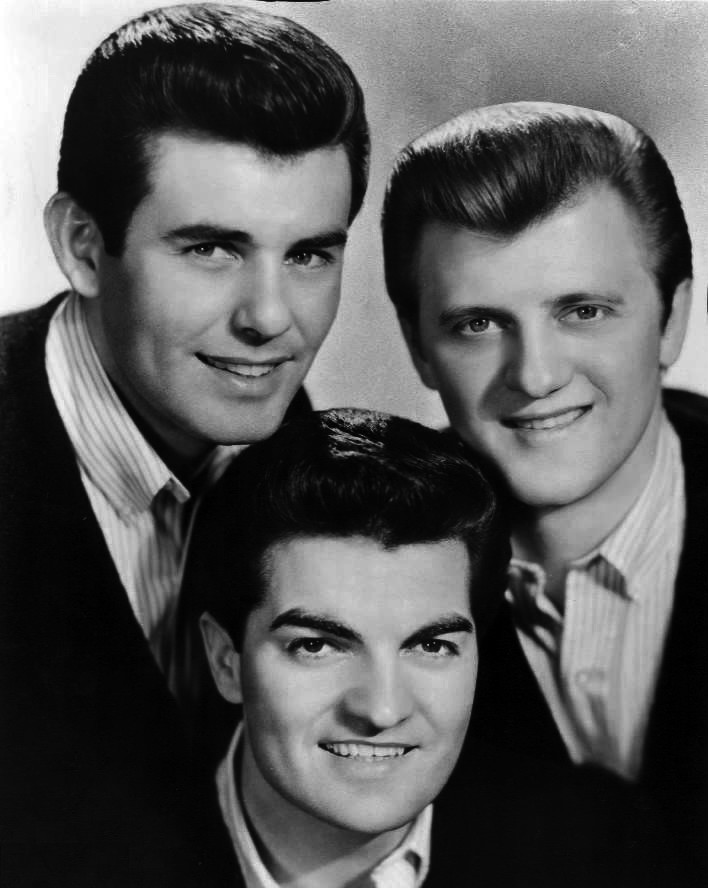
The Lettermen
The Lettermen are an American male pop vocal trio whose trademark is close-harmony pop songs with light arrangements. The group started in 1959. They have had two Top 10 singles (both No. 7), 16 Top 10 singles on the Adult Contemporary chart (including one No. 1), 32 consecutive Billboard chart albums, 11 gold records, and four Grammy nominations.
In 1958, the stage revue Newcomers of 1928 was produced, a nostalgia act which starred 1920s stars Paul Whiteman, Buster Keaton, Rudy Vallée, Harry Richman, and Fifi D'Orsay. The show required three male singers to impersonate The Rhythm Boys, the vocal group that traveled with Whiteman and his orchestra in the late 1920s, and gave Bing Crosby his initial fame. The three singers selected were Mike Barnett, Dick Stewart, and Tony Butala. Jackie Barnett, who was chief comedy writer for the Jimmy Durante TV show, had auditioned the singers, and he decided to name the group "The Lettermen" for the show. Newcomers of 1928 opened on February 28, 1958, at the Desert Inn in Las Vegas, Nevada. They played to sell-out audiences and were held over for many weeks. Continuing with a six-week tryout at the Deauville Hotel in Miami Beach, Florida, the idea continued to be a smash. Barnett and Russell were replaced midway through the run by Gary Clarke and Jerry Paul. When the show ended, Butala landed a job as singer/bass player in a lounge group, "Bill Norvis and the Upstarts", along with Clarke. After a few months, Clarke left the group and was replaced by Jim Pike (November 6, 1936 – June 9, 2019).
Pike and Butala decided to leave the Upstarts and form a new group, although they had not yet decided on a name. Pike envisioned a group where each member was an excellent soloist as well as a great group singer. Pike and Butala joined with Bob Engemann (February 19, 1935 – January 20, 2013), a singer whom Pike had met when he attended Brigham Young University a few years earlier. (Pike and Engemann had come to Los Angeles, California and sung together until Engemann had to go into the California National Guard for six months; Pike then joined Bill Norvis and there met Butala.) The combination of Pike, Engemann, and Butala first recorded in 1960. They secured a recording contract with Warner Bros. Records through Bob Engemann's older brother, Karl Engemann, who was a record producer there; Pike had earlier released a record for him, Lucy D, which was not successful.
As "The Lettermen", Pike, Butala, and Engemann released two singles in 1960 for Warner Bros. The A-sides were "Two Hearts" and "Their Hearts Were Full of Spring". They were not successful. After Warner Bros., Karl Engemann moved on to Capitol Records as President of A&R. He got them out of their contract at Warner Bros. and made an appointment for them to see Nick Venet, a producer at Capitol. The audition was successful in getting them another record contract.
There was another "Lettermen" group in the late 1950s and early 1960s that recorded for Liberty Records (which was a major record label at the time), a five-member R&B group, and their not-so-successful single was called "Hey Big Brain". About that same time, there was a third group called the Lettermen Trio, headed up by Sammy Vandenburg, who also had no record success. But the "Lettermen" of Pike, Engemann, and Butala had the first hit record, so, by law, they were entitled to use the "Lettermen" name exclusively.
The Lettermen were unknown until they signed with Capitol Records in 1961. Their first single for Capitol, "The Way You Look Tonight", succeeded on the Billboard Hot 100 pop chart and climbed to No. 13. Their next, "When I Fall in Love," reached the Top 10 in late 1962 and hit No. 1 on AC. They had several other Top 10 AC hits, such as 1965's "Theme From A Summer Place". In late 1967, Bob Engemann resigned and was replaced by Jim Pike's younger brother, Gary Pike. The hits continued with the grammy-nominated 1968 medley "Goin' Out of My Head"/"Can't Take My Eyes Off You" and "Put Your Head on My Shoulder", plus 1969's "Hurt So Bad", which reached No. 12 and lasted 21 weeks on the Hot 100, second only to the 22 weeks for The Archies' "Sugar, Sugar" within that calendar year. Their 1962 single, "A Song For Young Love" earned them a grammy nomination, and they released their last successful single "Everything Is Good About You" in 1971.
The Lettermen have had two Top 10 singles (both No. 7), 16 Top 10 Adult Contemporary singles, including one Adult Contemporary No. 1, 32 consecutive Billboard Hot 200 charted albums, 11 gold records, four Grammy nominations, an Andy Award, and a Clio Award.
The Lettermen were featured on the TV show Dobie Gillis in the episode "Vocal Boy Makes Good" which originally aired on January 16, 1963. The Lettermen were featured on The Jack Benny Program in the episode "The Lettermen" which originally aired on March 31, 1964. {S14 Ep25} In 1976, Jim Pike left the group because of vocal problems and sold the Lettermen name to Butala. After Gary Pike left the Lettermen in 1981, the Pike brothers, along with Ric de Azevedo sang The Lettermen hits, billed as "Reunion".
Hub AI
The Lettermen AI simulator
(@The Lettermen_simulator)
The Lettermen
The Lettermen are an American male pop vocal trio whose trademark is close-harmony pop songs with light arrangements. The group started in 1959. They have had two Top 10 singles (both No. 7), 16 Top 10 singles on the Adult Contemporary chart (including one No. 1), 32 consecutive Billboard chart albums, 11 gold records, and four Grammy nominations.
In 1958, the stage revue Newcomers of 1928 was produced, a nostalgia act which starred 1920s stars Paul Whiteman, Buster Keaton, Rudy Vallée, Harry Richman, and Fifi D'Orsay. The show required three male singers to impersonate The Rhythm Boys, the vocal group that traveled with Whiteman and his orchestra in the late 1920s, and gave Bing Crosby his initial fame. The three singers selected were Mike Barnett, Dick Stewart, and Tony Butala. Jackie Barnett, who was chief comedy writer for the Jimmy Durante TV show, had auditioned the singers, and he decided to name the group "The Lettermen" for the show. Newcomers of 1928 opened on February 28, 1958, at the Desert Inn in Las Vegas, Nevada. They played to sell-out audiences and were held over for many weeks. Continuing with a six-week tryout at the Deauville Hotel in Miami Beach, Florida, the idea continued to be a smash. Barnett and Russell were replaced midway through the run by Gary Clarke and Jerry Paul. When the show ended, Butala landed a job as singer/bass player in a lounge group, "Bill Norvis and the Upstarts", along with Clarke. After a few months, Clarke left the group and was replaced by Jim Pike (November 6, 1936 – June 9, 2019).
Pike and Butala decided to leave the Upstarts and form a new group, although they had not yet decided on a name. Pike envisioned a group where each member was an excellent soloist as well as a great group singer. Pike and Butala joined with Bob Engemann (February 19, 1935 – January 20, 2013), a singer whom Pike had met when he attended Brigham Young University a few years earlier. (Pike and Engemann had come to Los Angeles, California and sung together until Engemann had to go into the California National Guard for six months; Pike then joined Bill Norvis and there met Butala.) The combination of Pike, Engemann, and Butala first recorded in 1960. They secured a recording contract with Warner Bros. Records through Bob Engemann's older brother, Karl Engemann, who was a record producer there; Pike had earlier released a record for him, Lucy D, which was not successful.
As "The Lettermen", Pike, Butala, and Engemann released two singles in 1960 for Warner Bros. The A-sides were "Two Hearts" and "Their Hearts Were Full of Spring". They were not successful. After Warner Bros., Karl Engemann moved on to Capitol Records as President of A&R. He got them out of their contract at Warner Bros. and made an appointment for them to see Nick Venet, a producer at Capitol. The audition was successful in getting them another record contract.
There was another "Lettermen" group in the late 1950s and early 1960s that recorded for Liberty Records (which was a major record label at the time), a five-member R&B group, and their not-so-successful single was called "Hey Big Brain". About that same time, there was a third group called the Lettermen Trio, headed up by Sammy Vandenburg, who also had no record success. But the "Lettermen" of Pike, Engemann, and Butala had the first hit record, so, by law, they were entitled to use the "Lettermen" name exclusively.
The Lettermen were unknown until they signed with Capitol Records in 1961. Their first single for Capitol, "The Way You Look Tonight", succeeded on the Billboard Hot 100 pop chart and climbed to No. 13. Their next, "When I Fall in Love," reached the Top 10 in late 1962 and hit No. 1 on AC. They had several other Top 10 AC hits, such as 1965's "Theme From A Summer Place". In late 1967, Bob Engemann resigned and was replaced by Jim Pike's younger brother, Gary Pike. The hits continued with the grammy-nominated 1968 medley "Goin' Out of My Head"/"Can't Take My Eyes Off You" and "Put Your Head on My Shoulder", plus 1969's "Hurt So Bad", which reached No. 12 and lasted 21 weeks on the Hot 100, second only to the 22 weeks for The Archies' "Sugar, Sugar" within that calendar year. Their 1962 single, "A Song For Young Love" earned them a grammy nomination, and they released their last successful single "Everything Is Good About You" in 1971.
The Lettermen have had two Top 10 singles (both No. 7), 16 Top 10 Adult Contemporary singles, including one Adult Contemporary No. 1, 32 consecutive Billboard Hot 200 charted albums, 11 gold records, four Grammy nominations, an Andy Award, and a Clio Award.
The Lettermen were featured on the TV show Dobie Gillis in the episode "Vocal Boy Makes Good" which originally aired on January 16, 1963. The Lettermen were featured on The Jack Benny Program in the episode "The Lettermen" which originally aired on March 31, 1964. {S14 Ep25} In 1976, Jim Pike left the group because of vocal problems and sold the Lettermen name to Butala. After Gary Pike left the Lettermen in 1981, the Pike brothers, along with Ric de Azevedo sang The Lettermen hits, billed as "Reunion".