
Recent from talks
The Ronettes
Knowledge base stats:
Talk channels stats:
Members stats:
The Ronettes
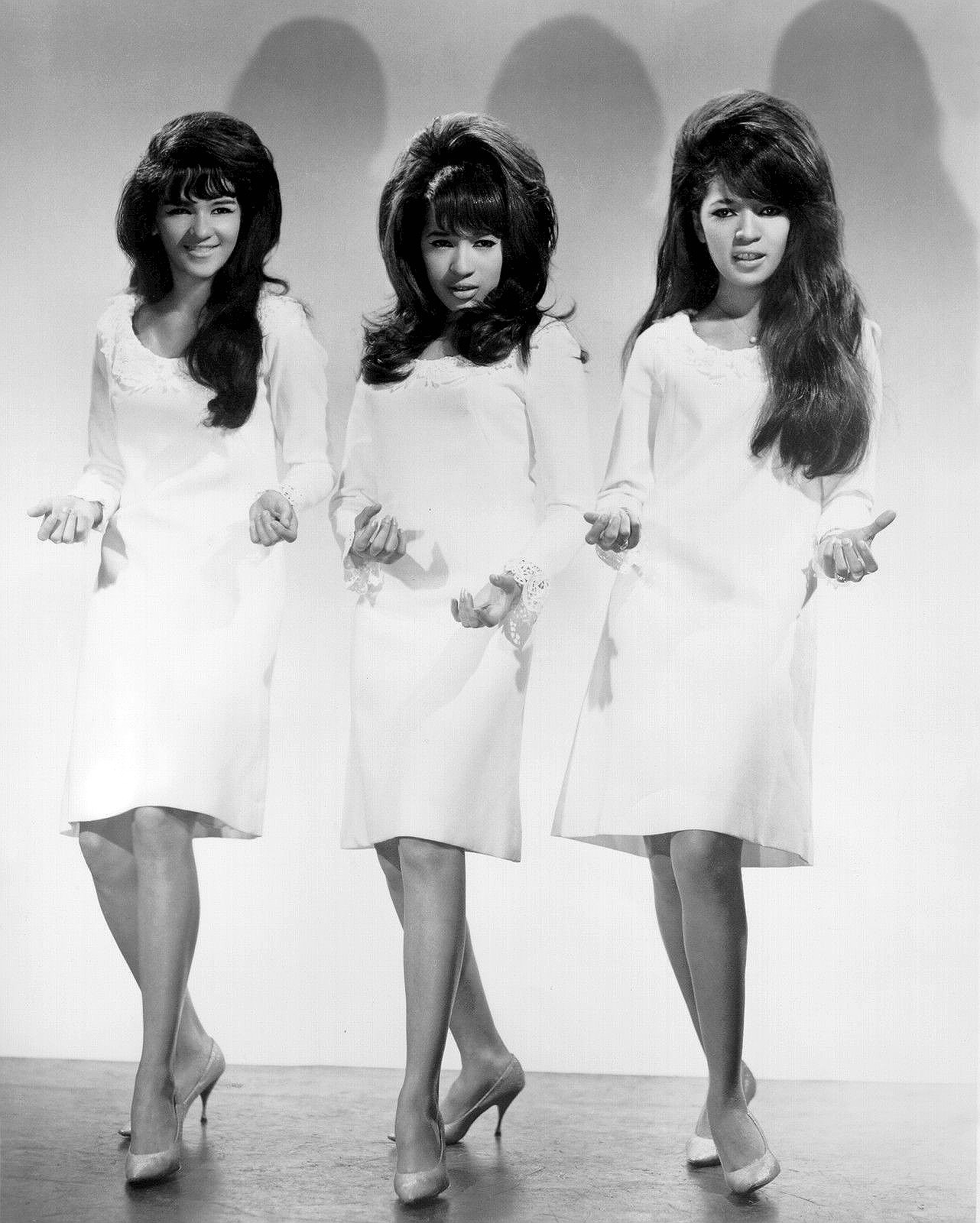
The Ronettes (/ˌrɒnˈnɛts/ ron-NETS) were an American girl group from Washington Heights, Manhattan, New York City. The group consisted of the lead singer Veronica Bennett (later known as Ronnie Spector), her older sister Estelle Bennett, and their cousin Nedra Talley. They had sung together since they were teenagers, then known as "The Darling Sisters". Signed first by Colpix Records in 1961, they moved to Phil Spector's Philles Records in March 1963 and changed their name to "The Ronettes".
The Ronettes placed nine songs on the Billboard Hot 100, six of which became Top 40 hits. Among their hit songs are "Be My Baby", which peaked at No. 2, their only contemporary top 10 hit, "Baby, I Love You", "(The Best Part of) Breakin' Up" and "Walking in the Rain". In 1964, the group released their only studio album, Presenting the Fabulous Ronettes featuring Veronica. That year, the Rolling Stones were their opening act when they toured the UK. The Ronettes opened for the Beatles on their 1966 US tour, becoming the only girl group to tour with them, before splitting up in 1967. In the 1970s, the group was briefly revived as Ronnie Spector and the Ronettes. Veronica Bennett married Phil Spector in 1968.
Their song "Be My Baby" was inducted into the Grammy Hall of Fame in 1999. Rolling Stone ranked their album Presenting the Fabulous Ronettes Featuring Veronica No. 422 on its list of The 500 Greatest Albums of All Time. The Ronettes were inducted into the Vocal Group Hall of Fame in 2004, and into the Rock and Roll Hall of Fame in 2007. The group also holds the record for the longest gap between top-ten hits in Billboard history, just over 58 years. With the death of Nedra Talley in April 2026, all original members of the group have died.
The Ronettes began as a family act where the girls grew up in Washington Heights, Manhattan. According to Nedra Talley, they started singing during childhood visits to their grandmother's home. "Estelle and Veronica are sisters," she said in a later interview. "I'm their cousin. Our mothers are sisters. We came out of a family that, on Saturday nights, home for us was at our grandmother's, entertaining each other." The Bennetts' mother was African American and Cherokee; their father was Irish-American. Their cousin, Talley, was African American, Cherokee and Puerto Rican. The trio also had a great-grandfather who was Chinese. "By the time I was eight, I was already working up whole numbers for our family's little weekend shows," Ronnie Spector later recalled. "Then Estelle would get up onstage and do a song, or she'd join Nedra or my cousin Elaine and me in a number we'd worked out in three-part harmony."
Furthering their interest in show business, Estelle was enrolled at Startime, a popular dancing school in the 1950s, while Ronnie became fascinated with Frankie Lymon and the Teenagers. In 1957, Ronnie formed the group later known as the Ronettes. Ronnie, her sister Estelle, and their cousins Nedra, Diane, and Elaine learned how to perfect their harmonies at their grandmother's house, and became proficient at songs such as "Goodnight Sweetheart" and "Red Red Robin". Emulating Frankie Lymon and the Teenagers, the girls added their male cousin Ira to the group and signed up for a Wednesday night amateur show at the Apollo Theater run by a friend of Ronnie and Estelle's mother. The show started out as a disaster; when the house band started playing Frankie Lymon's "Why Do Fools Fall in Love", Ira did not sing a word, so Ronnie took over. "I strutted out across the stage, singing as loud as I could," Ronnie later recalled. "When I finally heard a few hands of scattered applause, I sang even louder. That brought a little more applause, which was all I needed."
After their night at the Apollo, Ira, Elaine, and Diane left the group. After the curious renaming of the group to "Ronnie and the Relatives", Ronnie, Estelle, and Nedra began taking singing lessons two afternoons per week. Appearing at local bar mitzvahs and sock hops, they met Phil Halikus, who introduced them to Colpix Records producer Stu Phillips. According to Ronnie, Phillips played the piano while the women auditioned for him, singing "What's So Sweet About Sweet Sixteen". The audition was successful, and the group was brought into the studio in June 1961 and recorded four tracks: "I Want a Boy", "What's So Sweet About Sweet Sixteen", "I'm Gonna Quit While I'm Ahead", and "My Guiding Angel". Colpix released "I Want a Boy" in August 1961 and "I'm Gonna Quit While I'm Ahead" in January 1962, the first singles credited to Ronnie and the Relatives.
While both singles failed to chart on the Billboard Top 100, fate intervened in advancing the group's success. A fortuitous case of mistaken identity led to Ronnie and the Relatives making their debut – as dancers rather than a singing act – at New York City's hip Peppermint Lounge in 1961. It was the height of the twist craze, and under-aged Nedra and Ronnie disguised themselves to get in. The girls' mothers showed them how to put on make-up and fix their hair to make them look at least 23. When they arrived outside the club, its manager mistook Ronnie, Estelle, and Nedra for the trio supposed to dance behind house band Joey Dee and the Starliters for the evening. He led them in and put them onstage to perform in their place. During the show, Starliter David Brigati even handed the mike over to Ronnie when she started to sing Ray Charles' "What'd I Say". Soon afterward, Ronnie and the Relatives became a permanent act at The Peppermint Lounge, each earning $10 per night to dance the twist and usually sing a song at some point in the show.
Ronnie and the Relatives soon became "The Ronettes". Colpix issued the first two singles credited to the Ronettes, "Silhouettes" and a re-issue of "I'm Gonna Quit While I'm Ahead", on its May label in April and June 1962, respectively. Both singles disappointingly failed to chart. Later that year, they were flown to Miami to open a Florida branch of The Peppermint Lounge. After their performance at the Miami gala, radio host Murray the K came backstage and introduced himself to them. He asked the women to begin appearing at his shows at The Brooklyn Fox in New York. They agreed, taking the Fox stage in 1962 and completing a transition from Murray the K's "Dancing Girls", to back-up singing for other acts, to performing as the Ronettes before year's end. It was during this time that the women evolved their iconic look, wearing ever more exaggerated eye make-up while teasing their hair to impossible proportions. "We'd look pretty wild by the time we got out onstage," Ronnie later recalled, "and the kids loved it." Colpix's May label issued a final single by the Ronettes in March 1963. When "Good Girls" failed to chart, the women decided to look elsewhere for studio work.
Hub AI
The Ronettes AI simulator
(@The Ronettes_simulator)
The Ronettes
The Ronettes (/ˌrɒnˈnɛts/ ron-NETS) were an American girl group from Washington Heights, Manhattan, New York City. The group consisted of the lead singer Veronica Bennett (later known as Ronnie Spector), her older sister Estelle Bennett, and their cousin Nedra Talley. They had sung together since they were teenagers, then known as "The Darling Sisters". Signed first by Colpix Records in 1961, they moved to Phil Spector's Philles Records in March 1963 and changed their name to "The Ronettes".
The Ronettes placed nine songs on the Billboard Hot 100, six of which became Top 40 hits. Among their hit songs are "Be My Baby", which peaked at No. 2, their only contemporary top 10 hit, "Baby, I Love You", "(The Best Part of) Breakin' Up" and "Walking in the Rain". In 1964, the group released their only studio album, Presenting the Fabulous Ronettes featuring Veronica. That year, the Rolling Stones were their opening act when they toured the UK. The Ronettes opened for the Beatles on their 1966 US tour, becoming the only girl group to tour with them, before splitting up in 1967. In the 1970s, the group was briefly revived as Ronnie Spector and the Ronettes. Veronica Bennett married Phil Spector in 1968.
Their song "Be My Baby" was inducted into the Grammy Hall of Fame in 1999. Rolling Stone ranked their album Presenting the Fabulous Ronettes Featuring Veronica No. 422 on its list of The 500 Greatest Albums of All Time. The Ronettes were inducted into the Vocal Group Hall of Fame in 2004, and into the Rock and Roll Hall of Fame in 2007. The group also holds the record for the longest gap between top-ten hits in Billboard history, just over 58 years. With the death of Nedra Talley in April 2026, all original members of the group have died.
The Ronettes began as a family act where the girls grew up in Washington Heights, Manhattan. According to Nedra Talley, they started singing during childhood visits to their grandmother's home. "Estelle and Veronica are sisters," she said in a later interview. "I'm their cousin. Our mothers are sisters. We came out of a family that, on Saturday nights, home for us was at our grandmother's, entertaining each other." The Bennetts' mother was African American and Cherokee; their father was Irish-American. Their cousin, Talley, was African American, Cherokee and Puerto Rican. The trio also had a great-grandfather who was Chinese. "By the time I was eight, I was already working up whole numbers for our family's little weekend shows," Ronnie Spector later recalled. "Then Estelle would get up onstage and do a song, or she'd join Nedra or my cousin Elaine and me in a number we'd worked out in three-part harmony."
Furthering their interest in show business, Estelle was enrolled at Startime, a popular dancing school in the 1950s, while Ronnie became fascinated with Frankie Lymon and the Teenagers. In 1957, Ronnie formed the group later known as the Ronettes. Ronnie, her sister Estelle, and their cousins Nedra, Diane, and Elaine learned how to perfect their harmonies at their grandmother's house, and became proficient at songs such as "Goodnight Sweetheart" and "Red Red Robin". Emulating Frankie Lymon and the Teenagers, the girls added their male cousin Ira to the group and signed up for a Wednesday night amateur show at the Apollo Theater run by a friend of Ronnie and Estelle's mother. The show started out as a disaster; when the house band started playing Frankie Lymon's "Why Do Fools Fall in Love", Ira did not sing a word, so Ronnie took over. "I strutted out across the stage, singing as loud as I could," Ronnie later recalled. "When I finally heard a few hands of scattered applause, I sang even louder. That brought a little more applause, which was all I needed."
After their night at the Apollo, Ira, Elaine, and Diane left the group. After the curious renaming of the group to "Ronnie and the Relatives", Ronnie, Estelle, and Nedra began taking singing lessons two afternoons per week. Appearing at local bar mitzvahs and sock hops, they met Phil Halikus, who introduced them to Colpix Records producer Stu Phillips. According to Ronnie, Phillips played the piano while the women auditioned for him, singing "What's So Sweet About Sweet Sixteen". The audition was successful, and the group was brought into the studio in June 1961 and recorded four tracks: "I Want a Boy", "What's So Sweet About Sweet Sixteen", "I'm Gonna Quit While I'm Ahead", and "My Guiding Angel". Colpix released "I Want a Boy" in August 1961 and "I'm Gonna Quit While I'm Ahead" in January 1962, the first singles credited to Ronnie and the Relatives.
While both singles failed to chart on the Billboard Top 100, fate intervened in advancing the group's success. A fortuitous case of mistaken identity led to Ronnie and the Relatives making their debut – as dancers rather than a singing act – at New York City's hip Peppermint Lounge in 1961. It was the height of the twist craze, and under-aged Nedra and Ronnie disguised themselves to get in. The girls' mothers showed them how to put on make-up and fix their hair to make them look at least 23. When they arrived outside the club, its manager mistook Ronnie, Estelle, and Nedra for the trio supposed to dance behind house band Joey Dee and the Starliters for the evening. He led them in and put them onstage to perform in their place. During the show, Starliter David Brigati even handed the mike over to Ronnie when she started to sing Ray Charles' "What'd I Say". Soon afterward, Ronnie and the Relatives became a permanent act at The Peppermint Lounge, each earning $10 per night to dance the twist and usually sing a song at some point in the show.
Ronnie and the Relatives soon became "The Ronettes". Colpix issued the first two singles credited to the Ronettes, "Silhouettes" and a re-issue of "I'm Gonna Quit While I'm Ahead", on its May label in April and June 1962, respectively. Both singles disappointingly failed to chart. Later that year, they were flown to Miami to open a Florida branch of The Peppermint Lounge. After their performance at the Miami gala, radio host Murray the K came backstage and introduced himself to them. He asked the women to begin appearing at his shows at The Brooklyn Fox in New York. They agreed, taking the Fox stage in 1962 and completing a transition from Murray the K's "Dancing Girls", to back-up singing for other acts, to performing as the Ronettes before year's end. It was during this time that the women evolved their iconic look, wearing ever more exaggerated eye make-up while teasing their hair to impossible proportions. "We'd look pretty wild by the time we got out onstage," Ronnie later recalled, "and the kids loved it." Colpix's May label issued a final single by the Ronettes in March 1963. When "Good Girls" failed to chart, the women decided to look elsewhere for studio work.
Recent media