Hubbry Logo
ThecostracaThecostracaMain
Open search
Thecostraca
Community hub
Thecostraca
logo
8 pages, 0 posts
0 subscribers
Be the first to start a discussion here.
Thecostraca
Thecostraca
from Wikipedia

Thecostraca
Temporal range: Carboniferous–Recent
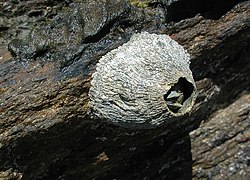
A barnacle of the family Balanidae, Mission Beach, Queensland, Australia, 2001.
Scientific classification Edit this classification
Kingdom: Animalia
Phylum: Arthropoda
Superclass: Multicrustacea
Class: Thecostraca
Gruvel, 1905
Subclasses

Thecostraca (from Ancient Greek θήκη (thḗkē) 'box' and ὄστρακον (óstrakon) 'shell') is a class of marine invertebrates containing over 2,200 described species.[1] Many species have planktonic larvae which become sessile or parasitic as adults.

The most prevalent subgroup are the barnacles (subclass Cirripedia), constituting a little over 2,100 known species.[1]

The subgroup Facetotecta contains a single genus, Hansenocaris, known only from the tiny planktonic nauplii called "y-larvae". These larvae have no known adult form, though it is suspected that they are parasites, and their affinity is uncertain. Some researchers believe that they may be larval tantulocaridans. No larval tantulocaridans are currently known.[2]

The group Ascothoracida contains about 110 species, all parasites of coelenterates and echinoderms.[1][3]

The nauplius larvae (sometimes absent) can be both lecithotrophic (non-feeding) and planktotrophic (feeding), and is followed by a larval stage called the cyprid, which is always lecithotrophic. The cypridoid larvae are referred to as the y-cyprid in the Facetotecta, the a-cyprid in the Ascothoracida, and the c-cyprid, or just cyprid, in the Cirripedia.[4][5]

Classification

[edit]

This article follows Chan et al. (2021) and the World Register of Marine Species in placing Thecostraca as a class of Crustacea and in the following classification of thecostracans down to the level of orders. Previously, Thecostraca was considered a subclass of Maxillopoda.[2] Significant changes in the organization of Cirripedia's orders, families, and genera were introduced in 2021 by Chan et al. and accepted by the World Register of Marine Species.[1][6]

Class Thecostraca Gruvel, 1905

Phylogeny

[edit]

The following cladogram depicts the internal relationships of the Thecostraca as of 2021.[1][7]

Thecostraca

References

[edit]
[edit]
Revisions and contributorsEdit on WikipediaRead on Wikipedia
from Grokipedia
Thecostraca is a subclass of crustaceans within the subphylum , encompassing approximately 2,116 described species distributed across three main subclasses: , Ascothoracida, and Cirripedia. These primarily exhibit remarkable morphological diversity, ranging from free-living sessile forms like to highly modified endoparasites that infect other marine organisms such as mollusks and echinoderms. Established as a taxonomic group by Gruvel in 1905, Thecostraca are characterized by their complex life cycles, which typically include planktonic larval stages and sessile or parasitic adults, adapting to a wide array of ecological niches from intertidal zones to deep-sea environments. The classification of Thecostraca reflects its evolutionary complexity, with Cirripedia being the most speciose subclass at around 1,990 species, including the well-known and (), burrowing forms (Acrothoracica), and root-like parasites (). Ascothoracida comprises about 114 species of mostly ectoparasitic or endoparasitic crustaceans that target hosts like and corals, while includes only 12 known species, represented solely by enigmatic planktonic larvae whose adult forms remain undiscovered and presumed parasitic. Phylogenetic studies, integrating molecular data from over 6,000 sites and morphological traits, support this tripartite division and highlight in parasitic lifestyles across the group. Morphologically, thecostracans feature distinctive cypridoid larvae with prehensile antennules for attachment and natatory thoracopods for swimming, transitioning through naupliar stages (typically six instars) before into adults. In Cirripedia, adults often develop plates enclosing the body, with cirri (modified limbs) used for filter-feeding on , whereas parasitic forms like undergo extreme simplification, lacking segmentation and forming root-like extensions into hosts for nutrient absorption. Life cycles vary from planktotrophic (feeding larvae) to lecitotrophic (non-feeding), with some species exhibiting hermaphroditism or sequential , as notably documented in early evolutionary studies by on . Ecologically, Thecostraca play key roles in marine ecosystems as biofoulers, competitors for space on substrates, and parasites influencing host populations, with some species achieving global distributions via ship hulls or drifting hosts. Their fossil record extends back to the , underscoring a long evolutionary history marked by adaptations to and sessility.

Overview

Etymology and Definition

Thecostraca is a class of within the phylum Arthropoda and Crustacea, encompassing highly modified crustaceans that include and their relatives. This class is characterized by its diverse adaptations, with over 2,100 described species distributed across marine environments worldwide. The name Thecostraca originates from the words "thḗkē" (θήκη), meaning box or case, and "óstrakon" (ὄστρακον), meaning shell, alluding to the protective shelled structures enclosing the bodies of many members. The term was first established as a taxonomic class by Gruvel in 1905. The fossil record of Thecostraca extends from the middle period, approximately 320–330 million years ago, with the earliest known s represented by the Praelepas, to the present day, demonstrating remarkable evolutionary persistence over more than 300 million years. Over 400 species have been documented, highlighting the group's long-term success in marine ecosystems. Many species in this class adopt sessile or parasitic lifestyles as adults, often protected by calcified or chitinous coverings.

General Features

Thecostraca is a diverse class of crustaceans predominantly inhabiting marine environments, where their cycles typically involve planktonic larval stages that transition to sessile or adult forms. This transition underscores their ecological adaptability, with larvae dispersing widely in the before settling onto substrates or hosts. Adults often exhibit reduced mobility, relying on attachment mechanisms to exploit stable positions for feeding or . The group displays remarkable morphological diversity, encompassing suspension-feeding forms that actively filter from the water, parasitic species that embed within host tissues, and cementing types that adhere firmly to hard surfaces. This variability arises from adaptations to contrasting lifestyles, yet all members share a common developmental pathway featuring early naupliar and later cypridoid larval stages. Such diversity positions Thecostraca as one of the most biologically variable clades within Crustacea, with forms ranging from externally armored to highly internalized. Key synapomorphies defining Thecostraca include the presence of lattice organs—paired chemosensory structures—on the head shield of cypridoid larvae, as well as frontal filaments and a distal antennular attachment device that facilitate settlement. The bivalved carapace characteristic of these larvae often evolves into an enveloping mantle in adults, providing protection and housing for feeding appendages. These traits, supported by both morphological and molecular evidence, affirm the monophyly of the group.

Morphology

Larval Morphology

The nauplius larvae of Thecostraca represent the initial free-living stage in their development, characterized by a simple consisting of an unsegmented head and a telson-like hindbody. These larvae typically possess three pairs of biramous appendages—antennules, antennae, and mandibles—that function primarily for swimming and feeding. A prominent median naupliar eye is present, providing basic phototactic responses essential for planktonic navigation. Feeding modes vary across the group: some nauplii are planktotrophic, actively consuming and other small particles via their appendages, while others are lecithotrophic, relying solely on reserves without external feeding. For instance, in , y-nauplii exhibit both modes, with planktotrophic forms showing more developed mouthparts for particle capture. Following several naupliar instars (typically six in Cirripedia and up to six in Ascothoracida, but seven in ), Thecostraca develop into cyprid larvae, which are universally lecithotrophic and adapted for dispersal and settlement rather than feeding. The cyprid body is enclosed in a bivalved that protects the underlying structures, with the head and fused into a shield-like form and a multi-segmented often flexed beneath. Locomotion is achieved through six pairs of biramous thoracopods, which beat in a coordinated manner for propulsion in the , while the antennules are modified into prehensile organs tipped with attachment disks or hooks for temporary substrate exploration. Sensory structures, including lattice organs—paired chemoreceptive setae arrays on the —play a crucial role in detecting suitable settlement sites or hosts, with variations in pore number and arrangement enhancing sensitivity to environmental cues. Cyprid morphology varies distinctly among thecostracan subclasses, reflecting adaptations to their respective life strategies. In , y-cyprids feature a univalved, boat-shaped that partially covers the body, along with a postocular filamentary tuft and four-segmented antennules bearing terminal hooks for host probing; these structures support active and potential endoparasitic host-seeking. Recent studies have identified seven naupliar s preceding the y-cyprid stage in some species, such as Hansenocaris itoi. Ascothoracida produce a-cyprids, often in two s, with the second instar displaying a more ornate bivalved adorned with setae and pores, rudimentary to functional thoracopods for limited dispersal, and four pairs of lattice organs in shallow pits that derive from naupliar setae for chemosensory host . In Cirripedia, c-cyprids exhibit a robust bivalved with fronto-lateral glands for during settlement, well-developed natatory thoracopods differing by family (e.g., elongated in Trypetesidae for enhanced , rudimentary in Cryptophialidae for reduced mobility), and five pairs of lattice organs with variable pore morphologies to facilitate substratum or host selection. These variations underscore in sensory and locomotor traits across the group, optimizing cyprids for precise settlement behaviors.

Adult Morphology

Adult thecostracans exhibit remarkable morphological diversity, reflecting their varied sessile, symbiotic, and parasitic lifestyles, with common traits including the development of a mantle cavity and reduction or modification of appendages for specialized functions. The mantle cavity, a defining feature, encloses the body and facilitates respiration, feeding, and across the group. Most appendages beyond the thoracic region are lost or highly reduced, adapting adults to non-motile or host-attached existence. In Cirripedia, adults are predominantly sessile filter-feeders, divided into stalked () and sessile (acorn ) forms. Stalked species feature a flexible peduncle for attachment to substrates, supporting a capitulum enclosed by flexible, non-calcified or lightly calcified plates that protect the thoracic region. Sessile forms attach directly via a calcified base plate and are armored by a wall of multiple calcified plates, with an operculum of movable tergal and scutal plates guarding the opening. Feeding is accomplished by six pairs of thoracic cirri, multi-segmented appendages that extend from the mantle cavity to capture , while the body proper includes a reduced and no free locomotion structures. Parasitic cirripedes, such as rhizocephalan , show extreme reduction, lacking cirri and shell plates, with a sac-like body and root-like interna invading the host for nutrient absorption. Ascothoracida adults are small, parasitic crustaceans primarily infecting like cnidarians and echinoderms, with a body enclosed in a bivalved or mantle sac. The head bears prehensile, multi-segmented antennules for attachment, and an oral cone with piercing mouthparts (mandibles, maxillules, maxillae) for host penetration. The comprises six segments with biramous thoracopods bearing plumose setae for limited natatory or grasping functions, while the is segmented with a and furcal rami. is pronounced, with larger females featuring a brood chamber in the mantle sac and vestigial , contrasted by smaller, cyprid-like males that attach externally. Host-invading stages use cement glands to form attachment pads, enabling ecto- or endoparasitic lifestyles with minimal segmentation loss compared to other thecostracans. The adult morphology of remains unknown, as no post-ypsigon stages have been observed in , though larval remnants suggest a highly reduced, likely endoparasitic form with minimal segmentation and appendages. Inferences from the slug-shaped ypsigon stage indicate retention of basic thecostracan traits like a mantle cavity, but with extreme simplification akin to parasitic relatives. This obscurity highlights the group's enigmatic position within Thecostraca, where adult forms are presumed to derive from cyprid-like larvae via minimal .

Life History

Reproduction

Thecostraca primarily reproduce sexually, with reproductive strategies varying significantly across its subclasses. In Cirripedia, the dominant group, simultaneous hermaphroditism is prevalent, allowing individuals to function as both concurrently, though some exhibit protandric development where male function precedes full female maturity without loss of male capability. Cross-fertilization occurs via a specialized that extends to transfer directly into the mantle cavity of nearby conspecifics, promoting in dense aggregations. In certain parasitic lineages like within Cirripedia, arises, combining hermaphrodites with dwarf males that attach to females or hermaphrodites for exclusive mating, an adaptation favored by high mortality and limited resources that enables early male maturation and reduced . Ascothoracida display pronounced , with larger females often exhibiting dimorphic forms—ranging from mobile, bopyriform stages to sac-like, endoparasitic adults—and smaller, cypridiform dwarf males that reside within the female's mantle cavity. Reproduction involves , where dwarf males deliver compactly adhered to their bodies or via spermatophores to the female's seminal receptacles, ensuring efficient insemination in parasitic habitats. This system supports , with males specialized for production and females for egg development, reflecting adaptations to endoparasitic lifestyles on hosts like cnidarians and echinoderms. Reproductive details for Facetotecta remain unknown, as adults have not been observed despite extensive larval studies. A 2025 phylogenomic study confirms as to Cirripedia, with the life cycle involving planktonic stages terminating in a parasitic, amoeboid form, though details of and host remain unresolved. Across Thecostraca, fertilized eggs are typically brooded within the mantle cavity. Larval types vary, with some species releasing lecithotrophic (non-feeding) naupliar larvae nourished by reserves, while others produce planktotrophic (feeding) nauplii. This brooding strategy enhances survival in diverse marine environments, from planktonic to parasitic.

Development and Settlement

The development of Thecostraca typically involves a planktonic larval phase consisting of multiple naupliar instars followed by a cyprid stage, which serves as the competent settler before to the adult form. In most groups, such as Cirripedia, the nauplius hatches from the egg and progresses through six instars (I–VI), each characterized by increasing complexity in appendages and sensory structures, before molting into the non-feeding cyprid larva. This sequence allows for dispersal in the , with the cyprid representing a specialized, short-lived stage adapted for substrate exploration and attachment. Metamorphosis from cyprid to juvenile is triggered by environmental cues, including suitable substrata, chemical signals from conspecifics or hosts, and physical factors like surface texture or light intensity, which induce settlement . In Cirripedia, the cyprid actively explores potential settlement sites using its antennules, which bear chemosensory setae for detecting cues; upon selection, it secretes an (cyprid cement) from specialized glands at the antennular base, forming a permanent attachment disc. Following attachment, rapid occurs over hours to days, involving resorption of larval structures, outgrowth of cirral appendages, and of the protective shell plates, transitioning the organism to a sessile . Variations exist across Thecostracan subgroups, particularly in parasitic lineages. In , development mirrors free-living cirripedes with naupliar and cyprid stages for host location, but settlement involves the cyprid injecting a kentrogon stage into the host via an extensile filament, leading to internal without external . Ascothoracida exhibit similar naupliar progression but include one or two cypridiform ascothoracid larvae (a-cyprids) for host attachment to echinoderms or cnidarians, with some species showing brooded development that shortens the planktonic phase. feature a y-nauplius series (up to five instars) and y-cyprid. A 2025 phylogenomic study confirms to a crawling ypsigon stage leading to a parasitic amoeboid adult form, though the full life cycle details remain unresolved. In certain parasitic forms, direct development occurs with internally brooded larvae lacking a prolonged planktonic phase, reducing dispersal but enhancing host specificity.

Classification

Taxonomic History

The taxonomic history of Thecostraca traces back to the initial classification of its primary group, the (Cirripedia). In 1758, placed barnacles within the class of his , specifically in the order Testacea, due to their calcareous shells and sessile appearance, which led to their mistaken affiliation with mollusks. This view persisted through early naturalists like , who also grouped them with mollusks based on superficial similarities in structure. A pivotal shift occurred in 1830 when John Vaughan Thompson described the planktonic nauplius and cypris larvae of , revealing their resemblance to crustacean developmental stages and prompting their reclassification within Arthropoda as . reinforced this in 1834 by detailing cirripede metamorphosis, solidifying their status. Darwin's monographs from to 1854 further advanced understanding by treating Cirripedia as a distinct subclass of Crustacea, emphasizing embryological and anatomical homologies. Early inclusions extended to parasitic forms, such as rhizocephalan and ascothoracid parasites, which were debated as either aberrant cirripedes or separate entities due to their highly modified morphologies. In 1905, Auguste Gruvel formally established Thecostraca as a subclass under Maxillopoda, uniting Cirripedia with Ascothoracida based on shared thoracic characteristics and parasitic lifestyles in the latter. This grouping highlighted the morphological diversity within the taxon, from sessile filter-feeders to endoparasites of cnidarians and echinoderms. Debates intensified with the discovery of in the late , whose y-larvae prompted questions about their affinity; some researchers initially linked them to based on superficial resemblances in trunk segmentation and , but morphological comparisons suggested otherwise. Key revisions came in 2001 with Joel W. Martin and George E. Davis's updated , which used comparative larval evidence—particularly the cypridoid stage—to support Thecostraca's and elevate it within , excluding unrelated groups like . This work emphasized developmental stages as critical for resolving affinities among highly derived forms. In 2021, Benny K. K. Chan and colleagues provided a comprehensive synthesis, refining Thecostraca's boundaries by integrating molecular, morphological, and data, confirming three subclasses (, Ascothoracida, and ) while updating genus-level taxonomy for .

Current Classification

Thecostraca is recognized as a class within the subphylum Crustacea, superclass , encompassing approximately 2,116 described species of marine arthropods. The current classification, as accepted by the (WoRMS), divides the class into three subclasses: Cirripedia, Ascothoracida, and . This framework reflects a post-2021 revision integrating and morphological data to ensure at higher ranks. The largest subclass, Cirripedia (approximately 1,990 species), is further subdivided into three infraclasses: Acrothoracica, , and . Acrothoracica includes two orders, Lithoglyptida and Cryptophialida, comprising burrowing forms. consists of parasitic species across 13 families, such as Sacculinidae. , the most diverse infraclass, is organized into superorders Phosphatothoracica and Thoracicalcarea, with eight orders including Scalpellomorpha (over 250 species in Scalpellidae alone), , and Pollicipedomorpha. Ascothoracida (approximately 114 species) is divided into two orders: Dendrogastrida and Laurida (the latter corresponding to Ascothoracida sensu stricto). These endoparasitic groups primarily infect cnidarians and echinoderms, with Dendrogastrida featuring branched body forms and Laurida showing more compact morphologies. The smallest subclass, , contains a single , Hansenocaris, with 12 known represented by y-naupliar larvae. However, recent molecular studies suggest much higher diversity, with over 80 putative species identified from larval and as of 2025. This group's adult form remains unknown, and it is classified based on larval characteristics. The overall taxonomy is maintained in WoRMS, which endorses the 2021 revisions for both extant and fossil taxa.

Phylogeny and Evolution

Phylogenetic Relationships

Thecostraca is classified within the superclass , a major clade of Crustacea that encompasses diverse pancrustacean lineages excluding and . Phylogenomic analyses of nuclear protein-coding sequences strongly support Thecostraca as part of the subclade Hexanauplia, which unites Thecostraca and Copepoda based on shared naupliar developmental features and molecular synapomorphies; this placement reflects their common ancestry characterized by six naupliar instars as a plesiomorphy. Within , Hexanauplia is positioned as sister to Vericrustacea (including and others), highlighting the deep divergence of these groups in arthropod evolution. Internally, the phylogeny of Thecostraca reveals a basal position for Ascothoracida, with and Cirripedia forming a derived , as resolved by recent metatranscriptomic and phylogenomic datasets comprising thousands of orthologous genes from larval and adult specimens. A 2025 phylogenomic study using metatranscriptomic data from y-larvae further confirmed this resolution and revealed unexpectedly high diversity in , with over 80 species identified from a single locality in . Earlier multilocus studies, using ribosomal and mitochondrial markers, had proposed Facetotecta as the most basal lineage, followed by Ascothoracida sister to the sessile Cirripedia, but genome-scale data have refined this to emphasize Cirripedia's derived status within the group. The enigmatic , known primarily from y-larvae, shows morphological parallels to in structures, though recent ultrastructural analyses reject homology of sensory organs like lattice organs, underscoring their distinct evolutionary trajectories. Molecular phylogenomics further demonstrates of across Thecostraca, with independent origins in the endoparasitic Ascothoracida, the externally parasitic rhizocephalan Cirripedia, and potentially in based on inferred host-invasion mechanisms in y-larvae. These findings, derived from Bayesian analyses of concatenated sequences, highlight how ecological pressures have driven parallel adaptations for host attachment and acquisition, despite disparate phylogenetic positions.

Fossil Record

The fossil record of Thecostraca is dominated by the subclass Cirripedia, owing to their calcified shell plates that facilitate preservation, whereas the soft-bodied, parasitic and Ascothoracida have no known s due to the absence of durable structures. Over 400 fossil species of cirripedes have been described, spanning from the to the present, providing insights into their evolutionary history. Exceptionally preserved specimens from the Wenlock Series (approximately 430 million years ago) in the Herefordshire of the UK document the metamorphosis of a free-swimming cyprid into a stalked juvenile, suggesting early evolution of crown-group cirripedes, though these soft-bodied forms are not definitive. The record reveals a origin for stalked forms and a radiation of sessile acorn , with notable gaps in earlier periods and for non-cirripedean groups. The earliest undisputed adult cirripede fossils are from the Carboniferous, such as phosphatic-shelled stalked barnacles like Praelepas (mid-Carboniferous, ~320 million years ago), which appear as the oldest with well-preserved plates. Praelepas exemplifies early pedunculate forms, characterized by simple, imbricating plates and attachment via a peduncle, and is now extinct. Evidence for acrothoracican cirripedes, which lack calcified shells and bore into substrates, comes indirectly from trace fossils such as elongated, slit-like borings in mollusc shells and hardgrounds, with the oldest attributed examples from the Late Devonian (Famennian, ~372 million years ago). These borings, often hosting multiple individuals, demonstrate that burrowing habits were established early in the group's history, though body fossils remain unknown. The Cirripedia fossil record intensifies in the Mesozoic, with stalked forms diversifying in the Triassic and Jurassic, followed by the first appearance of sessile acorn barnacles (Balanomorpha) in the Cretaceous (~100 million years ago), marking a shift toward modern faunas. Post-Cretaceous extinction events temporarily reduced diversity, but balanomorphs subsequently radiated, leading to their dominance today.

Diversity and Distribution

Major Groups

The major groups of Thecostraca are classified into three subclasses: Cirripedia, Ascothoracida, and , each exhibiting distinct biological traits and levels of diversity. These groups collectively encompass approximately 2,116 species as of 2021, with Cirripedia dominating in while the others are more enigmatic due to their parasitic or larval-only known life stages. Recent discoveries have increased the known diversity, particularly in Ascothoracida and . Cirripedia, the most diverse subclass with about 1,990 species, consists primarily of sessile, marine filter-feeders that attach to substrates using cement glands or peduncles. Adults are enclosed in calcified plates and use thoracic cirri—feathery appendages—to capture plankton from the water column, enabling them to thrive in intertidal to deep-sea environments. Key examples include acorn barnacles of the genus Balanus (now often classified under Amphibalanus), which form conical shells on rocky shores, and goose barnacles like Lepas anatifera, which hang from flexible stalks on floating debris. The 2021 taxonomic revision recognizes 14 orders within Cirripedia, reflecting their evolutionary radiation into varied forms such as vermilion acorn barnacles and symbiotic species. Ascothoracida comprises around 114 species (as of 2021; currently ~124 per WoRMS) of exclusively parasitic crustaceans that infest cnidarians (such as corals and sea anemones) and echinoderms (like and ophiuroids), often as endoparasites within host coelomic cavities. These dimorphic organisms feature sac-like adult females that brood eggs internally, with dwarf males sometimes residing within the female's mantle cavity, highlighting extreme adapted to their parasitic lifestyle. Biological diversity is evident in genera like Petrarca, which parasitizes stony corals, and Dendrogaster, which inhabits feather stars, demonstrating convergent adaptations for host invasion across at least 10 families. Recent studies have described new , contributing to ongoing taxonomic revisions. Facetotecta, the least diverse with only 12 described species as of 2021 (currently ~16 per WoRMS), is known exclusively from its planktonic y-larvae, which are microscopic, free-swimming forms with paired compound eyes and a naupliar modified for a pelagic existence. These larvae, often collected in tropical and subtropical marine plankton, feature a distinctive "Y"-shaped and are hypothesized to be non-parasitic or potentially hyperparasitic, though their adult stages and full life cycles remain undiscovered despite over a century of study. All known species belong to the single Hansenocaris within the family Hansenocaridae, underscoring the group's limited morphological and taxonomic diversity.

Global Distribution

Thecostraca are primarily marine crustaceans with a across global oceans, spanning from polar to equatorial latitudes and encompassing diverse aquatic environments. The class is represented in all major ocean basins, with over 33,000 occurrence records for its dominant subclass Cirripedia alone, indicating widespread ubiquity. This broad range is supported by extensive sampling from global marine databases. Within Thecostraca, Cirripedia exhibit the most extensive distribution, occurring ubiquitously from intertidal shores to abyssal depths exceeding 7,000 meters, and are found in nearly all marine habitats worldwide. Species such as those in the families and Tetraclitidae are reported across the Atlantic, Pacific, Indian, and Oceans, with some extending into brackish and freshwater systems. Ascothoracida, comprising around 114 species as of 2021 (currently ~124), show a more constrained but still global pattern, primarily in tropical to temperate seas where they parasitize hosts like cnidarians and echinoderms, with records from the , Atlantic, and Mediterranean. Facetotecta, the least known subclass with only about 12 described species as of 2021 (currently ~16), are documented from collections worldwide, including the Atlantic, Pacific, , and Indian Oceans, suggesting a truly pelagic and cosmopolitan lifestyle. Biogeographic patterns reveal elevated diversity in the Indo-West Pacific, a recognized hotspot for thecostracan richness due to historical Tethyan influences and favorable tropical conditions, where over half of all occur. Planktonic larval stages in Cirripedia and related groups facilitate long-distance dispersal via currents, enabling of remote and isolated habitats and contributing to these wide-ranging distributions.

Ecology

Habitats and Adaptations

Thecostraca, a diverse subclass of crustaceans, primarily inhabit marine environments ranging from intertidal zones to deep-sea habitats, with adaptations enabling survival in varied physicochemical conditions. These organisms exhibit remarkable physiological tolerances to fluctuations in , , and hydrostatic , which facilitate their occupancy of dynamic coastal and oceanic niches. For instance, many species, particularly within Cirripedia, demonstrate capabilities, maintaining osmotic balance through active ion regulation in salinities as low as 5 ppt or as high as 45 ppt. Temperature tolerance spans from subzero conditions in polar waters to over 40°C in tropical intertidal pools. A key adaptation in the free-living Cirripedia, such as and stalked , is their sessile lifestyle, involving permanent attachment to submerged substrates via a specialized apparatus. This consists of paired glands in the cyprid that secrete a proteinaceous , composed primarily of polyphenolic proteins and calcium-rich compounds, which cures underwater to form a durable bond resistant to shear forces and . The 's antifouling properties arise from its and low , preventing microbial colonization and overgrowth on the attachment site. In contrast, the parasitic Ascothoracida embed within host tissues of echinoderms or cnidarians, utilizing modified thoracic appendages to penetrate and reside endoparasitically, often inducing host for protection without producing . This embedding strategy allows nutrient absorption directly from host fluids, minimizing exposure to external environmental stressors. Shell in Thecostraca enhances structural integrity against mechanical and environmental pressures, particularly in calcified forms like those in Cirripedia. The process involves the deposition of in or polymorphs within a chitinous matrix, regulated by acidic proteins that control crystal nucleation and orientation for optimal strength-to-weight ratios. This confers resistance to dissolution in acidic waters and compressive forces in high-pressure depths, with shell thicknesses varying adaptively based on local conditions. Larval stages of Thecostraca are adapted for effective dispersal across columns, relying on sensory mechanisms to locate suitable settlement sites. Cyprid larvae exhibit positive phototaxis, orienting toward to remain in surface waters during early dispersal, transitioning to negative phototaxis in later stages to descend toward substrates. Chemosensory cues, detected via antennular aesthetascs, guide settlement by responding to conspecific pheromones, metabolites, and surface topographies, ensuring attachment in favorable microhabitats. These behaviors collectively promote wide distribution while optimizing survival post-settlement.

Ecological Roles

Thecostraca play diverse roles in marine ecosystems, primarily through their filter-feeding activities and interactions as both parasites and biofoulers. As suspension feeders, many thoracican species, particularly in the order Cirripedia, capture , , , and from the using specialized cirral appendages, thereby contributing to nutrient cycling and enhancing in coastal and estuarine environments. For instance, dense populations of the invasive barnacle Amphibalanus improvisus in the filter and , diverting to benthic and promoting the growth of green algae like through nutrient remineralization, which indirectly supports higher trophic levels. Additionally, Thecostraca serve as important prey items; barnacle larvae are consumed by planktivorous and benthic predators such as mussels (Mytilus edulis) and ascidians (Styela gibbsi), while adult barnacles are eaten by (e.g., shanny, Blennius pholis), birds, , snails, and worms, forming a key link in coastal food webs. In human-modified environments, cirripede barnacles are notorious for , where they attach to ship hulls, piers, and underwater structures, increasing hydrodynamic drag and fuel consumption. This fouling incurs substantial economic costs, estimated at up to USD 15 billion annually worldwide in additional fuel costs for the shipping industry as of 2025. To mitigate these impacts, traditional control methods rely on biocidal coatings, such as those containing (TBT) or copper-based compounds, which release toxins to deter larval settlement; however, TBT has been globally banned since due to its environmental , prompting a shift toward less harmful alternatives like peptide-based or fouling-release coatings. Parasitic groups within Thecostraca, such as the Ascothoracida and , exert significant influence on host populations by altering reproduction and behavior. Ascothoracidans, which infest s like sea stars and , often cause by occupying coelomic spaces and diverting host nutrients, potentially reducing population growth rates in affected species and indirectly impacting echinoderm fisheries through lowered yields of commercially harvested hosts. , such as Sacculina carcini and Peltogasterella gracilis, parasitize crabs (including commercially important species like shore crabs, , and hermit crabs in the family ) by developing root-like interna that infiltrate host tissues, inducing in males—such as reduced cheliped size and development of female-like pleopods—and complete , which sterilizes hosts and disrupts , mating behaviors, and viability. These effects can cascade through crustacean communities, reducing overall reproductive output and altering predator-prey balances in coastal ecosystems.

References

Add your contribution
Related Hubs
User Avatar
No comments yet.