



Community hub
Recent from talks
Knowledge base stats:
Talk channels stats:
Members stats:
Principality of Theodoro
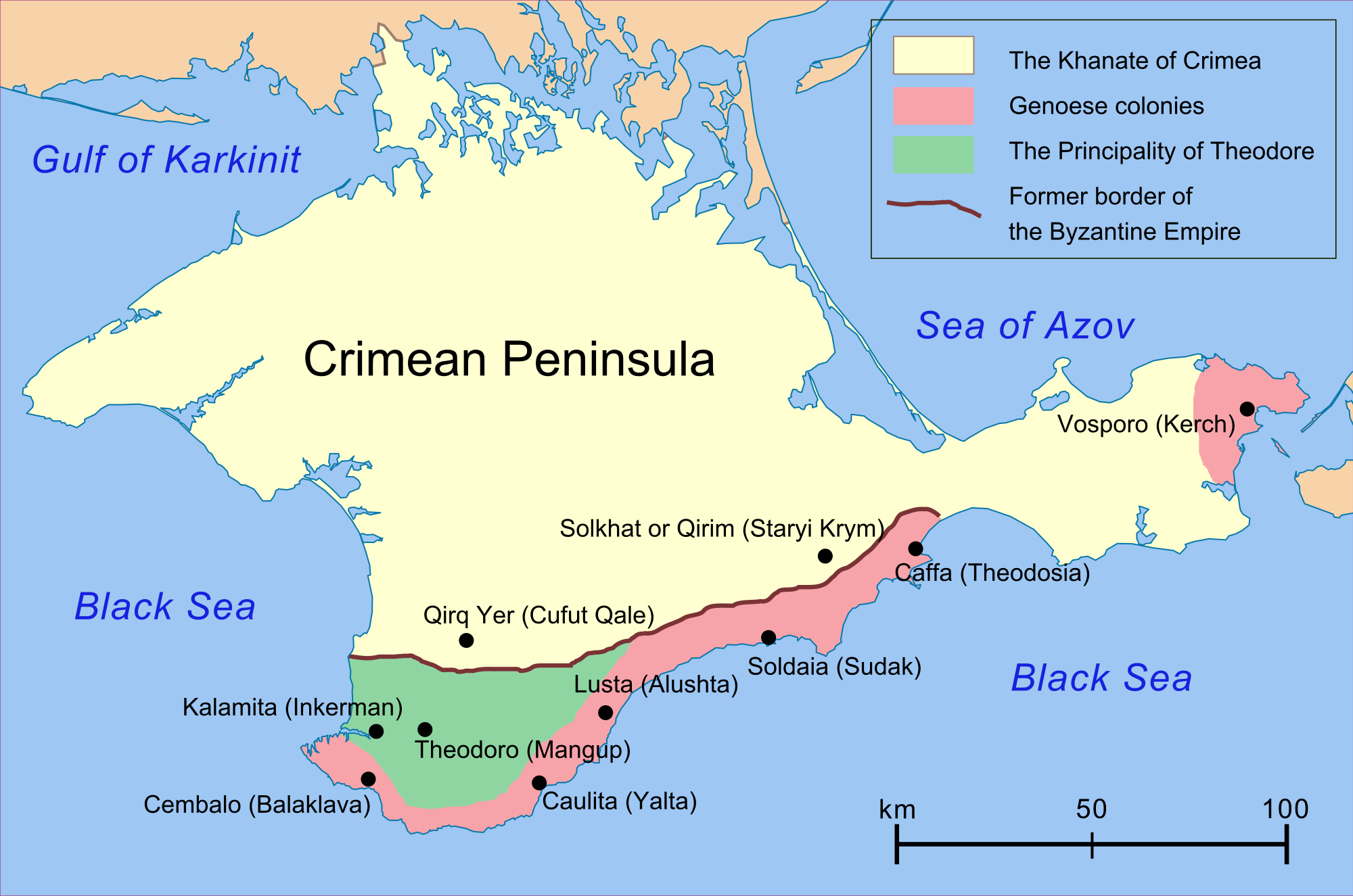
The Principality of Theodoro (Greek: Αὐθεντία πόλεως Θεοδωροῦς καὶ παραθαλασσίας), also known as Gothia (Γοτθία) or the Principality of Theodoro-Mangup, was a Greek principality in the southern part of Crimea, specifically on the foothills of the Crimean Mountains. It represented one of the final rump states of the Eastern Roman Empire and the last territorial vestige of the Crimean Goths until its conquest by the Ottoman Empire by the Ottoman Gedik Ahmed Pasha in 1475. Its capital was Doros, also sometimes called Theodoro and now known as Mangup. The state was closely allied with the Empire of Trebizond.
In the late 12th century, the Crimean peninsula had seceded from the Byzantine Empire, but soon after the Sack of Constantinople in 1204, parts of it were included in the Trapezuntine Gazarian Perateia. This dependence was never very strong and was eventually replaced by the invading Mongols, who in 1238 poured into the peninsula, occupied its east and enforced a tribute on the western half, including Gothia. Their influence was limited, leaving administrative matters in native hands.
The Principality of Gothia is first mentioned in the early 14th century, with the earliest date offered by the post-Byzantine historian Theodore Spandounes, who records the existence of a "Prince of Gothia" in the reign of Andronikos III Palaiologos (1328–1341). Further references occur over the 14th century, with several scholars identifying the "Dmitry", one of the three Golden Horde princes in the Battle of Blue Waters (c. 1362/1363), with a Prince of Gothia. The name, in this case, may be the baptismal name of a Tatar lord of Mangup, named Khuitani (see below). The name "Theodoro" (in the corrupted form Θεοδωραω) appears for the first time in a Greek inscription also dated to c. 1361/1362, and then again as "Theodoro Mangop" in a Genoese document of 1374. It was suggested by A. Mercati that the form is a corruption of the Greek plural Theodoroi 'the Theodores', meaning Saints Theodore Stratelates and Theodore Tiro, but N. Bănescu proposed the alternative explanation that it resulted from the definitive Greek name τὸ Δόρος (to Doros) or τὸ Δόρυ (to Dory), after the early medieval name of the region. Whatever its provenance, the name stuck: by the 1420s the official titulature of the prince read "Lord of the city of Theodoro and the Maritime Region" (αὐθέντης πόλεως Θεοδωροῦς καὶ παραθαλασσίας), while colloquially it was called Θεοδωρίτσι (Theodoritsi, 'little Theodoro') by its inhabitants.
In 1395, the warlord Tamerlane invaded the Crimean peninsula, destroying several towns including Gothia's capital Theodoro. After his death in 1404 Gothia grew to become one of the most significant powers of the Black Sea, profiting from a period of Genoese instability and the neglect of its Black Sea colonies, but also the rise of the Crimean Khanate. In 1432 Gothia sided with Venice against Genoa due to the former's promise to grant Gothia access to the sea.
The principality had peaceful relations with the Golden Horde to its north, paying an annual tribute as vassals, but was in constant strife with Genoese Gazaria colonies to the south over access to the coasts and the trade that went through the Crimean harbors. A narrow strip of the coastal land from Yamboli (Balaklava) in the west to Allston (Alushta) in the east initially part of the principality soon fell under Genoese control. Local Greeks called this region Parathalassia (Greek: Παραθαλασσια, "seashore"), while under Genoese rule it was known as Captainship of Gothia. After they had lost harbors on the southern coast Theodorites built a new port called Avlita at the mouth of the Chernaya River and fortified it with the fortress of Kalamata (modern Inkerman).
After the fall of Constantinople in 1453, many Qaraites, who were still Greek-speakers, decided to migrate to Crimea and in particular to the Principality of Theodoro and Chufut-Kale, as Crimea had a familiar Christian Greek culture.
During 1474, the people of Caffa appeared to have been on the verge of rebellion; official documents from this year describe the damage done to Gothic landowners and farmers or the burning of buildings in the border districts of Alushta and Cembalo. The prince at the time, Isaac (Italian documents write him Saichus or Saicus and the Russian Isaiko), presented a formal complaint to the Genoese fearing a war with Caffa. On 20 May 1475, an Ottoman fleet led by Gedik Ahmet Pasha left Constantinople and headed off to Crimea. On 6 June, the Ottoman Albanian commander Gedik Ahmet Pasha conquered Caffa after five days of siege. The prince sent a message on 20 June informing the Hungarian king that Theodoro had been captured by Alexander, brother-in-law of Stephen the Great; however, he also mentioned that Caffa had been captured by the Ottomans, while the khan of Crimea had allied with the sultan.
The siege of Mangup began sometime in September. The prince had three hundred Wallachians fighting in the defense. According to Vasiliev, the city endured five major assaults during the siege; in the end, Theodoro's food supply was blockaded and the people began to succumb to famine. At the end of December 1475, Mangup surrendered to the Ottomans under the condition that the Prince, the people, and their property would be spared. While much of the rest of Crimea remained part of the Crimean Khanate, now an Ottoman vassal, the former lands of Theodoro and southern Crimea were administered directly by the Sublime Porte. According to the Ottoman historian Ashik Pasha-Zade, after Mangup surrendered the Ottomans treated it the same way as Caffa. The Ottomans took the chiefs of the city and brought them to Constantinople where they were executed. Their treasures were handed over to the Sultan, while their wives and daughters were given as presents to the Sultan's officials. After the city's capitulation, one of the churches was converted into a mosque, where a prayer was said for the Sultan. According to an Ottoman chronicler, "the house of the infidel became the house of Islam."
Hub AI
Principality of Theodoro AI simulator
(@Principality of Theodoro_simulator)
Principality of Theodoro
The Principality of Theodoro (Greek: Αὐθεντία πόλεως Θεοδωροῦς καὶ παραθαλασσίας), also known as Gothia (Γοτθία) or the Principality of Theodoro-Mangup, was a Greek principality in the southern part of Crimea, specifically on the foothills of the Crimean Mountains. It represented one of the final rump states of the Eastern Roman Empire and the last territorial vestige of the Crimean Goths until its conquest by the Ottoman Empire by the Ottoman Gedik Ahmed Pasha in 1475. Its capital was Doros, also sometimes called Theodoro and now known as Mangup. The state was closely allied with the Empire of Trebizond.
In the late 12th century, the Crimean peninsula had seceded from the Byzantine Empire, but soon after the Sack of Constantinople in 1204, parts of it were included in the Trapezuntine Gazarian Perateia. This dependence was never very strong and was eventually replaced by the invading Mongols, who in 1238 poured into the peninsula, occupied its east and enforced a tribute on the western half, including Gothia. Their influence was limited, leaving administrative matters in native hands.
The Principality of Gothia is first mentioned in the early 14th century, with the earliest date offered by the post-Byzantine historian Theodore Spandounes, who records the existence of a "Prince of Gothia" in the reign of Andronikos III Palaiologos (1328–1341). Further references occur over the 14th century, with several scholars identifying the "Dmitry", one of the three Golden Horde princes in the Battle of Blue Waters (c. 1362/1363), with a Prince of Gothia. The name, in this case, may be the baptismal name of a Tatar lord of Mangup, named Khuitani (see below). The name "Theodoro" (in the corrupted form Θεοδωραω) appears for the first time in a Greek inscription also dated to c. 1361/1362, and then again as "Theodoro Mangop" in a Genoese document of 1374. It was suggested by A. Mercati that the form is a corruption of the Greek plural Theodoroi 'the Theodores', meaning Saints Theodore Stratelates and Theodore Tiro, but N. Bănescu proposed the alternative explanation that it resulted from the definitive Greek name τὸ Δόρος (to Doros) or τὸ Δόρυ (to Dory), after the early medieval name of the region. Whatever its provenance, the name stuck: by the 1420s the official titulature of the prince read "Lord of the city of Theodoro and the Maritime Region" (αὐθέντης πόλεως Θεοδωροῦς καὶ παραθαλασσίας), while colloquially it was called Θεοδωρίτσι (Theodoritsi, 'little Theodoro') by its inhabitants.
In 1395, the warlord Tamerlane invaded the Crimean peninsula, destroying several towns including Gothia's capital Theodoro. After his death in 1404 Gothia grew to become one of the most significant powers of the Black Sea, profiting from a period of Genoese instability and the neglect of its Black Sea colonies, but also the rise of the Crimean Khanate. In 1432 Gothia sided with Venice against Genoa due to the former's promise to grant Gothia access to the sea.
The principality had peaceful relations with the Golden Horde to its north, paying an annual tribute as vassals, but was in constant strife with Genoese Gazaria colonies to the south over access to the coasts and the trade that went through the Crimean harbors. A narrow strip of the coastal land from Yamboli (Balaklava) in the west to Allston (Alushta) in the east initially part of the principality soon fell under Genoese control. Local Greeks called this region Parathalassia (Greek: Παραθαλασσια, "seashore"), while under Genoese rule it was known as Captainship of Gothia. After they had lost harbors on the southern coast Theodorites built a new port called Avlita at the mouth of the Chernaya River and fortified it with the fortress of Kalamata (modern Inkerman).
After the fall of Constantinople in 1453, many Qaraites, who were still Greek-speakers, decided to migrate to Crimea and in particular to the Principality of Theodoro and Chufut-Kale, as Crimea had a familiar Christian Greek culture.
During 1474, the people of Caffa appeared to have been on the verge of rebellion; official documents from this year describe the damage done to Gothic landowners and farmers or the burning of buildings in the border districts of Alushta and Cembalo. The prince at the time, Isaac (Italian documents write him Saichus or Saicus and the Russian Isaiko), presented a formal complaint to the Genoese fearing a war with Caffa. On 20 May 1475, an Ottoman fleet led by Gedik Ahmet Pasha left Constantinople and headed off to Crimea. On 6 June, the Ottoman Albanian commander Gedik Ahmet Pasha conquered Caffa after five days of siege. The prince sent a message on 20 June informing the Hungarian king that Theodoro had been captured by Alexander, brother-in-law of Stephen the Great; however, he also mentioned that Caffa had been captured by the Ottomans, while the khan of Crimea had allied with the sultan.
The siege of Mangup began sometime in September. The prince had three hundred Wallachians fighting in the defense. According to Vasiliev, the city endured five major assaults during the siege; in the end, Theodoro's food supply was blockaded and the people began to succumb to famine. At the end of December 1475, Mangup surrendered to the Ottomans under the condition that the Prince, the people, and their property would be spared. While much of the rest of Crimea remained part of the Crimean Khanate, now an Ottoman vassal, the former lands of Theodoro and southern Crimea were administered directly by the Sublime Porte. According to the Ottoman historian Ashik Pasha-Zade, after Mangup surrendered the Ottomans treated it the same way as Caffa. The Ottomans took the chiefs of the city and brought them to Constantinople where they were executed. Their treasures were handed over to the Sultan, while their wives and daughters were given as presents to the Sultan's officials. After the city's capitulation, one of the churches was converted into a mosque, where a prayer was said for the Sultan. According to an Ottoman chronicler, "the house of the infidel became the house of Islam."