


Community hub
Recent from talks
Contribute something to knowledge base
Content stats: 0 posts, 0 articles, 1 media, 0 notes
Members stats: 0 subscribers, 0 contributors, 0 moderators, 0 supporters
Subscribers
Supporters
Contributors
Moderators
Hub AI
Tibetic languages AI simulator
(@Tibetic languages_simulator)
Hub AI
Tibetic languages AI simulator
(@Tibetic languages_simulator)
Tibetic languages
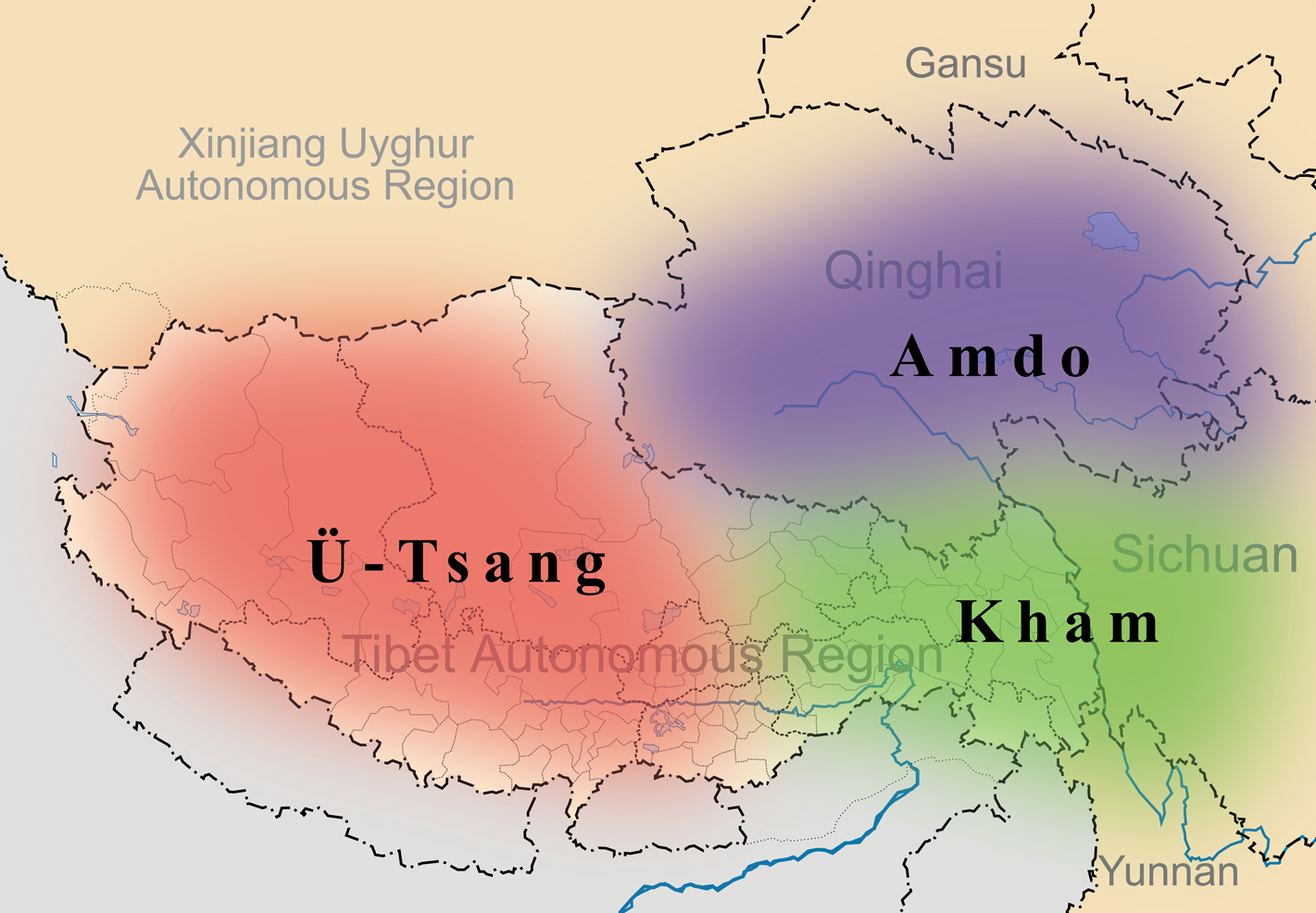
The Tibetic languages are a branch of the Tibeto-Burman languages in the Sino-Tibetan language family. Descending from Old Tibetan, there are 50 recognized Tibetic languages, which branch into more than 200 dialects, which could be grouped into eight dialect continua. These Tibetic languages are spoken in parts of China (Tibet, Aksai Chin), Pakistan (Gilgit-Baltistan), Nepal, Bhutan and India (Arunachal Pradesh, Assam, Uttarakhand, Himachal Pradesh, Sikkim). Classical Tibetan is the major literary language, particularly for its use in Tibetan Buddhist scriptures and literature.
Tibetan languages are spoken by some 6 million people, not all of whom are Tibetan. With the worldwide spread of Tibetan Buddhism, the Tibetan language has also spread into the western world and can be found in many Buddhist publications and prayer materials, while western students also learn the language for the translation of Tibetan texts. Outside of Lhasa itself, Lhasa Tibetan is spoken by approximately 200,000 exiled Tibetans who have moved from Tibet to India, Nepal and other countries. Tibetan is also spoken by groups of ethnic minorities in Tibet who have lived in close proximity to Tibetans for centuries, but nevertheless retain their own languages and cultures.
Although the Qiang peoples of Kham are classified by China as ethnic Tibetan, the Qiangic languages are not Tibetan, but rather form their own branch of the Tibeto-Burman language family.
Classical Tibetan was not a tonal language, but many varieties such as Central and Khams Tibetan have developed tone registers. Amdo and Ladakhi-Balti are without tone. Tibetan morphology can generally be described as agglutinative.
Although the term "Tibetic" had been applied in various ways within the Sino-Tibetan research tradition, Nicolas Tournadre defined it as a phylum derived from Old Tibetan. Following Nishi (1987) and Beyer (1992), he identified several lexical innovations that can be used as a diagnosis to distinguish Tibetic from the other languages of the family, such as བདུན bdun "seven".
The "Tibetic languages" in this sense are a substitute for the term "Tibetan languages/dialects" used in the previous literature; the distinction between "language" and "dialect" is not straightforward, and labeling varieties of Tibetic as "Tibetan dialects" could be misleading not only because those "dialects" are often mutually-unintelligible, but also the speakers of Tibetic do not necessarily consider themselves as ethnic Tibetan, as is the case with Sherpas, Ladakhis, Baltis, Lahaulas, Sikkimese and Bhutanese.
Marius Zemp (2018) hypothesizes that Tibetan originated as a pidgin with the West Himalayish language Zhangzhung as its superstratum, and Rgyalrongic as its substratum (both languages are part of the broader Sino-Tibetan family). However, there are many grammatical differences between the Rgyalrongic and Tibetic languages; Rgyalrongic tend to use prefixes such as *kə-, *tə-, etc., while Tibetic languages use suffixes such as -pa/-ba, -ma, -po/-bo, -mo, etc.
Similarly, Tamangic also has a West Himalayish superstratum, but its substratum is derived from a different Sino-Tibetan branch.
Tibetic languages
The Tibetic languages are a branch of the Tibeto-Burman languages in the Sino-Tibetan language family. Descending from Old Tibetan, there are 50 recognized Tibetic languages, which branch into more than 200 dialects, which could be grouped into eight dialect continua. These Tibetic languages are spoken in parts of China (Tibet, Aksai Chin), Pakistan (Gilgit-Baltistan), Nepal, Bhutan and India (Arunachal Pradesh, Assam, Uttarakhand, Himachal Pradesh, Sikkim). Classical Tibetan is the major literary language, particularly for its use in Tibetan Buddhist scriptures and literature.
Tibetan languages are spoken by some 6 million people, not all of whom are Tibetan. With the worldwide spread of Tibetan Buddhism, the Tibetan language has also spread into the western world and can be found in many Buddhist publications and prayer materials, while western students also learn the language for the translation of Tibetan texts. Outside of Lhasa itself, Lhasa Tibetan is spoken by approximately 200,000 exiled Tibetans who have moved from Tibet to India, Nepal and other countries. Tibetan is also spoken by groups of ethnic minorities in Tibet who have lived in close proximity to Tibetans for centuries, but nevertheless retain their own languages and cultures.
Although the Qiang peoples of Kham are classified by China as ethnic Tibetan, the Qiangic languages are not Tibetan, but rather form their own branch of the Tibeto-Burman language family.
Classical Tibetan was not a tonal language, but many varieties such as Central and Khams Tibetan have developed tone registers. Amdo and Ladakhi-Balti are without tone. Tibetan morphology can generally be described as agglutinative.
Although the term "Tibetic" had been applied in various ways within the Sino-Tibetan research tradition, Nicolas Tournadre defined it as a phylum derived from Old Tibetan. Following Nishi (1987) and Beyer (1992), he identified several lexical innovations that can be used as a diagnosis to distinguish Tibetic from the other languages of the family, such as བདུན bdun "seven".
The "Tibetic languages" in this sense are a substitute for the term "Tibetan languages/dialects" used in the previous literature; the distinction between "language" and "dialect" is not straightforward, and labeling varieties of Tibetic as "Tibetan dialects" could be misleading not only because those "dialects" are often mutually-unintelligible, but also the speakers of Tibetic do not necessarily consider themselves as ethnic Tibetan, as is the case with Sherpas, Ladakhis, Baltis, Lahaulas, Sikkimese and Bhutanese.
Marius Zemp (2018) hypothesizes that Tibetan originated as a pidgin with the West Himalayish language Zhangzhung as its superstratum, and Rgyalrongic as its substratum (both languages are part of the broader Sino-Tibetan family). However, there are many grammatical differences between the Rgyalrongic and Tibetic languages; Rgyalrongic tend to use prefixes such as *kə-, *tə-, etc., while Tibetic languages use suffixes such as -pa/-ba, -ma, -po/-bo, -mo, etc.
Similarly, Tamangic also has a West Himalayish superstratum, but its substratum is derived from a different Sino-Tibetan branch.
Recent media
Recent media