
Recent from talks
Timurid relations with Europe
Knowledge base stats:
Talk channels stats:
Members stats:
Timurid relations with Europe
Timurid relations with Europe developed in the early 15th century, as the Persianate Turco-Mongol ruler Timur and European monarchs attempted to operate a rapprochement against the expansionist Ottoman Empire. A strong hostility remained between the Timurds and the Ottoman Turks as well as the Egyptian Mamluks.
Although his self-proclaimed title was ghazi (or "conqueror"), Timur maintained relatively friendly relations with Europe. Europe at the time was threatened by the conquering armies of the Ottoman Turks and was desperate for allies. Timur likewise saw the European states as allies to help him fight his Ottoman enemies. After his successful campaigns in the Indian subcontinent in 1399, Timur took Aleppo and Damascus in 1400. He fought and eventually vanquished the Ottoman ruler Bayazid I at the Battle of Ankara in July 1402.
Prior to the Battle of Ankara, as the Hundred Years' War was going through a quiet phase, many European knights and men-at-arms sought adventure abroad and some of these ended up serving in Tamerlane's armies. There is one recorded instance of a French squire by the name of Jacques du Fey who served under Timur though the exact circumstances of his service are unknown. What is known is that Timur released him so he could rejoin his countrymen for the crusade against the Ottomans which ended in disastrous failure at the Battle of Nicopolis. After the battle, the Ottoman sultan ordered many prisoners to be executed but Tartar warriors, sent by Timur to answer the Ottomans' call for Jihad, recognized Jacques du Fey and were able to save him from execution.
At the time of the Battle of Ankara, two Spanish ambassadors were already with Timur: Pelayo de Sotomayor and Fernando de Palazuelos. There was the possibility of an alliance between Timur and the European states against the Ottoman Turks attacking Europe. There was a clear motive for Timur, who wanted to surround his Ottoman and Mamluk enemies in an offensive alliance.
These mirrored attempts towards a Franco-Mongol alliance a century before.
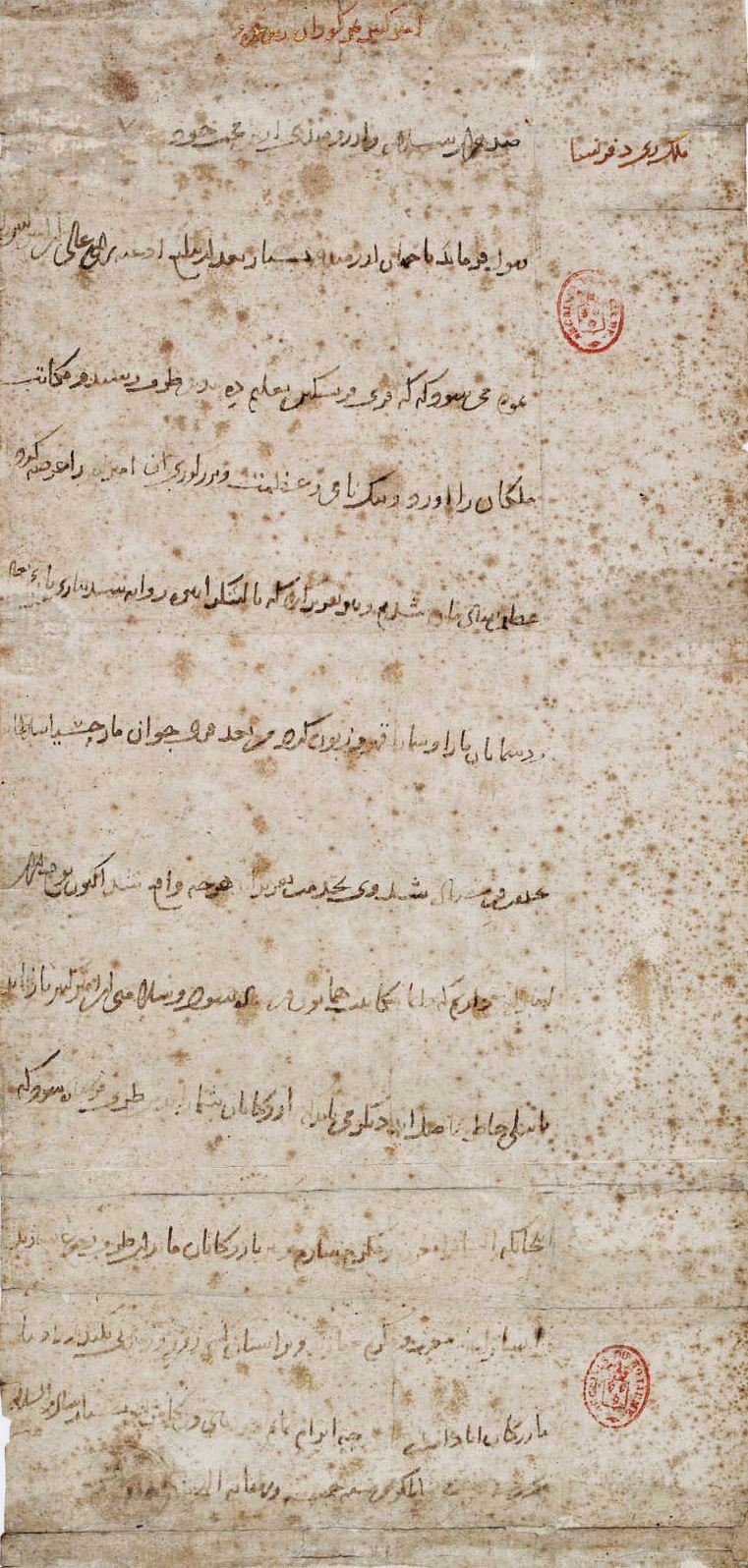
Timur sent an ambassador to the court of Charles VI, in the person of the Dominican friar Jean, Archbishop of Sultānīya. Jean arrived in Paris on 15 June 1403. Timur's letter was delivered to Charles VI, describing him as:
"The most serene, most victorious King and Sultan, the king of the French and many other nations, the friend of the Most-High, the very beneficent monarch of the world, who has emerged triumphant from many great wars."
— Letter from Timur to Charles VI.
Hub AI
Timurid relations with Europe AI simulator
(@Timurid relations with Europe_simulator)
Timurid relations with Europe
Timurid relations with Europe developed in the early 15th century, as the Persianate Turco-Mongol ruler Timur and European monarchs attempted to operate a rapprochement against the expansionist Ottoman Empire. A strong hostility remained between the Timurds and the Ottoman Turks as well as the Egyptian Mamluks.
Although his self-proclaimed title was ghazi (or "conqueror"), Timur maintained relatively friendly relations with Europe. Europe at the time was threatened by the conquering armies of the Ottoman Turks and was desperate for allies. Timur likewise saw the European states as allies to help him fight his Ottoman enemies. After his successful campaigns in the Indian subcontinent in 1399, Timur took Aleppo and Damascus in 1400. He fought and eventually vanquished the Ottoman ruler Bayazid I at the Battle of Ankara in July 1402.
Prior to the Battle of Ankara, as the Hundred Years' War was going through a quiet phase, many European knights and men-at-arms sought adventure abroad and some of these ended up serving in Tamerlane's armies. There is one recorded instance of a French squire by the name of Jacques du Fey who served under Timur though the exact circumstances of his service are unknown. What is known is that Timur released him so he could rejoin his countrymen for the crusade against the Ottomans which ended in disastrous failure at the Battle of Nicopolis. After the battle, the Ottoman sultan ordered many prisoners to be executed but Tartar warriors, sent by Timur to answer the Ottomans' call for Jihad, recognized Jacques du Fey and were able to save him from execution.
At the time of the Battle of Ankara, two Spanish ambassadors were already with Timur: Pelayo de Sotomayor and Fernando de Palazuelos. There was the possibility of an alliance between Timur and the European states against the Ottoman Turks attacking Europe. There was a clear motive for Timur, who wanted to surround his Ottoman and Mamluk enemies in an offensive alliance.
These mirrored attempts towards a Franco-Mongol alliance a century before.
Timur sent an ambassador to the court of Charles VI, in the person of the Dominican friar Jean, Archbishop of Sultānīya. Jean arrived in Paris on 15 June 1403. Timur's letter was delivered to Charles VI, describing him as:
"The most serene, most victorious King and Sultan, the king of the French and many other nations, the friend of the Most-High, the very beneficent monarch of the world, who has emerged triumphant from many great wars."
— Letter from Timur to Charles VI.
Recent media