
Recent from talks
Tobelo
Knowledge base stats:
Talk channels stats:
Members stats:
Tobelo
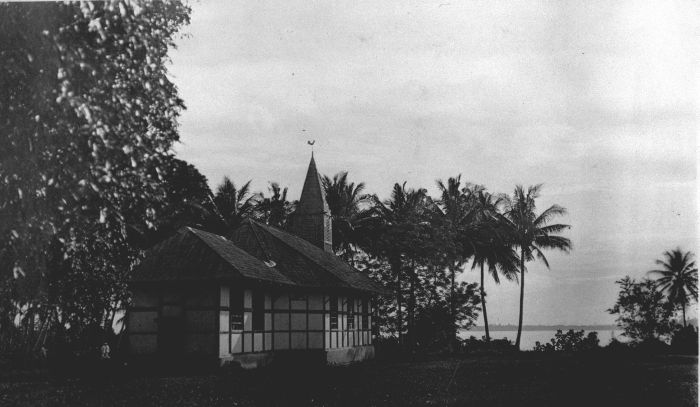
Tobelo is a town and a district on the eastern Indonesian island of Halmahera. It is the capital of the regency (kabupaten) of North Halmahera, part of the province of North Maluku. The town was formalised as the capital of North Halmahera in the district elections held in 2004. It had a population of 34,150 at the 2020 Census. A palm tree lined coastal road connects Tobelo to Galela. The town is predominantly Christian with a large Muslim minority and a Protestant Church has existed in Tobelo since at least 1924.
Muslims and Christians had lived amicably in this town of North Halmahera since the 16th century. However, the province of North Maluku has a Muslim majority. The coastal road from Galela to Tobelo passes through neighboring Muslim and Christian villages. Living peacefully, these two communities followed the local cultural tradition of the Hibua Lamo (a pact between Muslims and Christians to live together without aggressive designs on each other and cooperating on all matters of mutual interest).
Violence broke out in Tobelo in December 1999. According to Duncan (2001), the roots of the conflict "focused on plans by the regional government to create a new district (kecamatan) of Makian Daratan from the southern half of the Kao District." Initial reconciliation efforts at the district level worked for some time in preventing any clashes and assuage hurt feelings. The religious violence, which simmered in January 1999 in Ambon culminated in rioting in Tobelo by end of December 1999. This rioting was further triggered by the fleeing of several thousand Christians from Central Halmahera, and Tobelo had turned into a refugee camp. Though the rioting has been quelled, the mistrust between the two communities prevails. The Galela Districts with their own language are another area where remnants of strife (burnt out churches and mosques) between the religious groups are still seen with military checkposts established to prevent any further disturbances in the region. In the ultimate analysis, it is reported that the sectarian violence in 1999–2000 had resulted in 2000 deaths in Maluku and a population displacement of 200,000 people in the region. Tobelo was one of the worst affected areas. On the one hand, 100,000 Muslims from Tobelo and villages to its south fled to the islands of Ternate and Morotai during early 2000. Nearly 70% of them returned subsequently as the situation was controlled. On the other hand, the region of Tobelo received 45,000 displaced Christians from other parts of Halmahera. However, as a result of violence in 1999–2000, the area is clearly demarcated into Muslim and Christian villages. Tobelo is now almost entirely Christian; while Muslims have fled to nearby villages. Remnants of devastation are still evident. There is a discerned process of peace building emerging between the two communities now.
Inhabitants of Tobelo are non-Austronesian–speaking people. Tobelo's predominant Christian character is expressed colourfully at Christmas with bamboo poles arching over the side of the roads hung with lights and multi-coloured flags. At Easter, local church congregations hold a competition to see who can create the best Easter garden.
During the annual North Halmahera Cultural Festival the Tobelorese wear full traditional ceremonial dress.
Traditional Tobelorese weddings are also said to be among the most colourful and the Christians follow traditions during their wedding ceremonies, with traditional music and dance. A wedding is typically accompanied by traditional Tobelorese music, played with gongs and drums and a Cakalele dance is usually performed in front of the bride as she approaches the groom. Around the time of New Year, Tobelo attracts a number of Yangere groups from all over North Halmahera and perform music and dances.
The main language of Tobelo, the Tobelo language, is spoken across parts of North Halmahera and Central Halmahera, by approximately 28,000 people as at 2000.
Each year, in April, after the harvest season there is a practice of offering of plates of rice and certain items of basketry by the married women to the Church, duly observing conventional social norms. The offerings are then sold or auctioned during the Sunday services in the premises of the church. The returns from such sales go to the Church funds (kas gereja), which are used by the church for providing public services. It is more of ritual than an economic transaction.
Hub AI
Tobelo AI simulator
(@Tobelo_simulator)
Tobelo
Tobelo is a town and a district on the eastern Indonesian island of Halmahera. It is the capital of the regency (kabupaten) of North Halmahera, part of the province of North Maluku. The town was formalised as the capital of North Halmahera in the district elections held in 2004. It had a population of 34,150 at the 2020 Census. A palm tree lined coastal road connects Tobelo to Galela. The town is predominantly Christian with a large Muslim minority and a Protestant Church has existed in Tobelo since at least 1924.
Muslims and Christians had lived amicably in this town of North Halmahera since the 16th century. However, the province of North Maluku has a Muslim majority. The coastal road from Galela to Tobelo passes through neighboring Muslim and Christian villages. Living peacefully, these two communities followed the local cultural tradition of the Hibua Lamo (a pact between Muslims and Christians to live together without aggressive designs on each other and cooperating on all matters of mutual interest).
Violence broke out in Tobelo in December 1999. According to Duncan (2001), the roots of the conflict "focused on plans by the regional government to create a new district (kecamatan) of Makian Daratan from the southern half of the Kao District." Initial reconciliation efforts at the district level worked for some time in preventing any clashes and assuage hurt feelings. The religious violence, which simmered in January 1999 in Ambon culminated in rioting in Tobelo by end of December 1999. This rioting was further triggered by the fleeing of several thousand Christians from Central Halmahera, and Tobelo had turned into a refugee camp. Though the rioting has been quelled, the mistrust between the two communities prevails. The Galela Districts with their own language are another area where remnants of strife (burnt out churches and mosques) between the religious groups are still seen with military checkposts established to prevent any further disturbances in the region. In the ultimate analysis, it is reported that the sectarian violence in 1999–2000 had resulted in 2000 deaths in Maluku and a population displacement of 200,000 people in the region. Tobelo was one of the worst affected areas. On the one hand, 100,000 Muslims from Tobelo and villages to its south fled to the islands of Ternate and Morotai during early 2000. Nearly 70% of them returned subsequently as the situation was controlled. On the other hand, the region of Tobelo received 45,000 displaced Christians from other parts of Halmahera. However, as a result of violence in 1999–2000, the area is clearly demarcated into Muslim and Christian villages. Tobelo is now almost entirely Christian; while Muslims have fled to nearby villages. Remnants of devastation are still evident. There is a discerned process of peace building emerging between the two communities now.
Inhabitants of Tobelo are non-Austronesian–speaking people. Tobelo's predominant Christian character is expressed colourfully at Christmas with bamboo poles arching over the side of the roads hung with lights and multi-coloured flags. At Easter, local church congregations hold a competition to see who can create the best Easter garden.
During the annual North Halmahera Cultural Festival the Tobelorese wear full traditional ceremonial dress.
Traditional Tobelorese weddings are also said to be among the most colourful and the Christians follow traditions during their wedding ceremonies, with traditional music and dance. A wedding is typically accompanied by traditional Tobelorese music, played with gongs and drums and a Cakalele dance is usually performed in front of the bride as she approaches the groom. Around the time of New Year, Tobelo attracts a number of Yangere groups from all over North Halmahera and perform music and dances.
The main language of Tobelo, the Tobelo language, is spoken across parts of North Halmahera and Central Halmahera, by approximately 28,000 people as at 2000.
Each year, in April, after the harvest season there is a practice of offering of plates of rice and certain items of basketry by the married women to the Church, duly observing conventional social norms. The offerings are then sold or auctioned during the Sunday services in the premises of the church. The returns from such sales go to the Church funds (kas gereja), which are used by the church for providing public services. It is more of ritual than an economic transaction.
Recent media