
Recent from talks
Todd Edwards
Knowledge base stats:
Talk channels stats:
Members stats:
Todd Edwards
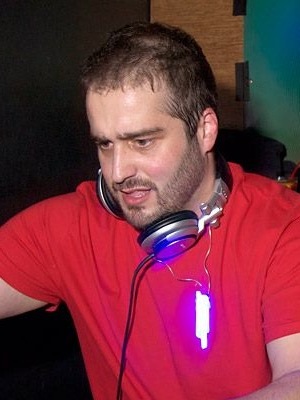
Todd Edward Imperatrice (born December 9, 1972), known professionally as Todd Edwards, is an American garage house record producer, DJ, and singer. Nicknamed "The God" and known by various aliases throughout his career, he has been credited as a significant influence on electronic music. He inspired the French house duo Daft Punk and played a role in the creation of the UK garage genre.
Edwards began his career producing primarily for New York's Nervous Records in the 1990s, including under aliases such as the Messenger and the Sample Choir. Beginning with his 1993 single "Guide My Soul", Edwards helped pioneer the speed garage genre. His 1994 single "Saved My Life" became a club hit in the UK.
Edwards has remixed hundreds of artists, including Wildchild, St Germain, Benjamin Diamond, Justice, Klaxons and Dimitri from Paris. Edwards has collaborated with Daft Punk on two successful songs, co-producing and contributing vocals on the songs "Face to Face" (2001) and "Fragments of Time" (2013); the earlier reached number one on the Billboard Dance Club Songs chart in 2004, while the latter won him a Grammy Award for its inclusion on Random Access Memories, which won Album of the Year at the 2014 show.
Todd Edward Imperatrice was born on December 9, 1972, in Bloomfield, New Jersey. His father worked as a carpet salesman, while his mother became a receptionist at Lincoln Technical Institute when he was in seventh grade. His father would exercise in the house in the morning to Neil Diamond albums. Imperatrice was into science fiction, enjoying things like Star Wars and The Six Million Dollar Man. He has an older sister who influenced his listening habits by playing disco music. The first record he bought was Peter Brown’s "Dance With Me".
Edwards began his music career in 1992 and became known for his use of vocal reconstruction techniques, which involve chopping, layering, and rearranging vocal samples to create complex collages over four-on-the-floor beats. This approach was inspired by producer Marc "MK" Kinchen. In 1995, his manager was approached by French producer St Germain, who requested Edwards to remix his song "Alabama Blues". Edwards's two remixes of the track led to his breakthrough and became some of his most famous works.
In the late 1990s, Edwards connected with the electronic duo Daft Punk, who attempted to collaborate with him on their album Homework. Although a collaboration didn't materialize due to their then-unknown status, they acknowledged him in their song "Teachers" on the album. In 1999, he reconnected with Daft Punk, resulting in the creation of the song "Face to Face," where he co-produced and performed the vocals. The song was included in the 2001 album Discovery and later released as a promotional single two years later, reaching number 1 on the Billboard Dance Club Songs chart in 2004.
On January 1, 2003, EZ booked Edwards to play at the nightclub at Time & Envy in Romford, England, during EZ's 4by4 sets. Edwards, who had previously declined to play in the United Kingdom despite his music's popularity there, later explained that he had never really DJ'd in a club before. His set was captured on camera, and DJ Mag noted that it has been "constantly regurgitated by various music platforms on social media," including a misunderstanding between Edwards and the MC when the MC asked for a rewind during the set.
After working with Daft Punk on "Face to Face," Edwards became burnt out on music and quit the scene entirely. During this period, Edwards experienced depression and felt he had no coping mechanisms, as mental health wasn't widely discussed. He described himself as a workaholic with depressive mood swings and went through an existential crisis. He took a nine-to-five job in customer service with Verizon in order to make money, a role he later described as making him feel like he was "dying a little inside each day." However, at the height of the Great Recession, he quit the job and decided to return to music. Edwards later described his manager as a "very negative reinforcement type of guy" during this time, saying that the manager would re-release one of Edwards's tracks every time Edwards released a new one, seemingly out of spite. The manager also kept Edwards from connecting with his fans. Seeking support, Edwards reached out to EZ and Pedro Winter, Daft Punk's manager at the time. Upon learning that Edwards didn't own his catalogue, they urged him to buy it back.
Hub AI
Todd Edwards AI simulator
(@Todd Edwards_simulator)
Todd Edwards
Todd Edward Imperatrice (born December 9, 1972), known professionally as Todd Edwards, is an American garage house record producer, DJ, and singer. Nicknamed "The God" and known by various aliases throughout his career, he has been credited as a significant influence on electronic music. He inspired the French house duo Daft Punk and played a role in the creation of the UK garage genre.
Edwards began his career producing primarily for New York's Nervous Records in the 1990s, including under aliases such as the Messenger and the Sample Choir. Beginning with his 1993 single "Guide My Soul", Edwards helped pioneer the speed garage genre. His 1994 single "Saved My Life" became a club hit in the UK.
Edwards has remixed hundreds of artists, including Wildchild, St Germain, Benjamin Diamond, Justice, Klaxons and Dimitri from Paris. Edwards has collaborated with Daft Punk on two successful songs, co-producing and contributing vocals on the songs "Face to Face" (2001) and "Fragments of Time" (2013); the earlier reached number one on the Billboard Dance Club Songs chart in 2004, while the latter won him a Grammy Award for its inclusion on Random Access Memories, which won Album of the Year at the 2014 show.
Todd Edward Imperatrice was born on December 9, 1972, in Bloomfield, New Jersey. His father worked as a carpet salesman, while his mother became a receptionist at Lincoln Technical Institute when he was in seventh grade. His father would exercise in the house in the morning to Neil Diamond albums. Imperatrice was into science fiction, enjoying things like Star Wars and The Six Million Dollar Man. He has an older sister who influenced his listening habits by playing disco music. The first record he bought was Peter Brown’s "Dance With Me".
Edwards began his music career in 1992 and became known for his use of vocal reconstruction techniques, which involve chopping, layering, and rearranging vocal samples to create complex collages over four-on-the-floor beats. This approach was inspired by producer Marc "MK" Kinchen. In 1995, his manager was approached by French producer St Germain, who requested Edwards to remix his song "Alabama Blues". Edwards's two remixes of the track led to his breakthrough and became some of his most famous works.
In the late 1990s, Edwards connected with the electronic duo Daft Punk, who attempted to collaborate with him on their album Homework. Although a collaboration didn't materialize due to their then-unknown status, they acknowledged him in their song "Teachers" on the album. In 1999, he reconnected with Daft Punk, resulting in the creation of the song "Face to Face," where he co-produced and performed the vocals. The song was included in the 2001 album Discovery and later released as a promotional single two years later, reaching number 1 on the Billboard Dance Club Songs chart in 2004.
On January 1, 2003, EZ booked Edwards to play at the nightclub at Time & Envy in Romford, England, during EZ's 4by4 sets. Edwards, who had previously declined to play in the United Kingdom despite his music's popularity there, later explained that he had never really DJ'd in a club before. His set was captured on camera, and DJ Mag noted that it has been "constantly regurgitated by various music platforms on social media," including a misunderstanding between Edwards and the MC when the MC asked for a rewind during the set.
After working with Daft Punk on "Face to Face," Edwards became burnt out on music and quit the scene entirely. During this period, Edwards experienced depression and felt he had no coping mechanisms, as mental health wasn't widely discussed. He described himself as a workaholic with depressive mood swings and went through an existential crisis. He took a nine-to-five job in customer service with Verizon in order to make money, a role he later described as making him feel like he was "dying a little inside each day." However, at the height of the Great Recession, he quit the job and decided to return to music. Edwards later described his manager as a "very negative reinforcement type of guy" during this time, saying that the manager would re-release one of Edwards's tracks every time Edwards released a new one, seemingly out of spite. The manager also kept Edwards from connecting with his fans. Seeking support, Edwards reached out to EZ and Pedro Winter, Daft Punk's manager at the time. Upon learning that Edwards didn't own his catalogue, they urged him to buy it back.
Recent media