Hubbry Logo
Dimitri from ParisDimitri from ParisMain
Open search
Dimitri from Paris
Community hub
Dimitri from Paris
logo
8 pages, 0 posts
0 subscribers
Be the first to start a discussion here.
Dimitri from Paris
Dimitri from Paris
from Wikipedia

Key Information

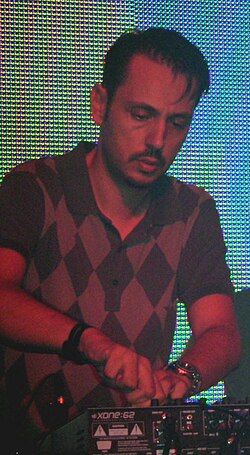
Dimitrios Yerasimos (Greek: Δημήτριος Γεράσιμος, Dimítrios Yerásimos; born 27 October 1963), better known as Dimitri from Paris, is a French music producer, DJ and composer of Greek descent.[1] His musical influences are rooted in 1970s funk and disco sounds that spawned contemporary house music, as well as original soundtracks from 1950s and 1960s movies such as Breakfast at Tiffany's, La Dolce Vita and The Party,[1] which were sampled in his album Sacrebleu.[2] Yerasimos fused these sounds with electro and block party hip hop he discovered in the 1980s.

Life and career

[edit]

Contrary to his musical pseudonym, Yerasimos was born not in Paris but in Istanbul, Turkey.[3] His family relocated to France[4] where he discovered DJing at home, using whatever he could find to "cut and paste" samples from disco hits or in to montages heard on the radio, blending them together to make tapes. This early experimentation helped him launch his DJ career.[1]

Early career

[edit]

He started out by DJing at the French station Radio 7, before moving on to Skyrock and finally to Radio NRJ, Europe's largest FM radio network, in 1986. There, he introduced the first ever house music show to be broadcast in France,[1] while simultaneously producing under the direction of sound designer Michel Gaubert, runway soundtracks for fashion houses such as Chanel, Jean-Paul Gaultier, Hermès and Yves Saint-Laurent. He also released two solo EPs from 1993 to 1994 and contributed to the Yellow Productions compilation La Yellow 357.[1]

Recording career

[edit]

In 1996, Yerasimos gained worldwide recognition with the release of his first full album, Sacrebleu, released on Yellow Productions.[1] A blend of diverse influences including jazz, original film soundtracks, samba, and organic house, Sacrebleu sold 300,000 copies worldwide and was named Album of the Year by UK's Mixmag magazine.[1]

In 2000, Yerasimos followed Sacrebleu up with A Night at the Playboy Mansion (Virgin) and Disco Forever (BBE), followed by My Salsoul in 2001, After the Playboy Mansion in 2002. In 2003, Cruising Attitude was released, to be closely followed by his first outing on UK's premier dance music label Defected: Dimitri from Paris In the House.

He has followed a somewhat glamorous musical path by recording soundtracks and advertising campaigns for fashion houses Chanel, Jean-Paul Gautier and Yves Saint Laurent and remixing hundreds of artists as diverse as Björk, The Cardigans, James Brown, Michael Jackson, New Order and Quincy Jones.[1] He also did the music for the opening theme of the anime Tsukuyomi: Moon Phase and mixed the soundtrack for the French luxury dessin animé Jet Groove produced by Method Films.

Recent developments

[edit]

2005 saw Yerasimos go back to his Funk and Disco roots, with Japanese hip hop producer and über collector DJ Muro for Super Disco Friends a double CD mixdown. In 2006 he offered his House of Love outing to Valentine's Day's lovers. Later on Yerasimos produced Los Amigos Invisibles "Super Pop Venezuela" album which grabbed a nomination for a Grammy Award.

2007 saw the release of the Cocktail Disco project with label BBE. Yerasimos described in the notes to the project that he arrived to the material through a "kind of evolution in music collecting [where] the more you complete one genre, the more you move to a sub genre, a sub, sub genre, eventually branching out to different musical paths, to avoid being stuck in dead ends. It turns out records I would overlook a few years back, are the ones I feverishly hunt now. One of many such sub genres I grew up to love over the years, is a type of Disco that I could best describe as Cocktail Disco."[5]

Yerasimos described the Cocktail Disco sub-genre as having "that ubiquitous 4/4 beat and flying open high hat, complemented by rich orchestrations, campy over the top vocals, and an often tropical latin vibe. Something that wouldn’t feel out of place in a Broadway musical."[5] He also pointed out that he believes "the same style was called Sleaze back in its days, from roughly 1976 to 1979. There were even DJs specialized in the Sleaze sound which was usually played after hours, in spots with a strong sex-oriented drive."[5]

The Cocktail Disco compilation includes tracks from Astrud Gilberto, Blue Velvets, the Ritchie Family and Paul Mauriat ("The Joy of You," from his New York-recorded disco album collaboration with Gérard Gambus Overseas Call).

2009 saw the release of the Night Dubbin', a post-disco R&B compilation remix album.[6]

Discography

[edit]

Studio albums

[edit]

Compilation albums

[edit]
  • Monsieur Dimitri's De-Luxe House of Funk, 1997
  • A Night at the Playboy Mansion, 2000
  • Disco Forever, 2000
  • My Salsoul, 2001
  • After the Playboy Mansion, 2002
  • In the House, 2004
  • Neko Mimi Mode, 2004
  • The Kings of Disco, 2004 compiled by Dimitri from Paris and Joey Negro
  • TV Tokyo Animation Tsukuyomi–Moon Phase– Best Collection "Zenbu, Kikitakunacchatta…", 2005
  • Super Disco Friends, 2005 compiled by Dimitri from Paris and DJ Muro
  • Southport Weekender, 2005 compiled by Dimitri from Paris, Jazzie B, and Quentin Harris
  • In the House of Love, 2006
  • Cocktail Disco, 2007
  • Return to the Playboy Mansion, 2008
  • Night Dubbin', 2009 compiled by Dimitri from Paris & The Idjut Boys
  • Get Down With The Philly Sound, 2010
  • Knights of the Playboy Mansion, 2011
  • The Remix Files, 2011
  • Back In The House, 2012
  • In the House of Disco, 2014
  • Dimitri From Paris Presents Le CHIC Remix, 2018

Remixes

[edit]

References

[edit]
[edit]
Revisions and contributorsEdit on WikipediaRead on Wikipedia
from Grokipedia
Dimitri from Paris (born Dimitrios Yerasimos in October 1963) is a French disc jockey, , and remixer of Greek descent, widely recognized for his influential contributions to , revivals, and eclectic remixes that bridge , , and electronic genres. Born in , , to Greek parents, he moved to at age three and developed a passion for music in his youth, collecting records and creating homemade mixes from radio broadcasts. His career began in the mid-1980s with club gigs and evolved into radio DJing on stations like Radio 7, Skyrock, and , where he hosted a popular show from 1987 to 1998. Dimitri from Paris achieved global breakthrough with his 1996 debut album , a genre-blending collection of , , , and hip-hop elements that sold over 300,000 copies worldwide and was named Album of the Year by Mixmag. He has since released numerous compilations and productions, including Disco Forever (2000) on BBE Music, A Night at the Playboy Mansion (2000) on Virgin, and Cruising Attitude (2004), amassing over a million copies sold across his discography on independent labels. Renowned for his remix work, he has reimagined tracks for artists such as , New Order, , , and —including an extended 2020 disco version of Jamiroquai's "Cosmic Girl" and a 2018 Chic compilation for Glitterbox featuring reworks of Sister Sledge's "." Early in his career, he provided soundtracks for fashion houses like , Gaultier, and , and was selected by to open her Paris concert. In 2005, he was awarded the Knight of the Order of Arts and Letters by the French government, becoming one of the first electronic music figures to receive this honor alongside acts like Air and Cassius. Dimitri from Paris continues to perform internationally and focuses on updating classic tracks for modern club play, emphasizing preservation with "a new coat of varnish" to keep disco and house relevant. His style, marked by dandyish flair and deep-rooted fandom for African-American dance music, has established him as a stylistic ambassador of French house globally.

Life and career

Early life and influences

Dimitrios Yerasimos, known professionally as Dimitri from Paris, was born on October 27, 1963, in , , to Greek parents. His family relocated to , , when he was three years old, where he spent the remainder of his childhood and formative years. Growing up in during the , Yerasimos was exposed to a rich array of musical genres through his family's record collection and local radio broadcasts, which introduced him to , , and sounds. These influences, drawn from music and European radio programming, shaped his early appreciation for rhythmic and melodic diversity without any formal musical education. As a self-taught enthusiast, he lacked structured training but immersed himself in the era's vibrant airwaves and home vinyl selections. In his teenage years during the early , Yerasimos began experimenting with music in his bedroom, creating rudimentary mixes and conducting self-taught sampling by recording and editing tracks from radio broadcasts onto tapes. This hands-on approach, blending cuts from family records with live radio captures, laid the groundwork for his intuitive understanding of rhythm and arrangement, influenced heavily by the soulful grooves of the time.

Career beginnings (1980s–1990s)

Dimitri from Paris entered the music industry through in the mid-, beginning with funk-focused shows on French stations Radio 7, Skyrock, and Radio starting in 1986. By 1987, he had transitioned to —Europe's largest FM network at the time—where he launched the country's inaugural program, a weekly show that ran until 1998 and played a key role in introducing to a broader French audience. Parallel to his radio work, he ventured into production in the late , composing soundtracks for high-profile fashion houses under the guidance of sound designer Michel Gaubert. These included runway and boutique audio for brands such as , Jean-Paul Gaultier, , and Yves Saint-Laurent, blending , , and emerging elements to complement their shows. This period marked his initial foray into professional music creation, leveraging his DJ skills to craft custom mixes that enhanced the glamour of Paris's fashion scene. His recording career gained momentum in the early with remixes for international artists, including his first major one for Björk's debut solo album. He released two solo EPs in 1993 and 1994. He soon collaborated with Yellow Productions, issuing the mini-LP Esquisses in 1995 and contributing tracks to their compilation La Yellow 357, while providing early remixes for up-and-coming French acts that helped solidify his presence in the burgeoning movement. These foundational efforts laid the groundwork for his later breakthrough with the 1996 album .

Breakthrough and major projects (1990s–2000s)

Dimitri from Paris rose to international prominence in the mid- with the release of his debut studio album, Sacrebleu, on June 11, 1996, via Yellow Productions. The album fused elements of , , and French pop, creating a distinctive lounge-downtempo sound that captured the emerging French touch aesthetic. Tracks like "Sacré Français" showcased his knack for blending retro influences with contemporary electronic production, earning widespread critical praise for its innovative approach. Building on this success, Dimitri from Paris entered the with a series of high-profile mix and compilation albums that solidified his reputation as a of and soulful . In , he released A Night at the Playboy Mansion on , a luxurious two-disc mix featuring bouncy edits and tracks from artists including , evoking an upscale, hedonistic vibe through seamless transitions and celebrity-inspired selections. That same year, Disco Forever (The Sound of Underground ) on BBE followed, compiling rare underground cuts with Dimitri's signature edits, highlighting his deep crate-digging expertise and revitalizing interest in grooves within electronic music circles. Throughout the decade, Dimitri from Paris expanded his influence through key collaborations and remix work with prominent artists. Additionally, his soundtrack contributions extended to fashion houses like and during the late 1990s and early 2000s, where he crafted atmospheric scores blending 1960s lounge with modern beats for runway shows. These projects, alongside the commercial momentum from his independent label releases, marked a peak in his career.

Later career and recent activities (2010s–present)

In the 2010s, Dimitri from Paris continued to curate and remix classic disco and funk material, with notable projects including his Salsoul Mastermix compilation released in December 2015, which reimagined tracks from the Salsoul Records catalog through DJ-friendly edits and blends. He also contributed a remix of Cerrone's "Love in C Minor" in May 2015, updating the 1976 disco staple for contemporary audiences. Extending his earlier work on Chic-related material, he helmed Dimitri From Paris Presents Le CHIC Remix in 2018 for Atlantic Records via Glitterbox, a 20-track collection featuring remastered and new edits of classics by Chic, Sister Sledge, and other artists from the Chic Organization, emphasizing his signature lush, extended disco arrangements. These efforts highlighted a sustained focus on archival curation rather than new original productions, aligning with the era's resurgence in vinyl and streaming revivals of 1970s and 1980s sounds. Entering the 2020s, Dimitri from Paris shifted further toward specialized edits and unreleased versions released via his own DFP Vaults imprint, prioritizing high-quality vinyl pressings for DJs and collectors in the streaming-dominated landscape. In September 2024, he issued "Funky Men / I Just Wanna Make You Dance (Dimitri From Paris Special Versions)," a 12-inch featuring re-edits of James Brown and The J.B.'s tracks with featured vocalist Maxxi, blending raw funk grooves with seamless transitions for modern dancefloors. This was followed in June 2025 by "Chez Madame La Baronne (Unreleased Versions)," a collaborative 12-inch with Chatobaron and remixes by Idjut Boys on the Bite The Day label, drawing from obscure French disco sources to unearth and polish long-lost recordings. In July 2025, he released "Tell You (Today) (Dimitri From Paris Special Version)," an updated take on Loose Joints' 1983 mutant disco track originally remixed by Larry Levan, incorporating the rare New Shoes Mix for extended play. No major studio albums have emerged since 2018, with his output centering on these targeted reissues that preserve and adapt disco heritage for vinyl enthusiasts. Dimitri from Paris maintained an active touring schedule through DJ residencies and festival appearances, including a headline slot at the Love Motion Festival in Crystal Palace Park, London, on August 24, 2025, alongside Nile Rodgers & CHIC, Cerrone, and Louie Vega, where he performed sets celebrating disco's enduring legacy. In recent interviews, he has reflected on his career's evolution, discussing key remix projects and the timeless appeal of disco editing in a 2024 Clash Magazine feature. This phase underscores his adaptation to the digital era by emphasizing physical formats and curation, ensuring his influence persists through selective, high-impact releases and live performances that bridge historical sounds with current club culture.

Musical style and legacy

Influences and signature sound

Dimitri from Paris's core musical influences draw heavily from the era, including the Philly Sound characterized by driving rhythms and soulful arrangements, as well as underground tracks that emphasized groove and elements. He has cited inspirations from New York City's late scene, with artists like serving as key references in his sampling approach to highlight orchestral strings and funky basslines. Additionally, pioneers such as and shaped his understanding of and club energy, influencing his early edits that blended extended mixes with emotional depth. His signature techniques revolve around eclectic sampling from , and sources, often weaving in elements like jazzy rhythms and breaks to create layered, nostalgic grooves in productions. Dimitri employs lush, orchestral arrangements in tracks, drawing from and soundtracks to add cinematic texture, while prioritizing a seamless emphasis on groove and retro in his mixes to evoke timeless dancefloor euphoria. This approach preserves the essence of original recordings, enhancing subtle details like crowd vocals or instrumentation without overhauling the source material. Over time, Dimitri's sound evolved from the raw, edit-focused tracks of the , exemplified by his debut album (1996), which incorporated live instrumentation like real drummers alongside swings and jazz-infused to achieve a sophisticated, eclectic fusion, to more polished, retro-futuristic blends in his work. This progression reflects a shift toward broader accessibility, balancing nostalgia with contemporary club playability through intuitive builds from melodies or samples. A recurring thematic element in his compilations is the concept, presented as a playful, glamorous motif that celebrates upscale and vibes, as seen in mixes like A Night at the , which curate uplifting selections evoking luxurious, seductive .

Impact and recognition in electronic music

Dimitri from Paris played a pioneering role in popularizing in during the 1980s, hosting the country's first dedicated radio program on CFM, which introduced listeners to emerging electronic sounds and laid groundwork for the French touch movement. His efforts helped bridge underground and influences with beats, contributing to a scene that later propelled acts like to global prominence, though his foundational radio work often receives less attention than the duo's commercial breakthroughs. This early advocacy fostered a distinctly French electronic aesthetic, blending vintage samples with modern production techniques that defined the genre's international appeal in the . His contributions have earned significant industry recognition, including a Grammy nomination for producing Los Amigos Invisibles' album Super Pop Venezuela in 2006. In 2005, the French government honored him with the title of Knight of the Order of Arts and Letters for his cultural impact on music. Commercially, his debut album Sacrebleu (1996) sold over 300,000 copies worldwide and was named one of the top ten albums of the year by Mixmag, while his overall catalog has exceeded one million units sold, underscoring his enduring commercial success in electronic music. He has also been featured in documentaries such as French Waves (2017), which chronicles the history of French electronic music, and Inside House Music (2008), highlighting his role in the genre's evolution. Through collaborations and mentorship, Dimitri from Paris has influenced emerging producers by sharing remix techniques that emphasize rearrangement over outright reconstruction, as detailed in his interviews on preserving original tracks' essence. His work with newer artists, including remixing tracks like Mark Ronson's "Nothing Breaks Like a Heart" (co-produced by Jamie xx), demonstrates this approach and has inspired contemporary remixers in the electronic scene. Additionally, his archival reissues, such as the Salsoul Re-Edits Series and Philadelphia International Records: Dimitri From Paris Remixes (2021), preserve disco heritage while adapting it for modern DJs, contributing to the 2020s vinyl revival by reintroducing classic grooves to new audiences; this continues with recent remixes like "We Got To Hit It Off" (2025) and ongoing Glitterbox radio shows as of 2025. Culturally, Dimitri from Paris has bridged underground club with mainstream spheres, producing soundtracks for fashion runway shows by houses like and , where his eclectic mixes of , , and elevated the sensory experience of high fashion events. His integrations of 1970s funk and film soundtrack samples into electronic productions have also influenced and media, extending house music's reach beyond clubs into broader pop . This crossover impact remains relevant in the , as his re-edit series and vinyl-focused releases align with renewed interest in analog formats and nostalgic electronic revivals.

Discography

Studio albums

Dimitri from Paris's debut studio album, , released in 1996, consists of 14 tracks that blend house rhythms with French vocals and spoken-word samples, evoking a nostalgic Parisian atmosphere through eclectic fusions of , , and electronic elements. The album's innovative production, characterized by playful interludes and stylish arrangements, earned critical acclaim, including an 8/10 rating from for its witty and genre-blending creativity. It performed strongly in Europe, with the lead single "Sacré Français" charting on the UK Official Charts and contributing to the album's commercial success as a cornerstone of the French Touch movement. Beyond this primary studio effort, Dimitri from Paris has not released additional original full-length albums, instead focusing on conceptual projects that highlight curated vibes and production innovation rather than traditional songwriting. Overall, this album reflects underground experimentation in , with critical praise and sales exceeding 300,000 units underscoring his impact on electronic music's evolution toward mainstream appeal.

Compilation and mix albums

Dimitri from Paris has curated numerous compilation and mix albums that highlight his expertise in selecting and sequencing tracks from the disco, funk, and house eras, often drawing from lesser-known recordings to create immersive listening experiences. His projects emphasize a DJ's perspective, blending rare gems with classics to evoke the energy of underground clubs. Notable releases include Disco Forever (The Sound of Underground Disco), a 2000 double-CD mix featuring 19 rare disco tracks compiled and mixed for Yellow Productions, which showcases his passion for overlooked 1970s underground sounds. Similarly, Cocktail Disco (2007), released on BBE Music, presents a themed collection of 26 tracks evoking a cocktail lounge atmosphere, with selections spanning soulful disco and boogie from the late 1970s and early 1980s. His curatorial approach centers on unearthing obscure and re-edits from the and , prioritizing tracks that might otherwise remain hidden in private collections or dusty archives. Collaborating frequently with labels like BBE Music, focuses on authenticity and discovery, avoiding mainstream hits in favor of material that captures the raw essence of era-defining genres. In interviews, he describes this process as building a "musical program" with meticulous attention to transitions and layering, allowing listeners to uncover nuances upon repeated plays. This method contrasts with simple track lists by emphasizing historical context, such as the influence of or dub techniques on modern dance music. Among his notable series are the Playboy Mansion compilations from 2000 to 2008, which function as extended DJ mixes blending uplifting soul and disco for an aspirational, party-ready vibe. A Night at the Playboy Mansion (2000) and After the Playboy Mansion (2002), both on Virgin Records, exemplify this with seamless blends of 14 to 20 tracks each, creating a continuous narrative of glamour and groove. Return to the Playboy Mansion (2008) on ITH Records extended this lounge-disco aesthetic across a set of tracks with prominent guest features, maintaining the series' emphasis on elegant, danceable electronica. The Super Disco Edits series in the 2010s extends his edit-focused curation, reworking classic disco cuts into extended versions for labels like Philadelphia International, often incorporated into broader mix projects. Overall, his compilations have achieved significant commercial success, with total sales exceeding one million units across independent releases. Thematically, Dimitri's mixes distinguish themselves through narrative flow in DJ sets, where track sequencing builds emotional arcs—starting with subtle builds and peaking in euphoric releases—rather than presenting standalone tracks for casual playback. This approach fosters a sense of journey, mirroring live performances while highlighting the interconnectedness of and disco's .

Notable remixes and edits

Dimitri from Paris began his remix career in the early , crafting extended club versions that infused classic tracks with grooves and flair to suit dancefloor demands. One of his earliest notable efforts was the 1990 of Sharon Redd's "Never Give You Up," which elongated the original hit into an eight-minute journey emphasizing pulsating basslines and layered percussion. Similarly, his 1992 re-edit of Sheila & B. Devotion's "Spacer" transformed the Euro- staple into a hypnotic anthem, adding subtle filters and builds that became a staple in underground sets. By the late , his of Atmosfear's "" (1998) showcased his growing signature, blending elements with rhythms to create a timeless club weapon. Entering the 2000s and , Dimitri from Paris amassed over 100 credited remixes for a diverse array of artists, solidifying his reputation as a versatile reinterpreter of , , and pop. His 1999 rework of Quincy Jones's "" (Dim's Space-A-Nova) injected cosmic vibes into the iconic instrumental, extending it for modern DJs while preserving its swinging brass. In the , he delivered a re-edit of Daft Punk's "Get Lucky" (2014), amplifying the grooves with extended breaks that highlighted Pharrell Williams's vocals and Rodgers's guitar, influencing crossover tracks. Other highlights included luxurious takes on Sister Sledge's "" and "Thinking of You" (both remixed in the 2010s with 2018 remasters), which layered orchestral strings and four-on-the-floor beats to revive for contemporary audiences. These works, often featured on compilations like Dimitri From Paris Presents Le Remix (2018), demonstrated his ability to bridge eras. In the 2020s, Dimitri from Paris shifted toward archival edits via his DFP Vaults imprint, unearthing and reworking unreleased or rare material to fuel the nu-disco revival. His 2024 special version of James Brown's "Funky Men" (featuring The J.B.'s and Maxxi) extended the obscure funk cut into a six-minute powerhouse with booming bass and percussive flair, emphasizing Brown's raw energy for today's dancefloors. This approach continued with the 2025 release of Loose Joints' "Tell You (Today)" (Dimitri From Paris Special Version), a mutant disco classic originally remixed by Larry Levan, now updated with seamless loops and airy synths drawn from 1980s no-wave sessions. That same year, his collaboration on "Chez Madame La Baronne" with Chatobaron produced unreleased versions blending French jazz-funk with Idjut Boys remixes, focusing on archival tapes to create extended, groove-heavy edits. These recent efforts highlight his ongoing influence, as his remixes consistently extend originals for immersive club play, contributing to the nu-disco movement's resurgence by merging vintage soul with modern production polish.

References

Add your contribution
Related Hubs
User Avatar
No comments yet.