Hubbry Logo
search
logo
1964542

Tom House

logo
Community Hub0 Subscribers
Read side by side
from Wikipedia

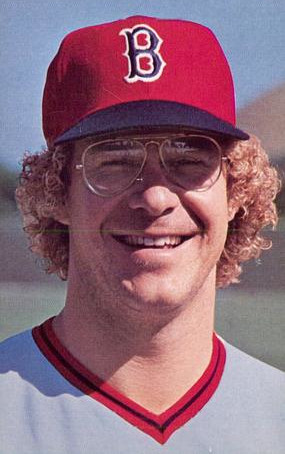
Thomas Ross House (born April 29, 1947) is an American former left-handed relief pitcher in Major League Baseball, as well as an author and a pitching coach.

Key Information

Baseball career

[edit]

Player

[edit]

House pitched at Nogales High School (La Puente, California) and the University of Southern California, before the Atlanta Braves selected him with the 48th overall pick of the 1967 draft's secondary phase, as part of the draft's third round. He had passed up an earlier chance to turn pro two years before, when the Chicago Cubs used the 201st overall pick to take him in the 11th round of the June draft's main phase.

Advancing quickly through the Braves' system, House made his major league debut on June 23, 1971, pitching one inning in relief of Pat Jarvis in the seventh inning of a 6–3 loss to the Montreal Expos.[1] Relying mainly on a curveball and a screwball, House was an important part of the Braves' bullpen in the mid-1970s. His best season was 1974, when he pitched 102+23 innings, all in relief, with a 1.93 earned run average (ERA) and a 0.98 walks plus hits per inning pitched (WHIP) ratio. His 38 games finished ranked seventh in the National League, and his 11 saves were good for fifth. House also ranked among the league leaders in those categories in 1975, when his 45 games finished ranked third, and his 11 saves placed tenth.

House was traded from the Braves to the Boston Red Sox for Roger Moret on December 12, 1975. At the time, the Red Sox had a surplus of starting pitchers and needed more bullpen depth.[2] After he spent 1976 in Boston, the Red Sox sold his contract to the Seattle Mariners, an expansion team, early in the 1977 season. House concluded his major league career after two seasons with the Mariners in 1977 and 1978. He retired with 29 wins, 23 losses, 34 saves, and a 3.79 ERA in 536 major league innings.

Coach

[edit]

After his retirement as a player, House became a pitching coach. In addition to Bachelor of Science in marketing and Master of Business Administration degrees from USC, House holds a Ph.D. in sports psychology from U.S. International University (now Alliant International University).[3][4] Early in his career, he employed what were thought of as unusual methods at the time, but have since been adopted by the baseball community at large such as having pitchers under his tutelage throw a football.[5]

House became the pitching coach for the Texas Rangers in 1985, during which time he was notable for his work with Nolan Ryan. During Ryan's induction into the Baseball Hall of Fame on July 25, 1999, he credited House as a positive influence on his career, saying:

While I was [with the Rangers] I was very fortunate to have a pitching coach by the name of Tom House. And Tom and I are of the same age and Tom is a coach that is always on the cutting edge. And I really enjoyed our association together and he would always come up with new training techniques that we would try and see how they would work in to my routine. And because of our friendship and Tom pushing me, I think I got in the best shape of my life during the years that I was with the Rangers.[6]

House has also worked as a coach for the Houston Astros, San Diego Padres, Chunichi Dragons, and Chiba Lotte Marines. He is an advisor with the American Sports Medicine Institute, and is the co-founder of the National Pitching Association. Through the NPA, he runs a series of camps and clinics for athletes, and markets a series of instructional videos for young baseball players. House has also written or co-written nineteen instructional books on baseball, as well as an autobiography.

In 1998, the American Baseball Coaches Association presented House with a lifetime achievement award.

House served as pitching coach for the USC Trojans from 2008-2011, when he retired from coaching.[7]

In 2008, House worked as a consultant and pitching coach for the reality program The Million Dollar Arm. In this capacity, he trained two young Indian prospects, Rinku Singh and Dinesh Patel over a period of seven months. At the end of that time he had raised the velocity of both prospects' fastballs to major league levels, and the two signed professional baseball contracts with the Pittsburgh Pirates' organization.[8] The story of The Million Dollar Arm is dramatized in the Disney movie of the same name.

Recently, House has worked with several NFL quarterbacks, including, Dak Prescott, Drew Brees, Tom Brady,[9] Alex Smith,[10] Carson Palmer, Cody Kessler, Matt Cassel, Jared Goff, Marcus Mariota, Andrew Luck, Jimmy Garoppolo, Carson Wentz, Terrelle Pryor, Tim Tebow, Andy Dalton,[11] Blake Bortles,[12] Matt Ryan,[13][14] Mac Jones, and Bo Nix.[15]

Historical legacy

[edit]

Coaching legacy

[edit]

House has been called the "father of modern pitching mechanics," and a "professor of throwing." House was one of the first to blend scientific based pitching study into methodologies for pitchers. He has led elite coaching to become scientific instead of guesswork. He has developed a model that is focused on quantifying the movement in each athlete's motion, then using drills and exercises to maximize accuracy and velocity and minimize strain on player's bodies.[16][17]

House has been one of the first to adopt "Neurophysiology," by pairing his mechanics and motion analysis with functional fitness to address an athlete's functional strength inefficiencies, sleep and nutrition to recover faster, and data driven mental and emotional assessment to uncover how athletes deal with the stress and anxiety of competition.[18][19]

Steroids

[edit]

House has admitted to using anabolic steroids in the 1970s, making him one of the earliest players to admit to using performance-enhancing drugs. In an interview with the San Francisco Chronicle, he described his use of steroids as "a failed experiment", although he increased from around 190 pounds to around 220 while using them. He viewed the experience as a failure since the extra muscle did not enhance his substandard 82-MPH fastball, while the drugs contributed to knee problems, eventually necessitating a total of seven operations. He claims to have stopped using them after learning in college classes during the off-season about the potential long-term effects of steroid use.

House has stated that "six or seven" pitchers on every major league staff in the 1970s were "fiddling" with steroids or human growth hormone. He attributes players' willingness to experiment with performance-enhancing substances to the permissiveness of the drug culture of the 1960s, and he believed that steroid use declined in Major League Baseball since the 1970s, as players have become more aware of the potential long-term drawbacks.[20]

Aaron's home run

[edit]

House and Hank Aaron were both members of the Braves in 1974, the season when Aaron broke Babe Ruth's record for career home runs. Aaron hit the record-setting 715th home run in the fourth inning of a game against the Los Angeles Dodgers, on April 8, 1974, against pitcher Al Downing. The ball landed in the Braves' bullpen in left-center field, where it was caught on the fly by House. Bill Buckner, then the Dodgers' left fielder, climbed to the top of the fence and begged House for the ball. The game stopped to celebrate the achievement, and after sprinting to the infield, House presented the ball to Aaron at home plate. His only payment was a TV given by a local store.[21]

[edit]

House was portrayed by Bill Paxton in the Disney film Million Dollar Arm.

Partial bibliography

[edit]

References

[edit]
[edit]
Revisions and contributorsEdit on WikipediaRead on Wikipedia
from Grokipedia
Thomas Ross House (born April 29, 1947) is an American former professional baseball pitcher and renowned pitching coach, widely recognized as the "Father of Modern Pitching Mechanics" for his pioneering use of biomechanics and motion analysis in athlete training.[1][2] House pitched in Major League Baseball (MLB) for eight seasons from 1971 to 1978, appearing in 289 games with a career record of 29 wins, 23 losses, a 3.79 earned run average (ERA), and 33 saves across 536 innings for the Atlanta Braves, Boston Red Sox, and Seattle Mariners.[3][2] After retiring as a player, House transitioned into coaching, serving as the Texas Rangers' pitching coach from 1985 to 1992, where he worked closely with Hall of Famer Nolan Ryan, helping him achieve peak performance including a 301-strikeout season in 1989.[4][2] He also held pitching coach positions with the Houston Astros (1980–1981), San Diego Padres (1981–1984), and later the University of Southern California Trojans (2008–2011), his alma mater.[2] Beyond team roles, House has advised elite athletes across sports, including quarterbacks Tom Brady and Drew Brees, applying his expertise in throwing mechanics to enhance performance and injury prevention.[2][1] House's contributions extend to education and innovation; he earned a Ph.D. in sports psychology from U.S. International University in San Diego in 1988 and co-founded the National Pitching Association in 2002 to promote science-based training methodologies.[2] He authored several books on pitching, such as The Jock’s Itch (1989), and developed the Mustard app in 2020, which uses smartphone-based motion analysis to provide personalized feedback for athletes.[2][1] A notable moment from his playing days was catching Hank Aaron's record-breaking 715th home run on April 8, 1974.[2] House, who resides in San Diego, was diagnosed with Parkinson's disease later in life but continues to influence sports science. In recent years, he has focused on Parkinson's advocacy, including exercise programs for patients.[2][5]

Early life and education

Childhood and high school

Thomas Ross House was born on April 29, 1947, in Seattle, Washington, to Thomas E. House, a civil engineer, and his wife Ruth.[2] He had a brother, Bill, a sister Peggy who died at age 4 of cancer, and the family adopted Richard Rice, an African American boy.[2] The family's frequent relocations due to the father's job marked House's early childhood, exposing him to different environments across the United States before settling in La Puente, California, when he was 13 years old.[2][6] House developed an early interest in baseball, beginning to play as a left-handed pitcher in Little League and Pony League while in Seattle.[2] After the move to Southern California, he continued honing his skills in local youth leagues, where baseball's year-round availability allowed him to focus intensely on the sport compared to others like football and basketball.[2][6] This period solidified his passion for pitching, as he practiced consistently and built foundational mechanics that would define his athletic path. At Nogales High School in La Puente, California, House participated in baseball, football, and basketball, but excelled particularly in baseball as a southpaw pitcher.[2][7] During his time there, he pitched seven no-hitters.[2] This high school success paved the way for his recruitment to the University of Southern California, where he continued his baseball career.[2]

College career and draft

House attended the University of Southern California (USC) on a baseball scholarship, joining the Trojans baseball team under legendary coach Rod Dedeaux.[2] In the summer of 1966, he played for the Alaska Goldpanners of Fairbanks, posting a 15-2 record with 177 strikeouts in 137 innings and helping the team win the National Baseball Congress World Series.[2] As a sophomore in 1967, he emerged as a key member of the pitching staff, posting a 5-3 record with a 1.43 ERA over 94 2/3 innings pitched.[2][8] His performance helped anchor a dominant rotation that included pitchers like Bill Thom and Dave Wight, contributing to the team's lowest ERA in program history at 2.26.[2] While pursuing his degree, House balanced academics and athletics, eventually earning a bachelor's degree in business from USC in 1972.[2] Although specific awards from his college tenure are not widely documented, his contributions on the mound during the 1967 season showcased the skills honed from his high school days, positioning him for professional opportunities. Following the 1967 college season, House was selected by the Atlanta Braves in the third round, 48th overall, of the June secondary phase draft—a selection that came after he had previously been drafted by the Chicago Cubs in the 11th round of the 1965 amateur draft but chose to attend USC instead.[9] He signed with the Braves shortly thereafter and transitioned directly to minor league baseball.[2]

Playing career

Atlanta Braves years

After being selected by the Atlanta Braves in the third round of the 1967 MLB Draft out of the University of Southern California, Tom House began his professional career in the Braves' minor league system, where he demonstrated steady progression as a left-handed pitcher. In 1967, his debut season, he split time across three levels: starting at Single-A with the Kinston Eagles (2-2, 3.46 ERA in 26 innings), advancing to Double-A Austin Braves (0-0, 2.00 ERA in 9 innings), and making brief appearances at Triple-A Richmond Braves (1-1, 5.40 ERA in 5 innings), compiling an overall 3-3 record with a 3.38 ERA and 40 strikeouts in 40 innings. By 1968, House focused on higher levels, posting a 2-1 mark and 1.00 ERA in 18 innings at Double-A Shreveport Braves before transitioning to Triple-A Richmond (5-7, 3.48 ERA in 124 innings, 77 strikeouts), ending the year 7-8 with a 3.17 ERA across 142 innings. His development continued in 1969 at Richmond (4-7, 4.05 ERA in 100 innings), shifting toward relief pitching, and in 1970, he appeared in 44 games (mostly relief) for Richmond (6-5, 4.12 ERA, 7 saves in 83 innings). In 1971, House excelled at Richmond with a 7-3 record, 2.33 ERA, and 11 saves in 58 innings, earning an International League All-Star nod and paving the way for his major league call-up.[10][2] House made his MLB debut on June 23, 1971, against the Montreal Expos at Atlanta-Fulton County Stadium, entering in relief of Pat Jarvis in the seventh inning and allowing one earned run in one inning pitched. Primarily deployed as a left-handed relief specialist throughout his Braves tenure, House appeared in 185 games from 1971 to 1975, starting just one, with a career 18-11 record, 3.18 ERA, 28 saves, and 160 strikeouts over 279.1 innings. In his rookie year of 1971, limited to 11 appearances after a September recall, he went 1-0 with a 3.05 ERA in 20.2 innings. The 1972 season saw sparse usage in 8 games (0-0, 2.89 ERA, 2 saves in 9.1 innings), though he spent most of the year in Triple-A Richmond, where he recorded a 5-8 mark with a 1.45 ERA and 20 saves in 62 innings; but 1973 marked his emergence as a key bullpen arm in 52 outings (4-2, 4.68 ERA, 4 saves in 67.1 innings).[9][2][10] House's most productive year with the Braves came in 1974, when he solidified his role as a reliable setup man and closer, appearing in 56 games with a 6-2 record, 1.93 ERA, 11 saves, and a 0.98 WHIP over 102.2 innings, allowing just 27 walks while striking out 64. He followed with another strong campaign in 1975, posting a 7-7 mark, 3.18 ERA, and 11 saves in 58 appearances, including a streak of 28 consecutive scoreless innings. Following the 1975 season, House was traded to the Boston Red Sox on December 12 for pitcher Roger Moret.[9][2]

Later MLB teams

After a successful stint with the Atlanta Braves that established him as a reliable left-handed reliever, Tom House's career took a more nomadic turn beginning in late 1975. On December 12, 1975, the Braves traded House to the Boston Red Sox in exchange for pitcher Roger Moret.[9] In his first full season with Boston in 1976, House appeared in 36 games exclusively in relief, posting a 1-3 record with a 4.33 ERA over 43.2 innings pitched, during which he allowed 39 hits and struck out 27 batters.[9] His performance was hampered by tendinitis and required knee surgery after the season.[2] House's time in Boston proved short-lived into the following year. Early in the 1977 season, he made eight relief appearances for the Red Sox, going 1-0 with a 12.91 ERA in 7.2 innings, surrendering 15 hits.[9] On May 28, 1977, the Red Sox sold his contract to the expansion Seattle Mariners, marking his third team in less than two years.[9] With Seattle that year, House transitioned to a more versatile role, making 26 appearances including 11 starts, where he recorded a 4-5 mark and a 3.93 ERA across 89.1 innings, with 94 hits allowed and 39 strikeouts; however, a hand injury sidelined him in August.[9][2] In 1978, House's final MLB season, he remained with the Mariners, appearing in 34 games (9 starts) and finishing with a 5-4 record and 4.66 ERA in 116 innings, during which he gave up 130 hits and 29 strikeouts while dealing with a dislocated finger that caused him to miss time.[9][2] Over his eight-year major league career spanning 289 games and 536.1 innings, House compiled a 29-23 record, 3.79 ERA, and 33 saves, with 261 strikeouts.[9] Declining performance, recurring injuries, and burnout contributed to his release by the Mariners on March 28, 1979, effectively ending his MLB tenure at age 31.[2]

Coaching career

Major League Baseball roles

House's coaching career began in the minor leagues as a pitching coach for the Houston Astros organization from 1980 to 1981, where he coached for their affiliate teams in Sarasota and Columbus, Georgia. He then served as a minor-league coach and instructor for the San Diego Padres from 1981 to 1984, including as pitching coach for their AAA affiliate, the Las Vegas Stars, in 1983 and 1984, where he began refining his science-driven approaches to pitcher development.[2] House began his Major League Baseball coaching career as the pitching coach for the Texas Rangers from 1985 to 1992, drawing on his experience as a former MLB reliever to implement innovative training techniques. During this tenure, he collaborated closely with veteran ace Nolan Ryan, who at age 42 led the American League with 301 strikeouts in 1989 and threw his seventh and final no-hitter in 1991 at age 44. House's methods, including video-based motion analysis with tools like the Digitizer and having pitchers throw footballs to enhance arm efficiency and mechanics, contributed to a more effective Rangers bullpen and overall staff performance, reducing injury risks through biomechanical focus.[2] After leaving the Rangers, House worked as a coach for the Chiba Lotte Marines in Japan from 1995 to 1998. He later worked with elite pitchers including Greg Maddux and Tom Glavine during their dominant years with the Atlanta Braves, as well as Randy Johnson across teams, helping refine their deliveries and contributing to their collective 11 Cy Young Awards—Maddux won four from 1992 to 1995, Glavine two in 1991 and 1998, and Johnson five from 1995 to 2002. These collaborations exemplified House's emphasis on biomechanical efficiency in professional settings, such as integrating motion capture in bullpen sessions to optimize velocity and control while minimizing strain.[2][11][12] House's MLB coaching emphasized practical applications of emerging sports science, fostering long-term pitcher health and performance; for instance, his work with Ryan and Johnson highlighted how targeted mechanical adjustments extended careers and elevated output in high-stakes environments. His playing experience as a reliever for the Braves, Red Sox, and Mariners provided foundational insights into bullpen dynamics that informed his team-based innovations.[2]

College and private coaching

After retiring from Major League Baseball coaching roles, Tom House returned to collegiate baseball as the pitching coach for the University of Southern California's Trojans from 2008 to 2011.[2][13] In this position, he focused on biomechanics and motion analysis to enhance pitcher development within the program.[2] House announced his retirement from coaching at the conclusion of the 2011 season, citing a desire to pursue other ventures in sports science.[13] House founded the National Pitching Association (NPA) as a private training organization dedicated to advanced, evidence-based instruction for baseball and softball pitchers.[14] The NPA emphasizes increasing velocity, building functional strength, and reducing injury risk through certified coaching methodologies reviewed by orthopedic specialists and sports physiologists.[15] Through the NPA, House provides private coaching to elite athletes, including professional pitchers seeking to refine their mechanics outside traditional team structures.[11] In 2008, House contributed to the Million Dollar Arm initiative by training Indian prospects Rinku Singh and Dinesh Patel in Los Angeles over a six-month period.[16] His guidance helped prepare them for tryouts with Major League Baseball scouts, resulting in their historic signings with the Pittsburgh Pirates as the first players from India to enter professional baseball contracts.[17][18]

Contributions to sports science

Pitching mechanics innovations

During his playing career in Major League Baseball from 1971 to 1978, Tom House began pioneering biomechanical analysis of pitching by transforming bullpens into makeshift research stations, where he meticulously observed and experimented with throwing mechanics during warm-up sessions. This hands-on approach, conducted while pitching for teams like the Atlanta Braves and Boston Red Sox, allowed him to study variables such as arm path, torque, and kinetic chain efficiency in real-time, laying the foundation for his later scientific contributions to the field. House's early efforts emphasized quantifiable improvements in velocity and injury prevention, drawing from emerging principles in kinesiology and physics to challenge traditional coaching methods.[5] In the late 1970s and early 1980s, House developed one of the first structured weighted-ball training programs, collaborating with Dr. Coop DeRenne at the University of Hawaii on a year-long study involving pitchers from five high schools and five universities across the United States. The program utilized balls 20% heavier and 20% lighter than standard baseballs to enhance arm strength, elasticity, and velocity, resulting in measurable gains in pitch speed without increasing injury risk when properly implemented. This research culminated in the publication of the book Implement Weight Training and the creation of the "VIP Program," which featured specialized 4-ounce and 6-ounce balls produced in partnership with Diamond Baseball (later acquired by Decker Sporting Goods), establishing weighted-ball protocols as a cornerstone of modern pitching development.[19] House also innovated video analysis techniques during the 1970s and 1980s, becoming one of the earliest coaches to integrate high-speed filming and rudimentary motion capture to dissect pitching deliveries frame by frame. By 1986, he advanced this work with 3D motion analysis using cameras and light-sensitive markers at 1,000 frames per second, enabling precise measurement of biomechanical variables like hip-shoulder separation and elbow valgus stress across over 900 Major League pitchers. These methods shifted pitching instruction from subjective observation to data-driven optimization, influencing arm health and performance standards in professional baseball.[1] In recognition of these foundational contributions, House co-founded Mustard in 2020, a digital throwing program and motion analysis app that applies his decades of biomechanical research to provide personalized feedback on mechanics for athletes at all levels. The platform uses AI-powered video assessment to evaluate key variables in the throwing motion, extending House's early innovations into accessible technology for velocity enhancement and injury reduction. For his overall impact on pitching science, the American Baseball Coaches Association awarded House its Lifetime Achievement Award in 1998.[20][21]

Cross-sport training applications

Tom House extended his expertise in throwing biomechanics beyond baseball to optimize performance for rotational athletes across various sports, emphasizing efficient power generation and injury prevention through kinematic sequencing and timing. His work with NFL quarterbacks, in particular, involved adapting pitching-derived principles to football passing, using high-speed cameras and 3D motion analysis to identify and correct mechanical inefficiencies. For instance, House analyzed quarterbacks' throws at 1,000 frames per second to refine arm paths, footwork, and torso rotation, drawing parallels between pitching motions and passing deliveries.[22] House's collaborations with elite NFL quarterbacks like Tom Brady and Drew Brees spanned over a decade, incorporating a multifaceted five-day program that integrated physical conditioning, nutritional guidance, and mental training to enhance throwing consistency and longevity. With Brady, House adjusted his non-throwing elbow position to maintain better alignment during release, contributing to sustained arm health into Brady's later career years. Similarly, for Brees, the focus was on rotational sequencing to maximize velocity without excessive strain, a method informed by data collected from legendary passers like Dan Marino and Joe Montana over two decades. These adaptations stemmed from House's core foundation in baseball mechanics but were tailored to the demands of pocket passing, such as quicker releases under pressure.[22][23][24] In 2025, House continued applying these principles to emerging talent, working with Denver Broncos quarterback Bo Nix during the offseason to refine footwork and arm action for greater efficiency. Nix's training addressed elongated strides and delivery timing, alongside nutritional shifts toward protein-focused recovery to improve blood chemistry and reduce fatigue, all approved by head coach Sean Payton. This session built on House's prior quarterback coaching, aiming to accelerate Nix's progression in his second NFL year.[25][26] Beyond football, House's methodologies extended to other rotational sports like tennis, golf, and lacrosse, where he optimized athletes' performance by applying universal principles of torque and energy transfer. Through his Rod Dedeaux Research and Baseball Institute and associated programs, he trained participants in these disciplines using sensor-based feedback to enhance swing or stroke mechanics, prioritizing functional strength and mental resilience for overall athletic durability. This cross-sport approach underscored House's philosophy that all rotational movements share kinematic fundamentals, enabling broader performance gains without sport-specific silos.[22][27][28]

Personal life and advocacy

Family and advanced education

Tom House earned a Bachelor of Science degree in marketing from the University of Southern California in 1972.[29] He subsequently pursued advanced studies at USC, obtaining a Master of Business Administration with a focus on marketing in 1974 and a master's degree in performance psychology from U.S. International University in 1985.[29] Later, House completed a Ph.D. in sports psychology from U.S. International University in 1988, which informed his shift toward integrating psychological principles into athletic training methodologies.[2][30] House was married once previously and has three children—daughters Brittany and Brooke, and son Bryan—from that marriage; all have pursued successful professional paths in various fields.[2] Following his retirement from coaching at USC in 2011, House transitioned into academia and consulting, establishing himself as an international performance analyst and sports psychologist who advises athletes across multiple disciplines, including baseball, football, and golf.[2][13] This phase leveraged his doctoral expertise to develop science-based training programs through organizations like the National Pitching Association, emphasizing biomechanical and mental conditioning for elite performers.[11][31]

Parkinson's diagnosis and initiatives

In 2010, Tom House was diagnosed with Parkinson's disease after experiencing symptoms such as difficulty with tasks that had previously been straightforward, initially leading him to suspect a brain tumor.[32][33] The diagnosis came as a profound shock, prompting House to reflect that his "life is over," yet he quickly resolved to confront the condition head-on, adapting his rigorous training regimen to manage symptoms through structured exercise and recovery protocols.[33] He has since described maintaining a daily routine of "four hours hard for four hours clear," emphasizing consistent physical activity to mitigate progression and sustain functionality.[5] Drawing on his extensive background in sports science, House founded the National Parkinson's Association to support others facing the disease, serving as its spokesperson to raise awareness and promote proactive management strategies.[32] Through the organization, he advocates for integrating evidence-based movement practices into daily life, leveraging his expertise in biomechanics to empower patients beyond traditional medical treatments.[32] In 2025, House launched the "Just Do Something Every Day" exercise program, a mobile app-based initiative tailored for Parkinson's patients that applies principles of proper mechanics, nutrition, and functional training to foster independence and symptom relief.[34] The program encourages simple, sustainable daily activities to build resilience, reflecting House's philosophy of turning personal adversity into communal benefit.[5]

Notable events

Hank Aaron's 715th home run

On April 8, 1974, at Atlanta-Fulton County Stadium, Hank Aaron of the Atlanta Braves faced the Los Angeles Dodgers in a regular-season game that would etch itself into baseball history. With the Braves trailing 3-1 in the bottom of the fourth inning, Aaron stepped to the plate against Dodgers pitcher Al Downing and launched a 1-0 fastball deep into left-center field, clearing the fence for a two-run home run—his 715th career tally, surpassing Babe Ruth's long-held record of 714 before a sellout crowd of 53,775 spectators.[35][36] Tom House, a 27-year-old relief pitcher for the Braves during his tenure with the team from 1971 to 1975, was stationed in the bullpen behind left-center field when the ball arced toward him. As Dodgers left fielder Bill Buckner struggled to scale the outfield wall, the historic shot carried over into House's glove for an easy catch. Without hesitation, House bolted from the bullpen, racing across the diamond through a sea of onrushing teammates and fans to reach home plate, where he personally handed the ball to Aaron amid the jubilant chaos.[37][36] The immediate aftermath amplified the moment's intensity, as national media swarmed the stadium, capturing the emotional embrace between Aaron and his mother, Estella, while House stood nearby as a key witness to the milestone. Entertainer Sammy Davis Jr., present in the stands, publicly offered $25,000 for the ball—more than the era's minimum MLB salary of $15,000—highlighting its instant cultural value. House later described the catch as the pinnacle of his playing career, a "remarkable truth" that underscored Aaron's grace and fortitude against pervasive racial threats during his pursuit of the record, forever shaping House's appreciation for baseball's human element.[36][38]

Steroids use admission

During his playing career in the 1960s and 1970s, Tom House experimented with anabolic steroids, amphetamines, and human growth hormone as a means to compete with peers in Major League Baseball, describing the effort as a "failed experiment" that yielded no significant performance enhancements.[39] He reported gaining nearly 30 pounds from the steroids, which improved workout recovery but did not increase his fastball velocity beyond 82 mph, ultimately leading him to abandon their use when emerging research revealed long-term health risks.[40] House estimated that 6 to 7 pitchers per team, or roughly 20-30% of players overall, engaged in similar experimentation during that era, often obtaining the substances legally via prescriptions or from teammates. He later clarified that his estimate may have overstated steroid use specifically, noting amphetamines were more commonly used among pitchers.[41][42] The added weight from steroid use contributed to severe knee issues for House, resulting in seven surgeries—five on his right knee and two on his left—which he directly attributed to the extra strain on his joints.[39] In his 2005 public admission to the San Francisco Chronicle, House emphasized the lack of benefits, stating, "I was a failed experiment," and highlighted the ignorance of the time: "We were doing steroids they wouldn’t give to horses. That was the ‘60s, when nobody knew."[39] This disclosure came amid growing scrutiny of performance-enhancing drugs in baseball, predating the more comprehensive revelations in the 2007 Mitchell Report. Post-admission, House advocated for education on the health dangers of steroids, urging baseball to prioritize clean competition and warning that unchecked use distorted the sport's integrity while posing risks like his own joint damage. He viewed the era's experimentation as a cautionary tale, emphasizing that modern awareness and testing had rightly curbed such practices to protect players' long-term well-being.[39]

Coaching influence

Tom House is widely recognized as the "father of modern pitching mechanics" for his pioneering research into biomechanical analysis and throwing efficiency, which revolutionized how pitchers train and perform.[43][44] His methods emphasized functional strength, injury prevention, and velocity enhancement through techniques like weighted-ball training and long-toss programs, influencing a generation of athletes across sports.[44] House's coaching directly shaped the careers of several Baseball Hall of Famers, including Nolan Ryan and Greg Maddux. Ryan credited House in his 1999 Hall of Fame induction speech for refining his mechanics in the later stages of his career, enabling sustained high performance into his 40s and contributing to his record seven no-hitters.[44] Similarly, Maddux, known for his precision and efficiency, incorporated House's principles on kinematic sequencing and balance, which helped maintain his dominance with four consecutive Cy Young Awards from 1992 to 1995.[45][1] House's innovations have seen broad adoption in Major League Baseball and youth development programs, with his National Pitching Association (NPA) training thousands of pitchers from Little League to professional levels since its founding in 2002.[14] MLB teams now commonly integrate his pre-throwing routines and biomechanical evaluations, correlating with league-wide fastball velocity increases from 91.1 mph in 2007 to 93.9 mph in recent seasons.[44] At the youth level, NPA-certified coaches apply his methodology to reduce injury rates and build foundational skills, making science-based pitching accessible beyond elite prospects.[46] In 2025, House continued his cross-sport influence by working with Denver Broncos quarterback Bo Nix to enhance throwing efficiency.[26] In recognition of his enduring contributions, House received the American Baseball Coaches Association's Lifetime Achievement Award in 1998, honoring his impact on coaching education and player development.[21] This accolade underscored his role in bridging academic research with practical application, influencing pitching curricula in college and professional settings.[21]

Media portrayals

Tom House was portrayed by actor Bill Paxton in the 2014 Disney film Million Dollar Arm, which dramatized the real-life efforts to recruit and train Indian cricket players as baseball pitchers, a project in which House served as the USC pitching coach.[47] The film highlights House's expertise in throwing mechanics during the training sequences, underscoring his brief on-field role in the story.[48] House has appeared in numerous interviews and podcasts discussing his baseball career and coaching philosophy, including a 2020 episode of the Todd Durkin IMPACT Show where he reflected on catching Hank Aaron's 715th home run and his work with athletes like Tom Brady.[49] His 1989 book, The Jock's Itch: The Fast-Track Private World of the Professional Ballplayer, offers an autobiographical account of his eight seasons as a Major League pitcher, drawing from his Ph.D. research on athlete psychology and behavior.[50] In recent years, House's advocacy for Parkinson's disease, which he was diagnosed with around 2010, has featured prominently in media. A June 2025 article in the WHY Institute detailed his role as co-founder and spokesperson for the National Parkinson's Association, emphasizing exercise programs like Rock Steady Boxing to manage symptoms.[5] That same month, he appeared on the Beyond Your WHY podcast, sharing how his performance training principles apply to Parkinson's rehabilitation.[51] In April 2025, House discussed his condition and ongoing advocacy on the Pablo Torre Finds Out podcast, linking mental resilience from his coaching career to coping with the disease at age 77.[52]

References

User Avatar
No comments yet.