
Recent from talks
Tommy Trinder
Knowledge base stats:
Talk channels stats:
Members stats:
Tommy Trinder
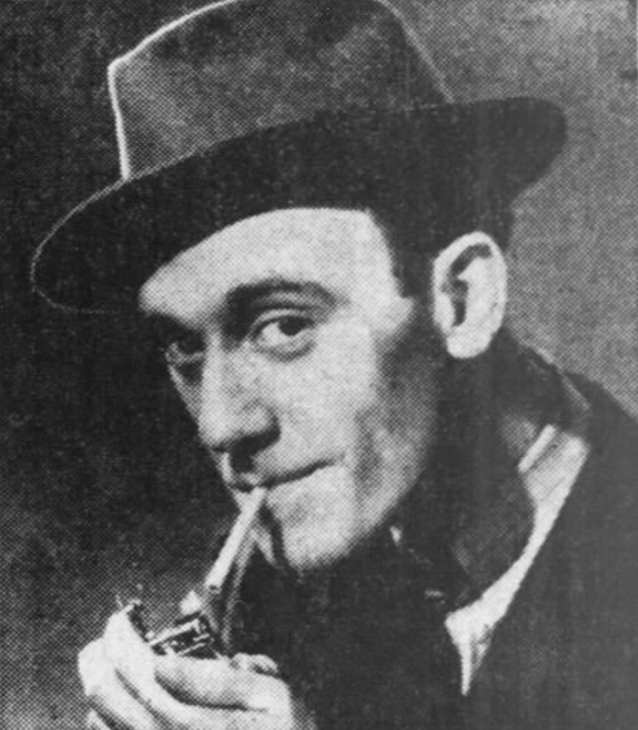
Thomas Edward Trinder (24 March 1909 – 10 July 1989) was an English stage, screen and radio comedian whose catchphrase was "You lucky people!". Described by cultural historian Matthew Sweet as "a cocky, front-of-cloth variety turn", he was one of the United Kingdom's foremost entertainers during the Second World War.
Known for his confident and direct style of comedy, Trinder first found recognition with his music hall revues in the late 1930s. During the war, he worked for ENSA and maintained a successful film career, starring in a string of Ealing Studios films including Sailors Three (1940), Champagne Charlie (1944) and Bitter Springs (1950). During the 1950s, Trinder became a television star, notably as the original host of Sunday Night at the London Palladium (1955–1958). In 1959, he became chairman of Fulham Football Club, a position he maintained until 1976. He continued to perform into the 1980s.
Tommy Trinder was born at 54 Wellfield Road, Streatham, South London, on 24 March 1909, the son of Thomas Henry Trinder, a London tram driver from Shilton, Oxfordshire, and his Scottish wife Jennie Georgina Harriet (née Mills). The family moved to Fulham after Trinder's father was transferred to Hammersmith. As a boy, Trinder would sneak into Fulham Football Club's Craven Cottage ground when the Thames was at low tide to watch the club play.
Trinder left school early for a job as an errand boy. He made his first stage appearance at the age of twelve in a talent competition at Collins's Music Hall. Trinder's singing act won the contest and when collecting his award, he was approached by Will Murray who recruited him for his Casey's Court juvenile comedy show. Trinder made his first appearance with the company on 5 June 1921 in Oldham.[citation needed] The company, which also featured Jimmy Wheeler at the time, toured music halls including Sunderland Empire Theatre.
After a few years with Casey's Court, Trinder then joined a dancing act called Phil Rees' Stable Lads. At the age of 14, he performed with them at Folies Bergère, Paris. By 1926, the 17-year-old Trinder was the star of Archie Pitt's travelling variety comedy shows, often appearing at the Queen's Theatre, Poplar, London. Trinder also performed in concert parties and working men's clubs. By the mid-1930s, Trinder was appearing in variety shows across the United Kingdom with an act titled "The Load of Nonsense".
Trinder began to achieve national recognition in 1937 with the touring revues Tune In and In Town Tonight. Trinder's stage persona was confident and cheeky with what historian Matthew Sweet has described as a "transcendental self-belief" typified by his "you lucky people!" catchphrase. His act was fast-talking and direct, with topical allusions and ad libs. Trinder would often begin his act with "The name's Trinder. That's T-R-I-N-D-E-R, pronounced Chumley", a dig at the upper classes. In December 1938, Trinder was spotlighted in an end-of-year review in The Era, who said "Tommy Trinder has established himself firmly in his own special niche, as we knew he would. But it is not a niche easy of attainment. To abolish deliberately the proscenium, to get down among the audience, treat individual members of it with easy familiarity, pinch their cigarettes and chocolates and to be loved for doing it... well, I have seen other artists try something like it, and their reward has been the frozen face and the indignant murmur. Tommy Trinder is a truly great artist". In July 1939, Trinder starred alongside Arthur Askey in Jack Hylton's stage version of the BBC's radio comedy series Band Waggon at the London Palladium.
By the time of the Second World War, Trinder was one of Britain's foremost entertainers and regularly appeared in his own shows at the London Palladium. He performed for British armed forces personnel as part of ENSA (Entertainments National Service Association) and would joke that the organisation’s name stood for Every Night Something Atrocious.[citation needed] Trinder would later dub its successor CSE (Combined Services Entertainment) "Chaos Supersedes ENSA". In 1941, he appeared in Eating Out with Tommy Trinder, a public information film promoting wartime British Restaurants.
Trinder was known for his self-promotion and claimed that, had he not entered showbusiness, he would have worked in publicity. When appearing in George Black's musical revue Happy and Glorious in 1944, he arranged for large posters to be displayed across London bearing the slogan "If it's laughter you're after, Trinder's the name". One of the posters, in the East End of London, was in Yiddish. The Stage has described Trinder as one of the first artists to recognise the importance of advertising.
Hub AI
Tommy Trinder AI simulator
(@Tommy Trinder_simulator)
Tommy Trinder
Thomas Edward Trinder (24 March 1909 – 10 July 1989) was an English stage, screen and radio comedian whose catchphrase was "You lucky people!". Described by cultural historian Matthew Sweet as "a cocky, front-of-cloth variety turn", he was one of the United Kingdom's foremost entertainers during the Second World War.
Known for his confident and direct style of comedy, Trinder first found recognition with his music hall revues in the late 1930s. During the war, he worked for ENSA and maintained a successful film career, starring in a string of Ealing Studios films including Sailors Three (1940), Champagne Charlie (1944) and Bitter Springs (1950). During the 1950s, Trinder became a television star, notably as the original host of Sunday Night at the London Palladium (1955–1958). In 1959, he became chairman of Fulham Football Club, a position he maintained until 1976. He continued to perform into the 1980s.
Tommy Trinder was born at 54 Wellfield Road, Streatham, South London, on 24 March 1909, the son of Thomas Henry Trinder, a London tram driver from Shilton, Oxfordshire, and his Scottish wife Jennie Georgina Harriet (née Mills). The family moved to Fulham after Trinder's father was transferred to Hammersmith. As a boy, Trinder would sneak into Fulham Football Club's Craven Cottage ground when the Thames was at low tide to watch the club play.
Trinder left school early for a job as an errand boy. He made his first stage appearance at the age of twelve in a talent competition at Collins's Music Hall. Trinder's singing act won the contest and when collecting his award, he was approached by Will Murray who recruited him for his Casey's Court juvenile comedy show. Trinder made his first appearance with the company on 5 June 1921 in Oldham.[citation needed] The company, which also featured Jimmy Wheeler at the time, toured music halls including Sunderland Empire Theatre.
After a few years with Casey's Court, Trinder then joined a dancing act called Phil Rees' Stable Lads. At the age of 14, he performed with them at Folies Bergère, Paris. By 1926, the 17-year-old Trinder was the star of Archie Pitt's travelling variety comedy shows, often appearing at the Queen's Theatre, Poplar, London. Trinder also performed in concert parties and working men's clubs. By the mid-1930s, Trinder was appearing in variety shows across the United Kingdom with an act titled "The Load of Nonsense".
Trinder began to achieve national recognition in 1937 with the touring revues Tune In and In Town Tonight. Trinder's stage persona was confident and cheeky with what historian Matthew Sweet has described as a "transcendental self-belief" typified by his "you lucky people!" catchphrase. His act was fast-talking and direct, with topical allusions and ad libs. Trinder would often begin his act with "The name's Trinder. That's T-R-I-N-D-E-R, pronounced Chumley", a dig at the upper classes. In December 1938, Trinder was spotlighted in an end-of-year review in The Era, who said "Tommy Trinder has established himself firmly in his own special niche, as we knew he would. But it is not a niche easy of attainment. To abolish deliberately the proscenium, to get down among the audience, treat individual members of it with easy familiarity, pinch their cigarettes and chocolates and to be loved for doing it... well, I have seen other artists try something like it, and their reward has been the frozen face and the indignant murmur. Tommy Trinder is a truly great artist". In July 1939, Trinder starred alongside Arthur Askey in Jack Hylton's stage version of the BBC's radio comedy series Band Waggon at the London Palladium.
By the time of the Second World War, Trinder was one of Britain's foremost entertainers and regularly appeared in his own shows at the London Palladium. He performed for British armed forces personnel as part of ENSA (Entertainments National Service Association) and would joke that the organisation’s name stood for Every Night Something Atrocious.[citation needed] Trinder would later dub its successor CSE (Combined Services Entertainment) "Chaos Supersedes ENSA". In 1941, he appeared in Eating Out with Tommy Trinder, a public information film promoting wartime British Restaurants.
Trinder was known for his self-promotion and claimed that, had he not entered showbusiness, he would have worked in publicity. When appearing in George Black's musical revue Happy and Glorious in 1944, he arranged for large posters to be displayed across London bearing the slogan "If it's laughter you're after, Trinder's the name". One of the posters, in the East End of London, was in Yiddish. The Stage has described Trinder as one of the first artists to recognise the importance of advertising.
Recent media