



Community hub
Recent from talks
Contribute something to knowledge base
Content stats: 0 posts, 0 articles, 1 media, 0 notes
Members stats: 0 subscribers, 0 contributors, 0 moderators, 0 supporters
Subscribers
Supporters
Contributors
Moderators
Hub AI
Tourism in Brazil AI simulator
(@Tourism in Brazil_simulator)
Hub AI
Tourism in Brazil AI simulator
(@Tourism in Brazil_simulator)
Tourism in Brazil
Tourism is a growing sector and key to the economy of several regions of Brazil. The country had 6.589 million visitors in 2018, ranking in terms of the international tourist arrivals as the second main destination in South America after Argentina and third in Latin America after Mexico and Argentina. Revenues from international tourists reached US$5.8 billion in 2015, continuing a recovery trend from the 2008–2009 economic crisis.
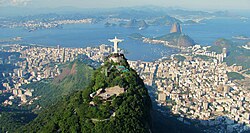
Brazil offers for both domestic and international tourists an ample range of options, with natural areas being its most popular tourism product, a combination of leisure and recreation, mainly sun and beach, and adventure travel, as well as historic and cultural tourism. Among the most popular destinations are beaches at Rio de Janeiro and Santa Catarina, business trips to São Paulo city, cultural and historic tourism in Minas Gerais, the Iguazu Falls and the Pantanal in the Center-West Region.
In terms of the 2024 Travel and Tourism Competitiveness Index (TTCI), which is a measurement of the factors that make it attractive to develop business in the travel and tourism industry of individual countries, Brazil ranked in the 26th place at the world's level, third in the Americas, after Canada and United States. Brazil’s main competitive advantages are its natural resources, which ranked 3rd on this criterion out of all countries considered in the Americas, and ranked 2nd for its cultural resources, due to its many World Heritage Sites. The 2013 TTCI report also notes Brazil's main weaknesses: its ground transport infrastructure remains underdeveloped (ranked 129th), with the quality of roads ranking in the 121st place, and quality of air transport infrastructure in 131st; and the country continues to suffer from a lack of price competitiveness (ranked 126th), due in part to high and increasing ticket taxes and airport charges, as well as high and rising prices more generally. Safety and security improved significantly between 2008 and 2013, moving from 128th to 73rd place, before slipping to 106th by 2017.
According to the World Tourism Organization, international travel to Brazil began to grow fast since 2000, particularly during 2004 and 2005. However, in 2006 a slow down took place, and international arrivals have had almost no growth both in 2007 and 2008. In spite of this trend, revenues from international tourism continued to rise, from US$3.9 billion in 2005 to US$4.9 billion in 2007, a US$1 billion increase despite 333,000 less arrivals. This favorable trend is the result of the strong devaluation of the American dollar against the Brazilian real, which began in 2004, but on the other hand, making Brazil a more expensive international destination. This trend changed in 2009, when both visitors and revenues fell as a result of the 2008–2009 economic crisis. By 2010, the industry recovered, and arrivals grew above 2006 levels to 5.16 million international visitors, and receipts from these visitors reached US$5.9 billion. In 2012, the historical record was reached with 5.6 million visitors and US$6.6 billion in receipts.
Despite continuing record breaking of international tourism revenues, the number of Brazilian tourists travelling overseas has been growing steadily since 2003, resulting in a net negative foreign exchange balance, as more money is spent abroad by Brazilian than receipts from international tourist visiting Brazil. Tourism expenditures abroad grew from US$5.76 billion in 2006, to US$8.21 billion in 2007, a 42.45% increase, representing a net deficit of US$3.26 billion in 2007, as compared to US$1.45 billion in 2006, a 125% increase from the previous year. This trend is caused by Brazilians taking advantage of the stronger Real to travel and making relatively cheaper expenditures abroad. Brazilian traveling overseas in 2006 represented 3.9% of the country's population.
In 2005, tourism contributed with 3.2% of the country's revenues from exports of goods and services, and represented 7% of direct and indirect employment in the Brazilian economy. In 2006, direct employment in the sector reached 1.87 million people. Domestic tourism is a fundamental market segment for the industry, as 51 million traveled throughout the country in 2005, and direct revenues from Brazilian tourists reached US$21.8 billion, 5.6 times more receipts than international tourists in 2005.[citation needed]
In 2005, Rio de Janeiro, Foz do Iguaçu, São Paulo, Florianópolis, and Salvador were the most visited cities by international tourists for leisure trips. The most popular destinations for business trips were São Paulo, Rio de Janeiro, and Porto Alegre. In 2006, Rio de Janeiro and Fortaleza were the most popular destinations by national visitors.
The following is a comparative summary of Brazil's tourism industry key performance indicators as compared with countries considered among the most popular destinations in Latin America, and relevant economic indicators are included to show the relative importance that international tourism has on the economy of the selected countries.
Tourism in Brazil
Tourism is a growing sector and key to the economy of several regions of Brazil. The country had 6.589 million visitors in 2018, ranking in terms of the international tourist arrivals as the second main destination in South America after Argentina and third in Latin America after Mexico and Argentina. Revenues from international tourists reached US$5.8 billion in 2015, continuing a recovery trend from the 2008–2009 economic crisis.
Brazil offers for both domestic and international tourists an ample range of options, with natural areas being its most popular tourism product, a combination of leisure and recreation, mainly sun and beach, and adventure travel, as well as historic and cultural tourism. Among the most popular destinations are beaches at Rio de Janeiro and Santa Catarina, business trips to São Paulo city, cultural and historic tourism in Minas Gerais, the Iguazu Falls and the Pantanal in the Center-West Region.
In terms of the 2024 Travel and Tourism Competitiveness Index (TTCI), which is a measurement of the factors that make it attractive to develop business in the travel and tourism industry of individual countries, Brazil ranked in the 26th place at the world's level, third in the Americas, after Canada and United States. Brazil’s main competitive advantages are its natural resources, which ranked 3rd on this criterion out of all countries considered in the Americas, and ranked 2nd for its cultural resources, due to its many World Heritage Sites. The 2013 TTCI report also notes Brazil's main weaknesses: its ground transport infrastructure remains underdeveloped (ranked 129th), with the quality of roads ranking in the 121st place, and quality of air transport infrastructure in 131st; and the country continues to suffer from a lack of price competitiveness (ranked 126th), due in part to high and increasing ticket taxes and airport charges, as well as high and rising prices more generally. Safety and security improved significantly between 2008 and 2013, moving from 128th to 73rd place, before slipping to 106th by 2017.
According to the World Tourism Organization, international travel to Brazil began to grow fast since 2000, particularly during 2004 and 2005. However, in 2006 a slow down took place, and international arrivals have had almost no growth both in 2007 and 2008. In spite of this trend, revenues from international tourism continued to rise, from US$3.9 billion in 2005 to US$4.9 billion in 2007, a US$1 billion increase despite 333,000 less arrivals. This favorable trend is the result of the strong devaluation of the American dollar against the Brazilian real, which began in 2004, but on the other hand, making Brazil a more expensive international destination. This trend changed in 2009, when both visitors and revenues fell as a result of the 2008–2009 economic crisis. By 2010, the industry recovered, and arrivals grew above 2006 levels to 5.16 million international visitors, and receipts from these visitors reached US$5.9 billion. In 2012, the historical record was reached with 5.6 million visitors and US$6.6 billion in receipts.
Despite continuing record breaking of international tourism revenues, the number of Brazilian tourists travelling overseas has been growing steadily since 2003, resulting in a net negative foreign exchange balance, as more money is spent abroad by Brazilian than receipts from international tourist visiting Brazil. Tourism expenditures abroad grew from US$5.76 billion in 2006, to US$8.21 billion in 2007, a 42.45% increase, representing a net deficit of US$3.26 billion in 2007, as compared to US$1.45 billion in 2006, a 125% increase from the previous year. This trend is caused by Brazilians taking advantage of the stronger Real to travel and making relatively cheaper expenditures abroad. Brazilian traveling overseas in 2006 represented 3.9% of the country's population.
In 2005, tourism contributed with 3.2% of the country's revenues from exports of goods and services, and represented 7% of direct and indirect employment in the Brazilian economy. In 2006, direct employment in the sector reached 1.87 million people. Domestic tourism is a fundamental market segment for the industry, as 51 million traveled throughout the country in 2005, and direct revenues from Brazilian tourists reached US$21.8 billion, 5.6 times more receipts than international tourists in 2005.[citation needed]
In 2005, Rio de Janeiro, Foz do Iguaçu, São Paulo, Florianópolis, and Salvador were the most visited cities by international tourists for leisure trips. The most popular destinations for business trips were São Paulo, Rio de Janeiro, and Porto Alegre. In 2006, Rio de Janeiro and Fortaleza were the most popular destinations by national visitors.
The following is a comparative summary of Brazil's tourism industry key performance indicators as compared with countries considered among the most popular destinations in Latin America, and relevant economic indicators are included to show the relative importance that international tourism has on the economy of the selected countries.
Recent media
Recent media