
Recent from talks
Tourism in Pakistan
Knowledge base stats:
Talk channels stats:
Members stats:
Tourism in Pakistan
Tourism in Pakistan is a growing industry. In 2010, Lonely Planet termed Pakistan "tourism's 'next big thing'". The country is geographically and ethnically diverse, and has a number of historical and cultural heritage sites. Condé Nast Traveller ranked Pakistan The Best Holiday Destination for 2020 and also declared it the third-highest potential adventure destination in the world for 2020. As security in the country improves, tourism increases; in two years, it has increased by more than 300%.
In 2018, the British Backpacker Society ranked Pakistan the world's top adventure travel destination, describing the country as "one of the friendliest countries on earth, with mountain scenery that is beyond anyone's wildest imagination". Forbes ranked Pakistan as one of the ‘coolest places’ to visit in 2019. The World Economic Forum's Travel and Tourism Competitiveness Report placed Pakistan in the top 25 percent of global destinations for its World Heritage Sites, which range from the mangroves in the Indus delta to the Indus Valley civilization sites including Mohenjo-daro and Harappa.
According to the World Economic Forum's Travel and Tourism Competitiveness Report 2017, the direct contribution of travel and tourism to Pakistan's GDP in 2015 was US$328.3 million, constituting 2.8% of the total GDP. According to the World Travel and Tourism Council, the direct contribution of travel and tourism to Pakistan's GDP in 2016 was Rs. 793 billion (equivalent to Rs. 4.0 trillion or US$14 billion in 2021), constituting 2.7% of the total GDP. By 2025, the government predicts tourism will contribute Rs. 1 trillion (US$3.5 billion) to the Pakistani economy.
In October 2006, one year after the 2005 Kashmir earthquake, The Guardian released a list of "the top five tourist sites in Pakistan" to help the country's tourism industry. The sites included Lahore, the Karakoram Highway, Karimabad and Lake Saiful Muluk. To promote the country's cultural heritage, in 2007, Pakistan launched the "Visit Pakistan" marketing campaign that involved events including fairs, religious festivals, regional sporting events, arts and craft shows, folk festivals and openings of historical museums.
In 2013, over half a million tourists visited Pakistan, contributing $298 million; these figures have since risen to over 6.6 million tourists in 2018. By comparison, Pakistan's domestic tourism industry is estimated at 50 million tourists who travel in the country on short trips usually between May and August. The largest inflow of tourists are from the United Kingdom, followed by the United States and China.
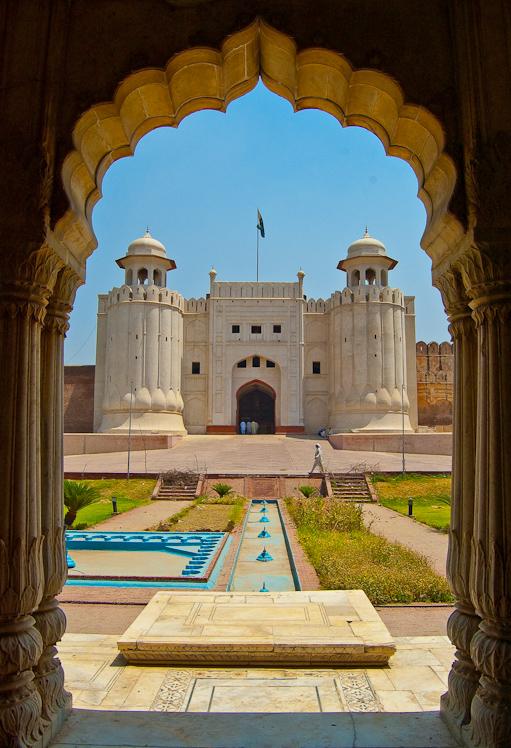
Major tourist attractions in Pakistan include the ruin of Mohenjo-daro and Harappa, the Himalayan hill stations. Pakistan is home to several mountain peaks over 7,000 metres (23,000 feet), including K2, which draw adventurers and mountaineers from around the world. The north of Pakistan has many old fortresses, ancient architecture and the Hunza and Chitral valleys, which are home to small Kalash communities and Fairy Meadows, and the Diamer District of Gilgit Baltistan. Punjab province has the historic city of Lahore, Pakistan's cultural capital, with many examples of Mughal architecture such as Badshahi Masjid, Shalimar Gardens, Tomb of Jahangir and Lahore Fort.[citation needed]
In the 1960s Pakistan was part of the "hippie trail" stretching from Europe to Asia. That tourism disappeared in the 1970s with the conversion from a liberal government to an Islamized Pakistan under dictator Muhammad Zia-ul-Haq. Due to subsequent Taliban and al-Qaeda influence, especially after the September 11 attacks, westerners became the target of local branches of those terror organizations. Domestic tourism also slowed as a result of terrorism and anti-terror military operations which had taken the lives of more than 65,000 in Pakistan between 2001 and 2018.
In 2019, Pakistan increased the availability of travel visas in a bid to increase tourism to the country. The new program grants visas on arrival to travelers from 50 countries, including the United States. Citizens of another 175 countries can apply for visas on the internet. Previously, visas could only be obtained from Pakistani embassies abroad.
Hub AI
Tourism in Pakistan AI simulator
(@Tourism in Pakistan_simulator)
Tourism in Pakistan
Tourism in Pakistan is a growing industry. In 2010, Lonely Planet termed Pakistan "tourism's 'next big thing'". The country is geographically and ethnically diverse, and has a number of historical and cultural heritage sites. Condé Nast Traveller ranked Pakistan The Best Holiday Destination for 2020 and also declared it the third-highest potential adventure destination in the world for 2020. As security in the country improves, tourism increases; in two years, it has increased by more than 300%.
In 2018, the British Backpacker Society ranked Pakistan the world's top adventure travel destination, describing the country as "one of the friendliest countries on earth, with mountain scenery that is beyond anyone's wildest imagination". Forbes ranked Pakistan as one of the ‘coolest places’ to visit in 2019. The World Economic Forum's Travel and Tourism Competitiveness Report placed Pakistan in the top 25 percent of global destinations for its World Heritage Sites, which range from the mangroves in the Indus delta to the Indus Valley civilization sites including Mohenjo-daro and Harappa.
According to the World Economic Forum's Travel and Tourism Competitiveness Report 2017, the direct contribution of travel and tourism to Pakistan's GDP in 2015 was US$328.3 million, constituting 2.8% of the total GDP. According to the World Travel and Tourism Council, the direct contribution of travel and tourism to Pakistan's GDP in 2016 was Rs. 793 billion (equivalent to Rs. 4.0 trillion or US$14 billion in 2021), constituting 2.7% of the total GDP. By 2025, the government predicts tourism will contribute Rs. 1 trillion (US$3.5 billion) to the Pakistani economy.
In October 2006, one year after the 2005 Kashmir earthquake, The Guardian released a list of "the top five tourist sites in Pakistan" to help the country's tourism industry. The sites included Lahore, the Karakoram Highway, Karimabad and Lake Saiful Muluk. To promote the country's cultural heritage, in 2007, Pakistan launched the "Visit Pakistan" marketing campaign that involved events including fairs, religious festivals, regional sporting events, arts and craft shows, folk festivals and openings of historical museums.
In 2013, over half a million tourists visited Pakistan, contributing $298 million; these figures have since risen to over 6.6 million tourists in 2018. By comparison, Pakistan's domestic tourism industry is estimated at 50 million tourists who travel in the country on short trips usually between May and August. The largest inflow of tourists are from the United Kingdom, followed by the United States and China.
Major tourist attractions in Pakistan include the ruin of Mohenjo-daro and Harappa, the Himalayan hill stations. Pakistan is home to several mountain peaks over 7,000 metres (23,000 feet), including K2, which draw adventurers and mountaineers from around the world. The north of Pakistan has many old fortresses, ancient architecture and the Hunza and Chitral valleys, which are home to small Kalash communities and Fairy Meadows, and the Diamer District of Gilgit Baltistan. Punjab province has the historic city of Lahore, Pakistan's cultural capital, with many examples of Mughal architecture such as Badshahi Masjid, Shalimar Gardens, Tomb of Jahangir and Lahore Fort.[citation needed]
In the 1960s Pakistan was part of the "hippie trail" stretching from Europe to Asia. That tourism disappeared in the 1970s with the conversion from a liberal government to an Islamized Pakistan under dictator Muhammad Zia-ul-Haq. Due to subsequent Taliban and al-Qaeda influence, especially after the September 11 attacks, westerners became the target of local branches of those terror organizations. Domestic tourism also slowed as a result of terrorism and anti-terror military operations which had taken the lives of more than 65,000 in Pakistan between 2001 and 2018.
In 2019, Pakistan increased the availability of travel visas in a bid to increase tourism to the country. The new program grants visas on arrival to travelers from 50 countries, including the United States. Citizens of another 175 countries can apply for visas on the internet. Previously, visas could only be obtained from Pakistani embassies abroad.
Recent media