
Recent from talks
Trans-Siberian Railway
Knowledge base stats:
Talk channels stats:
Members stats:
Trans-Siberian Railway
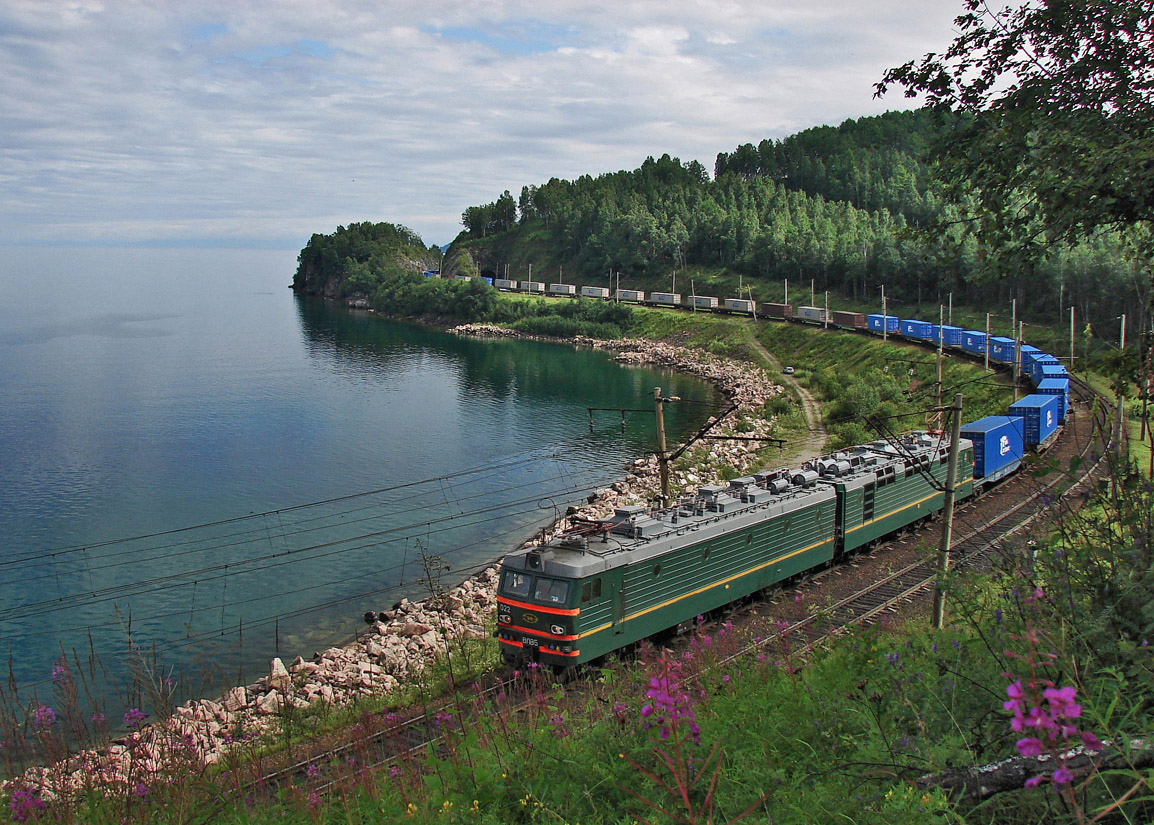
The Trans-Siberian Railway, historically known as the Great Siberian Route and often shortened to Transsib, is a large railway system that connects European Russia to the Russian Far East. Spanning a length of over 9,289 kilometers (5,772 miles), it is the longest railway line in the world. It runs from the city of Moscow in the west to the city of Vladivostok in the east.
During the period of the Russian Empire, government ministers—personally appointed by Alexander III and his son Nicholas II—supervised the building of the railway network between 1891 and 1916. Even before its completion, the line attracted travelers who documented their experiences. Since 1916, the Trans-Siberian Railway has directly connected Moscow with Vladivostok. As of 2021[update], expansion projects remain underway, with connections being built to Russia's neighbors Mongolia, China, and North Korea. Additionally, there have been proposals and talks to expand the network to Tokyo, Japan, with new bridges or tunnels that would connect the mainland railway via the Russian island of Sakhalin and the Japanese island of Hokkaido.
The railway is often associated with the main transcontinental Russian line that connects many large and small cities of the European and Asian parts of Russia. At a Moscow–Vladivostok track length of 9,289 kilometers (5,772 miles), it spans a record eight time zones. Taking eight days to complete the journey, it was the third-longest single continuous service in the world,[when?] after the Moscow–Pyongyang service 10,267 kilometers (6,380 mi) and the former Kiev–Vladivostok service 11,085 kilometers (6,888 mi), both of which also follow the Trans-Siberian for much of their routes.
The main route begins in Moscow at Yaroslavsky Vokzal, runs through Yaroslavl or Chelyabinsk, Omsk, Novosibirsk, Krasnoyarsk, Irkutsk, Ulan-Ude, Chita, and Khabarovsk to Vladivostok via southern Siberia. A second primary route is the Trans-Manchurian, which coincides with the Trans-Siberian east of Chita as far as Tarskaya (a stop 12 km (7 mi) east of Karymskoye, in Chita Oblast), about 1,000 km (621 mi) east of Lake Baikal. From Tarskaya the Trans-Manchurian heads southeast, via Harbin Harbin–Manzhouli railway and Mudanjiang Harbin–Suifenhe railway in China's Northeastern provinces (from where a connection to Beijing is used by one of the Moscow–Beijing trains), joining the main route in Ussuriysk just north of Vladivostok.
The third primary route is the Trans-Mongolian Railway, which coincides with the Trans-Siberian as far as Ulan-Ude on Lake Baikal's eastern shore. From Ulan-Ude the Trans-Mongolian heads south to Ulaanbaatar before making its way southeast to Beijing. In 1991, a fourth route running further to the north was finally completed, after more than five decades of sporadic work. Known as the Baikal–Amur Mainline (BAM), this recent extension departs from the Trans-Siberian line at Taishet several hundred miles west of Lake Baikal and passes the lake at its northernmost extremity. It crosses the Amur River at Komsomolsk-na-Amure (north of Khabarovsk), and reaches the Tatar Strait at Sovetskaya Gavan.
In the late 19th century, the development of Siberia was hampered by poor transport links within the region and with the rest of the country. Aside from the Great Siberian Route, roads suitable for wheeled transport were rare. For about five months of the year, rivers were the main means of transport. During winter, cargo and passengers traveled by horse-drawn sledges over the winter roads, many of which were the same rivers but frozen.
The first steamboat on the River Ob, Nikita Myasnikov's Osnova, was launched in 1844. However, early innovation had proven to be difficult, and it was not until 1857 that steamboat shipping had begun major development on the Ob system. Steamboats began operation on the Yenisei in 1863, and on the Lena and Amur in the 1870s. While the comparative flatness of Western Siberia was served by good river systems, the major river systems Ob–Irtysh–Tobol–Chulym of Eastern Siberia had difficulties. The Yenisei, the upper course of the Angara River below Bratsk which was not easily navigable because of the rapids, and the Lena, were mostly navigable only in the north–south direction, making west–east transportation difficult. An attempt to partially remedy the situation by building the Ob–Yenisei Canal had not yielded great success. These issues in the region created the need for a railway to be constructed.
The first railway projects in Siberia emerged after the completion of the Saint Petersburg–Moscow Railway in 1851. One of the first was the Irkutsk–Chita project, proposed by the American entrepreneur Perry Collins and supported by Transport Minister Constantine Possiet with a view toward connecting Moscow to the Amur River, and consequently the Pacific Ocean. Siberia's governor, Nikolay Muravyov-Amursky, was anxious to advance Russian colonization of the now Russian Far East, but his plans were unfeasible due to colonists importing grain and food from China and Korea. It was on Muravyov's initiative that surveys for a railway in the Khabarovsk region were conducted.
Hub AI
Trans-Siberian Railway AI simulator
(@Trans-Siberian Railway_simulator)
Trans-Siberian Railway
The Trans-Siberian Railway, historically known as the Great Siberian Route and often shortened to Transsib, is a large railway system that connects European Russia to the Russian Far East. Spanning a length of over 9,289 kilometers (5,772 miles), it is the longest railway line in the world. It runs from the city of Moscow in the west to the city of Vladivostok in the east.
During the period of the Russian Empire, government ministers—personally appointed by Alexander III and his son Nicholas II—supervised the building of the railway network between 1891 and 1916. Even before its completion, the line attracted travelers who documented their experiences. Since 1916, the Trans-Siberian Railway has directly connected Moscow with Vladivostok. As of 2021[update], expansion projects remain underway, with connections being built to Russia's neighbors Mongolia, China, and North Korea. Additionally, there have been proposals and talks to expand the network to Tokyo, Japan, with new bridges or tunnels that would connect the mainland railway via the Russian island of Sakhalin and the Japanese island of Hokkaido.
The railway is often associated with the main transcontinental Russian line that connects many large and small cities of the European and Asian parts of Russia. At a Moscow–Vladivostok track length of 9,289 kilometers (5,772 miles), it spans a record eight time zones. Taking eight days to complete the journey, it was the third-longest single continuous service in the world,[when?] after the Moscow–Pyongyang service 10,267 kilometers (6,380 mi) and the former Kiev–Vladivostok service 11,085 kilometers (6,888 mi), both of which also follow the Trans-Siberian for much of their routes.
The main route begins in Moscow at Yaroslavsky Vokzal, runs through Yaroslavl or Chelyabinsk, Omsk, Novosibirsk, Krasnoyarsk, Irkutsk, Ulan-Ude, Chita, and Khabarovsk to Vladivostok via southern Siberia. A second primary route is the Trans-Manchurian, which coincides with the Trans-Siberian east of Chita as far as Tarskaya (a stop 12 km (7 mi) east of Karymskoye, in Chita Oblast), about 1,000 km (621 mi) east of Lake Baikal. From Tarskaya the Trans-Manchurian heads southeast, via Harbin Harbin–Manzhouli railway and Mudanjiang Harbin–Suifenhe railway in China's Northeastern provinces (from where a connection to Beijing is used by one of the Moscow–Beijing trains), joining the main route in Ussuriysk just north of Vladivostok.
The third primary route is the Trans-Mongolian Railway, which coincides with the Trans-Siberian as far as Ulan-Ude on Lake Baikal's eastern shore. From Ulan-Ude the Trans-Mongolian heads south to Ulaanbaatar before making its way southeast to Beijing. In 1991, a fourth route running further to the north was finally completed, after more than five decades of sporadic work. Known as the Baikal–Amur Mainline (BAM), this recent extension departs from the Trans-Siberian line at Taishet several hundred miles west of Lake Baikal and passes the lake at its northernmost extremity. It crosses the Amur River at Komsomolsk-na-Amure (north of Khabarovsk), and reaches the Tatar Strait at Sovetskaya Gavan.
In the late 19th century, the development of Siberia was hampered by poor transport links within the region and with the rest of the country. Aside from the Great Siberian Route, roads suitable for wheeled transport were rare. For about five months of the year, rivers were the main means of transport. During winter, cargo and passengers traveled by horse-drawn sledges over the winter roads, many of which were the same rivers but frozen.
The first steamboat on the River Ob, Nikita Myasnikov's Osnova, was launched in 1844. However, early innovation had proven to be difficult, and it was not until 1857 that steamboat shipping had begun major development on the Ob system. Steamboats began operation on the Yenisei in 1863, and on the Lena and Amur in the 1870s. While the comparative flatness of Western Siberia was served by good river systems, the major river systems Ob–Irtysh–Tobol–Chulym of Eastern Siberia had difficulties. The Yenisei, the upper course of the Angara River below Bratsk which was not easily navigable because of the rapids, and the Lena, were mostly navigable only in the north–south direction, making west–east transportation difficult. An attempt to partially remedy the situation by building the Ob–Yenisei Canal had not yielded great success. These issues in the region created the need for a railway to be constructed.
The first railway projects in Siberia emerged after the completion of the Saint Petersburg–Moscow Railway in 1851. One of the first was the Irkutsk–Chita project, proposed by the American entrepreneur Perry Collins and supported by Transport Minister Constantine Possiet with a view toward connecting Moscow to the Amur River, and consequently the Pacific Ocean. Siberia's governor, Nikolay Muravyov-Amursky, was anxious to advance Russian colonization of the now Russian Far East, but his plans were unfeasible due to colonists importing grain and food from China and Korea. It was on Muravyov's initiative that surveys for a railway in the Khabarovsk region were conducted.
Recent media