
Recent from talks
Yaroslavl
Knowledge base stats:
Talk channels stats:
Members stats:
Yaroslavl
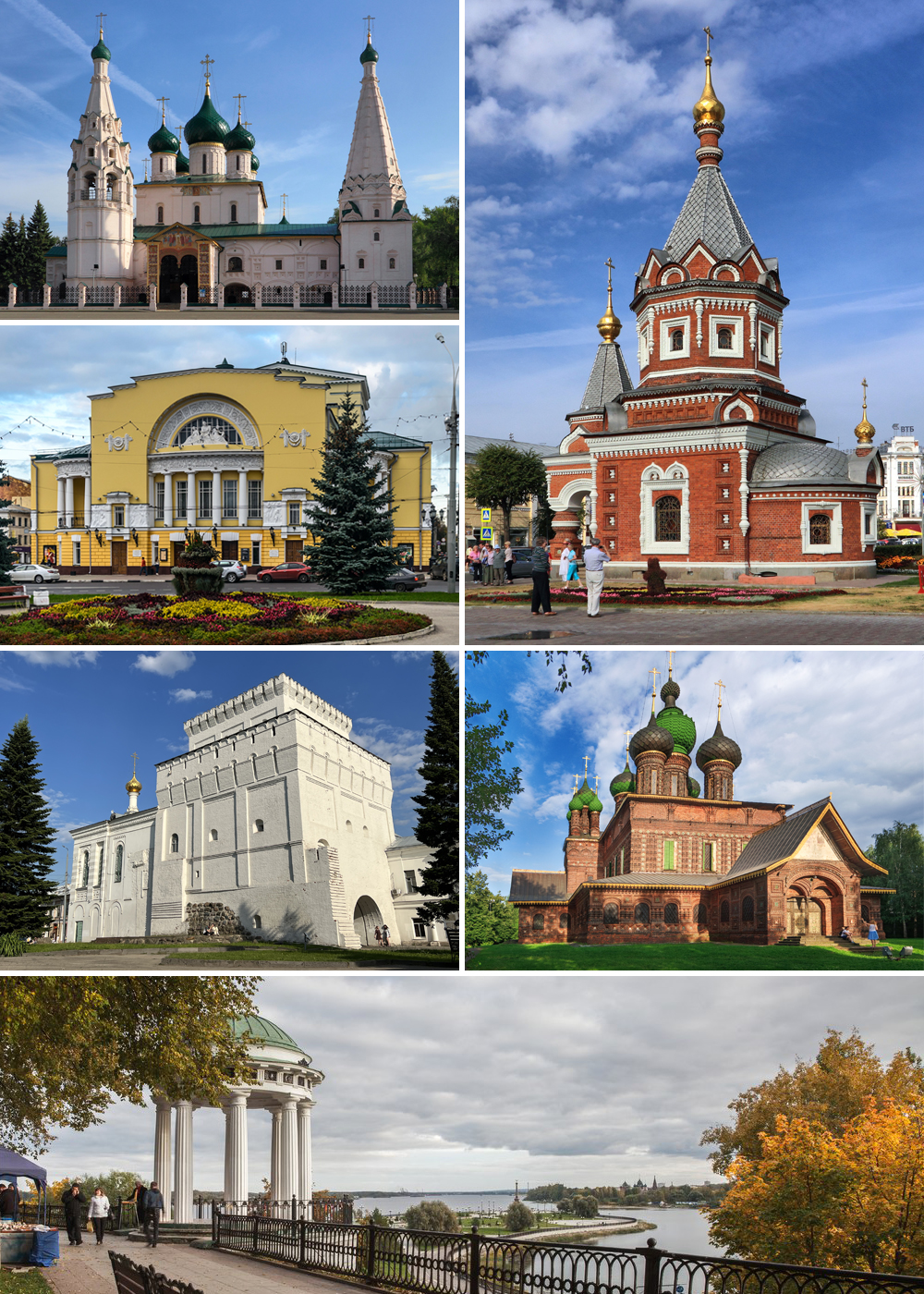
Yaroslavl (/ˌjærəˈslævəl/; Russian: Ярославль, IPA: [jɪrɐˈsɫavlʲ]) is a city and the administrative center of Yaroslavl Oblast, Russia, located 250 kilometers (160 mi) northeast of Moscow. The historic part of the city is a World Heritage Site, and is located at the confluence of the Volga and the Kotorosl rivers. It is part of the Golden Ring, a group of historic cities northeast of Moscow that have played an important role in Russian history. The population of the city at the 2021 census was 577,279.
Reportedly the capital of an independent Principality of Yaroslavl from 1218, it was incorporated[why?] into the Grand Duchy of Moscow in 1463.[citation needed]
In the 17th century, it was Russia's second-largest city, and for a time (during the Polish occupation of Moscow in 1612), the country's de facto capital. Today, Yaroslavl is an important industrial center (petrochemical plant, tire manufacturing plant, diesel engines plant and many others). It developed at the confluence of major rivers, which were important for transportation and, later, for power. Because of the city's importance, several major railways and later highways were constructed to intersect here.
The oldest settlement in the city is to be found on the left bank of the Volga River in front of the Strelka (a small cape at the confluence of the Volga and Kotorosl); this dates from the 5th–3rd millennium BCE.[citation needed]
In the 9th century the so-called Russian Khaganate formed, near Yaroslavl, a large Scandinavian-Slavic settlement in Timerevo. It is known for a surviving range of burial mounds. When excavations were carried out, a large number of artifacts, including Scandinavian weapons with runic inscriptions, chess pieces, and the largest collection of Arabian coins (treasure) in northern Europe (the earliest were struck in the first Idrisid), were found. In Timerevo the fourth set of Scandinavian brooches ever found in Russia was discovered. Apparently, this "proto-Yaroslavl" was a major center for the Volga trade route. Soon after the founding of Yaroslavl, the settlement went into decline, probably in connection with the termination of the operation of the Volga trade route. Upstream of the Volga River, just outside the boundaries of the modern city, archaeologists have studied a large necropolis with a predominance of ordinary graves of the Finno-Ugric-type.
Based on its earliest date of foundation, Yaroslavl is the oldest of all the existing towns on the Volga. Yaroslavl was founded by Yaroslav the Wise, a prince of Kievan Rus', during the period of his ruling the Principality of Rostov (988—1010) when he stepped ashore for the first time near the area now known as 'Strelka.' This is used as a contemporary park. On this spot, which was well protected from attack by the high, steep banks of the Volga, Kotorosl and Medveditsa rivers, Yaroslavl and his men began to set about building the first Yaroslavl Kremlin. The first recorded event of Yaroslavl occurred as a result of famine; it was recorded as the Rostov Uprising of 1071. The name of the city is traditionally linked to that of its founder: Yaroslav.
By the 12th century, the Petropavlovsky and Spaso-Preobrazhensky monasteries of Yaroslavl had already been developed. At that time, they were located well beyond the city limits, but the city later grew to encompass these institutions. During its first two centuries, Yaroslavl remained a minor fortified city of the Rostov-Suzdal lands.[citation needed]
From the beginning of the thirteenth century, Yaroslavl was ruled by the lordship of Konstantin and became one of his primary residences. Just before his death in 1218, Konstantin broke up his land among his various sons, bequeathing the Yaroslave land to his second son Vsevolod. The son ruled it as the Principality of Yaroslavl. This principality, of which Yaroslavl became the capital, included a number of territories to the north and operated independently until its eventual absorption in 1463 into the Principality of Moscow.
Hub AI
Yaroslavl AI simulator
(@Yaroslavl_simulator)
Yaroslavl
Yaroslavl (/ˌjærəˈslævəl/; Russian: Ярославль, IPA: [jɪrɐˈsɫavlʲ]) is a city and the administrative center of Yaroslavl Oblast, Russia, located 250 kilometers (160 mi) northeast of Moscow. The historic part of the city is a World Heritage Site, and is located at the confluence of the Volga and the Kotorosl rivers. It is part of the Golden Ring, a group of historic cities northeast of Moscow that have played an important role in Russian history. The population of the city at the 2021 census was 577,279.
Reportedly the capital of an independent Principality of Yaroslavl from 1218, it was incorporated[why?] into the Grand Duchy of Moscow in 1463.[citation needed]
In the 17th century, it was Russia's second-largest city, and for a time (during the Polish occupation of Moscow in 1612), the country's de facto capital. Today, Yaroslavl is an important industrial center (petrochemical plant, tire manufacturing plant, diesel engines plant and many others). It developed at the confluence of major rivers, which were important for transportation and, later, for power. Because of the city's importance, several major railways and later highways were constructed to intersect here.
The oldest settlement in the city is to be found on the left bank of the Volga River in front of the Strelka (a small cape at the confluence of the Volga and Kotorosl); this dates from the 5th–3rd millennium BCE.[citation needed]
In the 9th century the so-called Russian Khaganate formed, near Yaroslavl, a large Scandinavian-Slavic settlement in Timerevo. It is known for a surviving range of burial mounds. When excavations were carried out, a large number of artifacts, including Scandinavian weapons with runic inscriptions, chess pieces, and the largest collection of Arabian coins (treasure) in northern Europe (the earliest were struck in the first Idrisid), were found. In Timerevo the fourth set of Scandinavian brooches ever found in Russia was discovered. Apparently, this "proto-Yaroslavl" was a major center for the Volga trade route. Soon after the founding of Yaroslavl, the settlement went into decline, probably in connection with the termination of the operation of the Volga trade route. Upstream of the Volga River, just outside the boundaries of the modern city, archaeologists have studied a large necropolis with a predominance of ordinary graves of the Finno-Ugric-type.
Based on its earliest date of foundation, Yaroslavl is the oldest of all the existing towns on the Volga. Yaroslavl was founded by Yaroslav the Wise, a prince of Kievan Rus', during the period of his ruling the Principality of Rostov (988—1010) when he stepped ashore for the first time near the area now known as 'Strelka.' This is used as a contemporary park. On this spot, which was well protected from attack by the high, steep banks of the Volga, Kotorosl and Medveditsa rivers, Yaroslavl and his men began to set about building the first Yaroslavl Kremlin. The first recorded event of Yaroslavl occurred as a result of famine; it was recorded as the Rostov Uprising of 1071. The name of the city is traditionally linked to that of its founder: Yaroslav.
By the 12th century, the Petropavlovsky and Spaso-Preobrazhensky monasteries of Yaroslavl had already been developed. At that time, they were located well beyond the city limits, but the city later grew to encompass these institutions. During its first two centuries, Yaroslavl remained a minor fortified city of the Rostov-Suzdal lands.[citation needed]
From the beginning of the thirteenth century, Yaroslavl was ruled by the lordship of Konstantin and became one of his primary residences. Just before his death in 1218, Konstantin broke up his land among his various sons, bequeathing the Yaroslave land to his second son Vsevolod. The son ruled it as the Principality of Yaroslavl. This principality, of which Yaroslavl became the capital, included a number of territories to the north and operated independently until its eventual absorption in 1463 into the Principality of Moscow.
Recent media