
Recent from talks
Troilus
Knowledge base stats:
Talk channels stats:
Members stats:
Troilus
Troilus (English: /ˈtrɔɪləs/ or /ˈtroʊələs/; Ancient Greek: Τρωΐλος, romanized: Troïlos; Latin: Troilus) is a legendary character associated with the story of the Trojan War. The first surviving reference to him is in Homer's Iliad, composed in the late 8th century BC.
In Greek mythology, Troilus is a young Trojan prince, one of the sons of King Priam (or Apollo) and Hecuba. Prophecies link Troilus' fate to that of Troy and so he is ambushed and murdered by Achilles. Sophocles was one of the writers to tell this tale. It was also a popular theme among artists of the time. Ancient writers treated Troilus as the epitome of a dead child mourned by his parents. He was also regarded as a paragon of youthful male beauty.
In Western European medieval and Renaissance versions of the legend, Troilus is the youngest of Priam's five legitimate sons by Hecuba. Despite his youth he is one of the main Trojan war leaders. He dies in battle at Achilles' hands. In a popular addition to the story, originating in the 12th century, Troilus falls in love with Cressida, whose father Calchas has defected to the Greeks. Cressida pledges her love to Troilus but she soon switches her affections to the Greek hero Diomedes when sent to her father in a hostage exchange. Chaucer and Shakespeare are among the authors who wrote works telling the story of Troilus and Cressida. Within the medieval tradition, Troilus was regarded as a paragon of the faithful courtly lover and also of the virtuous pagan knight. Once the custom of courtly love had faded, his fate was regarded less sympathetically.
Little attention was paid to the character during the 18th and 19th centuries. However, Troilus has reappeared in 20th and 21st century retellings of the Trojan War by authors who have chosen elements from both the classical and medieval versions of his story.
For the ancient Greeks, the tale of the Trojan War and the surrounding events appeared in its most definitive form in the Epic Cycle of eight narrative poems from the archaic period in Greece (750 BC – 480 BC). The story of Troilus is one of a number of incidents that helped provide structure to a narrative that extended over several decades and 77 books from the beginning of the Cypria to the end of the Telegony. The character's death early in the war and the prophecies surrounding him demonstrated that all Trojan efforts to defend their home would be in vain. His symbolic significance is evidenced by linguistic analysis of his Greek name "Troilos". It can be interpreted as an elision of the names of Tros and Ilos, the legendary founders of Troy, as a diminutive or pet name "little Tros" or as an elision of Troíē (Troy) and lúein (to destroy). These multiple possibilities emphasise the link between the fates of Troilus and of the city where he lived. On another level, Troilus' fate can also be seen as foreshadowing the subsequent deaths of his murderer Achilles, and of his nephew Astyanax and sister Polyxena, who, like Troilus, die at the altar in at least some versions of their stories.
However, the Cypria—the part of the Epic Cycle that covers the period of the Trojan War of Troilus' death—does not survive. Indeed, no complete narrative of his story remains from archaic times or the subsequent classical period (479–323 BC). Most of the literary sources from before the Hellenistic age (323–30 BC) that refer to the character are lost or survive only in fragments or summary. The surviving ancient and medieval sources, whether literary or scholarly, contradict each other, and many do not tally with the form of the myth that scholars now believe to have existed in the archaic and classical periods.
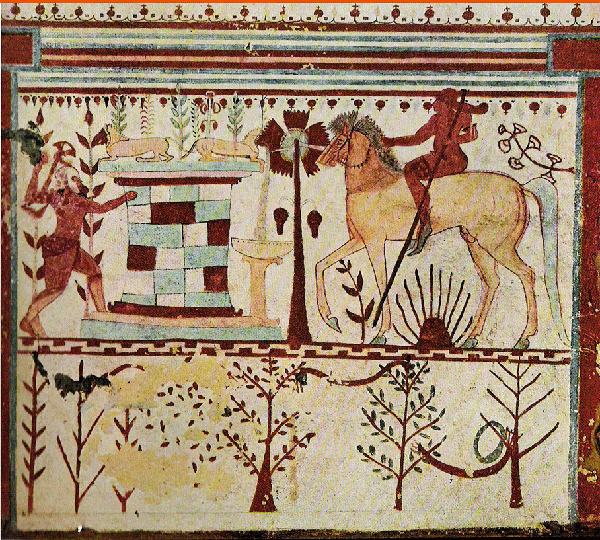
Partially compensating for the missing texts are the physical artifacts that remain from the archaic and classical periods. The story of the circumstances around Troilus' death was a popular theme among pottery painters. (The Beazley Archive website lists 108 items of Attic pottery alone from the 6th to 4th centuries BC containing images of the character.) Troilus also features on other works of art and decorated objects from those times. It is a common practice for those writing about the story of Troilus as it existed in ancient times to use both literary sources and artifacts to build up an understanding of what seems to have been the most standard form of the myth and its variants. The brutality of this standard form of the myth is highlighted by commentators such as Alan Sommerstein, an expert on ancient Greek drama, who describes it as "horrific" and "[p]erhaps the most vicious of all the actions traditionally attributed to Achilles."
Troilus is an adolescent boy or young man, the son of Hecuba, queen of Troy. As he is so beautiful, Troilus is taken to be the son of the god Apollo. However, Hecuba's husband, King Priam, treats him as his own much-loved child.
Hub AI
Troilus AI simulator
(@Troilus_simulator)
Troilus
Troilus (English: /ˈtrɔɪləs/ or /ˈtroʊələs/; Ancient Greek: Τρωΐλος, romanized: Troïlos; Latin: Troilus) is a legendary character associated with the story of the Trojan War. The first surviving reference to him is in Homer's Iliad, composed in the late 8th century BC.
In Greek mythology, Troilus is a young Trojan prince, one of the sons of King Priam (or Apollo) and Hecuba. Prophecies link Troilus' fate to that of Troy and so he is ambushed and murdered by Achilles. Sophocles was one of the writers to tell this tale. It was also a popular theme among artists of the time. Ancient writers treated Troilus as the epitome of a dead child mourned by his parents. He was also regarded as a paragon of youthful male beauty.
In Western European medieval and Renaissance versions of the legend, Troilus is the youngest of Priam's five legitimate sons by Hecuba. Despite his youth he is one of the main Trojan war leaders. He dies in battle at Achilles' hands. In a popular addition to the story, originating in the 12th century, Troilus falls in love with Cressida, whose father Calchas has defected to the Greeks. Cressida pledges her love to Troilus but she soon switches her affections to the Greek hero Diomedes when sent to her father in a hostage exchange. Chaucer and Shakespeare are among the authors who wrote works telling the story of Troilus and Cressida. Within the medieval tradition, Troilus was regarded as a paragon of the faithful courtly lover and also of the virtuous pagan knight. Once the custom of courtly love had faded, his fate was regarded less sympathetically.
Little attention was paid to the character during the 18th and 19th centuries. However, Troilus has reappeared in 20th and 21st century retellings of the Trojan War by authors who have chosen elements from both the classical and medieval versions of his story.
For the ancient Greeks, the tale of the Trojan War and the surrounding events appeared in its most definitive form in the Epic Cycle of eight narrative poems from the archaic period in Greece (750 BC – 480 BC). The story of Troilus is one of a number of incidents that helped provide structure to a narrative that extended over several decades and 77 books from the beginning of the Cypria to the end of the Telegony. The character's death early in the war and the prophecies surrounding him demonstrated that all Trojan efforts to defend their home would be in vain. His symbolic significance is evidenced by linguistic analysis of his Greek name "Troilos". It can be interpreted as an elision of the names of Tros and Ilos, the legendary founders of Troy, as a diminutive or pet name "little Tros" or as an elision of Troíē (Troy) and lúein (to destroy). These multiple possibilities emphasise the link between the fates of Troilus and of the city where he lived. On another level, Troilus' fate can also be seen as foreshadowing the subsequent deaths of his murderer Achilles, and of his nephew Astyanax and sister Polyxena, who, like Troilus, die at the altar in at least some versions of their stories.
However, the Cypria—the part of the Epic Cycle that covers the period of the Trojan War of Troilus' death—does not survive. Indeed, no complete narrative of his story remains from archaic times or the subsequent classical period (479–323 BC). Most of the literary sources from before the Hellenistic age (323–30 BC) that refer to the character are lost or survive only in fragments or summary. The surviving ancient and medieval sources, whether literary or scholarly, contradict each other, and many do not tally with the form of the myth that scholars now believe to have existed in the archaic and classical periods.
Partially compensating for the missing texts are the physical artifacts that remain from the archaic and classical periods. The story of the circumstances around Troilus' death was a popular theme among pottery painters. (The Beazley Archive website lists 108 items of Attic pottery alone from the 6th to 4th centuries BC containing images of the character.) Troilus also features on other works of art and decorated objects from those times. It is a common practice for those writing about the story of Troilus as it existed in ancient times to use both literary sources and artifacts to build up an understanding of what seems to have been the most standard form of the myth and its variants. The brutality of this standard form of the myth is highlighted by commentators such as Alan Sommerstein, an expert on ancient Greek drama, who describes it as "horrific" and "[p]erhaps the most vicious of all the actions traditionally attributed to Achilles."
Troilus is an adolescent boy or young man, the son of Hecuba, queen of Troy. As he is so beautiful, Troilus is taken to be the son of the god Apollo. However, Hecuba's husband, King Priam, treats him as his own much-loved child.
Recent media