
Recent from talks
Tsimshian
Knowledge base stats:
Talk channels stats:
Members stats:
Tsimshian
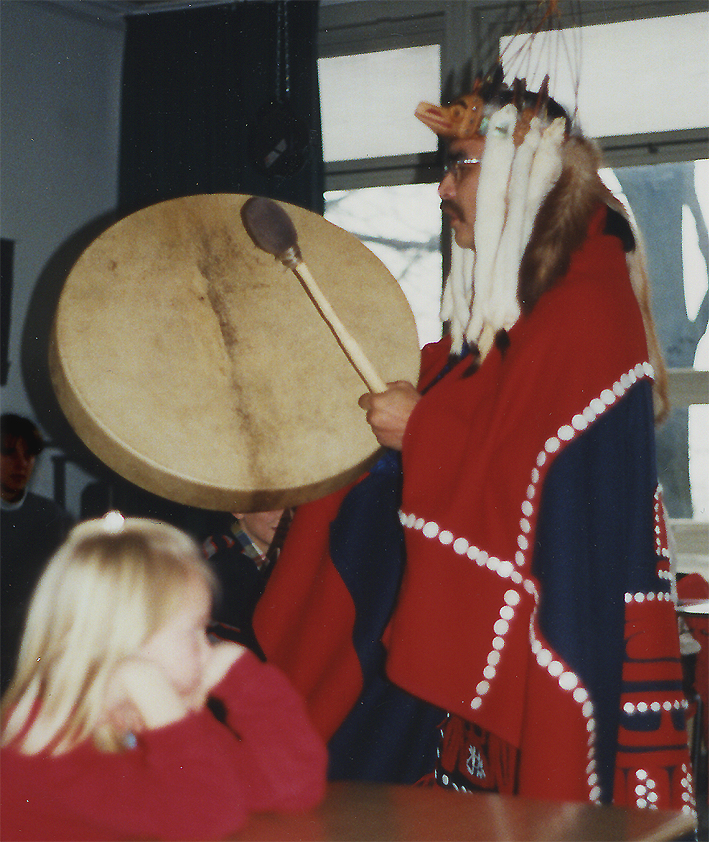
The Tsimshian (/ˈsɪmʃiən/; Tsimshian: Ts'msyen, lit. 'Inside the Skeena River') are an Indigenous people of the Pacific Northwest Coast of North America. Their communities are mostly in coastal British Columbia in Terrace and Prince Rupert, and Metlakatla, Alaska on Annette Island, the only reservation in Alaska.
The Tsimshian estimate there are 45,000 Tsimshian people and approximately 10,000 members are federally registered in eight First Nations communities: Kitselas, Kitsumkalum, Gitxaala, Gitga'at, Kitasoo, Lax Kw'Alaams, and Metlakatla. The latter two communities resulted in the colonial intersections of early settlers and consist of Tsimshian people belonging to the 'nine tribes.' The Tsimshian are one of the largest First Nations peoples in northwest British Columbia. Some Tsimshian migrated to the Annette Islands in Alaska, and today approximately 1,450 Alaska Tsimshian people are enrolled in the federally recognized Metlakatla Indian Community, sometimes also called the Annette Island Reserve. The Tsimshian honor the traditional Tlingit name of Taquan for this recent location.
Tsimshian society is matrilineal kinship-based, which means identity, clans and property pass through the maternal line. Their moiety-based societal structure is further divided into sub clans for certain lineages. The Tsimshian language has some 27 different terms for 'chief' likely because it is a stratified and ranked society.
Early Euro-Canadian anthropologists and linguists had classified the Gitxsan and Nisga'a as Tsimshian, because of apparent linguistic affinities. The three were all referred to as "Coast Tsimshian", even though some communities were not coastal. These three groups, however, are separate nations.
Tsimshian translates to "Inside the Skeena River" At one time the Tsimshian lived on the upper reaches of the Skeena River near present-day Hazelton, British Columbia.
According to southern Tsimshian oral history, after a series of disasters befell the people, a chief led a migration away from the cursed land to the coast, where they founded Kitkatla Village, the first of three Southern Tsimshian villages. Kitkatla is still considered to be the most conservative of the Tsimshian villages. The Nisga'a and Gitxsan remained in the upper Skeena region (above the canyon) near the Nass River and forks of the Skeena respectively, but other Tsimshian chiefs moved down the river and occupied all the lands of the lower Skeena valley. Over time, these groups developed a new dialect of their ancestral language and came to regard themselves as a distinct population, the Tsimshian-proper. They continued to share the rights and customs of those who are known as the Gitxsan, their kin on the upper Skeena.
The Tsimshian maintained winter villages in and around the islands of Prince Rupert Harbour and Venn Pass (Metlakatla). They returned to their summer villages along the lower Skeena River when the salmon returned. Archaeological evidence shows 5,000 years of continuous habitation in the Prince Rupert region.
Gitxaala might have been the first Tsimshian village contacted by Europeans when Captain Charles Duncan and James Colnett arrived in 1787 although Russian fur traders may have visited northern groups earlier. The confluence of the Skeena and Bulkley Rivers was formerly the site of the Tsimshian village of Kitanmaks and became a new European settlement of Skeena Forks (today known as Hazelton). When the Hudson's Bay Company moved their fort to modern-day Lax Kwʼalaams in 1834, nine Tsimshian tribal chiefs moved to the surrounding area for trade advantage. Many of the Tsimshian peoples in Canada still live in these regions.
Hub AI
Tsimshian AI simulator
(@Tsimshian_simulator)
Tsimshian
The Tsimshian (/ˈsɪmʃiən/; Tsimshian: Ts'msyen, lit. 'Inside the Skeena River') are an Indigenous people of the Pacific Northwest Coast of North America. Their communities are mostly in coastal British Columbia in Terrace and Prince Rupert, and Metlakatla, Alaska on Annette Island, the only reservation in Alaska.
The Tsimshian estimate there are 45,000 Tsimshian people and approximately 10,000 members are federally registered in eight First Nations communities: Kitselas, Kitsumkalum, Gitxaala, Gitga'at, Kitasoo, Lax Kw'Alaams, and Metlakatla. The latter two communities resulted in the colonial intersections of early settlers and consist of Tsimshian people belonging to the 'nine tribes.' The Tsimshian are one of the largest First Nations peoples in northwest British Columbia. Some Tsimshian migrated to the Annette Islands in Alaska, and today approximately 1,450 Alaska Tsimshian people are enrolled in the federally recognized Metlakatla Indian Community, sometimes also called the Annette Island Reserve. The Tsimshian honor the traditional Tlingit name of Taquan for this recent location.
Tsimshian society is matrilineal kinship-based, which means identity, clans and property pass through the maternal line. Their moiety-based societal structure is further divided into sub clans for certain lineages. The Tsimshian language has some 27 different terms for 'chief' likely because it is a stratified and ranked society.
Early Euro-Canadian anthropologists and linguists had classified the Gitxsan and Nisga'a as Tsimshian, because of apparent linguistic affinities. The three were all referred to as "Coast Tsimshian", even though some communities were not coastal. These three groups, however, are separate nations.
Tsimshian translates to "Inside the Skeena River" At one time the Tsimshian lived on the upper reaches of the Skeena River near present-day Hazelton, British Columbia.
According to southern Tsimshian oral history, after a series of disasters befell the people, a chief led a migration away from the cursed land to the coast, where they founded Kitkatla Village, the first of three Southern Tsimshian villages. Kitkatla is still considered to be the most conservative of the Tsimshian villages. The Nisga'a and Gitxsan remained in the upper Skeena region (above the canyon) near the Nass River and forks of the Skeena respectively, but other Tsimshian chiefs moved down the river and occupied all the lands of the lower Skeena valley. Over time, these groups developed a new dialect of their ancestral language and came to regard themselves as a distinct population, the Tsimshian-proper. They continued to share the rights and customs of those who are known as the Gitxsan, their kin on the upper Skeena.
The Tsimshian maintained winter villages in and around the islands of Prince Rupert Harbour and Venn Pass (Metlakatla). They returned to their summer villages along the lower Skeena River when the salmon returned. Archaeological evidence shows 5,000 years of continuous habitation in the Prince Rupert region.
Gitxaala might have been the first Tsimshian village contacted by Europeans when Captain Charles Duncan and James Colnett arrived in 1787 although Russian fur traders may have visited northern groups earlier. The confluence of the Skeena and Bulkley Rivers was formerly the site of the Tsimshian village of Kitanmaks and became a new European settlement of Skeena Forks (today known as Hazelton). When the Hudson's Bay Company moved their fort to modern-day Lax Kwʼalaams in 1834, nine Tsimshian tribal chiefs moved to the surrounding area for trade advantage. Many of the Tsimshian peoples in Canada still live in these regions.
Recent media