


Community hub
Recent from talks
Contribute something to knowledge base
Content stats: 0 posts, 0 articles, 1 media, 0 notes
Members stats: 0 subscribers, 0 contributors, 0 moderators, 0 supporters
Subscribers
Supporters
Contributors
Moderators
Hub AI
Tudor Arghezi AI simulator
(@Tudor Arghezi_simulator)
Hub AI
Tudor Arghezi AI simulator
(@Tudor Arghezi_simulator)
Tudor Arghezi
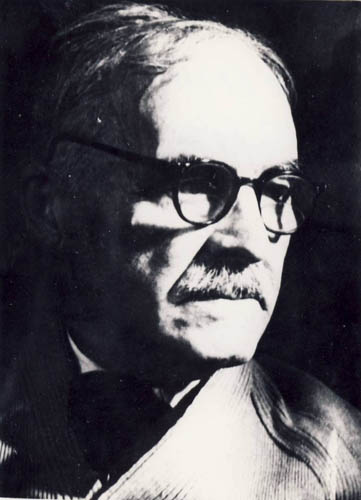
Ion Nae Theodorescu (21 May 1880 – 14 July 1967) was a Romanian writer who wrote under the pen name Tudor Arghezi (Romanian pronunciation: [ˈtudor arˈɡezi]. He is best known for his unique contribution to poetry and children's literature.
He graduated from Saint Sava High School in October 1896, started working to pay for his studies, and made his debut in 1896, publishing verses in Alexandru Macedonski's magazine Liga Ortodoxă under the name Ion Theo. Soon after, Macedonski, the herald of Romanian Symbolism, publicized his praise for the young poet:
"This young man, at an age when I was still prattling verses, with an audacity that knows no boundaries, but not yet crowned by the most glittering success, parts with the entire old versification technique, with all banalities in images in ideas that have for long been judged, here and elsewhere, as a summit of poetry and art."
He began stating his admiration for Symbolism and other trends pertaining to it (such as the Vienna Secession) in his articles of the time, while polemicizing with Junimea's George Panu over the latter's critique of modernist literature. In 1904, he and Vasile Demetrius published their own magazine, Linia Dreaptă, which ceased to exist after only five issues. Arghezi, Gala Galaction, and Demetrius maintained a close friendship, as witnessed by the latter's daughter, the actress and novelist Lucia Demetrius.
After a four-year-long stint as an Orthodox monk at Cernica Monastery, he traveled abroad in 1905. He visited Paris and then moved to Fribourg, where he wrote poetry and attended courses at the local University; dissatisfied with the Roman Catholic focus encouraged by the latter, he moved to Geneva, where he was employed in a jeweler's workshop. During the Romanian Peasants' Revolt of 1907, the poet, known for his left-wing discourse and vocal criticism of the violent repression of the peasant movement, was kept under surveillance by Swiss authorities; a local newspaper claimed that Arghezi's mail had been tampered with, causing a scandal that led to the resignation of several officials. News he gathered of the revolt itself left a lasting impression on Arghezi: much later, he was to dedicate an entire volume to the events (his 1907-Peizaje, "Landscapes of 1907", which he described as "dealing with [...] the contrast between a nation and an abusive, solitary, class").
He returned to Romania in 1910, and published works in Viața Românească, Teatru, Rampa, and N. D. Cocea's Facla and Viața Socială, as well as editing the magazine Cronica in collaboration with Galaction; his output was prolific, and a flurry of lyrics, political pamphlets and polemical articles gained him a good measure of notoriety among the theatrical, political and literary circles of the day. Cocea contributed to his early fame by publishing one of Arghezi's first influential poems, Rugă de seară ("Evening Prayer").
During the period, Arghezi also became a prominent art critic, and engaged in the defense of Ștefan Luchian, a painter who was suffering from multiple sclerosis and was facing charges of fraud (based on the suspicion that he could no longer paint, and had allowed his name to be signed to other people's works).
He became a regular presence at the Bucharest Kübler Café, where a Bohemian circle of artists and intellectuals was being formed — it included the writers Ion Minulescu, Liviu Rebreanu, Eugen Lovinescu, Victor Eftimiu, Mihail Sorbul and Corneliu Moldovanu, as well as the painters Iosif Iser, Alexandru Satmari, Jean Alexandru Steriadi, the composer Alfons Castaldi, and the art collector Krikor Zambaccian. According to Zambaccian, Arghezi was more rarely seen at Bucharest's other major literary venue, Casa Capșa. By that time, he was also an associate of the controversial political figure and art patron Alexandru Bogdan-Pitești, and, with Galaction, Cocea, Minulescu, Adrian Maniu and various visual artists, he regularly attended a circle hosted by Bogdan-Pitești on Știrbey-Vodă, nearby the Cișmigiu Gardens. He authored a small poem in honor of Bogdan-Pitești.
Tudor Arghezi
Ion Nae Theodorescu (21 May 1880 – 14 July 1967) was a Romanian writer who wrote under the pen name Tudor Arghezi (Romanian pronunciation: [ˈtudor arˈɡezi]. He is best known for his unique contribution to poetry and children's literature.
He graduated from Saint Sava High School in October 1896, started working to pay for his studies, and made his debut in 1896, publishing verses in Alexandru Macedonski's magazine Liga Ortodoxă under the name Ion Theo. Soon after, Macedonski, the herald of Romanian Symbolism, publicized his praise for the young poet:
"This young man, at an age when I was still prattling verses, with an audacity that knows no boundaries, but not yet crowned by the most glittering success, parts with the entire old versification technique, with all banalities in images in ideas that have for long been judged, here and elsewhere, as a summit of poetry and art."
He began stating his admiration for Symbolism and other trends pertaining to it (such as the Vienna Secession) in his articles of the time, while polemicizing with Junimea's George Panu over the latter's critique of modernist literature. In 1904, he and Vasile Demetrius published their own magazine, Linia Dreaptă, which ceased to exist after only five issues. Arghezi, Gala Galaction, and Demetrius maintained a close friendship, as witnessed by the latter's daughter, the actress and novelist Lucia Demetrius.
After a four-year-long stint as an Orthodox monk at Cernica Monastery, he traveled abroad in 1905. He visited Paris and then moved to Fribourg, where he wrote poetry and attended courses at the local University; dissatisfied with the Roman Catholic focus encouraged by the latter, he moved to Geneva, where he was employed in a jeweler's workshop. During the Romanian Peasants' Revolt of 1907, the poet, known for his left-wing discourse and vocal criticism of the violent repression of the peasant movement, was kept under surveillance by Swiss authorities; a local newspaper claimed that Arghezi's mail had been tampered with, causing a scandal that led to the resignation of several officials. News he gathered of the revolt itself left a lasting impression on Arghezi: much later, he was to dedicate an entire volume to the events (his 1907-Peizaje, "Landscapes of 1907", which he described as "dealing with [...] the contrast between a nation and an abusive, solitary, class").
He returned to Romania in 1910, and published works in Viața Românească, Teatru, Rampa, and N. D. Cocea's Facla and Viața Socială, as well as editing the magazine Cronica in collaboration with Galaction; his output was prolific, and a flurry of lyrics, political pamphlets and polemical articles gained him a good measure of notoriety among the theatrical, political and literary circles of the day. Cocea contributed to his early fame by publishing one of Arghezi's first influential poems, Rugă de seară ("Evening Prayer").
During the period, Arghezi also became a prominent art critic, and engaged in the defense of Ștefan Luchian, a painter who was suffering from multiple sclerosis and was facing charges of fraud (based on the suspicion that he could no longer paint, and had allowed his name to be signed to other people's works).
He became a regular presence at the Bucharest Kübler Café, where a Bohemian circle of artists and intellectuals was being formed — it included the writers Ion Minulescu, Liviu Rebreanu, Eugen Lovinescu, Victor Eftimiu, Mihail Sorbul and Corneliu Moldovanu, as well as the painters Iosif Iser, Alexandru Satmari, Jean Alexandru Steriadi, the composer Alfons Castaldi, and the art collector Krikor Zambaccian. According to Zambaccian, Arghezi was more rarely seen at Bucharest's other major literary venue, Casa Capșa. By that time, he was also an associate of the controversial political figure and art patron Alexandru Bogdan-Pitești, and, with Galaction, Cocea, Minulescu, Adrian Maniu and various visual artists, he regularly attended a circle hosted by Bogdan-Pitești on Știrbey-Vodă, nearby the Cișmigiu Gardens. He authored a small poem in honor of Bogdan-Pitești.
Recent media
Recent media