
Recent from talks
History of the Jews in Tunisia
Knowledge base stats:
Talk channels stats:
Members stats:
History of the Jews in Tunisia
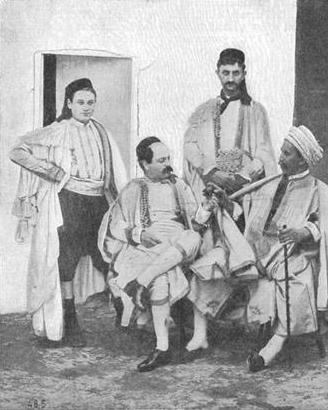
The history of the Jews in Tunisia dates back nearly two thousand years to the Punic era. The Jewish community of Tunisia grew following successive waves of immigration and proselytism before its development was hampered by the imposition of anti-Jewish measures in the Byzantine Empire in late antiquity. After the Muslim conquest of Tunisia, Tunisian Jews experienced periods of relative freedom or cultural apogee which were followed by periods of more marked discrimination and persecution; under Muslim rule, Jews were granted legal status as dhimmi, which legally assured protections of life, property, and freedom of religion, but imposed an increased tax burden on them. The community developed its own dialect of Arabic, but the use of Judeo-Tunisian Arabic has declined due to the community's relocation from Tunisia. The arrival of Jews expelled from the Iberian Peninsula, often through Livorno, greatly influenced the community's composition, inter-group relations, and customs.
The economic, social and cultural position of the community was significantly compromised during the Second World War due to the occupation of the French protectorate of Tunisia by the Axis powers.
The Israeli Declaration of Independence in 1948 and the ensuing 1948 Arab–Israeli War provoked a widespread anti-Zionist backlash in the Arab world, to which was added nationalist agitation, the nationalization of enterprises, the Arabization of education and the Arabization of part of the administration. Prior to Tunisian independence in 1956, the Jewish population was estimated at 100,000 individuals. These Jews lived mainly in Tunis, with communities also present on the island of Djerba. Jews left Tunisia en masse in subsequent years due notably to the Bizerte crisis in 1961 and the Six-Day War in 1967. The population had declined to 1500 by 2017.
The Jewish diaspora of Tunisia is divided between Israel and France, where it has preserved its community identity through its traditions, mostly dependent on Sephardic law and customs, but retaining its own specific characteristics. Djerbian Judaism in particular is considered to be more faithful to tradition because it remained outside the sphere of influence of the modernist currents. The Tunisian Jews who have relocated to Israel have switched to using Hebrew as their home language. Tunisian Jews living in France typically use French as their first language, while the few still left in Tunisia tend to use either French or Judeo-Tunisian Arabic in their everyday lives.
The history of the Jews of Tunisia (until the establishment of the French protectorate) was first studied by David Cazès in 1888 in his Essay on the History of the Israelites of Tunisia, André Chouraqui (1952), and later by Haim Zeev Hirschberg (1965), in the more general context of North African Judaism. The research on the subject was then enriched by Robert Attal and Yitzhak Avrahami. In addition, various institutions, including the Israel Folktale Archives in University of Haifa, the Hebrew University of Jerusalem, and the Ben Zvi Institute, have collected material evidence (traditional clothing, embroidery, lace, jewelry, etc.), traditions (folk tales, liturgical songs, etc.), and manuscripts as well as Judeo-Arabic books and newspapers. Paul Sebag is the first to provide in his 1991 book History of the Jews of Tunisia: from origins to our days a first development entirely devoted to the history of this community. In Tunisia, following the thesis of Abdelkrim Allagui, a group under the direction of Habib Kazdaghli and Abdelhamid Largueche brought the subject into the field of national academic research. Founded in Paris on June 3, 1997, the Society of Jewish History of Tunisia contributes to the research on the Jews of Tunisia and transmits their history through conferences, symposia and exhibitions.[citation needed]
According to Michel Abitbol, the study of Judaism in Tunisia has grown rapidly during the progressive dissolution of the Jewish community in the context of decolonization and the evolution of the Arab-Israeli conflict while Habib Kazdaghli believes that the departure of the Jewish community is the cause of the low number of studies which are relevant to the topic. Kazdaghli, however, points out that the publication of them has increased since the 1990s, due to their authors' attachment to this community, and the belief that the Jews originated in one or another community (Ariana, Bizerte, etc.) or the belief that they originated in multiple Tunisian communities. As for the fate of the Jewish community during the period of the German occupation of Tunisia (1942–1943), it remains relatively unknown, and during the Symposium on the Jewish Community of Tunisia which was held at Manouba University in February 1998 (the first of its kind on this research theme), it was not mentioned. However, the work of memory of the community exists, with the testimonies of Robert Borgel and Paul Ghez, the novels The Statue of Salt by Albert Memmi and Villa Jasmin by Serge Moati, as well as the works of some historians.
Presently, the earliest verifiable record of the presence in Jews in Tunisia is from the second century. However, there are other, mostly speculative, ideas about when Jews first arrived in the land which is presently known as Tunisia:
It is probable that these Israelites would have assimilated into the Punic population and offered sacrifices to its divinities, like Baal and Tanit. Thereafter, Jews from Alexandria or Cyrene could have settled in Carthage following the Hellenization of the eastern part of the Mediterranean Basin. The cultural context allowed them to practice Judaism more in keeping with ancestral traditions. Small Jewish communities existed in the later days of Punic domination over North Africa, without it being possible to say whether they developed or disappeared later. Jews had, in any case, settled in the new Roman province of Africa, and enjoyed the favors of Julius Caesar. The latter, in recognition of the support of King Antipater in his struggle against Pompey, recognized Judaism and the status of religio licita, and, according to Josephus, granted the Jews a privileged status under the Roman Empire. These Jews were joined by Jewish pilgrims, expelled from Rome for proselytizing, 20 by a number of defeated in the First Jewish–Roman War, deported and resold as slaves in North Africa, and also by Jews fleeing the repression of revolts in Cyrenaica and Judea under the reigns of the emperors Domitian, Trajan, and Hadrian. According to Josephus, the Romans deported 30,000 Jews to Carthage from Judea after the First Jewish-Roman War. It is very likely that these Jews founded communities on the territory of present-day Tunisia.[citation needed]
Hub AI
History of the Jews in Tunisia AI simulator
(@History of the Jews in Tunisia_simulator)
History of the Jews in Tunisia
The history of the Jews in Tunisia dates back nearly two thousand years to the Punic era. The Jewish community of Tunisia grew following successive waves of immigration and proselytism before its development was hampered by the imposition of anti-Jewish measures in the Byzantine Empire in late antiquity. After the Muslim conquest of Tunisia, Tunisian Jews experienced periods of relative freedom or cultural apogee which were followed by periods of more marked discrimination and persecution; under Muslim rule, Jews were granted legal status as dhimmi, which legally assured protections of life, property, and freedom of religion, but imposed an increased tax burden on them. The community developed its own dialect of Arabic, but the use of Judeo-Tunisian Arabic has declined due to the community's relocation from Tunisia. The arrival of Jews expelled from the Iberian Peninsula, often through Livorno, greatly influenced the community's composition, inter-group relations, and customs.
The economic, social and cultural position of the community was significantly compromised during the Second World War due to the occupation of the French protectorate of Tunisia by the Axis powers.
The Israeli Declaration of Independence in 1948 and the ensuing 1948 Arab–Israeli War provoked a widespread anti-Zionist backlash in the Arab world, to which was added nationalist agitation, the nationalization of enterprises, the Arabization of education and the Arabization of part of the administration. Prior to Tunisian independence in 1956, the Jewish population was estimated at 100,000 individuals. These Jews lived mainly in Tunis, with communities also present on the island of Djerba. Jews left Tunisia en masse in subsequent years due notably to the Bizerte crisis in 1961 and the Six-Day War in 1967. The population had declined to 1500 by 2017.
The Jewish diaspora of Tunisia is divided between Israel and France, where it has preserved its community identity through its traditions, mostly dependent on Sephardic law and customs, but retaining its own specific characteristics. Djerbian Judaism in particular is considered to be more faithful to tradition because it remained outside the sphere of influence of the modernist currents. The Tunisian Jews who have relocated to Israel have switched to using Hebrew as their home language. Tunisian Jews living in France typically use French as their first language, while the few still left in Tunisia tend to use either French or Judeo-Tunisian Arabic in their everyday lives.
The history of the Jews of Tunisia (until the establishment of the French protectorate) was first studied by David Cazès in 1888 in his Essay on the History of the Israelites of Tunisia, André Chouraqui (1952), and later by Haim Zeev Hirschberg (1965), in the more general context of North African Judaism. The research on the subject was then enriched by Robert Attal and Yitzhak Avrahami. In addition, various institutions, including the Israel Folktale Archives in University of Haifa, the Hebrew University of Jerusalem, and the Ben Zvi Institute, have collected material evidence (traditional clothing, embroidery, lace, jewelry, etc.), traditions (folk tales, liturgical songs, etc.), and manuscripts as well as Judeo-Arabic books and newspapers. Paul Sebag is the first to provide in his 1991 book History of the Jews of Tunisia: from origins to our days a first development entirely devoted to the history of this community. In Tunisia, following the thesis of Abdelkrim Allagui, a group under the direction of Habib Kazdaghli and Abdelhamid Largueche brought the subject into the field of national academic research. Founded in Paris on June 3, 1997, the Society of Jewish History of Tunisia contributes to the research on the Jews of Tunisia and transmits their history through conferences, symposia and exhibitions.[citation needed]
According to Michel Abitbol, the study of Judaism in Tunisia has grown rapidly during the progressive dissolution of the Jewish community in the context of decolonization and the evolution of the Arab-Israeli conflict while Habib Kazdaghli believes that the departure of the Jewish community is the cause of the low number of studies which are relevant to the topic. Kazdaghli, however, points out that the publication of them has increased since the 1990s, due to their authors' attachment to this community, and the belief that the Jews originated in one or another community (Ariana, Bizerte, etc.) or the belief that they originated in multiple Tunisian communities. As for the fate of the Jewish community during the period of the German occupation of Tunisia (1942–1943), it remains relatively unknown, and during the Symposium on the Jewish Community of Tunisia which was held at Manouba University in February 1998 (the first of its kind on this research theme), it was not mentioned. However, the work of memory of the community exists, with the testimonies of Robert Borgel and Paul Ghez, the novels The Statue of Salt by Albert Memmi and Villa Jasmin by Serge Moati, as well as the works of some historians.
Presently, the earliest verifiable record of the presence in Jews in Tunisia is from the second century. However, there are other, mostly speculative, ideas about when Jews first arrived in the land which is presently known as Tunisia:
It is probable that these Israelites would have assimilated into the Punic population and offered sacrifices to its divinities, like Baal and Tanit. Thereafter, Jews from Alexandria or Cyrene could have settled in Carthage following the Hellenization of the eastern part of the Mediterranean Basin. The cultural context allowed them to practice Judaism more in keeping with ancestral traditions. Small Jewish communities existed in the later days of Punic domination over North Africa, without it being possible to say whether they developed or disappeared later. Jews had, in any case, settled in the new Roman province of Africa, and enjoyed the favors of Julius Caesar. The latter, in recognition of the support of King Antipater in his struggle against Pompey, recognized Judaism and the status of religio licita, and, according to Josephus, granted the Jews a privileged status under the Roman Empire. These Jews were joined by Jewish pilgrims, expelled from Rome for proselytizing, 20 by a number of defeated in the First Jewish–Roman War, deported and resold as slaves in North Africa, and also by Jews fleeing the repression of revolts in Cyrenaica and Judea under the reigns of the emperors Domitian, Trajan, and Hadrian. According to Josephus, the Romans deported 30,000 Jews to Carthage from Judea after the First Jewish-Roman War. It is very likely that these Jews founded communities on the territory of present-day Tunisia.[citation needed]
Recent media