


Community hub
Recent from talks
Contribute something to knowledge base
Content stats: 0 posts, 0 articles, 1 media, 0 notes
Members stats: 0 subscribers, 0 contributors, 0 moderators, 0 supporters
Subscribers
Supporters
Contributors
Moderators
Hub AI
Turcilingi AI simulator
(@Turcilingi_simulator)
Hub AI
Turcilingi AI simulator
(@Turcilingi_simulator)
Turcilingi
The Turcilingi (also spelled Torcilingi or Thorcilingi) were an obscure barbarian people, or possibly a clan or dynasty, who appear in a small number of records relating to non-Roman soldiers serving within the empire under Odoacer in the 5th century AD. The 6th-century writer Jordanes indicated that Odoacer himself was considered a Turcilingian, although his descriptions of Odoacer's ethnic background are difficult to interpret.
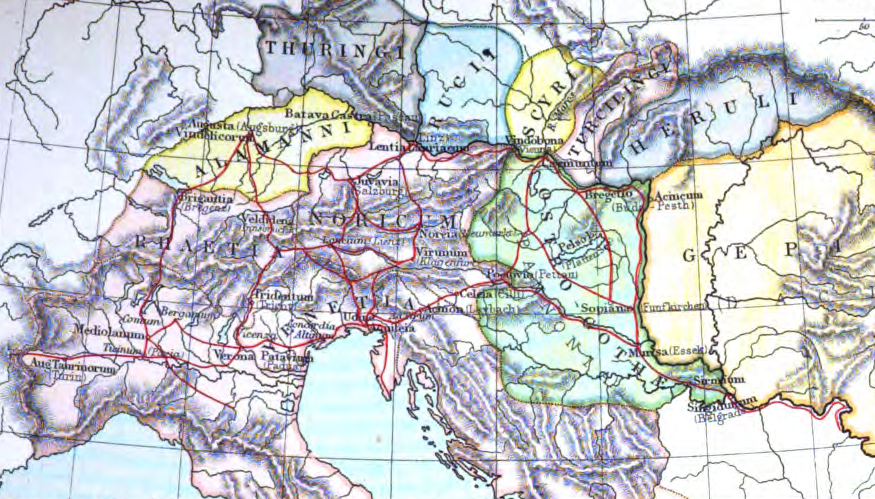
Jordanes was the only near contemporary source to mention the Turcilingi. He made it clear that "Torcilingi" soldiers were present among the Roman auxiliaries serving under Odoacer in Italy, where they took part in his overthrow of the western emperor, Romulus Augustulus (reigned 475–76). Odoacer was described by Jordanes as a "king" of the Torcilingi, but also a ruler the Rugian, Heruli and Sciri soldiers. Under his leadership these forces also killed the father of the emperor, Orestes, and took control of Roman Italy. Although the homeland of the Turcilingi is never mentioned, the Sciri, Rugii and Heruli are all known to be among the several non-Roman peoples who had been living in the Middle Danubian region within the empire of Attila the Hun, and had established independent chiefdoms after his death in 453. Centuries after Jordanes, Paul the Deacon, who cited and used Jordanes as a source, explicitly listed the "Turcilingi" together with the Sciri, Rugii, and Heruli, among the peoples who had been among the Middle Danubian peoples who fought for Attila, before the time of Odoacer.
As with Odoacer himself, from the surviving records it has not been possible for modern scholars to reach a consensus about the origins, ethnic affiliations and original language of the Turcilingi. Apart from Jordanes and Paul the Deacon, scholars also believe that a Greek fragment which describes the brother and father of Odoacer as Thuringians, was rightly or wrongly using the term to refer to the same people referred to as Turcilingi by Jordanes and Paul, who were associated with Odoacer. Some scholars go as far as accepting that the Turcilingi were the same as the Thuringi, opening the possibility that the term used by Jordanes may simply have been an error. By the 6th century the Thuringi had established a kingdom based significantly north of the Danube in what is now central Germany, but their earlier history is unknown. The Thuringi were, like the Turcilingi, first mentioned in the 5th century, but only in a text which mentioned that they bred a useful type of horse, similar to those bred by the Burgundians.
A second scholarly proposal which has been seen renewed interest since the 1980s is that the Turcilingi, and perhaps the Thuringi, may have somehow been connected to the earlier Tervingi. These were a Gothic people from eastern Europe, who had crossed the Danube into the Roman empire in the 4th century, well before Odoacer. The three names involved in these speculations can not however be connected in terms of any known regular language evolutions. If the names are related then it must have involved specific misunderstandings or ideas which can now only be speculated about.
All use of the term Turcilingi might go back to only one independent source, the 6th century writer Jordanes. He mentioned the "Thorcilingi" or "Torcilingi" in three descriptions of Odoacer in his works, twice in his Getica and once in his Romana.
In 1946, Reynolds and Lopez noted that when referring to Odoacer Jordanes consistently writes the word often translated as "Rugii", and normally equated to the name of a Middle Danubian Germanic people, with an "o" and not a "u". They therefore proposed that the version in the Romana could be read as "offspring of a person named Rogus", and they connected this to the fact that a person called Rogas or Ruga or Rugila had been recorded as an uncle of Attila. They therefore proposed that the key passage in Jordanes originally meant "Torcilingi-king, of the stock of Rogus, with Sciri and Herul followers". Other historians have objected to this translation. For example Maenchen-Helfen wrote that "Jordanes certainly wrote a queer sort of Latin, but genere Rogus means even in the most debased Latin 'by origin a Rogus', that is 'a Rugian'."
Centuries later, the Turcilingi (with a u) were also mentioned works of Paul the Deacon, in both his Historia Langobardorum and Historia Romana.
Krautschick notes that Maenchen-Helfen, in his critique of Reynolds and Lopez, missed the fact that Paul the Deacon actually equated the Torcilingi to the Sciri in one passage, and the Rugii in another. Nevertheless, he claims Paul could not have known any other source than Jordanes, and so these equations can be seen as attempts to explain the several confusing remarks of Jordanes regarding Odoacer’s kingships.
Turcilingi
The Turcilingi (also spelled Torcilingi or Thorcilingi) were an obscure barbarian people, or possibly a clan or dynasty, who appear in a small number of records relating to non-Roman soldiers serving within the empire under Odoacer in the 5th century AD. The 6th-century writer Jordanes indicated that Odoacer himself was considered a Turcilingian, although his descriptions of Odoacer's ethnic background are difficult to interpret.
Jordanes was the only near contemporary source to mention the Turcilingi. He made it clear that "Torcilingi" soldiers were present among the Roman auxiliaries serving under Odoacer in Italy, where they took part in his overthrow of the western emperor, Romulus Augustulus (reigned 475–76). Odoacer was described by Jordanes as a "king" of the Torcilingi, but also a ruler the Rugian, Heruli and Sciri soldiers. Under his leadership these forces also killed the father of the emperor, Orestes, and took control of Roman Italy. Although the homeland of the Turcilingi is never mentioned, the Sciri, Rugii and Heruli are all known to be among the several non-Roman peoples who had been living in the Middle Danubian region within the empire of Attila the Hun, and had established independent chiefdoms after his death in 453. Centuries after Jordanes, Paul the Deacon, who cited and used Jordanes as a source, explicitly listed the "Turcilingi" together with the Sciri, Rugii, and Heruli, among the peoples who had been among the Middle Danubian peoples who fought for Attila, before the time of Odoacer.
As with Odoacer himself, from the surviving records it has not been possible for modern scholars to reach a consensus about the origins, ethnic affiliations and original language of the Turcilingi. Apart from Jordanes and Paul the Deacon, scholars also believe that a Greek fragment which describes the brother and father of Odoacer as Thuringians, was rightly or wrongly using the term to refer to the same people referred to as Turcilingi by Jordanes and Paul, who were associated with Odoacer. Some scholars go as far as accepting that the Turcilingi were the same as the Thuringi, opening the possibility that the term used by Jordanes may simply have been an error. By the 6th century the Thuringi had established a kingdom based significantly north of the Danube in what is now central Germany, but their earlier history is unknown. The Thuringi were, like the Turcilingi, first mentioned in the 5th century, but only in a text which mentioned that they bred a useful type of horse, similar to those bred by the Burgundians.
A second scholarly proposal which has been seen renewed interest since the 1980s is that the Turcilingi, and perhaps the Thuringi, may have somehow been connected to the earlier Tervingi. These were a Gothic people from eastern Europe, who had crossed the Danube into the Roman empire in the 4th century, well before Odoacer. The three names involved in these speculations can not however be connected in terms of any known regular language evolutions. If the names are related then it must have involved specific misunderstandings or ideas which can now only be speculated about.
All use of the term Turcilingi might go back to only one independent source, the 6th century writer Jordanes. He mentioned the "Thorcilingi" or "Torcilingi" in three descriptions of Odoacer in his works, twice in his Getica and once in his Romana.
In 1946, Reynolds and Lopez noted that when referring to Odoacer Jordanes consistently writes the word often translated as "Rugii", and normally equated to the name of a Middle Danubian Germanic people, with an "o" and not a "u". They therefore proposed that the version in the Romana could be read as "offspring of a person named Rogus", and they connected this to the fact that a person called Rogas or Ruga or Rugila had been recorded as an uncle of Attila. They therefore proposed that the key passage in Jordanes originally meant "Torcilingi-king, of the stock of Rogus, with Sciri and Herul followers". Other historians have objected to this translation. For example Maenchen-Helfen wrote that "Jordanes certainly wrote a queer sort of Latin, but genere Rogus means even in the most debased Latin 'by origin a Rogus', that is 'a Rugian'."
Centuries later, the Turcilingi (with a u) were also mentioned works of Paul the Deacon, in both his Historia Langobardorum and Historia Romana.
Krautschick notes that Maenchen-Helfen, in his critique of Reynolds and Lopez, missed the fact that Paul the Deacon actually equated the Torcilingi to the Sciri in one passage, and the Rugii in another. Nevertheless, he claims Paul could not have known any other source than Jordanes, and so these equations can be seen as attempts to explain the several confusing remarks of Jordanes regarding Odoacer’s kingships.
Recent media
Recent media