



Community hub
Recent from talks
Knowledge base stats:
Talk channels stats:
Members stats:
Unitary group
In mathematics, the unitary group of degree n, denoted U(n), is the group of n × n unitary matrices, with the group operation of matrix multiplication. The unitary group is a subgroup of the general linear group GL(n, C), and it has as a subgroup the special unitary group, consisting of those unitary matrices with determinant 1.
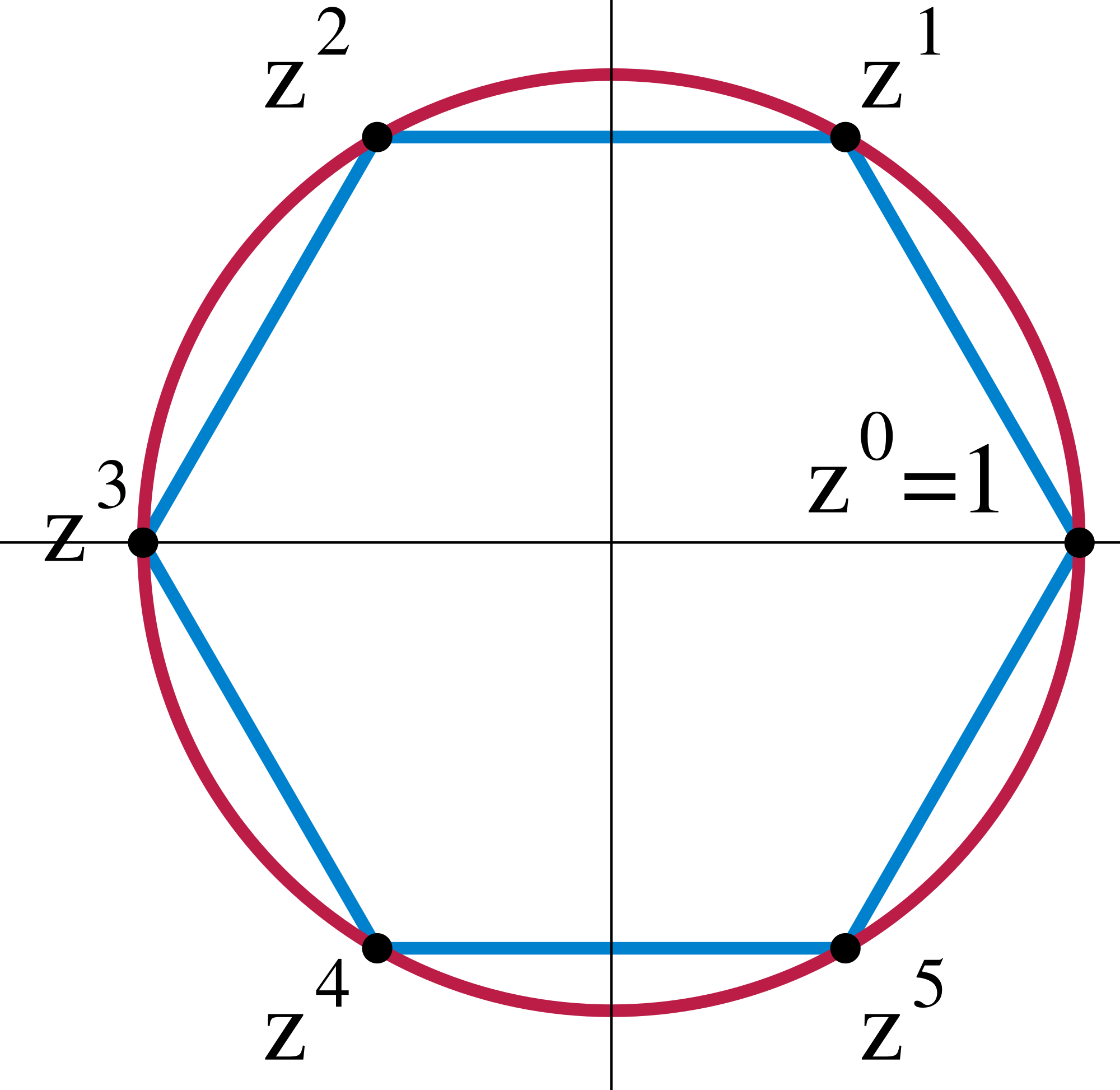
In the simple case n = 1, the group U(1) corresponds to the circle group, isomorphic to the set of all complex numbers that have absolute value 1, under multiplication. All the unitary groups contain copies of this group.
The unitary group U(n) is a real Lie group of dimension n2. The Lie algebra of U(n) consists of n × n skew-Hermitian matrices, with the Lie bracket given by the commutator.
The general unitary group, also called the group of unitary similitudes, consists of all matrices A such that A∗A is a nonzero multiple of the identity matrix, and is just the product of the unitary group with the group of all positive multiples of the identity matrix.
Unitary groups may also be defined over fields other than the complex numbers. The hyperorthogonal group is an archaic name for the unitary group, especially over finite fields.
Since the determinant of a unitary matrix is a complex number with norm 1, the determinant gives a group homomorphism
The kernel of this homomorphism is the set of unitary matrices with determinant 1. This subgroup is called the special unitary group, denoted SU(n). We then have a short exact sequence of Lie groups:
The above map U(n) to U(1) has a section: we can view U(1) as the subgroup of U(n) that are diagonal with eiθ in the upper left corner and 1 on the rest of the diagonal. Therefore U(n) is a semidirect product of U(1) with SU(n).
Hub AI
Unitary group AI simulator
(@Unitary group_simulator)
Unitary group
In mathematics, the unitary group of degree n, denoted U(n), is the group of n × n unitary matrices, with the group operation of matrix multiplication. The unitary group is a subgroup of the general linear group GL(n, C), and it has as a subgroup the special unitary group, consisting of those unitary matrices with determinant 1.
In the simple case n = 1, the group U(1) corresponds to the circle group, isomorphic to the set of all complex numbers that have absolute value 1, under multiplication. All the unitary groups contain copies of this group.
The unitary group U(n) is a real Lie group of dimension n2. The Lie algebra of U(n) consists of n × n skew-Hermitian matrices, with the Lie bracket given by the commutator.
The general unitary group, also called the group of unitary similitudes, consists of all matrices A such that A∗A is a nonzero multiple of the identity matrix, and is just the product of the unitary group with the group of all positive multiples of the identity matrix.
Unitary groups may also be defined over fields other than the complex numbers. The hyperorthogonal group is an archaic name for the unitary group, especially over finite fields.
Since the determinant of a unitary matrix is a complex number with norm 1, the determinant gives a group homomorphism
The kernel of this homomorphism is the set of unitary matrices with determinant 1. This subgroup is called the special unitary group, denoted SU(n). We then have a short exact sequence of Lie groups:
The above map U(n) to U(1) has a section: we can view U(1) as the subgroup of U(n) that are diagonal with eiθ in the upper left corner and 1 on the rest of the diagonal. Therefore U(n) is a semidirect product of U(1) with SU(n).