


Community hub
Recent from talks
Contribute something to knowledge base
Content stats: 0 posts, 0 articles, 1 media, 0 notes
Members stats: 0 subscribers, 0 contributors, 0 moderators, 0 supporters
Subscribers
Supporters
Contributors
Moderators
Hub AI
USS Plunkett AI simulator
(@USS Plunkett_simulator)
Hub AI
USS Plunkett AI simulator
(@USS Plunkett_simulator)
USS Plunkett
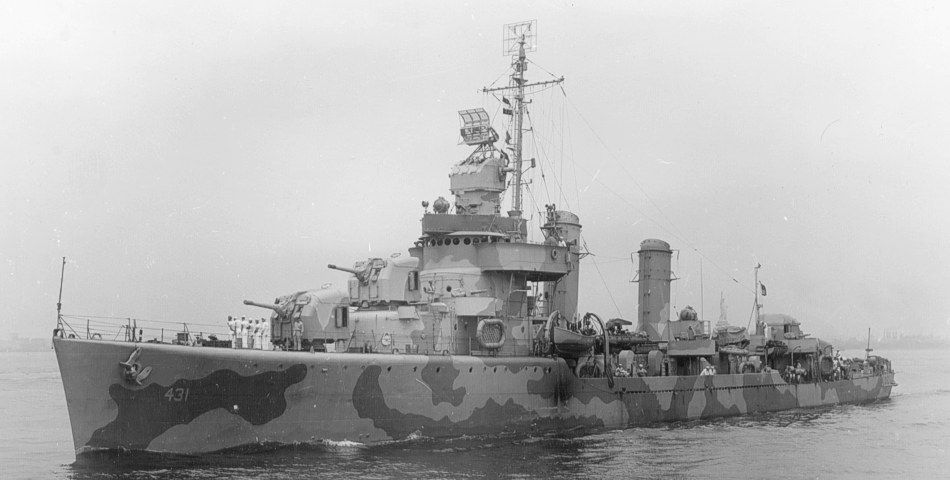
USS Plunkett (DD-431), a Gleaves-class destroyer, is the only ship of the United States Navy to be named for Rear Admiral Charles Peshall Plunkett.
Plunkett was laid down on 1 March 1939 by the Federal Shipbuilding and Dry Dock Co., Kearny, New Jersey and launched on 7 March 1940, sponsored by Mrs. Charles P. Plunkett, widow of Rear Admiral Plunkett. The ship was commissioned on 17 July 1940.
Prior to 7 December 1941, Plunkett operated in the Western Atlantic and in the Gulf of Mexico–Caribbean area on Neutrality Patrol. Initially in the latter area, she joined other Neutrality Patrol vessels off Tampico to prevent the departure of several German steamers, then cruised off Martinique, French Antilles to prevent the dispatching of warships, equipment, and gold to the Vichy government. Patrol and convoy missions in the North Atlantic followed, and, on 7 December 1941, she was en route from Reykjavík to Argentia.
Plunkett continued such duty until joining Task Force 39 (TF 39) on 20 March 1942. Six days later she departed the east coast for Scapa Flow and arrived in Orkney on 4 April to commence operations with the British Home Fleet. Employed on North Sea patrols and escort work over the first leg of the Murmansk run, she was relieved, by Mayrant, in mid-May and assigned to escort the battleship New York back to the United States. Coastwise and Caribbean escort duty followed and in August she returned to the North Atlantic to accompany UK-bound convoys. On 2 November, she departed New York On her first escort run to North Africa. Delayed en route to allow time for the clearance of wreckage from her port of destination, her group delivered its charges with their reinforcement troops and equipment to Casablanca on the 18th. Then, after patrolling off the Moroccan coast she returned to New York and local operations off southern New England.
Another transatlantic convoy to Casablanca preceded shore bombardment exercises in Chesapeake Bay, after which she escorted coastal convoys until May, 1943. On the 10th she sailed for Oran, Algeria, with TF 60; and, between the end of May and July, she was employed on hunter-killer (HUK), antisubmarine (ASW), and convoy escort assignments in North African waters.
On 6 July, she cleared Mers-el-Kebir as a unit of the Western Task Force for the Allied invasion of Sicily. During the invasion, she screened the merchant ships and minelayers of Task Group 80.5 (TG 80.5), then patrolled off the Gela anchorage and covered minelaying operations. On 12 July, she departed the assault area, returning on 17 July, to Scoglitti, and on 31 July, to Palermo, with convoys. During August, she participated in numerous landings on the Sicilian coast and, in September, joined TG 81.6 to screen the troop transports and landing craft for the assault on the Axis boot at Salerno. Early on the morning of 13 September, she aided bombed and burning British hospital ship HMHS Newfoundland. The struggle to save the ship continued for over 36 hours, but, in the evening of 14 September, Plunkett, on orders, fired on and sank the hulk.
North Africa–Naples convoys, interspersed with fire support missions, continued until 21 January 1944, when she sailed to escort the follow-up assault group to Cape Anzio. After delivering the craft, she remained in the area to screen the transports. On 24 January she fell victim to one of the numerous air attacks which, previously, she had helped to drive off. At 17:38 condition red was sounded. A few minutes later the attack was launched with two glider bombs coming in on the port beam, and two Ju 88s closing in from up ahead. Speed was increased; maneuvering was radical. The glider bombs finally dropped, at 200 yards (180 m) distance, but more planes had joined the foray to commence a sustained 17 minute battle. It ended at 17:57 as Plunkett took a 250 kg (550 lb) bomb and caught fire. The bomb killed 23, left 30 missing, with as many, and more, wounded, and caused extensive damage to her fire control apparatus, armament, and port engine. By 18:21, all fires were out and the destroyer proceeded, on one engine, to Palermo. Temporary repairs enabled her to reach Casablanca and, finally, New York, where repairs were completed.
On 5 May 1944, she again departed New York for European waters. Arriving at Belfast on 14 May, she remained until 3 June, then sailed toward the English Channel to join the armada staging for the invasion of France. On 6 June, she screened the transports off Omaha Beach. Fire support and patrol duties followed until 9 June, when she sailed back to England. Returning to the French coast a few days later, she added shore bombardment to her duties at the Bombardment of Cherbourg in Task Force 129.
USS Plunkett
USS Plunkett (DD-431), a Gleaves-class destroyer, is the only ship of the United States Navy to be named for Rear Admiral Charles Peshall Plunkett.
Plunkett was laid down on 1 March 1939 by the Federal Shipbuilding and Dry Dock Co., Kearny, New Jersey and launched on 7 March 1940, sponsored by Mrs. Charles P. Plunkett, widow of Rear Admiral Plunkett. The ship was commissioned on 17 July 1940.
Prior to 7 December 1941, Plunkett operated in the Western Atlantic and in the Gulf of Mexico–Caribbean area on Neutrality Patrol. Initially in the latter area, she joined other Neutrality Patrol vessels off Tampico to prevent the departure of several German steamers, then cruised off Martinique, French Antilles to prevent the dispatching of warships, equipment, and gold to the Vichy government. Patrol and convoy missions in the North Atlantic followed, and, on 7 December 1941, she was en route from Reykjavík to Argentia.
Plunkett continued such duty until joining Task Force 39 (TF 39) on 20 March 1942. Six days later she departed the east coast for Scapa Flow and arrived in Orkney on 4 April to commence operations with the British Home Fleet. Employed on North Sea patrols and escort work over the first leg of the Murmansk run, she was relieved, by Mayrant, in mid-May and assigned to escort the battleship New York back to the United States. Coastwise and Caribbean escort duty followed and in August she returned to the North Atlantic to accompany UK-bound convoys. On 2 November, she departed New York On her first escort run to North Africa. Delayed en route to allow time for the clearance of wreckage from her port of destination, her group delivered its charges with their reinforcement troops and equipment to Casablanca on the 18th. Then, after patrolling off the Moroccan coast she returned to New York and local operations off southern New England.
Another transatlantic convoy to Casablanca preceded shore bombardment exercises in Chesapeake Bay, after which she escorted coastal convoys until May, 1943. On the 10th she sailed for Oran, Algeria, with TF 60; and, between the end of May and July, she was employed on hunter-killer (HUK), antisubmarine (ASW), and convoy escort assignments in North African waters.
On 6 July, she cleared Mers-el-Kebir as a unit of the Western Task Force for the Allied invasion of Sicily. During the invasion, she screened the merchant ships and minelayers of Task Group 80.5 (TG 80.5), then patrolled off the Gela anchorage and covered minelaying operations. On 12 July, she departed the assault area, returning on 17 July, to Scoglitti, and on 31 July, to Palermo, with convoys. During August, she participated in numerous landings on the Sicilian coast and, in September, joined TG 81.6 to screen the troop transports and landing craft for the assault on the Axis boot at Salerno. Early on the morning of 13 September, she aided bombed and burning British hospital ship HMHS Newfoundland. The struggle to save the ship continued for over 36 hours, but, in the evening of 14 September, Plunkett, on orders, fired on and sank the hulk.
North Africa–Naples convoys, interspersed with fire support missions, continued until 21 January 1944, when she sailed to escort the follow-up assault group to Cape Anzio. After delivering the craft, she remained in the area to screen the transports. On 24 January she fell victim to one of the numerous air attacks which, previously, she had helped to drive off. At 17:38 condition red was sounded. A few minutes later the attack was launched with two glider bombs coming in on the port beam, and two Ju 88s closing in from up ahead. Speed was increased; maneuvering was radical. The glider bombs finally dropped, at 200 yards (180 m) distance, but more planes had joined the foray to commence a sustained 17 minute battle. It ended at 17:57 as Plunkett took a 250 kg (550 lb) bomb and caught fire. The bomb killed 23, left 30 missing, with as many, and more, wounded, and caused extensive damage to her fire control apparatus, armament, and port engine. By 18:21, all fires were out and the destroyer proceeded, on one engine, to Palermo. Temporary repairs enabled her to reach Casablanca and, finally, New York, where repairs were completed.
On 5 May 1944, she again departed New York for European waters. Arriving at Belfast on 14 May, she remained until 3 June, then sailed toward the English Channel to join the armada staging for the invasion of France. On 6 June, she screened the transports off Omaha Beach. Fire support and patrol duties followed until 9 June, when she sailed back to England. Returning to the French coast a few days later, she added shore bombardment to her duties at the Bombardment of Cherbourg in Task Force 129.
Recent media
Recent media