
Recent from talks
USS Snapper (SS-185)
Knowledge base stats:
Talk channels stats:
Members stats:
USS Snapper (SS-185)
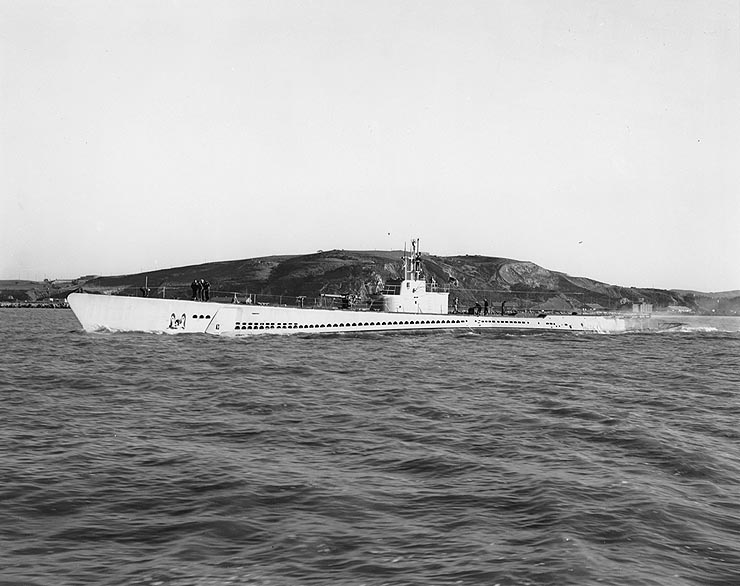
USS Snapper (SS-185), a Salmon-class submarine, was the third ship of the United States Navy of the name and the second to be named for the snapper.
Snapper′s keel was laid down by the Portsmouth Navy Yard at Kittery, Maine, on 23 July 1936. She was launched on 24 August 1937, sponsored by Mrs. Katharine R. Stark, wife of Rear Admiral Harold R. Stark, Chief of the Bureau of Ordnance, and commissioned on 16 December 1937.
On 10 May 1938, Snapper departed Portsmouth, New Hampshire, for her shakedown cruise, visited Cuba, the Panama Canal Zone, Peru, and Chile, and returned to Portsmouth on 16 July. There, she conducted final acceptance trials and underwent post-shakedown overhaul.
On 3 October, Snapper was assigned to Submarine Squadron (SubRon) 3 based at Balboa, Canal Zone, where she participated in training and fleet exercises until 15 March 1939, when she set sail for repairs at the Portsmouth Navy Yard. Departing Portsmouth on 9 May, she stopped at New London, Connecticut, and then got underway for the West Coast, arriving at San Diego, California, on 2 June. On 1 July, the submarine set sail for Pearl Harbor and maneuvers in the Hawaiian area, followed by overhaul at the Mare Island Navy Yard in Vallejo, California, from 1 December 1939 to 1 March 1940.
Following her return to San Diego, Snapper was assigned to SubRon 6 and got underway for Hawaii on 1 April, arriving at Pearl Harbor on 9 April. Except for a brief voyage to San Diego in October and November 1940, Snapper remained in the Hawaiian area participating in training exercises and fleet tactics until 3 May 1941, when she departed for overhaul at the Mare Island Navy Yard. Upon completion, she became a unit of SubRon 2 based at San Diego. During the Japanese attack on Pearl Harbor, Snapper was operating in the Philippine Islands area.
On 19 December, Snapper departed Manila for her first war patrol, covering the shipping lanes between Hong Kong and Hainan Strait until 8 January 1942, when she set sail for Davao Gulf in the Philippines. On 12 January, she made an unsuccessful attack on a Japanese supply ship which escaped when Snapper was forced down by an escorting destroyer. While off Cape San Agustin on 24 January, she attacked another supply ship without success, again being forced deep by destroyer escorts. On 1 February, as the submarine approached Bangka Strait, she was detected by an enemy destroyer which made a fruitless depth charge attack. In return, Snapper fired two torpedoes but both failed to find the target. Snapper arrived at Soerabaja, Java, on 10 February and then continued on to Fremantle, Western Australia.
Snapper departed Fremantle on 6 March for the approaches to Tarakan and her second war patrol. Finding no suitable targets there, she was directed to Davao Gulf where, on 31 March, she closed a large armed tender or auxiliary cruiser. She fired two bow torpedoes at 600 yards (550 m) and, after reversing course, came to periscope depth to observe the enemy ship dead in the water. After firing one torpedo from her stern tube, she was forced deep to evade an attacking escort ship. Later that night, she was ordered to Mactan Island to unload ammunition and take on board 46 tons of food for the besieged island of Corregidor. Arriving there on 4 April, she transferred her cargo to submarine rescue vessel Pigeon, took on board 27 evacuees, and headed back to Fremantle, evading Japanese destroyer patrols on the way.
On 23 April, Snapper received word that Searaven was in trouble and reversed course to go to her aid. After towing the stricken submarine to Fremantle, she sailed for Albany and then returned to Fremantle.
Hub AI
USS Snapper (SS-185) AI simulator
(@USS Snapper (SS-185)_simulator)
USS Snapper (SS-185)
USS Snapper (SS-185), a Salmon-class submarine, was the third ship of the United States Navy of the name and the second to be named for the snapper.
Snapper′s keel was laid down by the Portsmouth Navy Yard at Kittery, Maine, on 23 July 1936. She was launched on 24 August 1937, sponsored by Mrs. Katharine R. Stark, wife of Rear Admiral Harold R. Stark, Chief of the Bureau of Ordnance, and commissioned on 16 December 1937.
On 10 May 1938, Snapper departed Portsmouth, New Hampshire, for her shakedown cruise, visited Cuba, the Panama Canal Zone, Peru, and Chile, and returned to Portsmouth on 16 July. There, she conducted final acceptance trials and underwent post-shakedown overhaul.
On 3 October, Snapper was assigned to Submarine Squadron (SubRon) 3 based at Balboa, Canal Zone, where she participated in training and fleet exercises until 15 March 1939, when she set sail for repairs at the Portsmouth Navy Yard. Departing Portsmouth on 9 May, she stopped at New London, Connecticut, and then got underway for the West Coast, arriving at San Diego, California, on 2 June. On 1 July, the submarine set sail for Pearl Harbor and maneuvers in the Hawaiian area, followed by overhaul at the Mare Island Navy Yard in Vallejo, California, from 1 December 1939 to 1 March 1940.
Following her return to San Diego, Snapper was assigned to SubRon 6 and got underway for Hawaii on 1 April, arriving at Pearl Harbor on 9 April. Except for a brief voyage to San Diego in October and November 1940, Snapper remained in the Hawaiian area participating in training exercises and fleet tactics until 3 May 1941, when she departed for overhaul at the Mare Island Navy Yard. Upon completion, she became a unit of SubRon 2 based at San Diego. During the Japanese attack on Pearl Harbor, Snapper was operating in the Philippine Islands area.
On 19 December, Snapper departed Manila for her first war patrol, covering the shipping lanes between Hong Kong and Hainan Strait until 8 January 1942, when she set sail for Davao Gulf in the Philippines. On 12 January, she made an unsuccessful attack on a Japanese supply ship which escaped when Snapper was forced down by an escorting destroyer. While off Cape San Agustin on 24 January, she attacked another supply ship without success, again being forced deep by destroyer escorts. On 1 February, as the submarine approached Bangka Strait, she was detected by an enemy destroyer which made a fruitless depth charge attack. In return, Snapper fired two torpedoes but both failed to find the target. Snapper arrived at Soerabaja, Java, on 10 February and then continued on to Fremantle, Western Australia.
Snapper departed Fremantle on 6 March for the approaches to Tarakan and her second war patrol. Finding no suitable targets there, she was directed to Davao Gulf where, on 31 March, she closed a large armed tender or auxiliary cruiser. She fired two bow torpedoes at 600 yards (550 m) and, after reversing course, came to periscope depth to observe the enemy ship dead in the water. After firing one torpedo from her stern tube, she was forced deep to evade an attacking escort ship. Later that night, she was ordered to Mactan Island to unload ammunition and take on board 46 tons of food for the besieged island of Corregidor. Arriving there on 4 April, she transferred her cargo to submarine rescue vessel Pigeon, took on board 27 evacuees, and headed back to Fremantle, evading Japanese destroyer patrols on the way.
On 23 April, Snapper received word that Searaven was in trouble and reversed course to go to her aid. After towing the stricken submarine to Fremantle, she sailed for Albany and then returned to Fremantle.
Recent media