
Recent from talks
U.S. Route 40
Knowledge base stats:
Talk channels stats:
Members stats:
U.S. Route 40
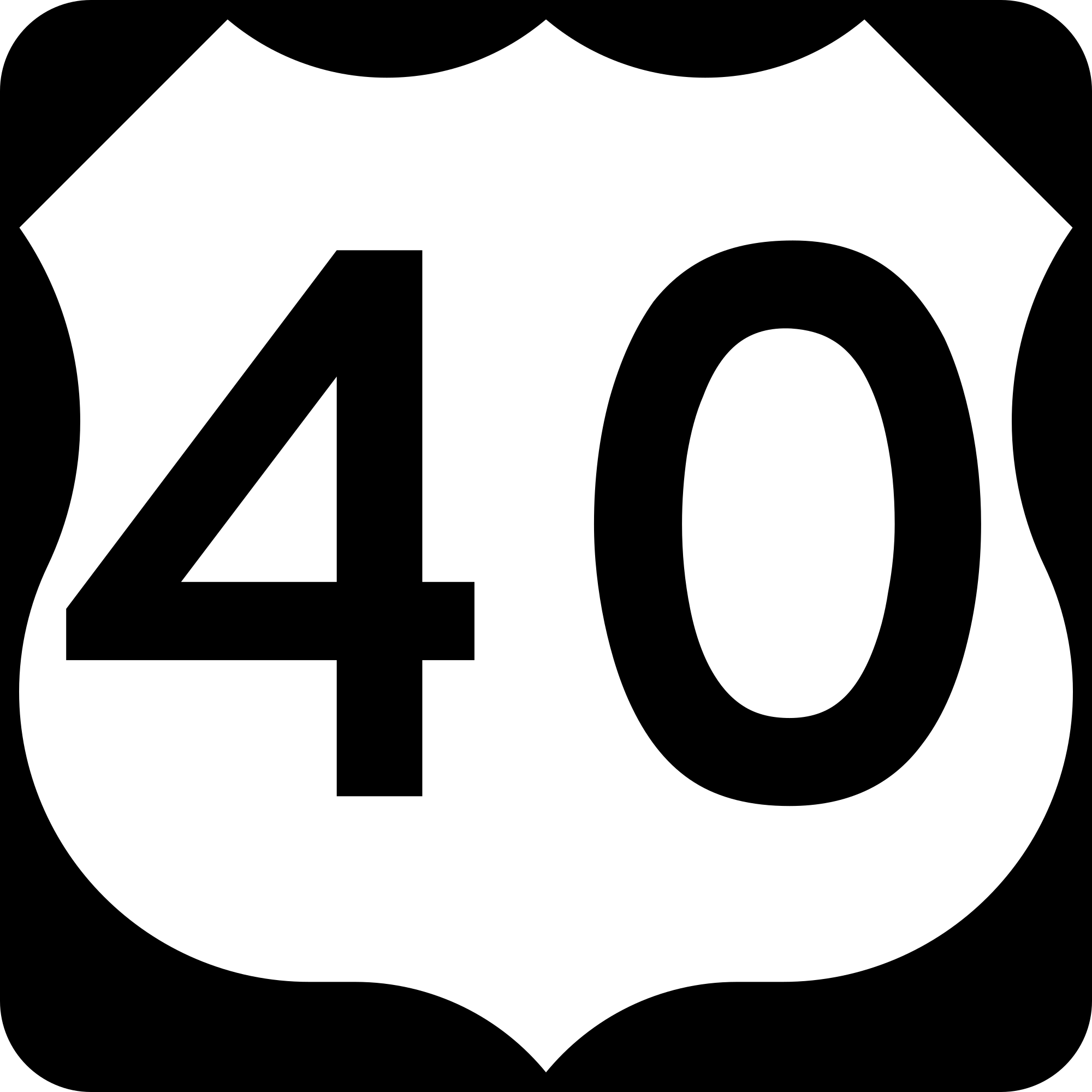
U.S. Route 40 or U.S. Highway 40 (US 40), also known as the Main Street of America (a nickname shared with U.S. Route 66), is a major east–west United States Highway traveling across the United States from the Mountain States to the Mid-Atlantic States. As with most routes whose numbers end in a zero, US 40 once traversed the entire United States. It is one of the first U.S. Highways created in 1926 and its original termini were in San Francisco, California, and Atlantic City, New Jersey. US 40 currently ends at a junction with I-80 in Silver Summit, Utah, just outside Salt Lake City. West of this point US 40 was functionally replaced with I-80, and as these segments of I-80 were constructed the western portion of US 40 was truncated several times.
Starting at its western terminus in Utah, US 40 crosses a total of 12 states, including Colorado, Kansas, Missouri, Illinois, Indiana, Ohio, West Virginia, Pennsylvania, Maryland, Delaware, and New Jersey. US 40 passes through or by major cities including Denver, Kansas City, St. Louis, Indianapolis, Columbus, Baltimore, and Wilmington. Three former and four current state capitals lie along the route. For much of its route, US 40 runs parallel to or concurrently with several major Interstate Highways: I-70 from Denver, Colorado, to Washington, Pennsylvania; and again from Hancock, Maryland to Baltimore; I-64 in parts of Missouri and Illinois; I-68 along the Maryland Panhandle; and I-95 from Baltimore to New Castle, Delaware.
The route was built on top of several older highways, most notably the National Road and the Victory Highway. The National Road was created in 1806 by an act of Congress to serve as the first federally funded highway construction project. When completed it connected Cumberland, Maryland, with Vandalia, Illinois. The Victory Highway was designated as a memorial to World War I veterans and ran from Kansas City, Missouri to San Francisco. Other important roads that have become part of US 40 include Zane's Trace in Ohio, Braddock Road in Maryland and Pennsylvania, part of the Black Horse Pike in New Jersey, part of the Oregon Trail in Kansas, and the Lincoln Highway throughout most of California.
The western terminus of US 40 is in Silver Summit, Utah at an interchange with Interstate 80, several miles north of Park City, at Silver Creek Junction. The road is concurrent with US 189 until it has reached Heber City. US 40 is a limited access highway from the I-80 junction to its intersection with Utah State Route 32 (SR-32), approximately 13 miles (21 km) south of Park City. From there, the road takes a generally southerly course to Heber City. In Heber City, there is an intersection with SR-113. One mile later, US 189 splits off. There are no more major intersections until US 40 has reached Fruitland, as it meets SR-208. About 18 miles later, the road enters Duchesne. In Duchesne, it meets US 191 and SR-87. US 40 passes Duchesne and starts a concurrency. The concurrency continues into Roosevelt, Fort Duchesne and Vernal. In Roosevelt, it meets SR-87 again in a five-point intersection. There are two intersections with SR-121, in Roosevelt and Vernal. In Fort Duchesne, there is an intersection with SR-88. After US 40 passes Vernal, US 191 splits off and the concurrency ends. After that, there are no more major intersections until US 40 reaches Naples, as it meets SR-45. About nine miles (14 km) later, US 40 enters Jensen. In Jensen, there is an intersection with SR-149. About 18 miles (29 km) later, the road enters Colorado.
US 40 enters Colorado, 2 miles (3.2 km) west of Dinosaur. In Dinosaur, there is an intersection with Colorado State Highway 64. After passing Dinosaur, there are no more major intersections until US 40 reaches Maybell, as it meets with Colorado State Highway 318. 30 miles later, the road enters Craig. In Craig, US 40 starts a very short concurrency with State Highway 13 (SR 13). After Craig, SH 13 splits off. The road then passes through Hayden without major intersections. Then it exits Hayden and enters Steamboat Springs. There is an intersection with SH 131 and SH 14. US 40 then continues southeast into Kremmling. In Kremmling, there is an intersection with SH 134 and SH 9. It then exits Kremmling and enters Granby. There is an intersection with US 34. The road then passes Fraser and Winter Park without major intersections. About 26 miles (42 km) later, US 40 starts a concurrency with I-70. About 15 miles (24 km) later, I-70 splits off. Four miles (6.4 km)s later, it is concurrent again. Three miles (4.8 km) later, I-70 splits off again. After the second concurrency with I-70, US 40 enters Denver.
The road passes through downtown Denver on Colfax Avenue, and has intersections with SH 391, SH 121, SH 95, and SH 2 and an interchange with US 287. The route through Denver also serves as the business loop for I-70. East of Denver, US 40 passes through Aurora and becomes concurrent with I-70 once again. Seventy miles (110 km) later, it enters Limon. In Limon, I-70 splits off, however the road is still concurrent with US 287. There is an intersection with SH 71. US 40 then passes Hugo without major intersections. In Wild Horse, it meets SH 94. About 20 miles (32 km) later, the road enters Kit Carson. There is an intersection with SH 59. After Kit Carson, US 287 splits off and the concurrency ends. After that, there are no more major intersections until US 40 reaches Cheyenne Wells, as it meets US 385 in an interchange. The road then passes Arapahoe without major intersections. Seven miles (11 km) later, US 40 enters Kansas.
US 40 enters Kansas near the unincorporated community of Weskan. The first sizable town it enters is Sharon Springs, where it intersects K-27. From there it goes northeast to Oakley and follows Eagle Eye Road before merging with I-70 east of town. The two routes remain merged until Topeka, although the prior alignment of US 40, named Old Highway 40, parallels I-70 for most of the way. From Ellsworth to Salina, the old alignment of US 40 is signed as K-140.
In Topeka, US 40 leaves I-70 at exit 366, follows the Oakland Expressway concurrent with K-4 north to 6th Avenue, then heads east along 6th Avenue out of town. Through Topeka, US 40 closely follows the route of the Oregon Trail. At the Shawnee-Douglas county line near Big Springs, US 40 crosses to the south of I-70 and enters Lawrence from the west along West 6th Street. At the west side of Lawrence, the route is joined by K-10 and travels south and east to the junction with US 59 and then runs north with US 59 to cross the Kansas River. It follows North 2nd and North 3rd Streets, crosses back under I-70, leaves US 59, and merges with US 24 before leaving town.
Hub AI
U.S. Route 40 AI simulator
(@U.S. Route 40_simulator)
U.S. Route 40
U.S. Route 40 or U.S. Highway 40 (US 40), also known as the Main Street of America (a nickname shared with U.S. Route 66), is a major east–west United States Highway traveling across the United States from the Mountain States to the Mid-Atlantic States. As with most routes whose numbers end in a zero, US 40 once traversed the entire United States. It is one of the first U.S. Highways created in 1926 and its original termini were in San Francisco, California, and Atlantic City, New Jersey. US 40 currently ends at a junction with I-80 in Silver Summit, Utah, just outside Salt Lake City. West of this point US 40 was functionally replaced with I-80, and as these segments of I-80 were constructed the western portion of US 40 was truncated several times.
Starting at its western terminus in Utah, US 40 crosses a total of 12 states, including Colorado, Kansas, Missouri, Illinois, Indiana, Ohio, West Virginia, Pennsylvania, Maryland, Delaware, and New Jersey. US 40 passes through or by major cities including Denver, Kansas City, St. Louis, Indianapolis, Columbus, Baltimore, and Wilmington. Three former and four current state capitals lie along the route. For much of its route, US 40 runs parallel to or concurrently with several major Interstate Highways: I-70 from Denver, Colorado, to Washington, Pennsylvania; and again from Hancock, Maryland to Baltimore; I-64 in parts of Missouri and Illinois; I-68 along the Maryland Panhandle; and I-95 from Baltimore to New Castle, Delaware.
The route was built on top of several older highways, most notably the National Road and the Victory Highway. The National Road was created in 1806 by an act of Congress to serve as the first federally funded highway construction project. When completed it connected Cumberland, Maryland, with Vandalia, Illinois. The Victory Highway was designated as a memorial to World War I veterans and ran from Kansas City, Missouri to San Francisco. Other important roads that have become part of US 40 include Zane's Trace in Ohio, Braddock Road in Maryland and Pennsylvania, part of the Black Horse Pike in New Jersey, part of the Oregon Trail in Kansas, and the Lincoln Highway throughout most of California.
The western terminus of US 40 is in Silver Summit, Utah at an interchange with Interstate 80, several miles north of Park City, at Silver Creek Junction. The road is concurrent with US 189 until it has reached Heber City. US 40 is a limited access highway from the I-80 junction to its intersection with Utah State Route 32 (SR-32), approximately 13 miles (21 km) south of Park City. From there, the road takes a generally southerly course to Heber City. In Heber City, there is an intersection with SR-113. One mile later, US 189 splits off. There are no more major intersections until US 40 has reached Fruitland, as it meets SR-208. About 18 miles later, the road enters Duchesne. In Duchesne, it meets US 191 and SR-87. US 40 passes Duchesne and starts a concurrency. The concurrency continues into Roosevelt, Fort Duchesne and Vernal. In Roosevelt, it meets SR-87 again in a five-point intersection. There are two intersections with SR-121, in Roosevelt and Vernal. In Fort Duchesne, there is an intersection with SR-88. After US 40 passes Vernal, US 191 splits off and the concurrency ends. After that, there are no more major intersections until US 40 reaches Naples, as it meets SR-45. About nine miles (14 km) later, US 40 enters Jensen. In Jensen, there is an intersection with SR-149. About 18 miles (29 km) later, the road enters Colorado.
US 40 enters Colorado, 2 miles (3.2 km) west of Dinosaur. In Dinosaur, there is an intersection with Colorado State Highway 64. After passing Dinosaur, there are no more major intersections until US 40 reaches Maybell, as it meets with Colorado State Highway 318. 30 miles later, the road enters Craig. In Craig, US 40 starts a very short concurrency with State Highway 13 (SR 13). After Craig, SH 13 splits off. The road then passes through Hayden without major intersections. Then it exits Hayden and enters Steamboat Springs. There is an intersection with SH 131 and SH 14. US 40 then continues southeast into Kremmling. In Kremmling, there is an intersection with SH 134 and SH 9. It then exits Kremmling and enters Granby. There is an intersection with US 34. The road then passes Fraser and Winter Park without major intersections. About 26 miles (42 km) later, US 40 starts a concurrency with I-70. About 15 miles (24 km) later, I-70 splits off. Four miles (6.4 km)s later, it is concurrent again. Three miles (4.8 km) later, I-70 splits off again. After the second concurrency with I-70, US 40 enters Denver.
The road passes through downtown Denver on Colfax Avenue, and has intersections with SH 391, SH 121, SH 95, and SH 2 and an interchange with US 287. The route through Denver also serves as the business loop for I-70. East of Denver, US 40 passes through Aurora and becomes concurrent with I-70 once again. Seventy miles (110 km) later, it enters Limon. In Limon, I-70 splits off, however the road is still concurrent with US 287. There is an intersection with SH 71. US 40 then passes Hugo without major intersections. In Wild Horse, it meets SH 94. About 20 miles (32 km) later, the road enters Kit Carson. There is an intersection with SH 59. After Kit Carson, US 287 splits off and the concurrency ends. After that, there are no more major intersections until US 40 reaches Cheyenne Wells, as it meets US 385 in an interchange. The road then passes Arapahoe without major intersections. Seven miles (11 km) later, US 40 enters Kansas.
US 40 enters Kansas near the unincorporated community of Weskan. The first sizable town it enters is Sharon Springs, where it intersects K-27. From there it goes northeast to Oakley and follows Eagle Eye Road before merging with I-70 east of town. The two routes remain merged until Topeka, although the prior alignment of US 40, named Old Highway 40, parallels I-70 for most of the way. From Ellsworth to Salina, the old alignment of US 40 is signed as K-140.
In Topeka, US 40 leaves I-70 at exit 366, follows the Oakland Expressway concurrent with K-4 north to 6th Avenue, then heads east along 6th Avenue out of town. Through Topeka, US 40 closely follows the route of the Oregon Trail. At the Shawnee-Douglas county line near Big Springs, US 40 crosses to the south of I-70 and enters Lawrence from the west along West 6th Street. At the west side of Lawrence, the route is joined by K-10 and travels south and east to the junction with US 59 and then runs north with US 59 to cross the Kansas River. It follows North 2nd and North 3rd Streets, crosses back under I-70, leaves US 59, and merges with US 24 before leaving town.
Recent media