
Recent from talks
Ulalume
Knowledge base stats:
Talk channels stats:
Members stats:
Ulalume
"Ulalume" (/ˈuːləluːm/) is a poem written by Edgar Allan Poe in 1847. Much like a few of Poe's other poems (such as "The Raven", "Annabel Lee", and "Lenore"), "Ulalume" focuses on the narrator's loss of his beloved due to her death. Poe originally wrote the poem as an elocution piece and, as such, the poem is known for its focus on sound. Additionally, it makes many allusions, especially to mythology, and the identity of Ulalume herself, if a real person, has been a subject of debate.
The poem takes place on a night in the "lonesome October" with a gray sky as the leaves are withering for the autumn season. In the region of Weir, by the lake of Auber, the narrator roams with a "volcanic" heart. He has a "serious and sober" talk with his soul, though he does not realize it is October or where his roaming is leading him. He remarks on the stars as night fades away, remarking on the brightest one, and wonders if it knows that the tears on his cheeks have not yet dried. His soul, however, mistrusts the star and where it is leading them. Just as the narrator calms his soul, he realizes he has unconsciously walked to the vault of his "lost Ulalume" on the very night he had buried her a year before.
Unlike Poe's poem "Annabel Lee", this poem presents a narrator who is not conscious of his return to the grave of his lost love. This reveals the speaker's dependence on Ulalume and her love; his losing her leaves him not only sad but absolutely devastated and, by visiting her grave, he unconsciously subjects himself to further self-inflicted anguish. The poem has a heavy focus on decay and deterioration: the leaves are "withering" and the narrator's thoughts are "palsied". Like many of Poe's later poems, "Ulalume" has a strong sense of rhythm and musicality. The verses are purposefully sonorous, built around sound to create feelings of sadness and anguish. The poem employs Poe's typical theme of the "death of a beautiful woman", which he considered "the most poetical topic in the world". Biographers and critics have often suggested that Poe's obsession with this theme stems from the repeated loss of women throughout his life, including his mother Eliza Poe, his wife, and his foster mother Frances Allan.
The identity of Ulalume in the poem is uncertain. Poe scholar and distant relative Harry Lee Poe says it is autobiographical and shows Poe's grief over the recent death of his wife Virginia. Scholar Scott Peeples notes that "Ulalume" serves as a sequel to "The Raven". Poetically, the name Ulalume emphasizes the letter L, a frequent device in Poe's female characters such as "Annabel Lee", "Eulalie", and "Lenore". If it really stands for a deceased love, Poe's choosing to refer to Ulalume as "the thing" and "the secret" do not seem endearing terms. In one possible view, Ulalume may be representative of death itself.
Much work has been done by scholars to identify all of Poe's allusions, most notably by Thomas Ollive Mabbott, though other scholars suggest that the names throughout the poem should be valued only because of their poetic sounds. The title itself suggests wailing (from the Latin ululare). The name may also allude to the Latin lumen, a light symbolizing sorrow. The narrator personifies his soul as the ancient Greek Psyche, representing the irrational but careful part of his subconsciousness. It is Psyche who first feels concerned about where they are walking and makes the first recognition that they have reached Ulalume's vault.
The bright star they see is Astarte, a goddess associated with Venus and connected with fertility and sexuality. The "sinfully scintillant planet" in the original final verse is another reference to Venus. Astarte may represent a sexual temptress or a vision of the ideal. Mount Yaanek, with its "sulphurous currents" in the "ultimate climes of the pole", has been associated with Mount Erebus, a volcano in Antarctica first sighted in 1841, although Yaanek's location is specified as being in "the realms of the boreal pole", indicating an Arctic location rather than an Antarctic one for the fictional counterpart. The Auber and Weir references in the poem may be to two contemporaries of Poe: Daniel François Esprit Auber, a composer of sad operatic tunes, and Robert Walter Weir, a painter of the Hudson River School famous for his landscapes.
Poe wrote the poem on the request of Reverend Cotesworth Bronson, who had asked Poe for a poem he could read at one of his lectures on public speaking. He asked Poe for something with "vocal variety and expression". Bronson decided not to use the poem Poe sent him, "Ulalume". Poe then submitted the poem to Sartain's Union Magazine, which rejected it as too dense. Poe probably saw Bronson's request as a personal challenge as well as an opportunity to enhance his renown, especially after his previous poem "The Raven" had also been demonstrated for its elocution style.
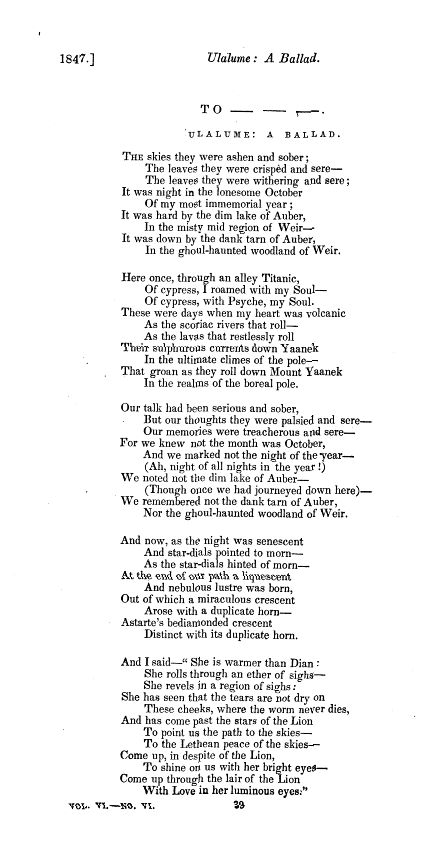
"Ulalume - A Ballad" was finally published, albeit anonymously, in the American Whig Review in December, 1847. Originally, Poe had sold his essay "The Rationale of Verse", then unpublished, to the Review's editor George Hooker Colton. Colton did not immediately print the manuscript, so Poe exchanged it for "Ulalume".
Hub AI
Ulalume AI simulator
(@Ulalume_simulator)
Ulalume
"Ulalume" (/ˈuːləluːm/) is a poem written by Edgar Allan Poe in 1847. Much like a few of Poe's other poems (such as "The Raven", "Annabel Lee", and "Lenore"), "Ulalume" focuses on the narrator's loss of his beloved due to her death. Poe originally wrote the poem as an elocution piece and, as such, the poem is known for its focus on sound. Additionally, it makes many allusions, especially to mythology, and the identity of Ulalume herself, if a real person, has been a subject of debate.
The poem takes place on a night in the "lonesome October" with a gray sky as the leaves are withering for the autumn season. In the region of Weir, by the lake of Auber, the narrator roams with a "volcanic" heart. He has a "serious and sober" talk with his soul, though he does not realize it is October or where his roaming is leading him. He remarks on the stars as night fades away, remarking on the brightest one, and wonders if it knows that the tears on his cheeks have not yet dried. His soul, however, mistrusts the star and where it is leading them. Just as the narrator calms his soul, he realizes he has unconsciously walked to the vault of his "lost Ulalume" on the very night he had buried her a year before.
Unlike Poe's poem "Annabel Lee", this poem presents a narrator who is not conscious of his return to the grave of his lost love. This reveals the speaker's dependence on Ulalume and her love; his losing her leaves him not only sad but absolutely devastated and, by visiting her grave, he unconsciously subjects himself to further self-inflicted anguish. The poem has a heavy focus on decay and deterioration: the leaves are "withering" and the narrator's thoughts are "palsied". Like many of Poe's later poems, "Ulalume" has a strong sense of rhythm and musicality. The verses are purposefully sonorous, built around sound to create feelings of sadness and anguish. The poem employs Poe's typical theme of the "death of a beautiful woman", which he considered "the most poetical topic in the world". Biographers and critics have often suggested that Poe's obsession with this theme stems from the repeated loss of women throughout his life, including his mother Eliza Poe, his wife, and his foster mother Frances Allan.
The identity of Ulalume in the poem is uncertain. Poe scholar and distant relative Harry Lee Poe says it is autobiographical and shows Poe's grief over the recent death of his wife Virginia. Scholar Scott Peeples notes that "Ulalume" serves as a sequel to "The Raven". Poetically, the name Ulalume emphasizes the letter L, a frequent device in Poe's female characters such as "Annabel Lee", "Eulalie", and "Lenore". If it really stands for a deceased love, Poe's choosing to refer to Ulalume as "the thing" and "the secret" do not seem endearing terms. In one possible view, Ulalume may be representative of death itself.
Much work has been done by scholars to identify all of Poe's allusions, most notably by Thomas Ollive Mabbott, though other scholars suggest that the names throughout the poem should be valued only because of their poetic sounds. The title itself suggests wailing (from the Latin ululare). The name may also allude to the Latin lumen, a light symbolizing sorrow. The narrator personifies his soul as the ancient Greek Psyche, representing the irrational but careful part of his subconsciousness. It is Psyche who first feels concerned about where they are walking and makes the first recognition that they have reached Ulalume's vault.
The bright star they see is Astarte, a goddess associated with Venus and connected with fertility and sexuality. The "sinfully scintillant planet" in the original final verse is another reference to Venus. Astarte may represent a sexual temptress or a vision of the ideal. Mount Yaanek, with its "sulphurous currents" in the "ultimate climes of the pole", has been associated with Mount Erebus, a volcano in Antarctica first sighted in 1841, although Yaanek's location is specified as being in "the realms of the boreal pole", indicating an Arctic location rather than an Antarctic one for the fictional counterpart. The Auber and Weir references in the poem may be to two contemporaries of Poe: Daniel François Esprit Auber, a composer of sad operatic tunes, and Robert Walter Weir, a painter of the Hudson River School famous for his landscapes.
Poe wrote the poem on the request of Reverend Cotesworth Bronson, who had asked Poe for a poem he could read at one of his lectures on public speaking. He asked Poe for something with "vocal variety and expression". Bronson decided not to use the poem Poe sent him, "Ulalume". Poe then submitted the poem to Sartain's Union Magazine, which rejected it as too dense. Poe probably saw Bronson's request as a personal challenge as well as an opportunity to enhance his renown, especially after his previous poem "The Raven" had also been demonstrated for its elocution style.
"Ulalume - A Ballad" was finally published, albeit anonymously, in the American Whig Review in December, 1847. Originally, Poe had sold his essay "The Rationale of Verse", then unpublished, to the Review's editor George Hooker Colton. Colton did not immediately print the manuscript, so Poe exchanged it for "Ulalume".
Recent media