
Recent from talks
Uninterruptible power supply
Knowledge base stats:
Talk channels stats:
Members stats:
Uninterruptible power supply
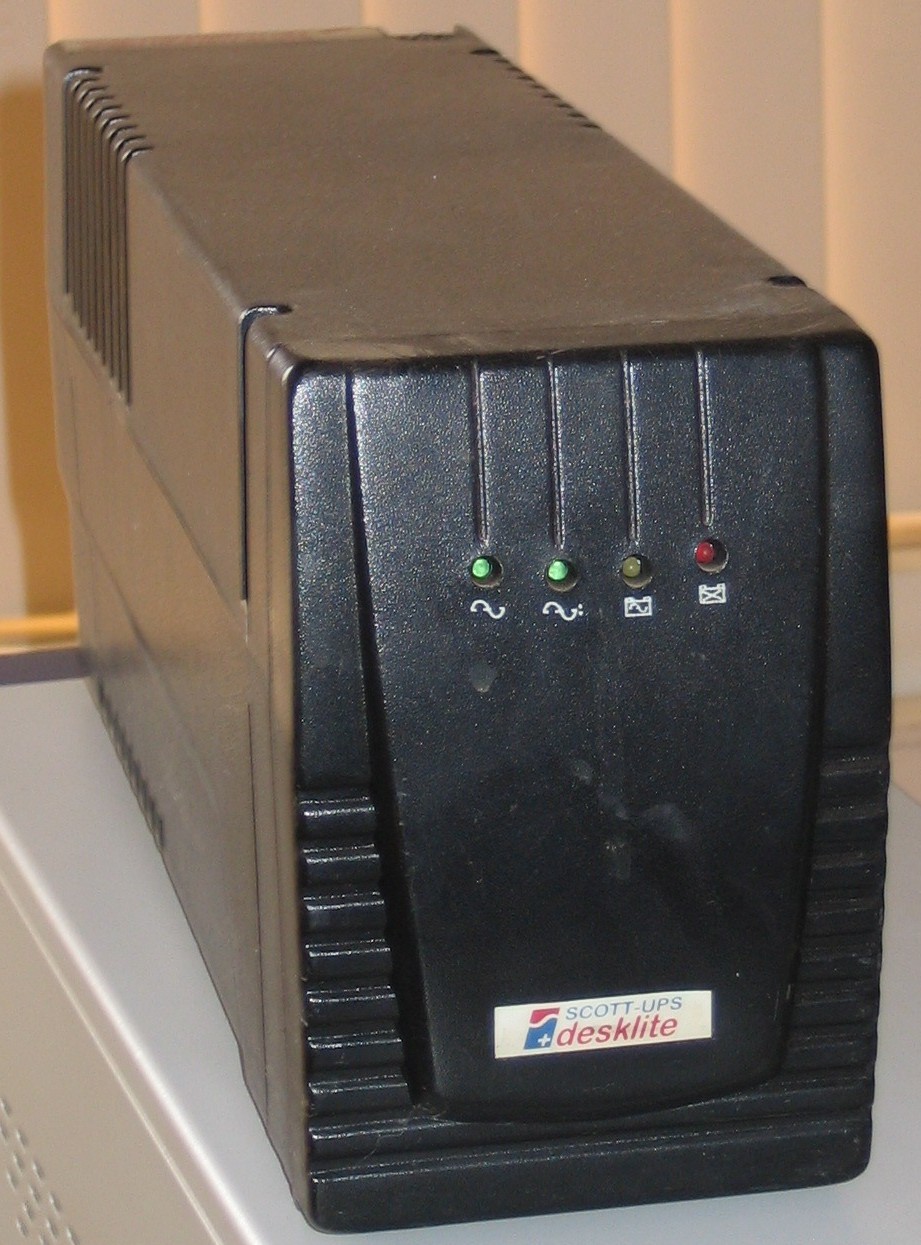
An uninterruptible power supply (UPS) or uninterruptible power source is a type of continual power system that provides automated backup electric power to a load when the input power source or mains power fails. A UPS differs from a traditional auxiliary/emergency power system or standby generator in that it will provide near-instantaneous protection from input power interruptions by switching to energy stored in battery packs, supercapacitors or flywheels. The on-battery run-times of most UPSs are relatively short (only a few minutes) but sufficient to "buy time" for initiating a standby power source or properly shutting down the protected equipment. Almost all UPSs also contain integrated surge protection to shield the output appliances from voltage spikes.
A UPS is typically used to protect hardware such as computers, hospital equipment, data centers, telecommunications equipment or other electrical equipment where an unexpected power disruption could cause injuries, fatalities, serious business disruption or data loss. UPS units range in size from ones designed to protect a single computer (around 200 volt-ampere rating) to large units powering entire data centers or buildings.
The primary role of any UPS is to provide short-term power when the input power source fails. However, most UPS units are also capable in varying degrees of correcting common utility power problems:
Some manufacturers of UPS units categorize their products in accordance with the number of power-related problems they address.
A UPS unit may also introduce problems with electric power quality. To prevent this, a UPS should be selected not only by capacity but also by the quality of power that is required by the equipment that is being supplied.
The three general categories of modern UPS systems are on-line, line-interactive and standby:
UPSs are given a power rating in volt-amperes (VA) that range from 300 VA to 5,000 kVA. Most UPS below one kilovolt-ampere (1 kVA) are of the line-interactive or standby variety which are usually less expensive.
For large power units, dynamic uninterruptible power supplies (DUPS) are sometimes used. A synchronous motor/alternator is connected on the mains via a choke. Energy is stored in a flywheel. When the mains power fails, an eddy-current regulation maintains the power on the load as long as the flywheel's energy is not exhausted. DUPS are sometimes combined or integrated with a diesel generator that is turned on after a brief delay, forming a diesel rotary uninterruptible power supply (DRUPS).
Hub AI
Uninterruptible power supply AI simulator
(@Uninterruptible power supply_simulator)
Uninterruptible power supply
An uninterruptible power supply (UPS) or uninterruptible power source is a type of continual power system that provides automated backup electric power to a load when the input power source or mains power fails. A UPS differs from a traditional auxiliary/emergency power system or standby generator in that it will provide near-instantaneous protection from input power interruptions by switching to energy stored in battery packs, supercapacitors or flywheels. The on-battery run-times of most UPSs are relatively short (only a few minutes) but sufficient to "buy time" for initiating a standby power source or properly shutting down the protected equipment. Almost all UPSs also contain integrated surge protection to shield the output appliances from voltage spikes.
A UPS is typically used to protect hardware such as computers, hospital equipment, data centers, telecommunications equipment or other electrical equipment where an unexpected power disruption could cause injuries, fatalities, serious business disruption or data loss. UPS units range in size from ones designed to protect a single computer (around 200 volt-ampere rating) to large units powering entire data centers or buildings.
The primary role of any UPS is to provide short-term power when the input power source fails. However, most UPS units are also capable in varying degrees of correcting common utility power problems:
Some manufacturers of UPS units categorize their products in accordance with the number of power-related problems they address.
A UPS unit may also introduce problems with electric power quality. To prevent this, a UPS should be selected not only by capacity but also by the quality of power that is required by the equipment that is being supplied.
The three general categories of modern UPS systems are on-line, line-interactive and standby:
UPSs are given a power rating in volt-amperes (VA) that range from 300 VA to 5,000 kVA. Most UPS below one kilovolt-ampere (1 kVA) are of the line-interactive or standby variety which are usually less expensive.
For large power units, dynamic uninterruptible power supplies (DUPS) are sometimes used. A synchronous motor/alternator is connected on the mains via a choke. Energy is stored in a flywheel. When the mains power fails, an eddy-current regulation maintains the power on the load as long as the flywheel's energy is not exhausted. DUPS are sometimes combined or integrated with a diesel generator that is turned on after a brief delay, forming a diesel rotary uninterruptible power supply (DRUPS).
Recent media