



Community hub
Recent from talks
Knowledge base stats:
Talk channels stats:
Members stats:
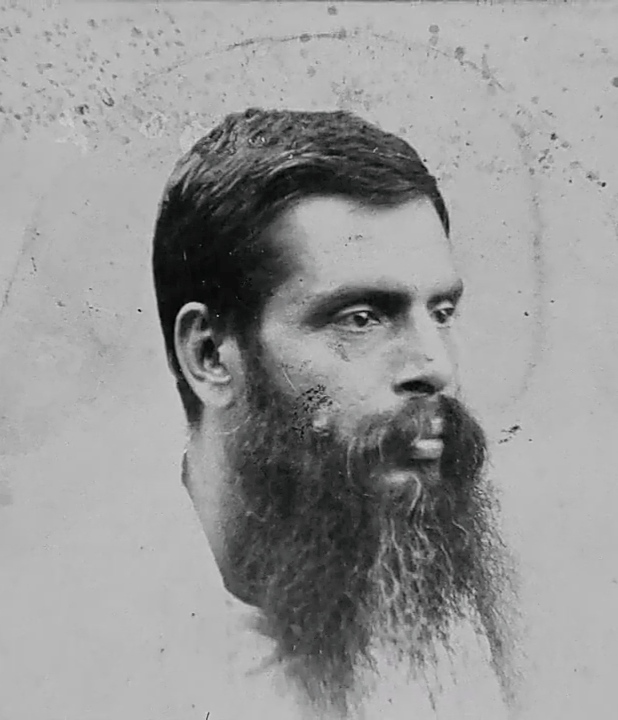
Upendrakishore Ray Chowdhury
Upendrakishore Ray Chowdhury (12 May 1863 – 20 December 1915) was a Bengali writer, painter and entrepreneur. He was the son-in-law of reformer Dwarkanath Ganguly.
According to the history of the Ray family, one of their ancestors, Shri Ramsunder Deb, was a native of Chakdah village in Nadia district of present-day West Bengal, India. In search of fortune, he migrated to Sherpur in East Bengal. There he met Raja Gunichandra, the zamindar of Jashodal, at the zamindar house of Sherpur. King Gunichandra was immediately impressed by Ramsunder's beautiful appearance and sharp intellect and took Ramsunder with him to his zamindari estate. He made Ramsunder his son-in-law and granted him some property in Jashodal, Kishorganj. From then on, Ramsunder started living in Jashodal. His descendants migrated from there and settled down in the village of Masua in the Katiadi upazila of the Kishoreganj district.
Upendrakishore Ray Chowdhury was born on 12 May 1863, in a little village called Moshua in Mymensingh District of Bengal (now Kishoreganj District in Bangladesh). He spent most of his adult life in Calcutta, where he died on 20 December 1915, aged only fifty-two.
He was born as Kamadaranjan Ray to Kalinath Ray, a scholar in Sanskrit, Arabic and Persian. His elder brother Saradaranjan Ray was one of the pioneers of Indian cricket who was called the W.G. Grace of India. At the age of five, Kamadaranjan was adopted by Harikishore, a family relative who was a zamindar in Mymensingh. Harikishore renamed his adopted son as Upendrakishore Roychowdhury and added the honorific 'Raychaudhuri' as a surname.
Ray Chowdhury passed the entrance examination in 1880 with a scholarship from Mymensingh Zilla School. He studied for a while at Presidency College, then affiliated with the University of Calcutta, but passed the BA examination in 1884 from the Calcutta Metropolitan Institution (now Vidyasagar College). Upendra took to drawing while in school. He published his first literary work in the magazine Sakha in 1883.
His father, Kalinath Ray, was an expert in both English and Persian and also in the traditional Indian and Anglo-Indian legal systems. He became an eminent expert in interpreting old land deeds written in Persian and in helping the landowners get the best deal from the newly introduced British legal system in India. He became affluent, and in due course, his family was able to afford two elephants.
Upendrakishore first introduced modern blockmaking, including half-tone and colour blockmaking, in South Asia. When the reproduction using woodcut line blocks of his illustrations for one of his books, Chheleder Ramayan, was very poor, he imported books, chemicals and equipment from Britain to learn the technology of blockmaking. After mastering this, in 1895 he successfully set up a business, U. Ray and Sons, of making blocks at 7 Shibnarain Lane, which then became his residence-cum-workplace. He experimented with the process of advanced blockmaking, and several of his technical articles about blockmaking were published in the Penrose Annual Volumes published from Britain. In his own lifetime, a printing expert from abroad commented that Upendrakishore's contribution was far more original than that of his counterparts in Europe and America, "which is all the more surprising when we consider how far he is from hub-centres of process work". He also went on publishing books, but initially he had them printed in other printing presses. His residence and business were located at 22, Sukeas Street (now the premises has been renamed 30B, Mahendra Srimany Street) from 1901 to 1914. The Sandesh magazine was first published here in 1913 (Baisakh Bengali year 1320).
In 1914 he founded what was then probably the finest printing press in South Asia, U. Ray and Sons, at 100 Garpar Road. Even the building plans were designed by him. He quickly earned recognition in India and abroad for the new methods he developed for printing both black and white and colour photographs with great accuracy of detail. It was with the intention of running this business that his son Sukumar Ray spent a few years at the University of Manchester's printing technology department.
Hub AI
Upendrakishore Ray Chowdhury AI simulator
(@Upendrakishore Ray Chowdhury_simulator)
Upendrakishore Ray Chowdhury
Upendrakishore Ray Chowdhury (12 May 1863 – 20 December 1915) was a Bengali writer, painter and entrepreneur. He was the son-in-law of reformer Dwarkanath Ganguly.
According to the history of the Ray family, one of their ancestors, Shri Ramsunder Deb, was a native of Chakdah village in Nadia district of present-day West Bengal, India. In search of fortune, he migrated to Sherpur in East Bengal. There he met Raja Gunichandra, the zamindar of Jashodal, at the zamindar house of Sherpur. King Gunichandra was immediately impressed by Ramsunder's beautiful appearance and sharp intellect and took Ramsunder with him to his zamindari estate. He made Ramsunder his son-in-law and granted him some property in Jashodal, Kishorganj. From then on, Ramsunder started living in Jashodal. His descendants migrated from there and settled down in the village of Masua in the Katiadi upazila of the Kishoreganj district.
Upendrakishore Ray Chowdhury was born on 12 May 1863, in a little village called Moshua in Mymensingh District of Bengal (now Kishoreganj District in Bangladesh). He spent most of his adult life in Calcutta, where he died on 20 December 1915, aged only fifty-two.
He was born as Kamadaranjan Ray to Kalinath Ray, a scholar in Sanskrit, Arabic and Persian. His elder brother Saradaranjan Ray was one of the pioneers of Indian cricket who was called the W.G. Grace of India. At the age of five, Kamadaranjan was adopted by Harikishore, a family relative who was a zamindar in Mymensingh. Harikishore renamed his adopted son as Upendrakishore Roychowdhury and added the honorific 'Raychaudhuri' as a surname.
Ray Chowdhury passed the entrance examination in 1880 with a scholarship from Mymensingh Zilla School. He studied for a while at Presidency College, then affiliated with the University of Calcutta, but passed the BA examination in 1884 from the Calcutta Metropolitan Institution (now Vidyasagar College). Upendra took to drawing while in school. He published his first literary work in the magazine Sakha in 1883.
His father, Kalinath Ray, was an expert in both English and Persian and also in the traditional Indian and Anglo-Indian legal systems. He became an eminent expert in interpreting old land deeds written in Persian and in helping the landowners get the best deal from the newly introduced British legal system in India. He became affluent, and in due course, his family was able to afford two elephants.
Upendrakishore first introduced modern blockmaking, including half-tone and colour blockmaking, in South Asia. When the reproduction using woodcut line blocks of his illustrations for one of his books, Chheleder Ramayan, was very poor, he imported books, chemicals and equipment from Britain to learn the technology of blockmaking. After mastering this, in 1895 he successfully set up a business, U. Ray and Sons, of making blocks at 7 Shibnarain Lane, which then became his residence-cum-workplace. He experimented with the process of advanced blockmaking, and several of his technical articles about blockmaking were published in the Penrose Annual Volumes published from Britain. In his own lifetime, a printing expert from abroad commented that Upendrakishore's contribution was far more original than that of his counterparts in Europe and America, "which is all the more surprising when we consider how far he is from hub-centres of process work". He also went on publishing books, but initially he had them printed in other printing presses. His residence and business were located at 22, Sukeas Street (now the premises has been renamed 30B, Mahendra Srimany Street) from 1901 to 1914. The Sandesh magazine was first published here in 1913 (Baisakh Bengali year 1320).
In 1914 he founded what was then probably the finest printing press in South Asia, U. Ray and Sons, at 100 Garpar Road. Even the building plans were designed by him. He quickly earned recognition in India and abroad for the new methods he developed for printing both black and white and colour photographs with great accuracy of detail. It was with the intention of running this business that his son Sukumar Ray spent a few years at the University of Manchester's printing technology department.