Recent from talks
Nothing was collected or created yet.
Vallisneria
View on Wikipedia
| eelgrass or tape grass | |
|---|---|
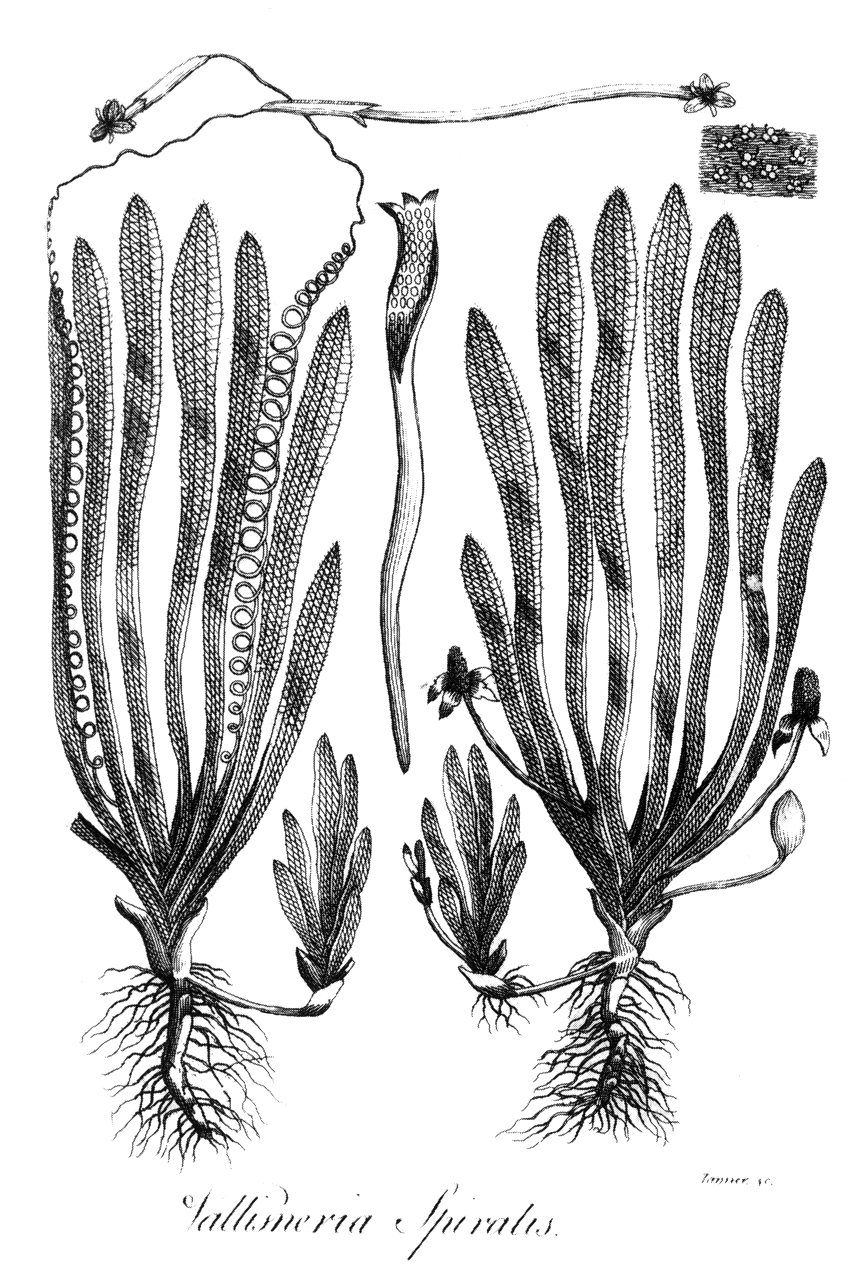
| Vallisneria spiralis [1] | |
| Scientific classification | |
| Kingdom: | Plantae |
| Clade: | Tracheophytes |
| Clade: | Angiosperms |
| Clade: | Monocots |
| Order: | Alismatales |
| Family: | Hydrocharitaceae |
| Subfamily: | Hydrilloideae |
| Genus: | Vallisneria L. |
| Synonyms[2] | |
| |
Vallisneria (named in honor of Antonio Vallisneri[3][4]) is a genus of freshwater aquatic plant, commonly called eelgrass, tape grass or vallis. The genus is widely distributed in tropical and subtropical regions of Asia, Africa, Australia, Europe, and North America.[2]
Vallisneria is a submerged plant that spreads by runners and sometimes forms tall underwater meadows. Leaves arise in clusters from their roots. The leaves have rounded tips, and definite raised veins. Single white female flowers grow to the water surface on very long stalks.[3] Male flowers grow on short stalks, become detached, and float to the surface.[3] It is dioecious, with male and female flowers on separate plants.[5] The fruit is a banana-like capsule having many tiny seeds.[6][7]
Sometimes it is confused with the superficially similar Sagittaria when grown submerged.
This plant should not be confused with Zostera species, marine seagrasses that are usually also given the common name "eelgrass". Vallisneria has arched stems which cross over small obstacles and develop small planters at their nodes.
Use in aquaria
[edit]Various strains of Vallisneria are commonly kept in tropical and subtropical aquaria. These include dwarf forms such as Vallisneria tortifolia, a variety with leaves around 15 to 20 cm in length and characterised by having thin, tightly coiled leaves. A medium-sized variety, Vallisneria spiralis is also very popular, typically having leaves 30 to 60 cm in length. The largest varieties are often called Vallisneria gigantea regardless of their actual taxonomic designation; most of the plants sold as Vallisneria gigantea are actually Vallisneria americana. Similarly, some Vallisneria gigantea are sold as Vallisneria spiralis and these giant varieties are only suitable for very large tanks, having leaves that frequently exceed 1 m in length, but are quite hardy and will do well in tanks with big fish that might uproot more delicate aquarium plants.[8][9]
With few exceptions, the commonly traded Vallisneria are tolerant and adaptable. While they do best under bright illumination they will do well under moderate lighting as well, albeit with slower growth rates. They are not picky about substrate, and will accept plain gravel provided an iron-rich fertiliser is added to the water periodically. Once settled in, they multiply readily through the production of daughter plants at the end of runners (as mentioned above). Once they have established their own roots, these daughter plants can be cut away and transplanted if necessary. Vallisneria will accept neutral to alkaline water conditions (they do not like very acidic conditions) and do not require carbon dioxide fertilization. They are also among the few commonly traded aquarium plants that tolerate brackish water, provided the specific gravity does not exceed 1.003 (around 10 percent the salinity of normal sea water).[10]
Literature and culture
[edit]In L'Intelligence des fleurs (The Intelligence of the Flowers), Nobel laureate Maurice Maeterlinck draws conclusions about vegetal intelligence from the reproductive strategy of Vallisneria, which he describes at length:
"The Vallisneria is a rather insignificant herb, possessing none of the strange grace of the Water-lily or of certain submersed comas . But it seems as though nature had delighted in giving it a beautiful idea. The whole existence of the little plant is spent at the bottom of the water, in a sort of half-slumber, until the moment of the wedding hour in which it aspires to a new life. Then the female flower slowly uncoils the long spiral of its peduncle, rises, emerges and floats and blossoms on the surface of the pond. From a neighbouring stem, the male flowers, which see it through the sunlit water, soar in their turn, full of hope, towards the one that rocks, that awaits them, that calls them to a magic world. But, when they have come half-way, they feel themselves suddenly held back: their stalk, the very source of their life, is too short ; they will never reach the abode of light, the only spot in which the union of the stamens and the pistil can be achieved ! . . Is there any more cruel inadvertence or ordeal in nature? Picture the tragedy of that longing, the inaccessible so nearly attained, the transparent fatality, the impossible with not a visible obstacle ! ... It would be insoluble, like our own tragedy upon this earth, were it not that an unexpected element is mingled with it. Did the males foresee the disillusion to which they would be subjected? One thing is certain, that they have locked up in their hearts a bubble of air, even as we lock up in our souls a thought of desperate deliverance. It is as though they hesitated for a moment; then, with a magnificent effort, the finest, the most supernatural that I know of in the annals of the insects and the flowers , in order to rise to happiness they deliberately break the bond that attaches them to life. They tear themselves from their peduncle and, with an incomparable flight, amid pearly beads of gladness, their petals dart up and break the surface of the water. Wounded to death, but radiant and free, they float for a moment beside their heedless brides and the union is accomplished, whereupon the victims drift away to perish, while the wife, already a mother, closes her corolla, in which lives their last breath, rolls up her spiral and descends to the depths, there to ripen the fruit of the heroic kiss."[11]
Species
[edit]- Accepted species[2]
- Vallisneria americana – North America incl West Indies, Colombia
- Vallisneria anhuiensis – Anhui
- Vallisneria annua – Australia
- Vallisneria australis – Australia
- Vallisneria caulescens – Australia
- Vallisneria densiserrulata – China, Japan
- Vallisneria erecta – Queensland
- Vallisneria longipedunculata – Anhui
- Vallisneria nana – Philippines, New Guinea, N Australia, New Caledonia
- Vallisneria natans – China, Japan, Korea, Primorye, Vietnam, India, Nepal, Iraq
- Vallisneria neotropicalis – North America incl West Indies
- Vallisneria rubra – northern Western Australia
- Vallisneria spinulosa – China
- Vallisneria spiralis – S + E Europe, W + S + SW Asia, Africa
- Vallisneria triptera – N Australia
Gallery
[edit]-
Vallisneria gigantea in a tropical fish tank (with freshwater Nomorhamphus liemi halfbeaks)
References
[edit]- ^ 1791 illustration from The Botanic Garden (1791) of Erasmus Darwin.
- ^ a b c "World Checklist of Selected Plant Families: Royal Botanic Gardens, Kew". apps.kew.org. Retrieved 2017-01-31.[permanent dead link]
- ^ a b c Gilman, D. C.; Peck, H. T.; Colby, F. M., eds. (1905). . New International Encyclopedia (1st ed.). New York: Dodd, Mead.
- ^ Gledhill, D. (1994). The Names of Plants. Cambridge University Press, Cambridge, UK. ISBN 9780521366755.
- ^ Lowden, Richard M. (1982). "An approach to the taxonomy of Vallisneria L. (Hydrocharitaceae)". Aquatic Botany. 13: 269–298. Bibcode:1982AqBot..13..269L. doi:10.1016/0304-3770(82)90064-X.
- ^ "Vallisneria in Flora of China @ efloras.org". www.efloras.org. Retrieved 2017-01-31.
- ^ "Vallisneria in Flora of North America @ efloras.org". www.efloras.org. Retrieved 2017-01-31.
- ^ Brunner, Gerhard. 1973. Aquarium Plants. T.F.H. Publ., N.J.
- ^ Ingersoll, Helen (1920). . In Rines, George Edwin (ed.). Encyclopedia Americana.
- ^ Roe, Colin D. 1967. A Manual of Aquarium Plants. Shirley Aquatics, Ltd.
- ^ Maeterlinck, Maurice (1907). The intelligence of the flowers. Cornell University Library. New York : Dodd, Mead.
Further reading
[edit]- Systematics of Vallisneria (Hydrocharitaceae). Donald H. Les, Surrey W. L. Jacobs, Nicholas P. Tippery,1 Lei Chen, Michael L. Moody, and Maike Wilstermann-Hildebrand Systematic Botany (2008), 33(1): pp. 49–65
Vallisneria
View on GrokipediaTaxonomy
Etymology and History
The genus Vallisneria derives its name from Antonio Vallisneri (1661–1730), an Italian naturalist, anatomist, and early botanist known for his studies on natural history and microscopy, in honor of his contributions to the understanding of natural phenomena.[1][6] The genus was formally established by Carl Linnaeus in his Species Plantarum (1753), where he described the type species Vallisneria spiralis based on specimens from southern Europe, placing it within the family Hydrocharitaceae.[1][7] Early European collections of Vallisneria species occurred in the 1700s, primarily from freshwater habitats in the Mediterranean region, as naturalists documented aquatic flora amid growing interest in botanical exploration.[7] These early observations often led to confusion with other submerged aquatic plants, such as the marine eelgrass (Zostera spp.), due to superficial similarities in linear leaves and underwater growth, resulting in overlapping common names like "eelgrass" for both genera.[8] Nomenclature evolved through subsequent botanical works, with Scottish botanist Robert Brown contributing significantly by describing additional species, such as Vallisneria nana, in his Prodromus Florae Novae Hollandiae (1810) based on Australian collections, which helped delineate the genus's cosmopolitan distribution.[9] Later stabilizations, including Robert A. Lowden's comprehensive taxonomic review in 1982, resolved ambiguities in species delimitation and synonymy, affirming V. spiralis as the type and clarifying distinctions within Hydrocharitaceae.Classification and Phylogeny
Vallisneria is classified within the family Hydrocharitaceae, order Alismatales, and clade Lilianae (monocots), alongside other fully aquatic angiosperms such as those in the genera Elodea and Najas.[10] This placement reflects its adaptation to submerged freshwater environments, distinguishing it from terrestrial monocots while sharing evolutionary ties with other Alismatales families like Alismataceae and Potamogetonaceae, which exhibit similar helical flower structures and hydrophilous pollination.[11] Phylogenetic analyses confirm Vallisneria as a monophyletic genus, with molecular evidence from chloroplast genes rbcL and matK placing it in one of two major clades within Hydrocharitaceae.[12] In this clade, Vallisneria clusters closely with the freshwater genus Hydrilla and the marine seagrasses Halophila, Thalassia, and Enhalus, highlighting convergent evolution in aquatic habits across freshwater and marine lineages.[12] Broader studies using eight genes (rbcL, matK, trnK intron, rpoB, rpoC1, 18S, cob, atp1) further resolve Vallisneria as sister to Nechamandra and Maidenia, within a subclade supported by high bootstrap (96%) and posterior probability (1.0) values, underscoring its position in the family's diversification from an Oriental-Australasian origin.[10] Recent molecular analyses (as of 2024) using nuclear ITS and plastid markers confirm these relationships while supporting the incorporation of Maidenia species into Vallisneria, such as M. rubra as V. rubra.[13][14] To maintain monophyly, taxonomic revisions have incorporated species formerly in Maidenia, based on nested phylogenetic placement.[15] The genus lacks formal subgenera or sections, though species delimitation relies on morphological traits including floral features (e.g., perianth segment number, staminode fusion and count) and vegetative characters (e.g., rosulate vs. caulescent growth, leaf width and venation).[15] Phylogenetic frameworks reveal caulescent (vittate) species nested between rosulate groups, informing revisions from earlier reductions to two species (Lowden 1982) to the current recognition of approximately 17 species as of 2024, though taxonomy remains unsettled with ongoing descriptions of novel taxa.[15][13][16] Family-level boundaries in Hydrocharitaceae have been debated historically, with pre-molecular classifications separating genera like Najas into Najadaceae based on inflorescence and fruit traits; DNA-based phylogenies have unified the family as monophyletic, incorporating both freshwater (e.g., Vallisneria) and marine elements previously aligned with Zosteraceae in some schemes.[10]Description
Morphology
Vallisneria species are submerged aquatic perennials characterized by a rosulate or caulescent habit, lacking true stems and instead featuring short, creeping rhizomes that anchor the plant in sediment. The roots are fibrous and adventitious, emerging from the rhizome base to penetrate the substrate for stability and nutrient absorption. This structure supports the plant's fully submerged lifestyle in freshwater environments, with the rhizomes facilitating vegetative spread.[17][15] The leaves are linear and ribbon-like, forming dense rosettes or tufts, and can reach lengths of 1-2 meters (up to 3 meters in some species) with widths of 2-20 mm. They arise from sheathing bases that clasp the rhizome, exhibiting parallel venation with prominent longitudinal veins and finer cross-veins, and typically have entire or finely toothed margins ending in rounded tips. The leaves also contain prominent lacunae (air spaces) that aid in buoyancy. These leaves are leathery and flexible, adapted for underwater conditions, with minimal or absent stomata on the blade surface.[8][17][15][1] Vallisneria plants are dioecious, producing unisexual flowers in distinct inflorescences. Male flowers occur in dense, floating clusters within a spathe, borne on short, coiled (spiral) peduncles that elongate and detach to reach the water surface, releasing the flowers to drift. Each male flower features three green, free sepals, three smaller petals (often rudimentary), and one to three fertile stamens with filaments that may be free or partially fused. Female flowers are solitary, emerging from a spathe on elongate peduncles up to 1 meter long that extend to the surface; they possess three sepals, three petals, and a superior ovary with a lobed stigma adapted for surface pollination. These floral traits, including the perianth and stamen arrangement, serve as key diagnostics within the genus.[15][18][8]Growth and Physiology
Vallisneria species are well-adapted to low-light aquatic environments through specialized photosynthetic mechanisms that enhance light capture efficiency. In shaded or turbid waters, these plants exhibit a low light compensation point, enabling net photosynthesis even at irradiance levels as low as 10-50 μmol photons m⁻² s⁻¹, which allows sustained growth where many other submerged macrophytes fail.[19] To optimize photon utilization, Vallisneria invests resources in increasing chlorophyll a and b concentrations, particularly in leaf tissues, facilitating efficient absorption across the photosynthetically active radiation spectrum and minimizing photoinhibition under fluctuating light conditions.[20] This pigment adjustment, observed in species like V. natans, supports higher quantum yields in dim light by redistributing chlorophyll to maximize surface area exposure.[21] Nutrient uptake in Vallisneria occurs predominantly through the root system, which forages in heterogeneous sediments to access essential elements like nitrogen, phosphorus, and iron from nutrient-rich substrates. Roots exhibit radial oxygen loss that promotes nutrient retention by oxidizing sediments and facilitating precipitation of phosphates, thereby enhancing bioavailability while preventing toxic accumulation.[22] These plants prefer sediments with moderate to high organic content for optimal growth, as low-nutrient conditions limit biomass accumulation.[23] Vallisneria tolerates a pH range of 6.5 to 8.5, maintaining physiological functions across slightly acidic to alkaline conditions typical of freshwater systems, though extreme shifts can impair root membrane integrity and ion transport.[24] Growth patterns in Vallisneria are characterized by rapid linear elongation during spring and summer, with relative growth rates reaching up to 2-3 cm per day under favorable temperatures (20-30°C) and light availability, leading to the formation of dense monospecific mats that can cover substrates extensively.[25] In response to water flow, leaves orient parallel to currents, forming elongated "streamers" that reduce drag and prevent mechanical damage while promoting nutrient exchange at the leaf surface.[26] This hydrodynamically adaptive morphology enhances overall plant stability in lotic environments.[27] Under physiological stress, Vallisneria displays resilience but succumbs to dieback when exposed to elevated salinity or pollutants. Salinities exceeding 5 ppt induce osmotic stress, reducing photosynthetic rates by 50% or more and causing leaf necrosis, particularly in freshwater ecotypes.[28] Similarly, high levels of ammonia nitrogen (>5 mg L⁻¹) or heavy metals like copper in sediments trigger oxidative damage, leading to chlorophyll degradation and widespread tissue dieback within weeks.[29] These responses highlight the plant's sensitivity to anthropogenic perturbations, limiting its persistence in degraded habitats.[30]Distribution and Habitat
Native Range
Vallisneria species are primarily native to freshwater systems in Australia, Asia (including regions such as China and India), Africa, and parts of Europe, with additional significant presence in North America. In Asia, species like V. natans, V. asiatica, V. denseserrulata, V. erecta, and V. spinulosa occur naturally in rivers and lakes across subtropical and temperate zones from India to the Russian Far East. Australian natives include V. australis, V. caulescens, V. gracilis, V. nana, and V. triptera, among others, predominantly in eastern and northern freshwater habitats. In Africa and Europe, V. spiralis is widespread in northern Africa, the Middle East, and southern Europe, while V. americana dominates North American freshwater ecosystems from Canada to the southern United States. These distributions reflect the genus's adaptation to diverse continental freshwater environments, as detailed in systematic analyses of the Hydrocharitaceae family.[15][31] The preferred habitats for Vallisneria encompass slow-moving or still freshwater bodies such as rivers, lakes, and wetlands, typically in clear waters with soft to moderately hard substrates like sand, gravel, or muck. These plants thrive in depths ranging from shallow margins to up to 5 meters, where light penetration supports photosynthesis, though some species like V. americana exhibit zonation patterns favoring deeper zones (1–4.5 meters) in lakes and streams for optimal growth and reproduction. The genus is associated with tropical to subtropical climates, though certain species extend into temperate regions with alkaline to neutral pH (6.5–8.0) and temperatures between 15–30°C. Such conditions promote dense meadow formations that stabilize sediments and enhance water clarity in native settings.[8][32][33] Historical range expansions of Vallisneria predate human influence, with fossil evidence indicating presence in Europe during the Early Miocene, as seen in V. janecekii from freshwater lake deposits in the Most Basin, North Bohemia. These Miocene records (approximately 23–16 million years ago) suggest early diversification and dispersal within the Old World, contributing to the genus's broad contemporary distribution across continents.[34]Introduced Populations
Vallisneria species have been introduced beyond their native ranges primarily through the aquarium trade, as they are commonly sold as ornamental submerged plants, with fragments also dispersed unintentionally by waterfowl or human activities in waterways.[35][36][7] Several species have established non-native populations in North America, Europe, and Oceania. For instance, Vallisneria australis, native to Australia, has been documented in the Sacramento-San Joaquin Delta of California since 2018, likely via aquarium discards intercepted in shipments from other U.S. states.[37] In Europe, populations initially identified as V. americana in countries including Belgium, Germany, Hungary, and Italy were confirmed through molecular analysis to be V. australis, with an additional V. neotropicalis population in Russia; these establishments stem from aquarium trade introductions and cover areas up to 60 m² in some canals. V. americana, native to eastern North America including eastern Canada, has been introduced to western Canada (British Columbia), the Netherlands, and New Zealand, while V. nana and V. spiralis have established in New Zealand waterways such as those near Auckland. Additionally, the hybrid V. × pseudorosulata, resulting from V. spiralis and V. denseserrulata, has invaded the Tennessee Valley Authority reservoir system and southeastern U.S. rivers.[35][38][8][39] These introduced populations often achieve invasive status by forming dense monocultures that rapidly colonize shallow, slow-moving waters, leading to challenges such as clogged irrigation canals, restricted navigation, flooding from impeded water flow, silting, and reduced aesthetic and recreational value of affected water bodies. In New Zealand, V. nana and V. spiralis have proliferated in rivers and lakes, outcompeting native aquatic vegetation and altering habitats, while V. australis in California poses risks to biodiversity in the Delta by potentially lowering native plant diversity despite providing some food for aquatic organisms. Similar impacts occur with V. × pseudorosulata in the southeastern U.S., where it infests reservoirs and competes with local flora.[36][7][40] Management of introduced Vallisneria focuses on prevention and targeted control, as full eradication is challenging once established. In New Zealand, small infestations of V. spiralis are controlled by diver hand-pulling, while larger stands require mechanical harvesting with weed cutters or suction dredges; herbicides like diquat are used for chemical control, though they must be applied carefully to avoid non-target effects. Biological options, such as grass carp, have been considered but are limited due to their broad feeding habits. In California, V. australis is rated as a high-risk pest, with recommendations for early detection and mechanical or chemical removal to prevent further spread in irrigation systems.[7][36][41] Genetic analyses of introduced populations reveal variations compared to natives, often stemming from multiple introduction sources or hybridization. European V. australis populations exhibit non-uniform genetic profiles based on nuclear ribosomal ITS sequencing, suggesting diverse origins from aquarium trade discards rather than a single founder event. In the U.S., the invasive hybrid V. × pseudorosulata demonstrates novel genetic combinations absent in native ranges, contributing to its establishment success. While direct comparisons show that restored V. americana populations in areas like Chesapeake Bay maintain heterozygosity levels similar to natural sites, small introduced populations may experience inbreeding due to limited initial sizes, though comprehensive data on reduced diversity in wild invasives remains limited.[38][40][42]Ecology
Ecosystem Roles
Vallisneria species serve as primary producers in aquatic ecosystems, converting sunlight into biomass through photosynthesis and forming the base of food webs that support herbivores and higher trophic levels. As submerged macrophytes, they contribute significantly to ecosystem productivity in freshwater and brackish environments, where their dense meadows enhance overall biodiversity by providing organic matter that fuels detrital pathways.[20] These plants play a crucial role in stabilizing sediments and preventing erosion in rivers and lakes, with their extensive root systems anchoring substrates and reducing resuspension caused by water flow or bioturbation. In restoration efforts, Vallisneria natans-dominated systems have demonstrated effective sediment retention, maintaining water clarity and structural integrity of the benthic environment. Additionally, through radial oxygen loss (ROL) from roots, Vallisneria species oxygenate surrounding sediments and water columns, increasing oxic volumes by up to 447 times during daylight hours[43] and supporting aerobic microbial processes. This oxygenation improves habitat quality for fish by elevating dissolved oxygen levels, creating suitable conditions for species that require well-oxygenated waters, while also mitigating anoxic stress in eutrophic systems.[44][45] Vallisneria contributes to nutrient cycling by actively uptake nitrogen and phosphorus from water and sediments, thereby reducing eutrophication risks and promoting clearer water conditions. For instance, in integrated multitrophic systems, V. natans can achieve up to 55.86% total nitrogen removal and 91.61% total phosphorus removal when combined with appropriate densities of associated organisms.[44] This uptake, coupled with root-induced redox gradients, stimulates processes like denitrification, removing an additional 25–70 µmol N₂ m⁻² hr⁻¹ depending on light conditions.[43] As an indicator species for water quality, Vallisneria thrives in oligotrophic to mesotrophic conditions but shows sensitivity to stressors such as metal pollution and eutrophication; leaf-to-root surface area ratios in V. americana correlate with sediment contamination and light availability, providing a biomonitoring metric for site quality in stressed ecosystems. Similarly, tissue metal accumulation in V. americana reflects spatial variations in water depth and exposure to contaminated inflows, enabling assessment of pollution gradients.Interactions with Other Organisms
Vallisneria species serve as an important food source for a variety of aquatic herbivores, including manatees (Trichechus manatus), waterfowl such as ducks, and invertebrates like snails and aquatic insects. Manatees rely on Vallisneria as a primary forage plant in coastal and freshwater systems, consuming large quantities that can exert significant grazing pressure and influence plant population dynamics.[47] Similarly, waterfowl grazing on tubers and leaves of Vallisneria americana creates density-dependent effects, where low plant densities provide a refuge from herbivory, allowing recovery in overgrazed areas, while high densities attract intense foraging that limits growth.[48] Invertebrate grazers, including insects and snails, contribute to belowground herbivory, further shaping plant density by targeting roots and rhizomes in seasonal patterns.[8] The elongated leaves of Vallisneria form dense meadows that provide critical habitat for numerous aquatic organisms, offering shelter from predators and suitable sites for spawning and juvenile development. These structures support a diverse community of invertebrates, such as snails and crustaceans, which use the foliage for attachment and refuge, while small fish species utilize the meadows as nursery grounds to evade larger predators.[49] In addition, the plant's architecture facilitates epiphytic communities, enhancing overall biodiversity in freshwater ecosystems.[8] Vallisneria exhibits allelopathic properties through the release of secondary metabolites, such as phenolic compounds, which inhibit the growth of algae and cyanobacteria, including Microcystis aeruginosa. These chemical interactions help suppress algal blooms in nutrient-rich waters, promoting clearer conditions that benefit the plant's own establishment.[50] In competitive dynamics, Vallisneria engages in resource rivalry with invasive species like Hydrilla verticillata, where outcomes depend on factors such as soil fertility and nitrogen availability; higher nutrient levels often favor Hydrilla's superior metabolism, reducing Vallisneria abundance.[51] Dense stands of Vallisneria are particularly susceptible to pathogen infections, including fungal diseases that thrive under humid, low-flow conditions, leading to leaf necrosis and reduced vigor. Fungal endophytes and opportunistic pathogens can proliferate in these crowded formations, exacerbating stress from environmental factors and potentially causing widespread decline in affected populations.Reproduction
Sexual Reproduction
Vallisneria species are dioecious, with individual plants producing either male or female flowers.[52] Male flowers develop in clusters of up to 2000 within an ovoid spathe on short peduncles, each flower featuring three sepals, one reduced petal, and two stamens that release lightweight pollen.[52] Female flowers occur singly in a tubular spathe on an elongating peduncle, with three sepals, three white petals, and a central pistil with a single style bearing receptive stigmas.[52][2] Pollination in Vallisneria is hydrophilous, specifically epihydrophily, where male flowers detach from the plant and float to the water surface, carried by currents toward female flowers.[52] Upon reaching a female flower, which remains attached to its peduncle at the surface and creates a surface-tension depression, the male flowers aggregate around it, allowing direct contact between stamens and stigmas for pollen transfer.[2][52] After pollination, the female peduncle coils, retracting the developing fruit underwater for protection.[2] Flowering in Vallisneria typically occurs during summer in temperate zones, from late June to September, triggered by long photoperiods exceeding 13 hours and water temperatures above 20°C.[52] This seasonality aligns with optimal growth conditions, enhancing reproductive success in natural habitats.[53] Seed production follows successful pollination, with each female plant yielding one to several cylindrical capsules measuring 5–15 cm long, containing 150–500 seeds per fruit.[52] The seeds, 1.8–2.6 mm in length, exhibit high viability rates of 93–98% and are dispersed primarily by water currents, with fruits initially floating before sinking and seeds moving downstream or via attachment to waterfowl.[52]Vegetative Reproduction
Vallisneria species propagate vegetatively primarily through stolons and runners that originate from rhizomes, enabling the production of new plantlets and facilitating rapid clonal spread across aquatic sediments. These horizontal stems elongate during the growing season, developing shoots that form independent ramets with rosette-like structures and ribbon-like leaves, allowing colonies to expand efficiently without reliance on sexual processes.[54] In species such as Vallisneria americana, stolons produce an average of 3.22 ramets per individual in riverine populations, supporting dense meadow formation.[55] Fragmentation serves as another key vegetative mechanism, where broken leaves, stems, or stolon portions detach and root in the sediment to establish new colonies. This process is enhanced by water flow, human activities like boating, or mechanical disturbances, promoting dispersal and colonization in fragmented habitats. For instance, in Vallisneria spiralis, small fragments broken by flooding or disturbance readily form viable new plants, contributing to invasive potential in non-native ranges.[7] Similarly, Vallisneria australis spreads via stolon fragments transported by water currents or equipment.[35] In stable aquatic habitats, vegetative reproduction predominates over sexual modes, leading to populations characterized by low genetic diversity as identical clones proliferate. This clonality is evident in V. americana beds, where genotypic diversity ranges from 0.10 to 0.79, with 62-64% of shoots arising from multi-ramets, limiting adaptability but ensuring persistence through refugia.[56] Such dominance reduces opportunities for genetic recombination, amplifying existing genotypes across extensive areas.[55] Environmental triggers, including nutrient availability in sediments, influence stolon growth and overall clonal allocation. Fertile sediments, such as those amended with peat or vermiculite, enhance ramet production and biomass accumulation under low-light conditions, promoting vegetative expansion by improving nutrient uptake.[57] Additionally, water depth acts as a cue, with deeper conditions (e.g., 150 cm) increasing stolon and tuber output—up to 8.3 tubers per plant in Vallisneria spinulosa—as a response to reduced light, shifting resources from sexual to clonal propagation.[58]Cultivation and Uses
Aquarium Cultivation
Vallisneria species are popular choices for aquarium cultivation due to their ease of growth and ability to create a lush, natural backdrop in planted tanks. Ideal water temperatures range from 20–28°C (68–82°F), mimicking their preference for warm, stable conditions similar to those in their native freshwater habitats.[59][60][61] Moderate lighting is sufficient, typically 2–3 watts per gallon or 30–50 PAR, with stronger illumination promoting faster growth but risking algae if not balanced with nutrients.[60][59] The substrate should consist of fine gravel or sand, at least 2–3 inches deep, to allow root anchoring without nutrient deficiencies; nutrient-rich aquasoil enhances vigor.[60][61] Water parameters include a pH of 6.5–8.0 and general hardness of 4–18 dGH, as Vallisneria thrives in slightly alkaline to neutral, moderately hard water.[59][5][61] For planting, use root divisions or runners spaced 5–10 cm apart in the mid- or background, ensuring the crown remains above the substrate to prevent rot.[59][60] Maintenance involves regular pruning of overgrown leaves with sharp scissors to maintain aesthetics and prevent shading other plants, as well as thinning runners to control spread in smaller tanks.[5][61] Fertilization is minimal but beneficial; root tabs provide essential nutrients like potassium and iron, while liquid fertilizers support overall health, especially under higher light.[60][59] CO2 injection is optional but can accelerate growth in demanding setups.[62] Vallisneria spiralis, known as straight or Italian Vallisneria, is ideal for beginners due to its adaptability and bright green, ribbon-like leaves reaching 40–50 cm.[59][61] Other varieties include the dwarf V. nana for compact tanks (up to 40 cm) and the tall V. americana for large aquaria (up to 1 m or more).[59][60][5] Propagation occurs primarily through runners that emerge from the base; once new plantlets develop roots, they can be clipped and replanted for expansion, or excess growth harvested to preserve tank balance and visual appeal.[59][60][5] Common issues include leaf melting, often due to unstable CO2 levels or low nitrates, which can be addressed by stabilizing parameters and adding fertilizers.[59] Chlorosis, indicated by yellowing leaves, results from iron deficiency or insufficient lighting and responds to iron supplements or adjusted illumination.[59] Rot at the crown occurs if buried too deeply during planting, requiring careful repositioning of affected plants.[59][60] To avoid overgrowth in public or community aquaria, regular monitoring and selective trimming ensure harmonious integration with fish and other plants.[62][5]Other Applications
Vallisneria species are employed in wetland restoration projects to stabilize sediments and enhance water quality in constructed ponds and aquatic systems. As submergent plants, they thrive in permanently inundated conditions, helping to prevent erosion by anchoring substrates and reducing sediment resuspension through their dense growth forms. In Florida freshwater ecosystems, Vallisneria americana provides sediment stability and improves water clarity by filtering particulates and nutrients, contributing to overall habitat restoration.[8] These plants are particularly valuable in engineered wetlands, where they support biodiversity and ecosystem services like nutrient cycling in restored or artificial ponds. In phytoremediation efforts, Vallisneria demonstrates capacity to absorb heavy metals from contaminated sediments and waters, serving as a bioaccumulator for pollutants like lead (Pb). Field studies in the St. Lawrence River during the early 2000s revealed that Vallisneria americana roots effectively uptake bioavailable Pb, with tissue concentrations correlating strongly to free Pb²⁺ ions at the root-sediment interface rather than total sediment levels, making it a reliable bioindicator for Pb contamination.[63] Similarly, Vallisneria natans has shown efficacy in stabilizing Pb in roots during intercropping trials, achieving up to 26% removal of associated metals like copper from sediments, though long-term field applications emphasize its role in preventing metal remobilization.[64] Recent studies as of 2025 have advanced the use of Vallisneria in restoration, including sediment-based biochar to enhance growth and phytochemical properties of V. spiralis,[65] optimized planting densities for improved water restoration performance in V. spinulosa systems,[66] and the influence of underwater light sources on nitrogen and phosphorus removal pathways.[67] Vallisneria serves as a model organism in research on aquatic pollination mechanisms and invasive species dynamics. Its dioecious, epihydrophilous pollination—where male flowers release pollen to float on water surfaces toward female flowers—has been extensively studied to understand environmental factors like water depth, current, and temperature influencing reproductive success and seed viability in hydrophilous plants.[68] Additionally, species like Vallisneria spiralis are examined for vegetative spread and invasion patterns, as their runner-based propagation facilitates rapid colonization in non-native habitats, informing management strategies against aquatic invasives.[69]Species
Accepted Species
The genus Vallisneria currently comprises 18 accepted species, as recognized by databases such as POWO integrating morphological and molecular data.[70] These species are primarily distinguished by differences in leaf morphology (such as width and serration), the length and coiling of flower peduncles, and their geographic isolation across continents, which has driven speciation in freshwater habitats.[13][15] Taxonomic revisions in the 2010s and 2020s, particularly DNA-based studies using markers like nrITS, rbcL, and trnK introns, have elevated several subspecies to full species status and resolved cryptic diversity, expanding from the 14 species outlined in earlier work. For instance, V. gracilis and V. neotropicalis were resurrected, and V. jacobsii was described as new based on phylogenetic evidence from Australian populations.[13][15] Representative accepted species include:- Vallisneria americana Michx.: A wide-leaved species native to North America, including the West Indies and extending to Colombia; it features broad ribbons up to 2 cm wide and is common in temperate and subtropical rivers.[71]
- Vallisneria spiralis L.: The type species, widespread in the Old World from Europe to Indo-China and Australia; known for its narrow, spiral-twisting leaves and long peduncles up to 1 m, it is assessed as Least Concern by the IUCN.[72]
- Vallisneria caulescens F.M. Bailey & F. Muell.: Native to Australia, with caulescent stems and branching habit; it occurs in tropical freshwater systems and has been noted in conservation assessments as data deficient, though local populations face threats from habitat alteration.[73]
- Vallisneria natans (Lour.) H.Hara: Distributed from India to the Russian Far East, featuring floating narrow leaves and annual growth; it is adapted to variable water levels in ponds and rivers.[31]
