


Community hub
Recent from talks
Contribute something to knowledge base
Content stats: 0 posts, 0 articles, 1 media, 0 notes
Members stats: 0 subscribers, 0 contributors, 0 moderators, 0 supporters
Subscribers
Supporters
Contributors
Moderators
Hub AI
Vayishlach AI simulator
(@Vayishlach_simulator)
Hub AI
Vayishlach AI simulator
(@Vayishlach_simulator)
Vayishlach
Vayishlach (Biblical Hebrew: וַיִּשְׁלַח, romanized: Wayyišlaḥ, lit. 'and he sent', the first word of the weekly Torah portion) is the eighth weekly Torah portion in the annual Jewish cycle of Torah reading. In the parashah, Jacob reconciles with Esau after wrestling with a "man." The prince Shechem rapes Dinah, whose brothers sack the city of Shechem in revenge. In the family's subsequent flight, Rachel gives birth to Benjamin and dies in childbirth.
The parashah constitutes Genesis 32:4–36:43. The parashah has the most verses of any weekly Torah portion in the Book of Genesis (Parashat Miketz has the most letters, Parashat Vayeira has the most words, and Parashat Noach has an equal number of verses as Parashat Vayishlach). It is made up of 7,458 Hebrew letters, 1,976 Hebrew words, 153 verses, and 237 lines in a Torah scroll. Jews read it the eighth Shabbat after Simchat Torah, in November or December.
In traditional Sabbath Torah reading, the parashah is divided into seven readings, oraliyot. In the Masoretic Text of the Hebrew Bible, Vayishlach has six "open portion" divisions (roughly equivalent to a paragraph, often abbreviated with the Hebrew letter פ (peh). The first open portion is further subdivided by two "closed portion" divisions (abbreviated with the Hebrew letter ס samekh). The first open portion spans the first four readings and part of the fifth reading. The two closed portion divisions occur in the fourth reading. The second and third open portions divide the fifth reading and extend into the sixth. The fourth and fifth open portions divide the sixth reading and extend into the seventh. The fifth and sixth open portion divisions divide the seventh reading.
In the very first reading, Jacob sent a message to his brother Esau in Edom that he had stayed with Laban until then, had oxen, donkeys, flocks, and servants, and hoped to find favor in Esau's sight. The messengers returned and greatly frightened Jacob with the report that Esau was coming to meet him with 400 men. Jacob divided his camp in two, reasoning that if Esau destroyed one of the two, then the other camp could escape. Jacob prayed to God, recalling that God had promised to return him whole to his country, noting his unworthiness for God's transformation of him from a poor man with just a staff to the leader of two camps, and prayed God to deliver him from Esau, as God had promised Jacob good and to make his descendants as numerous as the sand of the sea. The first reading ends here.
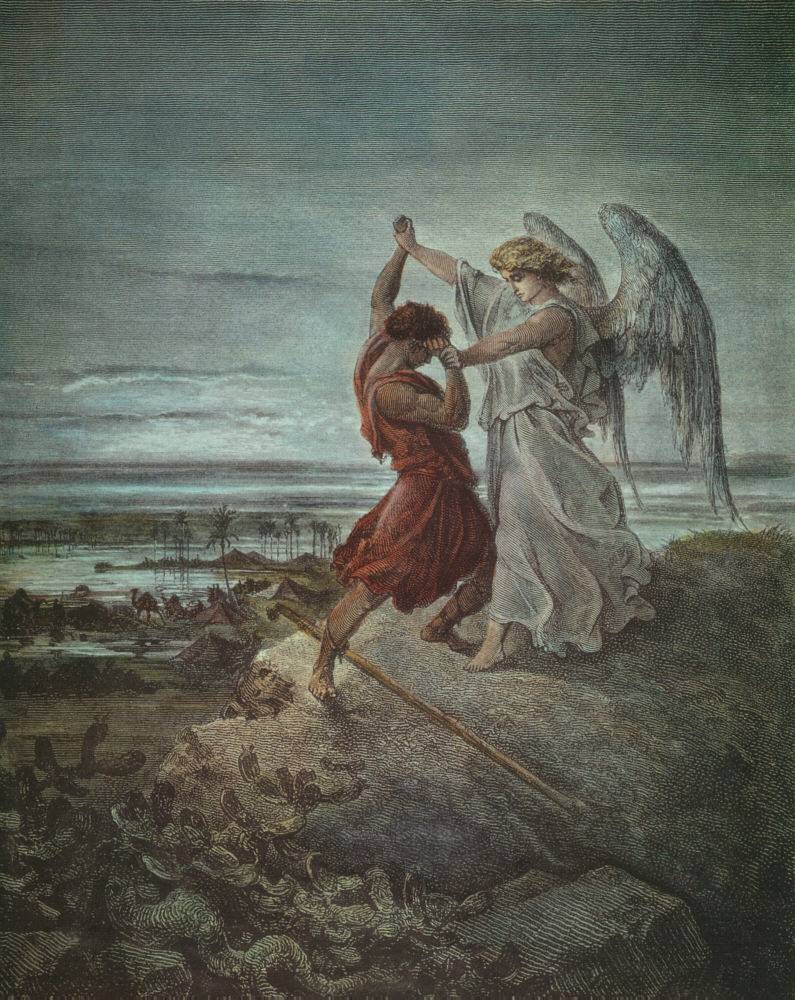
In the second reading, Jacob assembled a present of hundreds of goats, sheep, camels, cattle, and donkeys to appease Esau and instructed his servants to deliver them to Esau in successive droves with the message that they were a present from his servant Jacob, who followed behind. As the presents went before him, Jacob took his wives, handmaids, children, and belongings over the Jabbok River, and then remained behind that night alone. Jacob wrestled with a "man" until dawn, and when the "man" saw that he was not prevailing, he touched the hollow of Jacob's thigh and strained it. The man asked Jacob to let him go, for the day was breaking, but Jacob would not let him go without a blessing. The man asked Jacob his name, and when Jacob replied "Jacob," the man told him that his name would no more be Jacob, but Israel, for he had striven with God and with men and prevailed. Jacob asked the "man" his name, but the "man" asked him why and then blessed him. The second reading ends here.
In the third reading, Jacob named the place Peniel, saying that he had seen God face to face and lived. At sunrise, Jacob limped from the injury to his thigh. Because of this, Jews do not eat the sinew of the vein that is the hollow of the thigh because the man touched the hollow of Jacob's thigh. When Jacob saw Esau coming with 400 men, he divided his family, putting the handmaids and their children foremost, Leah and her children next, and Rachel and Joseph at the back. Jacob went before them and bowed to the ground seven times as he approached his brother.
Esau ran to meet him, embraced him, and kissed him, and they wept. Esau asked who the women and children were. In 33:4, the word וַיִּשָּׁקֵהוּ is written with dots on top of each letter in a scroll. The third reading ends here.
In the fourth reading, Jacob told Esau that the women and children were his, and they all came to Esau and bowed down. Esau asked what Jacob meant by all the livestock, and Jacob told him that he sought Esau's favor. Esau said that he had enough, but Jacob pressed him to accept his present, saying that seeing Esau's face was like seeing the face of God, and Esau took the gifts. Esau suggested that Jacob and he travel together, but Jacob asked that Esau allow Jacob's party to travel more slowly so as not to tax the young children and the flocks until they came to Esau in Seir. Esau offered to leave some of his men behind with Jacob, but Jacob declined. So Esau left for Seir, and Jacob left for Sukkot (meaning "booths"), where he built a house and made booths for his cattle, thus explaining the place's name. A closed portion ends here.
Vayishlach
Vayishlach (Biblical Hebrew: וַיִּשְׁלַח, romanized: Wayyišlaḥ, lit. 'and he sent', the first word of the weekly Torah portion) is the eighth weekly Torah portion in the annual Jewish cycle of Torah reading. In the parashah, Jacob reconciles with Esau after wrestling with a "man." The prince Shechem rapes Dinah, whose brothers sack the city of Shechem in revenge. In the family's subsequent flight, Rachel gives birth to Benjamin and dies in childbirth.
The parashah constitutes Genesis 32:4–36:43. The parashah has the most verses of any weekly Torah portion in the Book of Genesis (Parashat Miketz has the most letters, Parashat Vayeira has the most words, and Parashat Noach has an equal number of verses as Parashat Vayishlach). It is made up of 7,458 Hebrew letters, 1,976 Hebrew words, 153 verses, and 237 lines in a Torah scroll. Jews read it the eighth Shabbat after Simchat Torah, in November or December.
In traditional Sabbath Torah reading, the parashah is divided into seven readings, oraliyot. In the Masoretic Text of the Hebrew Bible, Vayishlach has six "open portion" divisions (roughly equivalent to a paragraph, often abbreviated with the Hebrew letter פ (peh). The first open portion is further subdivided by two "closed portion" divisions (abbreviated with the Hebrew letter ס samekh). The first open portion spans the first four readings and part of the fifth reading. The two closed portion divisions occur in the fourth reading. The second and third open portions divide the fifth reading and extend into the sixth. The fourth and fifth open portions divide the sixth reading and extend into the seventh. The fifth and sixth open portion divisions divide the seventh reading.
In the very first reading, Jacob sent a message to his brother Esau in Edom that he had stayed with Laban until then, had oxen, donkeys, flocks, and servants, and hoped to find favor in Esau's sight. The messengers returned and greatly frightened Jacob with the report that Esau was coming to meet him with 400 men. Jacob divided his camp in two, reasoning that if Esau destroyed one of the two, then the other camp could escape. Jacob prayed to God, recalling that God had promised to return him whole to his country, noting his unworthiness for God's transformation of him from a poor man with just a staff to the leader of two camps, and prayed God to deliver him from Esau, as God had promised Jacob good and to make his descendants as numerous as the sand of the sea. The first reading ends here.
In the second reading, Jacob assembled a present of hundreds of goats, sheep, camels, cattle, and donkeys to appease Esau and instructed his servants to deliver them to Esau in successive droves with the message that they were a present from his servant Jacob, who followed behind. As the presents went before him, Jacob took his wives, handmaids, children, and belongings over the Jabbok River, and then remained behind that night alone. Jacob wrestled with a "man" until dawn, and when the "man" saw that he was not prevailing, he touched the hollow of Jacob's thigh and strained it. The man asked Jacob to let him go, for the day was breaking, but Jacob would not let him go without a blessing. The man asked Jacob his name, and when Jacob replied "Jacob," the man told him that his name would no more be Jacob, but Israel, for he had striven with God and with men and prevailed. Jacob asked the "man" his name, but the "man" asked him why and then blessed him. The second reading ends here.
In the third reading, Jacob named the place Peniel, saying that he had seen God face to face and lived. At sunrise, Jacob limped from the injury to his thigh. Because of this, Jews do not eat the sinew of the vein that is the hollow of the thigh because the man touched the hollow of Jacob's thigh. When Jacob saw Esau coming with 400 men, he divided his family, putting the handmaids and their children foremost, Leah and her children next, and Rachel and Joseph at the back. Jacob went before them and bowed to the ground seven times as he approached his brother.
Esau ran to meet him, embraced him, and kissed him, and they wept. Esau asked who the women and children were. In 33:4, the word וַיִּשָּׁקֵהוּ is written with dots on top of each letter in a scroll. The third reading ends here.
In the fourth reading, Jacob told Esau that the women and children were his, and they all came to Esau and bowed down. Esau asked what Jacob meant by all the livestock, and Jacob told him that he sought Esau's favor. Esau said that he had enough, but Jacob pressed him to accept his present, saying that seeing Esau's face was like seeing the face of God, and Esau took the gifts. Esau suggested that Jacob and he travel together, but Jacob asked that Esau allow Jacob's party to travel more slowly so as not to tax the young children and the flocks until they came to Esau in Seir. Esau offered to leave some of his men behind with Jacob, but Jacob declined. So Esau left for Seir, and Jacob left for Sukkot (meaning "booths"), where he built a house and made booths for his cattle, thus explaining the place's name. A closed portion ends here.
Recent media
Recent media