



Community hub
Recent from talks
Knowledge base stats:
Talk channels stats:
Members stats:
Vernal pool
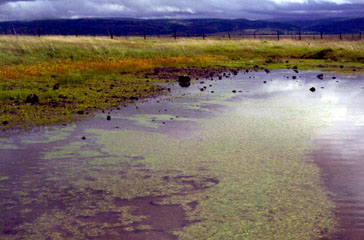
Vernal pools, also called vernal ponds or ephemeral pools, are seasonal pools of water that provide habitat for distinctive plants and animals. They are considered to be a unique type of wetland usually devoid of fish, and thus allow the safe development of natal amphibian and insect species unable to withstand competition or predation by fish. Certain tropical fish lineages (such as killifishes) have however, adapted to this habitat specifically.
Vernal pools are a type of wetland. They can be surrounded by many communities/species, including deciduous forest, grassland, lodgepole pine forest, blue oak woodland, sagebrush steppe, succulent coastal scrub and prairie. These pools are characteristic of Mediterranean climates, but occur in many other ecosystems.
During most years, a vernal pool basin will experience inundation from rain/precipitation, followed by desiccation from evapotranspiration. These conditions are commonly associated with a Mediterranean climate , such as the Central Valley of California. Vernal pool basins are often characteristic of Mediterranean climates, but they also occur in many other ecosystems, such as forested areas of the Canadian Shield, where they are difficult to identify due to the dense rest canopy. Most pools are dry for at least part of the year, and fill with the winter rains, spring snowmelts, and rising water tables. Some pools may remain at least partially filled with water over a year or more, but all vernal pools dry up periodically. Typically, though, a vernal pool has three phases each year: it is inundated in the winter (inundated phase) with the vernal pool holding onto the water from 10–65 days, it dries slowly during the spring (flowering phase), and it dries completely during the summer (dry phase). Vernal pools favor native species because many non-native species cannot tolerate the extreme seasonal changes in environmental conditions.
Some vernal pools have an underlying impermeable clay layer (also known as a hardpan) that reduces water percolation. The impermeable layer is hydrophobic, and it prevents water from draining into lower soil layers, allowing vernal pools to become inundated for a very long period of time. This feature of vernal pools means that the water is allowed to slowly evaporate instead of draining. This is a key factor in the development of vernal pool plant communities as it keeps the soil at the water's edge just wet enough for vernal plant communities to flourish, while those closer to the center of the pool are more inundated, leading to zonation of plant communities as the water level recedes. This clay layer also allows pools to exist long enough to prevent upland species from developing, while existing for just enough time to prevent aquatic plant species from taking over.
Some authorities restrict the definition of vernal pools to exclude seasonal wetlands that have defined inlet and outlet channels. The justification is that such seasonal wetlands tend to be qualitatively different from isolated vernal pools; this is because they are fed by larger drainage basins so that firstly, inflow contributes higher concentrations of dissolved minerals. Secondly, flow patterns increase the periodic scouring and silting effect of flows through or simply into the wetland. Thirdly, longer distance inflow and outflow make for less strictly endemic populations and plants. Low dissolved mineral concentrations of smaller vernal pool basins may be characterized as oligotrophic, and poorly buffered with rapid pH shifts due to carbon dioxide uptake during photosynthesis.
Vernal pools are so called because they are often, though not necessarily, at their maximum depth in the spring ("vernal" meaning of, relating to, or occurring in the spring). There are many local names for such pools, depending upon the part of the world in which they occur. Vernal pools may form in forest, but they are more typically associated with grassland and rocky plains or basins. While many vernal pools are only a few meters in width, playas and prairie potholes are usually much larger, but still are otherwise similar in many respects, with high water in wet periods, followed by dry conditions. Some exclude desert playas from the definition of vernal pools because their larger closed drainage basins in areas with high evaporation rates produce higher concentrations of dissolved minerals, with salinity and alkalinity favoring different species. Playas may be inundated less frequently than vernal pools, and inundation typically coincides with colder weather unfavorable for plant growth.
Despite being dry at times, vernal pools teem with life when filled, serving as critical breeding grounds for many amphibian and invertebrate species. The most obvious inhabitants are various species of breeding frogs and toads. Some salamanders also utilize vernal pools for reproduction, but the adults may visit the pool only briefly. Other notable inhabitants are Daphnia and fairy shrimp, the latter often used as an indicator species to decisively define a vernal pool. Other indicator species, at least in New England, are the wood frog, the spadefoot toad, and some species of mole salamanders.
While vernal pools can be devoid of fish, in some habitats such as African Savannah vernal pools, killifish may, due to the ability of their eggs to survive desiccation, co-exist with their branchiopod crustacean prey which utilize the same strategy to survive dry periods. Some killifish mature in only three to six weeks in order to make the most use of temporary pools before they disappear.
Hub AI
Vernal pool AI simulator
(@Vernal pool_simulator)
Vernal pool
Vernal pools, also called vernal ponds or ephemeral pools, are seasonal pools of water that provide habitat for distinctive plants and animals. They are considered to be a unique type of wetland usually devoid of fish, and thus allow the safe development of natal amphibian and insect species unable to withstand competition or predation by fish. Certain tropical fish lineages (such as killifishes) have however, adapted to this habitat specifically.
Vernal pools are a type of wetland. They can be surrounded by many communities/species, including deciduous forest, grassland, lodgepole pine forest, blue oak woodland, sagebrush steppe, succulent coastal scrub and prairie. These pools are characteristic of Mediterranean climates, but occur in many other ecosystems.
During most years, a vernal pool basin will experience inundation from rain/precipitation, followed by desiccation from evapotranspiration. These conditions are commonly associated with a Mediterranean climate , such as the Central Valley of California. Vernal pool basins are often characteristic of Mediterranean climates, but they also occur in many other ecosystems, such as forested areas of the Canadian Shield, where they are difficult to identify due to the dense rest canopy. Most pools are dry for at least part of the year, and fill with the winter rains, spring snowmelts, and rising water tables. Some pools may remain at least partially filled with water over a year or more, but all vernal pools dry up periodically. Typically, though, a vernal pool has three phases each year: it is inundated in the winter (inundated phase) with the vernal pool holding onto the water from 10–65 days, it dries slowly during the spring (flowering phase), and it dries completely during the summer (dry phase). Vernal pools favor native species because many non-native species cannot tolerate the extreme seasonal changes in environmental conditions.
Some vernal pools have an underlying impermeable clay layer (also known as a hardpan) that reduces water percolation. The impermeable layer is hydrophobic, and it prevents water from draining into lower soil layers, allowing vernal pools to become inundated for a very long period of time. This feature of vernal pools means that the water is allowed to slowly evaporate instead of draining. This is a key factor in the development of vernal pool plant communities as it keeps the soil at the water's edge just wet enough for vernal plant communities to flourish, while those closer to the center of the pool are more inundated, leading to zonation of plant communities as the water level recedes. This clay layer also allows pools to exist long enough to prevent upland species from developing, while existing for just enough time to prevent aquatic plant species from taking over.
Some authorities restrict the definition of vernal pools to exclude seasonal wetlands that have defined inlet and outlet channels. The justification is that such seasonal wetlands tend to be qualitatively different from isolated vernal pools; this is because they are fed by larger drainage basins so that firstly, inflow contributes higher concentrations of dissolved minerals. Secondly, flow patterns increase the periodic scouring and silting effect of flows through or simply into the wetland. Thirdly, longer distance inflow and outflow make for less strictly endemic populations and plants. Low dissolved mineral concentrations of smaller vernal pool basins may be characterized as oligotrophic, and poorly buffered with rapid pH shifts due to carbon dioxide uptake during photosynthesis.
Vernal pools are so called because they are often, though not necessarily, at their maximum depth in the spring ("vernal" meaning of, relating to, or occurring in the spring). There are many local names for such pools, depending upon the part of the world in which they occur. Vernal pools may form in forest, but they are more typically associated with grassland and rocky plains or basins. While many vernal pools are only a few meters in width, playas and prairie potholes are usually much larger, but still are otherwise similar in many respects, with high water in wet periods, followed by dry conditions. Some exclude desert playas from the definition of vernal pools because their larger closed drainage basins in areas with high evaporation rates produce higher concentrations of dissolved minerals, with salinity and alkalinity favoring different species. Playas may be inundated less frequently than vernal pools, and inundation typically coincides with colder weather unfavorable for plant growth.
Despite being dry at times, vernal pools teem with life when filled, serving as critical breeding grounds for many amphibian and invertebrate species. The most obvious inhabitants are various species of breeding frogs and toads. Some salamanders also utilize vernal pools for reproduction, but the adults may visit the pool only briefly. Other notable inhabitants are Daphnia and fairy shrimp, the latter often used as an indicator species to decisively define a vernal pool. Other indicator species, at least in New England, are the wood frog, the spadefoot toad, and some species of mole salamanders.
While vernal pools can be devoid of fish, in some habitats such as African Savannah vernal pools, killifish may, due to the ability of their eggs to survive desiccation, co-exist with their branchiopod crustacean prey which utilize the same strategy to survive dry periods. Some killifish mature in only three to six weeks in order to make the most use of temporary pools before they disappear.