Hubbry Logo
KillifishKillifishMain
Open search
Killifish
Community hub
Killifish
logo
8 pages, 0 posts
0 subscribers
Be the first to start a discussion here.
Killifish
Killifish
from Wikipedia
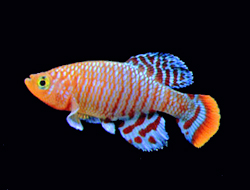
A bluefin notho killifish, Nothobranchius rachovii, from East Africa

A killifish is any of various oviparous (egg-laying) cyprinodontiform fish,[1] including families Aplocheilidae, Pantanodontidae, Cyprinodontidae, Fundulidae, Nothobranchiidae, Profundulidae, Aphaniidae and Valenciidae. All together, there are 1,270 species of killifish, the biggest family being Rivulidae, containing more than 320 species.[2] As an adaptation to living in ephemeral waters, the eggs of most killifish can survive periods of partial dehydration. Many of the species rely on such a diapause, since the eggs would not survive more than a few weeks if entirely submerged in water. The adults of some species, such as Kryptolebias marmoratus, can additionally survive out of the water for several weeks.[3] Most killifish are small, measuring from 2.5 to 5 centimetres (1 to 2 in), with the largest species growing to just under 15 centimetres (6 in).

The word killifish is of uncertain origin, but is likely to have come from the Dutch kil for a kill (small stream).[4] Although killifish is sometimes used as an English equivalent to the taxonomical term Cyprinodontidae, this is only one of several families that are referred to as killifish. Cyprinodontidae more specifically refers to the pupfish family.

Range and habitat

[edit]
Devils Hole pupfish, Cyprinodon diabolis, from Death Valley National Park

Killifish are found mainly in fresh or brackish waters in the Americas, as far south as Argentina and as far north as southern Ontario and even Newfoundland and Labrador.[5] There are also species in southern Europe, in much of Africa as far south as KwaZulu-Natal, South Africa, in the Middle East and Asia (as far east as Vietnam), and on several Indian Ocean islands.

The majority of killifish are found in permanent streams, rivers, and lakes, and live between two and three years. Such killifish are common in the Americas (Cyprinodon, Fundulus and Rivulus) as well as in Africa and Asia (including Aphyosemion, Aplocheilus, Epiplatys, Fundulopanchax and Lacustricola) and southern Europe (Aphanius). Some of these habitats can be rather extreme; the only natural habitat of the Devils Hole pupfish (Cyprinodon diabolis) is Devils Hole: a cavern at least 91 metres (299 ft) deep, branching out from a small opening at the surface, approximately 1.8 metres (6 ft) by 5.5 metres (18 ft) wide.

Some specialized forms live in temporary ponds and flood plains, and typically have a much shorter lifespan. Such species, known as "annuals", live no longer than nine months, and are used as models for studies on aging. Examples include the African genus Nothobranchius and South American genera ranging from the cold water Austrolebias of Argentina and Uruguay to the more tropical Gnatholebias, Pterolebias,[6] Simpsonichthys and Terranatos.

Territorial behaviour

[edit]
Fundulus auroguttatus, a non-annual North American killifish similar to Fundulus chrysotus known as a topminnow

A small number of species will shoal while most are territorial to varying degrees. Populations can be dense and territories can shift quickly, especially for species of the extreme shallows (a few centimetres of water). Many species exist as passive tribes in small streams where dominant males will defend a territory while allowing females and immature males to pass through the area. In the aquarium, territorial behaviour is different for every grouping, and will even vary by individuals. In a large enough aquarium, most species can live in groups as long as there are more than three males.

Diet

[edit]

Killifish feed primarily on aquatic arthropods such as insect (mosquito) larvae, aquatic crustaceans and worms. Some species of Orestias from Lake Titicaca are planktonic filter feeders. Others, such as Cynolebias and Megalebias species and Nothobranchius ocellatus are predatory and feed mainly on other fish. The American Flagfish (Jordanella floridae) feeds heavily on algae and other plant matter as well as aquatic invertebrates. Nothobranchius furzeri needs much food because it grows quickly, so when food supplied is inadequate, bigger fish will eat the smaller fish.[7]

In lifespan research

[edit]
A male Nothobranchius furzeri GRZ
(from Gonarezhou National Park)

Some strains have a lifespan as short as several months and can thus serve as a model for biogerontological studies.[8][9][10][11][12] The African turquoise killifish (Nothobranchius furzeri) is the shortest-living vertebrate that can be bred in captivity, having a lifespan of between three and nine months.[9][10] Sexual maturation occurs within 3–4 weeks, with fecundity peaking in 8–10 weeks.[13]

Nothobranchius furzeri shows no signs of telomere shortening, reduced telomerase activity, or replicative senescence with age, despite its short lifespan.[14][15] Nonetheless, lipofuscin accumulates in the brain and liver (associated with age-related neurodegeneration), and there is an increased risk of cancer with age.[13] Calorie restriction reduces these age-related disease conditions.[13] Resveratrol has been shown to increase the mean (56%) and maximum life span (59%) of Nothobranchius furzeri,[16][17] but resveratrol has not been shown to have this effect in mammals.[18][19][16]

Transferring the gut microbiota from young killifish into middle-aged killifish significantly extends the lifespans of the middle-aged killifish.[20][21]

Transgenic strains have been made,[22] and precise genome editing was achieved in Nothobranchius furzeri using a draft genome and the CRISPR/Cas9 system.[10] By targeting multiple genes, including telomerase, the killifish can now be used as an attractive vertebrate model organism for aging and diseases (such as Dyskeratosis congenita).[10] Sequencing the whole killifish genome indicated modification to the IGF-1 receptor gene.[23]

As pets

[edit]
Blue lyretail, Fundulopanchax gardneri, one of the most common West African species of killifish kept in aquariums

Many killifish are lavishly coloured and most species are easy to keep and breed in an aquarium. Specimens can be obtained from specialist societies and associations. Striped panchax (also known as the Golden Wonder killifish) are commonly found in pet shops, but caution must be exercised when considering tank mates, since the mouth of the Striped panchax is as wide as the head, and much smaller fish will be eaten. Flagfish, native to south Florida, is another species of killifish commonly found in pet stores. They are useful in aquariums for algae control. The golden topminnow (Fundulus chrysotus) is also native to the United States and often available at auction, but care must be taken with these fish to stop them from jumping out of the tank. A firm cover and a layer of floating plants is best when keeping these fish.

Behaviour-altering infection

[edit]

Normally, killifish avoid near-surface water to reduce the danger of being eaten by predators. However, when infected with a type of fluke the fish swim near the surface, and sometimes even swim upside down, exposing their camouflaged bellies. The fluke completes its lifecycle in the digestive tract of birds.[24]

Evolved resistance to extreme levels of toxicity

[edit]

The large populations of killifish and the genetic diversity of the species have enabled it to evolve and survive in areas where other species have died out, including Superfund sites. Over a few dozen generations of killifish[25][26] in a relatively short period of time (50–60 years), killifish have evolved resistance against levels of dioxins, PCBs, mercury, and other industrial chemicals up to 8,000 times higher than the previously estimated lethal dose. Sequencing the genomes of the adapted individuals showed a common set of mutations among the pollution-tolerant fish, many of which help to deactivate or turn off a molecular pathway responsible for a large part of the cellular damage caused by the chemicals.[27]

Killifish were found to fare relatively well in the wake of the Deepwater Horizon oil spill.[28][29]

The resistance of killifish to environmental changes, including toxicity, appears to be a longstanding adaptation of theirs. Abundant fossils of the extinct Miocene-aged killifish Kenyaichthys have been recovered from a prehistoric lake of the Lukeino Formation where few other fish fossils have been found. It has been suggested that this lake was subject to frequent flash droughts and increased heavy metal load from a nearby volcano. The Kenyaichthys fossils show evidence of deformities as a result of this metal load, but were still successful inhabitants of the lake.[30]

References

[edit]
[edit]
Revisions and contributorsEdit on WikipediaRead on Wikipedia
from Grokipedia
Killifish comprise approximately 1,270 species of small, oviparous cyprinodontiform fishes distributed across diverse aquatic environments, including temporary freshwater pools, permanent streams, and brackish waters in tropical and subtropical regions of Africa, the Americas, and southern Eurasia. These fish, belonging to families such as Nothobranchiidae, Rivulidae, Fundulidae, and Cyprinodontidae, exhibit remarkable adaptability to ephemeral habitats that desiccate seasonally, with many species producing diapausing eggs that remain viable through prolonged dry periods. In scientific research, killifish serve as valuable model organisms; the African turquoise killifish (Nothobranchius furzeri), with its compressed lifespan of a few months, enables rapid studies of vertebrate aging, metabolism, and neurodegeneration. Populations of the Atlantic killifish (Fundulus heteroclitus) have independently evolved resistance to high levels of industrial pollutants in contaminated estuaries, illuminating mechanisms of genetic adaptation to anthropogenic stressors. While popular among aquarists for their vivid coloration and distinctive breeding strategies, certain species face existential threats from habitat degradation, underscoring their ecological vulnerability despite inherent resilience.

Taxonomy and systematics

Phylogenetic classification

Killifish encompass diverse oviparous (egg-laying) species within the order , commonly termed egg-laying toothcarps, which contrasts with the viviparous (live-bearing) toothcarps such as those in the family . This order belongs to the superorder Atherinomorpha, a monophyletic clade that also includes and , characterized by shared morphological traits like cycloid scales and specific jaw structures derived from percomorph ancestors. The term "killifish" itself denotes a polyphyletic assemblage of small-bodied cyprinodontiforms adapted to freshwater or brackish environments, excluding live-bearers and thus not reflecting a single evolutionary lineage. Major killifish families include Fundulidae (predominantly North American topminnows), Rivulidae (South American rivulines, many annual species), and Nothobranchiidae (African nothobranchs, featuring annual forms), alongside others like Aplocheilidae (Indo-Malayan aplocheilichthyines) and Cyprinodontidae (pupfishes). Phylogenetic analyses, incorporating multigene sequences and morphological data, resolve as monophyletic within Atherinomorpha, with internal suborders like Cyprinodontoidei and Aplocheiloidei showing repeated independent evolutions of traits such as in annual lineages. These relationships are supported by molecular datasets, including mitochondrial and nuclear genes, revealing divergences among families like Rivulidae dating to the in some clades. As secondary freshwater fishes, killifish lineages originated from marine or coastal ancestors, adapting to inland habitats through physiological tolerances for gradients and . Fossil evidence, including cyprinodontiforms from , combined with time-calibrated molecular phylogenies, indicates the order's diversification began in the , approximately 70-100 million years ago, with broader Atherinomorpha origins potentially extending to 100-150 million years ago amid Gondwanan fragmentation. This transition from marine realms underscores causal adaptations driven by ecological opportunities in episodic freshwater systems, evidenced by ancestral state reconstructions in Bayesian frameworks.

Diversity and species distribution

Killifish comprise approximately 1,516 valid species (including ) across 151 genera, primarily within the families Nothobranchiidae, Rivulidae, Aplocheilidae, and of the order . This diversity reflects adaptations to varied freshwater and brackish environments, with ongoing taxonomic revisions incorporating molecular data. The highest concentrations of species occur in and . African killifish diversity is dominated by annual species in genera such as Nothobranchius, with over 85 recognized species in eastern regions, inhabiting temporary pools in lowland floodplains. In , the rivulid family exhibits exceptional richness, particularly among annual killifish in genera like Austrolebias, which includes about 58 species distributed across temperate and subtropical basins. North American representation is more modest, with roughly 40 species in the genus Fundulus, including F. heteroclitus () along Atlantic coasts. Prominent genera illustrate regional patterns: Fundulus prevails in temperate , featuring resilient species tolerant of fluctuations; Nothobranchius characterizes African annuals, such as N. furzeri, confined to ephemeral habitats; and Austrolebias exemplifies South American annuals adapted to seasonal wetlands in the Pampas and Uruguay River basin. These distributions underscore driven by habitat and isolation. Recent discoveries affirm active diversification, notably the 2025 description of Nothobranchius sylvaticus from critically endangered seasonal wetlands in a Kenyan refugium, the first endemic Nothobranchius documented in forested environments. This finding, based on morphological and genetic analyses, highlights in relict habitats amid habitat loss.

Morphology and physiology

Physical characteristics

Killifish generally measure 2.5 to 5 centimeters in standard length, with larger reaching up to 15 centimeters. Their bodies are elongated, laterally compressed, and pike-shaped, promoting streamlined movement through shallow or vegetated waters. A single originates midway along the body, and an adipose fin is absent, aligning with traits of the order . The mouth is typically small, oblique, and upturned, positioned for intercepting prey near the water surface, while the head is flattened dorsally with a straight upper profile in many . scales cover the body, providing flexibility without the rigidity of ctenoid scales found in some other groups. Physiologically, killifish gills serve dual roles in respiration and , featuring specialized ionocytes (mitochondrion-rich cells) that remodel in response to salinity shifts, enabling survival across freshwater, brackish, and hypersaline environments. These cells regulate ion transport via enzymes like Na+/K+-ATPase, which increase activity upon transfer to lower salinities to counteract hypoosmotic stress and cell swelling. lamellae protrude for efficient , though surface area adjusts to balance respiratory demands with reduced permeability in freshwater or hypoxic conditions. Sensory structures include a well-developed system of neuromasts along the head and body, sensitive to hydrodynamic pressure waves and vibrations for environmental monitoring. Eyes are positioned laterally with keen suited to detecting motion in low-light or turbid habitats, supported by a structure that models age-related changes in neural processing.

Sexual dimorphism and coloration

Killifish species across the order exhibit pronounced , particularly in body coloration and fin morphology, with males generally featuring brighter pigments and more extended fins than females. This dimorphism manifests in males through vivid reds, oranges, blues, and metallic sheens, often arranged in spots, bars, or stripes, which serve signaling functions during male-male and female assessment. Females, by contrast, display subdued, cryptic patterns in greens and browns, correlating with reduced visibility to predators and a more robust body form. Empirical observations confirm that male fin size, especially in dorsal and anal regions, is significantly larger, with shapes adapted for display postures. In North American species like Fundulus heteroclitus, males exhibit dark vertical bars alternating with silvery ones along the sides, enhancing contrast during displays, while females lack such patterning. Similarly, Fundulus males often show iridescent tones on the back during breeding periods, contrasting with the plainer guise. African genera such as Nothobranchius demonstrate dichromatism, with males in species like N. rachovii (bluefin notho) bearing metallic hues on fins and body, absent or muted in females. Coloration intensity varies ontogenetically and environmentally; wild specimens adopt more camouflaged tones for ambush foraging, whereas aquarium-reared individuals reveal heightened vibrancy due to and optimal nutrition. Field studies indicate that such male-specific traits evolve under selection pressures favoring conspicuousness in mate attraction over .

Distribution and habitats

Global range

Killifish, encompassing primarily oviparous members of the suborder Aplocheiloidei and family Cyprinodontidae, are native to freshwater, brackish, and coastal habitats across the from southern to , , the Mediterranean basin of , the , and parts of southern . They are absent from , , and , reflecting biogeographic barriers and climatic constraints that limit their presence in arid continents without historical freshwater connections and polar extremes. The highest species diversity occurs in , with over 300 species in genera such as Nothobranchius and Fundulopanchax, and in , where the family Rivulidae dominates with nearly 300 species in temporary and permanent waters. In contrast, North American distributions center on genera like Fundulus and Cyprinodon, spanning the Nearctic and Neotropical realms. Southern European and Middle Eastern populations, primarily Aphanius species, occupy relict Mediterranean refugia. Phylogenetic reconstructions link these patterns to vicariance driven by the Cretaceous breakup of , with ancestral aplocheiloid lineages diverging as separated from approximately 100–90 million years ago, followed by further tied to the isolation of and . Molecular clock estimates support early radiations in northern Gondwanan fragments, with subsequent dispersals into Laurasian margins via Eocene marine incursions in the . Certain species, such as annual killifishes from , have been introduced experimentally in non-native regions including parts of and the for mosquito larval control, though efficacy remains limited by predation inefficiencies and ecological mismatches. Native North American Fundulus species have also been deployed locally as alternatives to exotic poeciliids in .

Habitat preferences and adaptations

Killifish species favor shallow, vegetated freshwater and brackish environments, including marshes, , slow-moving , and coastal estuaries. Annual killifish, such as those in the genera Nothobranchius and Austrofundulus, are particularly specialized for ephemeral habitats in tropical regions of and , where pools form during wet seasons and desiccate completely in dry periods, necessitating for survival. These niches often feature fluctuating water levels, high vegetation cover for cover and spawning substrates, and periodic connectivity to larger water bodies. Many killifish demonstrate euryhaline capabilities, tolerating wide salinity gradients from freshwater (0 ppt) to hypersaline conditions exceeding seawater (up to 74–114 ppt in some Fundulus species). For example, the Gulf killifish (Fundulus grandis) withstands salinities of 0 to over 40 ppt, enabling habitation in dynamic estuarine zones with rapid tidal salinity shifts. Thermal tolerances typically span 2–35°C, with optimal activity between 10–30°C, allowing persistence in seasonally variable temperate and subtropical waters. Adaptations to harsh conditions include resistance to hypoxia in low-dissolved-oxygen habitats, often below 3 mg/L, where some employ bimodal respiration—gills for aquatic oxygen uptake and cutaneous or buccopharyngeal surfaces for air breathing during emersion or stagnation. Field observations document elevated population densities in acidic, oxygen-poor waters, such as polluted urban estuaries, contrasting with the narrower tolerances of related cyprinids that avoid such extremes. These traits underpin their occupancy of marginal niches overlooked by less resilient fishes.

Life history and reproduction

Reproductive strategies

Killifish primarily employ oviparous reproductive strategies characterized by and substrate spawning, where females scatter demersal eggs over vegetation, , or fine substrates, often with adhesive chorionic filaments facilitating attachment. This pattern predominates across genera like Fundulus and Aphyosemion, with eggs typically deposited in concealed sites to minimize predation. Courtship rituals feature males executing dynamic displays, such as flaring, body quivering, and territorial chases, to solicit female attention, while females exercise influenced by male coloration, size, and vigor. In like the bluefin killifish (Lucania goodei), male competition for spawning territories interacts with female preferences, determining access to mates through metrics like courting bout frequency. Spawning proceeds in iterative batches throughout the reproductive window, yielding daily fecundities of 10–100 eggs per female depending on species and conditions; for instance, Gulf killifish (Fundulus grandis) release 100–250 eggs at intervals of about 5 days, equating to roughly 0.9 eggs per gram of female body weight daily. Annual killifish accelerate this cycle with precocious sexual maturity, reaching reproductive competence in as little as 14 days post-hatching in Nothobranchius furzeri, allowing maximal output before habitat desiccation. Non-annual killifish sustain extended breeding, with continuous or seasonal spawning; Fundulus heteroclitus, for example, produces up to 512 eggs per female from March through August in natural settings. Such variability underscores adaptive diversification, with annual forms prioritizing burst reproduction and perennials favoring sustained output aligned with stable aquatic environments.

Egg diapause and annual cycles

Annual killifish, particularly species in genera such as Nothobranchius and Austrolebias, deposit eggs in the substrate of temporary pools that enter a state of —a reversible developmental —enabling embryos to withstand and lasting from several months to over a year until favorable conditions return with seasonal rains. This is essential for survival in ephemeral habitats prone to annual drying, where adults complete their life cycle rapidly before pools evaporate, leaving eggs buried in mud as the sole propagating stage. Unlike perennial killifish , which lack and inhabit stable aquatic environments with extended reproductive periods, annual forms exhibit obligate or facultative tied to predictable environmental cyclicity. Embryos of annual killifish can arrest development at three discrete stages: I during the early dispersed cell phase before , II at the mid-somitogenesis stage following organ formation, and III immediately prior to hatching. These stages are genetically regulated, involving remodeling of ancient paralogs and microRNA-mediated pathways that coordinate arrest, reduced metabolism, and tolerance to hypoxia and ; for instance, II features G1-phase halt and suppressed oxygen consumption. I serves primarily as a protective mechanism during vulnerability to , while II and III allow of hatching with pool refilling. In Austrolebias , I and II may be facultative, but III is typically obligate, reflecting across African and South American lineages. This convergent evolution underscores the independent origins of diapause within Cyprinodontiformes, particularly in the suborder Aplocheiloidei, with studies estimating at least six to seven separate evolutions across phylogenetic groups such as the African Nothobranchiidae and South American Rivulidae. For instance, in the African lineage of Nothobranchius, diapause emerged less than 18 million years ago during the Miocene epoch, co-opting ancient gene paralogs dating back over 473 million years, while within the Rivulidae family, diapause arose independently at least twice, also during the Miocene (approximately 23–5 million years ago). Dormancy termination is triggered by environmental cues, including rising oxygen levels, elevated temperatures (e.g., 30°C to bypass or exit ), and photoperiod changes that signal inundation; laboratory studies show that hypoxia promotes entry into diapause trajectories, while warming and induce escape pathways leading to . Upon , synchronized cohorts of juveniles exhibit accelerated growth and maturation, achieving and producing viable eggs within 4-6 weeks—yielding times as short as 20-42 days in species like Nothobranchius furzeri—before reproducing en masse and senescing as habitats dry. This compressed annual cycle, with non-overlapping s, contrasts sharply with the multi-year reproductive spans of non-annual killifish, optimizing fitness in predictably transient ecosystems.

Behavior and ecology

Territorial and social behaviors

Males of many killifish species, such as the bluefin killifish (Lucania goodei), establish and vigorously defend small spawning territories during the breeding season, primarily against intruding males through displays involving fin flaring, rapid chases, and occasional bites or attacks. These agonistic interactions peak in intensity when resources like spawning sites are contested, as observed in field and laboratory settings where dominant males maintain consistent territories over multiple days by adopting postures like head-down stances to advertise ownership. In contrast, females exhibit minimal territoriality, often entering male territories solely for spawning before departing, though males may direct aggression toward females in the absence of rivals, potentially as redirected competition. Juvenile killifish frequently engage in schooling behavior, forming polarized groups that enhance antipredator vigilance, as documented in species like the (Fundulus diaphanus), where cohesion correlates with familiarity and reduces individual predation risk. Adults, however, shift toward solitary or paired arrangements, with escalating in high-density conditions but diminishing in larger groups due to conditional establishment, where subordinate males adopt peripheral positions rather than constant fighting. Empirical field observations confirm density-dependent modulation, as overcrowded spawning grounds lead to escalated chases that resolve into hierarchical spacing. In annual killifish genera like Nothobranchius, territorial aggression manifests as brief, high-intensity male-male conflicts upon initial encounters, influenced by their compressed lifespan of weeks to months, which prioritizes rapid mate access over prolonged defense. This contrasts with longer-lived non-annual , where sustained territoriality supports extended breeding; annuals show less investment in site fidelity, potentially due to ephemeral habitats, though males remain aggressive toward conspecifics in confined settings. Few killifish display social structures, with most interactions driven by rather than mutualism, as evidenced by the prevalence of dominance hierarchies over egalitarian schooling in mature adults.

Diet and foraging strategies

Killifish species are omnivorous in natural habitats, with diets dominated by aquatic invertebrates including copepods, ostracods, chironomid larvae, insects, and mosquito larvae, supplemented by algae, diatoms, detritus, and amphipods. Gut content analyses of Fundulus heteroclitus in salt marshes confirm that invertebrates form the primary dietary component, alongside detritus and microalgae. In annual killifish such as Nothobranchius species inhabiting temporary pools, the diet consists predominantly of small crustaceans like cladocerans, copepods, and ostracods, varying with seasonal prey availability during the brief rainy period. Many killifish possess upturned mouths adapted for surface feeding, enabling capture of aerial and floating prey such as emerging insect larvae. Larger individuals in genera like Fundulus demonstrate opportunistic piscivory, preying on or engaging in and scavenging within systems. Foraging behaviors are opportunistic and generalist, involving both predation—where fish remain stationary amid —and active pursuit of mobile prey, influenced by structure and levels. Activity peaks diurnally, with dietary flexibility allowing shifts toward plant matter or increased consumption during invertebrate scarcity in fluctuating environments.

Evolutionary adaptations

Resistance to environmental toxins

Populations of the Atlantic killifish (Fundulus heteroclitus) from contaminated sites like New Bedford Harbor, a location with high PCB levels exceeding 270 ppm in sediments, exhibit heritable resistance to the embryotoxic and teratogenic effects of polychlorinated biphenyls (PCBs) and dioxin-like compounds. This , first documented in laboratory crosses confirming genetic basis in the early 2000s, involves reduced sensitivity to aryl hydrocarbon receptor () agonists that typically induce cytochrome P4501A () expression and production leading to deformities. Genomic analyses indicate that resistance evolved rapidly and convergently across at least four independent urban estuary populations through mutations disrupting the signaling pathway, with key variants identified by 2016 as having large effect sizes on tolerance. Empirical toxicity assays reveal that embryos from resistant strains withstand PCB-126 concentrations up to 8,000 times the (LD50) for sensitive reference populations, demonstrating tolerance to levels that cause near-total mortality and spinal/heart malformations in non-adapted . Field-to-lab reciprocal transplants and multi-generational breeding confirm this resilience is not merely physiological acclimation but polygenic occurring within decades of onset, countering assumptions of uniform, irreversible degradation from industrial contaminants. While multi-generational exposures to related pollutants like (PBDEs) in flame retardants or crude oil components alter offspring —such as persistent transcriptomic shifts in pathways and neurobehavioral genes—resistant populations show attenuated transgenerational deficits compared to clean-site conspecifics. For example, adult exposure to water-accommodated fractions of oil propagates embryonic metabolic perturbations across two generations, yet evolved AHR pathway variants in polluted lineages buffer against equivalent developmental from PCBs, illustrating adaptive overrides of epigenetic legacies in causal response. These findings, derived from controlled exposures and genomic sequencing, highlight microevolutionary mechanisms enabling persistence amid chronic anthropogenic stress without invoking unsubstantiated claims of inherent fragility.

Responses to pathogens and infections

Killifish, particularly species in the genus Fundulus, exhibit parasite-induced behavioral alterations that facilitate transmission to definitive hosts. In Fundulus parvipinnis, infection with the brain-encysting trematode Euhaplorchis californiensis leads to conspicuous swimming behaviors, including increased surfacing, jerking, and tail flips, which elevate predation risk by avian predators by 10- to 30-fold compared to uninfected conspecifics. Field experiments confirm that parasitized fish are substantially more susceptible to predation, supporting the of adaptive manipulation by the parasite to enhance transmission. These changes correlate with altered activity, including reduced post-stress serotonergic signaling in the , contrasting with non-infected controls where stress restores normal activity. Immune responses in killifish to involve both innate and adaptive components, with innate defenses providing the primary rapid barrier. Fundulus heteroclitus populations display leukocyte-mediated responses, including and , to challenges, though efficacy varies by sex and exposure history, with males showing higher production. In polluted habitats, evolved tolerance to contaminants like PCBs in F. heteroclitus from sites such as New Bedford Harbor involves suppressed signaling, but this incurs trade-offs, including heightened susceptibility to bacterial like , with tolerant fish exhibiting 2- to 3-fold higher mortality rates under infection compared to reference populations. Such adaptations prioritize over pathogen clearance, potentially reducing overall fitness through impaired humoral and cellular immunity. Lab studies of trematode infections reveal variable encapsulation and minimal clearance of metacercariae in neural tissues, allowing persistence and behavioral effects without overt host mortality in controlled settings.

Diapause as an evolutionary adaptation

Diapause, a defining physiological trait in annual killifish of the suborder Aplocheiloidei within Cyprinodontiformes, has evolved independently multiple times across phylogenetic groups, enabling survival in ephemeral habitats. Phylogenetic analyses indicate at least six to seven independent origins of diapause, occurring in families such as Rivulidae (South America) and Nothobranchiidae (Africa). Geological timelines suggest these traits emerged during the Miocene epoch (approximately 23–5 million years ago) for Rivulidae, with more recent evolution less than 18 million years ago in the African turquoise killifish (Nothobranchius furzeri) lineage. This convergent evolution underscores diapause's role in phylogenetic diversification and adaptation to seasonal droughts. For details on diapause mechanisms and annual cycles, see the "Egg diapause and annual cycles" subsection under "Life history and reproduction."

Human interactions and research

Aquarium husbandry and pet trade

Killifish are maintained in aquariums for their vibrant colors and breeding potential, with species such as Fundulopanchax gardneri, Aphyosemion australe, and clown killifish (Epiplatys annulatus) commonly selected by hobbyists. These fish typically require species-specific tanks to accommodate territorial behaviors and prevent hybridization, particularly for non-annual varieties kept in groups of one male to two or more females to minimize aggression toward females. Annual killifish, like those in the genus Nothobranchius, necessitate specialized breeding setups using peat moss substrate to simulate diapause for egg incubation, as eggs must dry out to hatch successfully. Optimal water conditions emphasize soft, acidic parameters mimicking natural habitats, with ranging from 6.0 to 7.0 and temperatures of 72–75°F (22–24°C) for most temperate species, though tropical varieties may tolerate slightly warmer setups. Hiding spots via plants or decor reduce stress and jumping risks, which necessitate tight-fitting lids on tanks. Diet consists of high-quality flakes supplemented with live or frozen foods such as or to promote health and spawning, as flake-only diets often lead to nutritional deficiencies observed in captive populations. Lifespans in captivity vary from 6 months for annual species like Nothobranchius furzeri to 2–3 years for non-annuals, with empirical data showing extended survival when wild-like conditions—such as subdued lighting and substrate foraging—are replicated. The pet trade features killifish through specialized suppliers and hobbyist networks, bolstered by organizations like the American Killifish Association, which facilitates exchange of breeding stock and promotes best practices among thousands of members worldwide. While exact annual trade volumes are not comprehensively tracked, the species' niche appeal sustains a steady market in ornamental outlets, with releases from aquariums posing risks of establishing invasive populations, as documented in cases of bluefin killifish ( goodei) introductions via discarded pets or . Such escapes have led to non-native establishments in U.S. waters, underscoring the need for responsible disposal to mitigate ecological disruptions.

Applications in scientific research

Killifish, especially annual species such as Nothobranchius furzeri, are employed as model organisms in due to their high sensitivity to like and suitability for chronic exposure tests. Acute and chronic toxicity assays have demonstrated that N. furzeri exhibits greater sensitivity to than standard test species like and , with LC50 values indicating effective use in standardized protocols. This sensitivity, combined with their short life cycles and drought-resistant embryos, facilitates efficient multigenerational studies on impacts. Populations of Fundulus heteroclitus from polluted estuaries have independently evolved resistance to contaminants including polychlorinated biphenyls (PCBs) and crude oil, serving as natural models for studying rapid evolutionary adaptations to anthropogenic toxins. Genetic tools like CRISPR/Cas9 have been applied to mutate (AHR) genes in Fundulus, revealing mechanisms of pollutant resistance and gene-environment interactions. Recent experiments, including those from 2025, show that adult exposure to crude oil induces transgenerational perturbations in embryonic and larval morphology, persisting across at least two generations. In , the of annual killifish provides a system for investigating reversible developmental arrest and associated gene regulatory networks. stages (I, II, III) enable studies on dynamics, metabolic suppression, and environmental cues like temperature and signaling that influence trajectory. The short generation times of these species—often completing cycles in months—accelerate experimental iterations compared to longer-lived models, enhancing throughput in genetic and toxicological .

Lifespan and aging studies

![Nothobranchius furzeri GRZ strain][float-right]
Nothobranchius furzeri, particularly strains like GRZ, exhibits a median lifespan of 2-3 months, while others such as MZM-0403 reach about 6 months, with maximum lifespans varying from 4-10 months across strains under conditions. This naturally short lifespan, combined with accelerated and expression of aging hallmarks such as telomere attrition, epigenetic alterations, and , positions N. furzeri as a model for aging research since its establishment around 2011. Unlike longer-lived models, its compressed timeline enables rapid observation of age-related decline, facilitating causal pathway identification without artificial lifespan shortening.
Genomic resources, including full sequencing of strains like MZM-0403, support forward and reverse genetic screens for aging mutants, allowing stable lines to be generated in 2-3 months for testing interventions targeting senescence hallmarks. This contrasts with mammalian models by enabling high-throughput studies of naturally occurring aging processes, revealing conserved mechanisms like protein disruption. Recent 2025 studies highlight aging via impaired elongation, where selective slowdown in protein synthesis of DNA/RNA-binding proteins contributes to loss, neuronal dysfunction, and aggregation, as observed in GRZ strain . In cardiac aging, the GRZ strain demonstrates increased markers by 16 weeks compared to 8 weeks, with phenotypic changes like reduced heart function, establishing it as a model for cardiac . Housing density effects show that single or low-density rearing accelerates juvenile growth but extends adult , challenging assumptions of trade-offs between early development and in short-lived .

Conservation and threats

Endangered species and biodiversity

Annual killifish in the genus Nothobranchius exhibit high extinction risk, with 72% of 94 assessed species classified as threatened under IUCN criteria, primarily due to their dependence on ephemeral wetlands. The (Cyprinodon diabolis) is listed as Critically Endangered (CR), with a population confined to a single geothermal spring in , , assessed in 2014. Newly described Nothobranchius sylvaticus from Kenyan forests qualifies for Critically Endangered status based on its restricted range and vulnerability, as recommended in its 2025 species description. Biodiversity hotspots for killifish conservation include East African lowland regions, such as southeastern and eastern , where seasonal pools support diverse Nothobranchius assemblages, and South American riparian wetlands harboring annual Austrolebias species. Ex situ breeding programs aid preservation, as seen in efforts for killifishes (Fundulus spp.) involving captive propagation to bolster wild populations. Empirical data indicate significant population declines in annual killifish habitats, with natural pools in regions like experiencing marked loss since the 1980s due to alteration, though provides some resilience by enabling survival. These adaptations underscore the genus's potential as a flagship for small amid ongoing erosion.

Anthropogenic impacts and resilience

Human activities have significantly altered killifish habitats through drainage and , leading to fragmentation and loss of ephemeral pools critical for annual species reproduction. For instance, drainage for and development has contributed to population declines in Neotropical killifish like those in the genus Austrolebias, where habitat desiccation disrupts diapause egg survival. further exacerbate pressures, as non-native competitors and predators disrupt local ecosystems; in Mediterranean systems, introduced fishes have been linked to reduced native killifish abundances via resource competition and hybridization risks. Pollution from industrial effluents and agricultural chemicals poses acute toxicological threats, inducing and developmental abnormalities. Exposure to like Roundup Transorb has been shown to elevate and antioxidant enzyme activity in endangered Austrolebias charrua, impairing embryonic viability at environmentally relevant concentrations (e.g., 1-10 μg/L glyphosate equivalents). Similarly, persistent organic pollutants such as PCBs cause cardiac deformities and in sensitive populations, though baseline susceptibility varies by species and life stage. Despite these pressures, certain killifish demonstrate remarkable resilience through rapid genetic , particularly in urban estuaries. Atlantic killifish (Fundulus heteroclitus) populations have independently evolved resistance to PCBs and dioxins across multiple sites, achieving up to 8,000-fold tolerance via mutations in a few pathway genes, enabling survival in sediments exceeding lethal thresholds for reference populations. Recent genomic analyses confirm this polygenic urban occurs on decadal timescales, with urban cohorts showing modified sensitivity to novel toxicants faster than expected under neutral drift models, underscoring causal roles of strong selection over . Management strategies leveraging this adaptability prioritize habitat restoration alongside captive assurance programs to bolster local genotypes rather than assuming inevitable decline. Restoration efforts, such as rehydrating seasonal wetlands and mitigating point-source , have supported population recovery in Bermuda killifish (Fundulus bermudae), where translocation of resilient strains enhances connectivity. protocols maintain for reintroduction, with evidence indicating that evolved tolerances persist in controlled settings, favoring targeted interventions over broad translocation to avoid .

References

Add your contribution
Related Hubs
User Avatar
No comments yet.