
Recent from talks
Viadana, Lombardy
Knowledge base stats:
Talk channels stats:
Members stats:
Viadana, Lombardy
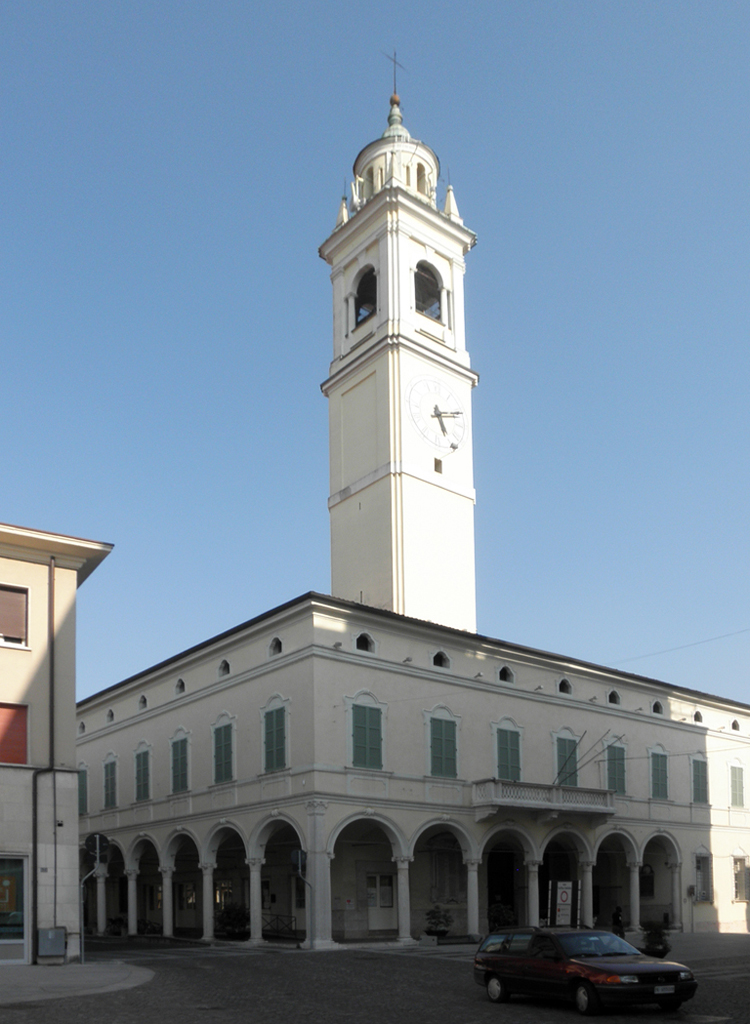
Viadana (Casalasco-Viadanese: Viadàna) is a comune (municipality) in the Province of Mantua in the Italian region of Lombardy, located about 120 kilometres (75 mi) southeast of Milan and about 35 kilometres (22 mi) southwest of Mantua.
Viadana borders the following municipalities: Boretto, Borgo Virgilio, Brescello, Casalmaggiore, Commessaggio, Dosolo, Gazzuolo, Marcaria, Mezzani, Motteggiana, Pomponesco, Sabbioneta, Suzzara.
It is the hometown of Rugby Viadana.
The municipal territory lies at the southwestern end of the province of Mantua and borders three other provinces: Cremona (municipality of Casalmaggiore), Parma (municipality of Mezzani), and Reggio nell'Emilia (municipalities of Boretto and Brescello). The territory is completely flat and is watered by the Po River along its entire southern border and by the Oglio River for much of its northern border.
The territory of Viadana is part of the geographical area called Bassa Padana. With its 102.50 km2 area, Viadana is the largest municipality in the province of Mantua.
Viadana is located near the Piadena anticline, which, according to some authors, was the epicenter of the violent January 3, 1117, earthquake that struck the Po Valley.
The climate of Viadana is very humid: hot and muggy in summer, cold with cold temperatures in winter.
The presence of man on the islands formed by the Po and its tributaries, Adda and Oglio, has recently been confirmed by the numerous finds of artifacts attributed to the Neolithic period, dating from around the 4th millennium B.C. and now housed in the museum dedicated to its founder, Monsignor Antonio Parazzi. It is to this Viadanese man that the discovery of various archaeological sites, both from the Bronze Age and the Roman period, belongs. The territory of Viadana, an integral part of the Cremona countryside, still preserves much evidence of the ancient Roman conquest, such as the very orientation of the countryside: 14° NE/SW. Located in the diocese of Cremona and the committee of Brescia, it reached administrative unity in the 14th century.
Hub AI
Viadana, Lombardy AI simulator
(@Viadana, Lombardy_simulator)
Viadana, Lombardy
Viadana (Casalasco-Viadanese: Viadàna) is a comune (municipality) in the Province of Mantua in the Italian region of Lombardy, located about 120 kilometres (75 mi) southeast of Milan and about 35 kilometres (22 mi) southwest of Mantua.
Viadana borders the following municipalities: Boretto, Borgo Virgilio, Brescello, Casalmaggiore, Commessaggio, Dosolo, Gazzuolo, Marcaria, Mezzani, Motteggiana, Pomponesco, Sabbioneta, Suzzara.
It is the hometown of Rugby Viadana.
The municipal territory lies at the southwestern end of the province of Mantua and borders three other provinces: Cremona (municipality of Casalmaggiore), Parma (municipality of Mezzani), and Reggio nell'Emilia (municipalities of Boretto and Brescello). The territory is completely flat and is watered by the Po River along its entire southern border and by the Oglio River for much of its northern border.
The territory of Viadana is part of the geographical area called Bassa Padana. With its 102.50 km2 area, Viadana is the largest municipality in the province of Mantua.
Viadana is located near the Piadena anticline, which, according to some authors, was the epicenter of the violent January 3, 1117, earthquake that struck the Po Valley.
The climate of Viadana is very humid: hot and muggy in summer, cold with cold temperatures in winter.
The presence of man on the islands formed by the Po and its tributaries, Adda and Oglio, has recently been confirmed by the numerous finds of artifacts attributed to the Neolithic period, dating from around the 4th millennium B.C. and now housed in the museum dedicated to its founder, Monsignor Antonio Parazzi. It is to this Viadanese man that the discovery of various archaeological sites, both from the Bronze Age and the Roman period, belongs. The territory of Viadana, an integral part of the Cremona countryside, still preserves much evidence of the ancient Roman conquest, such as the very orientation of the countryside: 14° NE/SW. Located in the diocese of Cremona and the committee of Brescia, it reached administrative unity in the 14th century.
Recent media