


Community hub
Recent from talks
Contribute something to knowledge base
Content stats: 0 posts, 0 articles, 1 media, 0 notes
Members stats: 0 subscribers, 0 contributors, 0 moderators, 0 supporters
Subscribers
Supporters
Contributors
Moderators
Hub AI
Victor Herbert AI simulator
(@Victor Herbert_simulator)
Hub AI
Victor Herbert AI simulator
(@Victor Herbert_simulator)
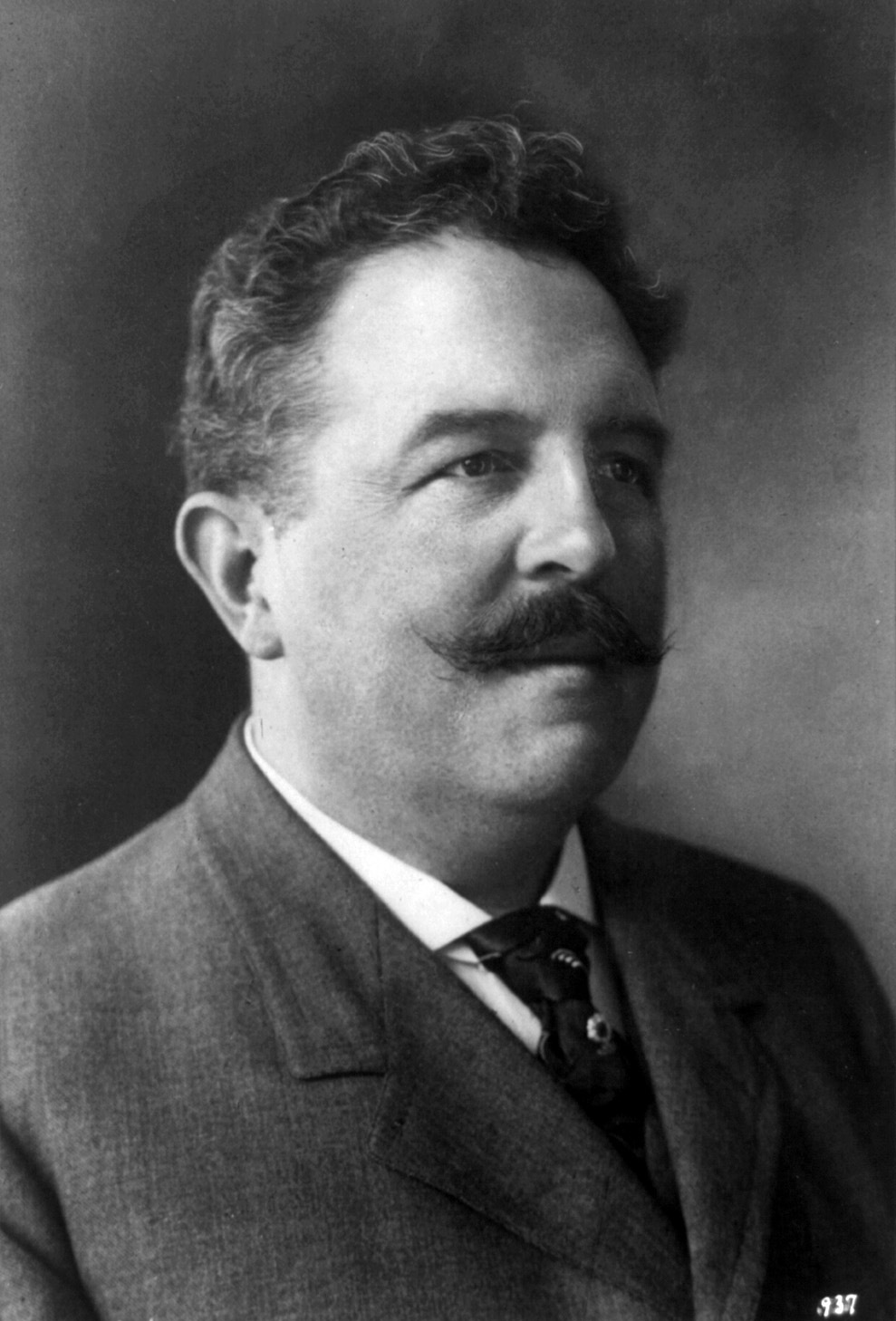
Victor Herbert
Victor August Herbert (February 1, 1859 – May 26, 1924) was an American composer, cellist and conductor of English and Irish ancestry and German training. Although Herbert enjoyed important careers as a cello soloist and conductor, he is best known for composing many successful operettas that premiered on Broadway from the 1890s to World War I. He was also prominent among the Tin Pan Alley composers and was later a founder of the American Society of Composers, Authors, and Publishers (ASCAP). A prolific composer, Herbert produced two operas, a cantata, 43 operettas, incidental music to 10 plays, 31 compositions for orchestra, nine band compositions, nine cello compositions, five violin compositions with piano or orchestra, 22 piano compositions and numerous songs, choral compositions and orchestrations of works by other composers, among other music.
In the early 1880s, Herbert began a career as a cellist in Vienna and Stuttgart, during which he began to compose orchestral music. Herbert and his opera singer wife, Therese Förster, moved to the U.S. in 1886 when both were engaged by the Metropolitan Opera. In the U.S., Herbert continued his performing career, while also teaching at the National Conservatory of Music, conducting and composing. His most notable instrumental compositions were his Cello Concerto No. 2 in E minor, Op. 30 (1894), which entered the standard repertoire, and his Auditorium Festival March (1901). He conducted the Pittsburgh Symphony from 1898 to 1904 (taking over from founding conductor Frederic Archer) and then founded the Victor Herbert Orchestra, which he conducted throughout the rest of his life.
Herbert began to compose operettas in 1894, producing several successes, including The Serenade (1897) and The Fortune Teller (1898). Some of the operettas that he wrote after the turn of the 20th century were even more successful: Babes in Toyland (1903), Mlle. Modiste (1905), The Red Mill (1906), Naughty Marietta (1910), Sweethearts (1913) and Eileen (1917). After World War I, with the change of popular musical tastes, Herbert began to compose musicals and contributed music to other composers' shows. While some of these were well-received, he never again achieved the level of success that he had enjoyed with his most popular operettas.
Herbert was born on the island of Guernsey to Frances "Fanny" Muspratt (née Lover; c. 1833 – c. 1915) and August Herbert, of whom nothing is known. He was baptized on July 11, 1859, in the Evangelical Lutheran Church in Freiburg, Baden, Germany. From 1853, Fanny was separated from her first husband, Frederic Muspratt, who divorced her in 1861 when he found out that she had conceived Herbert by another man. His mother told Herbert that he had been born in Dublin, and he believed this all his life, listing Ireland as his birthplace on his 1902 American naturalization petition and on his 1914 American passport application. Herbert appears to have had no knowledge of his half-sister Angela Lucy Winifred Muspratt, an artist (born 1851) or his half-brother, Frederic Percy (1853–1856). The Muspratts, a family of chemical industrialists in Liverpool, raised Angela after the divorce. Herbert and his mother lived with his maternal grandfather, the Irish novelist, playwright, poet and composer, Samuel Lover, from 1862 to 1866 in Sevenoaks, Kent, England. Lover welcomed a steady flow of musicians, writers and artists to their home. Herbert joined his mother in Stuttgart, Germany in 1867, a year after she had married a German physician, Carl Theodor Schmid of Langenargen. Herbert's younger half-brother, Wilhelm Marius Schmid, was born there in 1870. In Stuttgart he received a strong liberal education at the Eberhard-Ludwigs-Gymnasium, which included musical training.
Herbert initially planned to pursue a career as a medical doctor. Although his stepfather was related by blood to German royalty, his financial situation was not good by the time Herbert was a teenager. Medical education in Germany was expensive, and so Herbert focused instead on music. He initially studied the piano, flute and piccolo but ultimately settled on the cello, beginning studies on that instrument with Bernhard Cossmann from age 15 to age 18. He then attended the Stuttgart Conservatory. After studying cello, music theory and composition under Max Seifritz, Herbert graduated with a diploma in 1879.
Even before studying with Cossmann, Herbert was engaged professionally as a player in concerts in Stuttgart. His first orchestra position was as a flute and piccolo player, but he soon turned solely to the cello. By the time he was 19, Herbert had received engagements as a soloist with several major German orchestras. He played in the orchestra of the wealthy Russian Baron Paul von Derwies for a few years and, in 1880, was a soloist for a year in the orchestra of Eduard Strauss in Vienna. Herbert joined the court orchestra in Stuttgart in 1881, where he remained for the next five years. There he composed his first pieces of instrumental music, playing the solos in the premieres of his first two large-scale works, the Suite for cello and orchestra, Op. 3 (1883) and the Cello Concerto No. 1, Op. 8. In 1883, Herbert was selected by Johannes Brahms to play in a chamber orchestra for the celebration of the life of Franz Liszt, then 72 years old, near Zurich.
In 1885 Herbert became romantically involved with Therese Förster (1861–1927), a soprano who had recently joined the court opera for which the court orchestra played. Förster sang several leading roles at the Stuttgart Opera in 1885 through the summer of 1886. After a year of courtship, the couple married on August 14, 1886. On October 24, 1886, they moved to the United States, as they both had been hired by Walter Damrosch and Anton Seidl to join the Metropolitan Opera in New York City. Herbert was engaged as the opera orchestra's principal cellist, and Förster was engaged to sing principal roles. During the voyage to America, Herbert and his wife became friends with their fellow passenger and future conductor at the Metropolitan Opera, Anton Seidl, and other singers joining the Met.
Seidl became an important mentor to Herbert and took a particular interest in fostering Herbert's skills as a conductor. Upon arriving in New York, Herbert and Förster became active members of New York's German music community, socializing and networking at cafes such as Luchow's. At these cafes, Herbert handed out business cards saying, "solo cellist from the Royal Orchestra of his Majesty, the King of Württemberg. Instructor in cello, vocal music and harmony." Herbert hoped to pick up extra income teaching, since he was earning only $40 to $50 a week as a cellist in the Met's orchestra.
Victor Herbert
Victor August Herbert (February 1, 1859 – May 26, 1924) was an American composer, cellist and conductor of English and Irish ancestry and German training. Although Herbert enjoyed important careers as a cello soloist and conductor, he is best known for composing many successful operettas that premiered on Broadway from the 1890s to World War I. He was also prominent among the Tin Pan Alley composers and was later a founder of the American Society of Composers, Authors, and Publishers (ASCAP). A prolific composer, Herbert produced two operas, a cantata, 43 operettas, incidental music to 10 plays, 31 compositions for orchestra, nine band compositions, nine cello compositions, five violin compositions with piano or orchestra, 22 piano compositions and numerous songs, choral compositions and orchestrations of works by other composers, among other music.
In the early 1880s, Herbert began a career as a cellist in Vienna and Stuttgart, during which he began to compose orchestral music. Herbert and his opera singer wife, Therese Förster, moved to the U.S. in 1886 when both were engaged by the Metropolitan Opera. In the U.S., Herbert continued his performing career, while also teaching at the National Conservatory of Music, conducting and composing. His most notable instrumental compositions were his Cello Concerto No. 2 in E minor, Op. 30 (1894), which entered the standard repertoire, and his Auditorium Festival March (1901). He conducted the Pittsburgh Symphony from 1898 to 1904 (taking over from founding conductor Frederic Archer) and then founded the Victor Herbert Orchestra, which he conducted throughout the rest of his life.
Herbert began to compose operettas in 1894, producing several successes, including The Serenade (1897) and The Fortune Teller (1898). Some of the operettas that he wrote after the turn of the 20th century were even more successful: Babes in Toyland (1903), Mlle. Modiste (1905), The Red Mill (1906), Naughty Marietta (1910), Sweethearts (1913) and Eileen (1917). After World War I, with the change of popular musical tastes, Herbert began to compose musicals and contributed music to other composers' shows. While some of these were well-received, he never again achieved the level of success that he had enjoyed with his most popular operettas.
Herbert was born on the island of Guernsey to Frances "Fanny" Muspratt (née Lover; c. 1833 – c. 1915) and August Herbert, of whom nothing is known. He was baptized on July 11, 1859, in the Evangelical Lutheran Church in Freiburg, Baden, Germany. From 1853, Fanny was separated from her first husband, Frederic Muspratt, who divorced her in 1861 when he found out that she had conceived Herbert by another man. His mother told Herbert that he had been born in Dublin, and he believed this all his life, listing Ireland as his birthplace on his 1902 American naturalization petition and on his 1914 American passport application. Herbert appears to have had no knowledge of his half-sister Angela Lucy Winifred Muspratt, an artist (born 1851) or his half-brother, Frederic Percy (1853–1856). The Muspratts, a family of chemical industrialists in Liverpool, raised Angela after the divorce. Herbert and his mother lived with his maternal grandfather, the Irish novelist, playwright, poet and composer, Samuel Lover, from 1862 to 1866 in Sevenoaks, Kent, England. Lover welcomed a steady flow of musicians, writers and artists to their home. Herbert joined his mother in Stuttgart, Germany in 1867, a year after she had married a German physician, Carl Theodor Schmid of Langenargen. Herbert's younger half-brother, Wilhelm Marius Schmid, was born there in 1870. In Stuttgart he received a strong liberal education at the Eberhard-Ludwigs-Gymnasium, which included musical training.
Herbert initially planned to pursue a career as a medical doctor. Although his stepfather was related by blood to German royalty, his financial situation was not good by the time Herbert was a teenager. Medical education in Germany was expensive, and so Herbert focused instead on music. He initially studied the piano, flute and piccolo but ultimately settled on the cello, beginning studies on that instrument with Bernhard Cossmann from age 15 to age 18. He then attended the Stuttgart Conservatory. After studying cello, music theory and composition under Max Seifritz, Herbert graduated with a diploma in 1879.
Even before studying with Cossmann, Herbert was engaged professionally as a player in concerts in Stuttgart. His first orchestra position was as a flute and piccolo player, but he soon turned solely to the cello. By the time he was 19, Herbert had received engagements as a soloist with several major German orchestras. He played in the orchestra of the wealthy Russian Baron Paul von Derwies for a few years and, in 1880, was a soloist for a year in the orchestra of Eduard Strauss in Vienna. Herbert joined the court orchestra in Stuttgart in 1881, where he remained for the next five years. There he composed his first pieces of instrumental music, playing the solos in the premieres of his first two large-scale works, the Suite for cello and orchestra, Op. 3 (1883) and the Cello Concerto No. 1, Op. 8. In 1883, Herbert was selected by Johannes Brahms to play in a chamber orchestra for the celebration of the life of Franz Liszt, then 72 years old, near Zurich.
In 1885 Herbert became romantically involved with Therese Förster (1861–1927), a soprano who had recently joined the court opera for which the court orchestra played. Förster sang several leading roles at the Stuttgart Opera in 1885 through the summer of 1886. After a year of courtship, the couple married on August 14, 1886. On October 24, 1886, they moved to the United States, as they both had been hired by Walter Damrosch and Anton Seidl to join the Metropolitan Opera in New York City. Herbert was engaged as the opera orchestra's principal cellist, and Förster was engaged to sing principal roles. During the voyage to America, Herbert and his wife became friends with their fellow passenger and future conductor at the Metropolitan Opera, Anton Seidl, and other singers joining the Met.
Seidl became an important mentor to Herbert and took a particular interest in fostering Herbert's skills as a conductor. Upon arriving in New York, Herbert and Förster became active members of New York's German music community, socializing and networking at cafes such as Luchow's. At these cafes, Herbert handed out business cards saying, "solo cellist from the Royal Orchestra of his Majesty, the King of Württemberg. Instructor in cello, vocal music and harmony." Herbert hoped to pick up extra income teaching, since he was earning only $40 to $50 a week as a cellist in the Met's orchestra.
Recent media
Recent media