



Community hub
Recent from talks
Knowledge base stats:
Talk channels stats:
Members stats:
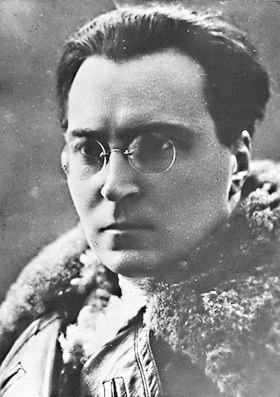
Victor Serge
Victor Serge (French: [viktɔʁ sɛʁʒ]; born Viktor Lvovich Kibalchich, Russian: Ви́ктор Льво́вич Киба́льчич; 30 December 1890 – 17 November 1947) was a Belgian-born Russian revolutionary, novelist, poet, historian, journalist, and translator. Serge was a key eyewitness to and participant in the revolutionary movements of the 20th century and the opposition to Stalinism, which influenced his writing along with contemporary Modernist experiments. His notable and best-known works as an author include such novels as The Case of Comrade Tulayev, his historical account Year One of the Russian Revolution, and his Memoirs of a Revolutionary, 1901–1941.
Originally an anarchist, Victor Serge joined the Bolsheviks in January 1919 after arriving in Petrograd (Saint Petersburg) at the height of the Russian Civil War. He worked for the Comintern as a journalist, editor, and translator and was an early critic of the emerging Stalinist regime. Serge joined the Left Opposition in 1923 and was expelled from the Communist Party in late 1927 or early 1928. He was imprisoned by the Soviet regime in 1928 and again from 1933 to 1936.
Following an international campaign by prominent intellectuals, Serge was released from deportation in Orenburg and allowed to leave the Soviet Union in April 1936. During his subsequent exiles in France and Mexico, he continued to write extensively, producing critical analyses of the Soviet Union, several acclaimed novels depicting the lives of revolutionaries and the psychological toll of political struggle, and historical works.
His writings offer a unique perspective on the Russian Revolution, its degeneration into totalitarianism, and the broader struggles against fascism and authoritarianism; critics have also embraced his fiction works as remarkable examples of Modernist literature influenced by Joyce, Freud and Russian modernism. After decades of relative obscurity, interest in Serge's work experienced a significant revival towards the end of the 20th century and into the 21st, with many of his books being republished. He is remembered for his unwavering commitment to socialist ideals, his defense of individual freedom and critical thought, and his powerful literary testimonies to the "unforgettable times" he lived through.
Viktor Lvovich Kibalchich was born on 30 December 1890, in Brussels, Belgium, to impoverished Russian émigré intellectuals. His parents were Narodnik sympathizers who had fled Russia after the assassination of Tsar Alexander II in 1881, a plot in which a relative, Nikolai Kibalchich, a chemist, played a key technical role and was subsequently executed. Victor Kibalchich did not adopt the name "Victor Serge" until 1917, when he began writing for Tierra y Libertad in Spain.
In his youth, Serge joined the Belgian Young Socialists but soon became disgusted with their electoralism and opportunism. He turned to anarchism, moving to Paris in 1909. There, he associated with anarcho-individualist and illegalist circles, became a writer and editor for the journal L'Anarchie under the pen name Le Rétif (The Stubborn One), and was implicated with the Bonnot Gang. Although he did not participate in the gang's expropriations, he defended the principle of individual expropriation. Refusing to denounce his comrades, Serge was sentenced to five years of solitary confinement in 1913 for his association with the group. This experience formed the basis of his first novel, Men in Prison.
Released in January 1917, Serge was expelled from France and went to Barcelona, Spain. There, he joined the CNT, participated in the syndicalist uprising of July 1917, and wrote for Tierra y Libertad. Disillusioned with anarchism's inability to confront the question of power and drawn by the Russian Revolution, he decided to go to Russia. He attempted to reach Russia via France but was arrested in October 1917 for violating his expulsion order and interned as a "Bolshevik suspect" in a French concentration camp at Precigne for fifteen months. In the camp, he studied Marxism with other Russian revolutionaries.
Serge was exchanged for French military officers held by the Russians and arrived in Petrograd in January 1919. He was immediately struck by the harsh realities of the Civil War, famine, and the Red Terror, as well as the Bolsheviks' authoritarian measures. An article by Grigory Zinoviev on "The Monopoly of Power" shocked him, raising concerns about the suppression of democratic liberties. Nevertheless, Serge believed Bolshevism was necessary for the survival of the revolution and joined the Russian Communist Party (Bolsheviks) in May 1919.
Hub AI
Victor Serge AI simulator
(@Victor Serge_simulator)
Victor Serge
Victor Serge (French: [viktɔʁ sɛʁʒ]; born Viktor Lvovich Kibalchich, Russian: Ви́ктор Льво́вич Киба́льчич; 30 December 1890 – 17 November 1947) was a Belgian-born Russian revolutionary, novelist, poet, historian, journalist, and translator. Serge was a key eyewitness to and participant in the revolutionary movements of the 20th century and the opposition to Stalinism, which influenced his writing along with contemporary Modernist experiments. His notable and best-known works as an author include such novels as The Case of Comrade Tulayev, his historical account Year One of the Russian Revolution, and his Memoirs of a Revolutionary, 1901–1941.
Originally an anarchist, Victor Serge joined the Bolsheviks in January 1919 after arriving in Petrograd (Saint Petersburg) at the height of the Russian Civil War. He worked for the Comintern as a journalist, editor, and translator and was an early critic of the emerging Stalinist regime. Serge joined the Left Opposition in 1923 and was expelled from the Communist Party in late 1927 or early 1928. He was imprisoned by the Soviet regime in 1928 and again from 1933 to 1936.
Following an international campaign by prominent intellectuals, Serge was released from deportation in Orenburg and allowed to leave the Soviet Union in April 1936. During his subsequent exiles in France and Mexico, he continued to write extensively, producing critical analyses of the Soviet Union, several acclaimed novels depicting the lives of revolutionaries and the psychological toll of political struggle, and historical works.
His writings offer a unique perspective on the Russian Revolution, its degeneration into totalitarianism, and the broader struggles against fascism and authoritarianism; critics have also embraced his fiction works as remarkable examples of Modernist literature influenced by Joyce, Freud and Russian modernism. After decades of relative obscurity, interest in Serge's work experienced a significant revival towards the end of the 20th century and into the 21st, with many of his books being republished. He is remembered for his unwavering commitment to socialist ideals, his defense of individual freedom and critical thought, and his powerful literary testimonies to the "unforgettable times" he lived through.
Viktor Lvovich Kibalchich was born on 30 December 1890, in Brussels, Belgium, to impoverished Russian émigré intellectuals. His parents were Narodnik sympathizers who had fled Russia after the assassination of Tsar Alexander II in 1881, a plot in which a relative, Nikolai Kibalchich, a chemist, played a key technical role and was subsequently executed. Victor Kibalchich did not adopt the name "Victor Serge" until 1917, when he began writing for Tierra y Libertad in Spain.
In his youth, Serge joined the Belgian Young Socialists but soon became disgusted with their electoralism and opportunism. He turned to anarchism, moving to Paris in 1909. There, he associated with anarcho-individualist and illegalist circles, became a writer and editor for the journal L'Anarchie under the pen name Le Rétif (The Stubborn One), and was implicated with the Bonnot Gang. Although he did not participate in the gang's expropriations, he defended the principle of individual expropriation. Refusing to denounce his comrades, Serge was sentenced to five years of solitary confinement in 1913 for his association with the group. This experience formed the basis of his first novel, Men in Prison.
Released in January 1917, Serge was expelled from France and went to Barcelona, Spain. There, he joined the CNT, participated in the syndicalist uprising of July 1917, and wrote for Tierra y Libertad. Disillusioned with anarchism's inability to confront the question of power and drawn by the Russian Revolution, he decided to go to Russia. He attempted to reach Russia via France but was arrested in October 1917 for violating his expulsion order and interned as a "Bolshevik suspect" in a French concentration camp at Precigne for fifteen months. In the camp, he studied Marxism with other Russian revolutionaries.
Serge was exchanged for French military officers held by the Russians and arrived in Petrograd in January 1919. He was immediately struck by the harsh realities of the Civil War, famine, and the Red Terror, as well as the Bolsheviks' authoritarian measures. An article by Grigory Zinoviev on "The Monopoly of Power" shocked him, raising concerns about the suppression of democratic liberties. Nevertheless, Serge believed Bolshevism was necessary for the survival of the revolution and joined the Russian Communist Party (Bolsheviks) in May 1919.