Hubbry Logo
Viola TreeViola TreeMain
Open search
Viola Tree
Community hub
Viola Tree
logo
8 pages, 0 posts
0 subscribers
Be the first to start a discussion here.
Viola Tree
Viola Tree
from Wikipedia

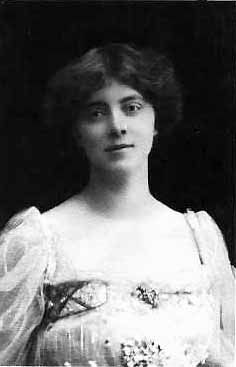
Viola Tree (17 July 1884 – 15 November 1938) was an English actress, singer, playwright and author. Daughter of the actor Herbert Beerbohm Tree, she made many of her early appearances with his company at His Majesty's Theatre. Later she appeared in opera, variety, straight theatre and film.

Tree made her London debut in 1904 as Viola in Twelfth Night, and for the next four years she appeared in her father's productions at His Majesty's Theatre, often in Shakespeare roles. She yearned to have an operatic career, and studied in Milan, but sang only two opera roles; she then resumed her career in plays and in variety. In 1919, she became manager of the Aldwych Theatre, while continuing her acting career.

In 1930–31 she played on Broadway and on tour in drama and appeared in the Ziegfeld Follies. In London in the 1930s, she played in comedies and tried her hand at directing. Her last West End role was in The Melody that Got Lost in 1938. She also appeared in four films between 1920 and 1938, wrote two plays and several books, including a novel and a book of etiquette.

Biography

[edit]

Tree was born in London, the eldest of three daughters of Herbert Beerbohm Tree and his wife, the actress Helen Maud Tree, née Holt.[1] Her aunt was author Constance Beerbohm and an uncle was Max Beerbohm. She was educated privately in London and in Europe. Her sisters were Felicity Tree and Iris Tree. She also had seven illegitimate half-siblings, the products of her father's many infidelities, among them the director Carol Reed and Peter Reed, whose son became the actor Oliver Reed.[2]

Stage and film career

[edit]

Originally, Tree planned a career as a singer, but entered the family profession in 1904. She made a very successful London debut in March 1904 as Viola in Twelfth Night.[3] For the next four years she appeared in her father's productions at His Majesty's Theatre. Her other Shakespeare roles included Hero in Much Ado about Nothing, the Queen in Richard II, Ariel in The Tempest, Anne Page in The Merry Wives of Windsor, Ophelia in Hamlet and Perdita in The Winter's Tale, in which Ellen Terry played Hermione.[1][4]

1907 drawing by John Singer Sargent

Tree continued to plan an operatic career, and after making a success in the title role of Iphigénie en Tauride and as Euridice in Orfeo ed Euridice at the Savoy Theatre in 1910,[5][6] she went to Milan to study. On her return, however, she did not pursue her operatic ambitions, except for playing Euridice again in 1912. Instead, she continued to build her stage career in plays and in variety.[1] In 1912, Tree married a drama critic, Alan Parsons, who died in 1933, aged 44. They had two sons, including David Tree, and a daughter Virginia Penelope Parsons (1917–2003), wife of David Tennant and then the 6th Marquess of Bath.[1][7]

In 1919, Tree took over the management of the Aldwych Theatre, scoring particular success with the works of Sacha Guitry.[1] Her last Shakespeare role was Helena in A Midsummer Night's Dream in 1923.[8] In 1930–31 she was in the US, appearing on Broadway and on tour in drama and also appeared in the Ziegfeld Follies.[1] Through the 1930s, Tree continually played in light comedies in the West End, varied with occasional unorthodox undertakings. In 1930 she directed an Italian play, La Piccola by Massimo Bontempelli, in the original Italian,[9] and in 1934 she directed Jean-Philippe Rameau's opera Castor et Pollux for the Oxford University Opera Club.[10] In 1931 she starred in the play with music For the Love of Mike, and starred in the works' film adaptation in 1932.[11]

Tree's last West End appearance was in The Melody that Got Lost, "a comedy with music", in January 1938.[12] She was an early and strong supporter of the foundation of a National Theatre.[13][14]

Tree also played in four films between 1920 and 1938,[8] the last of which, Pygmalion, by George Bernard Shaw (1938), completed three generations of the Tree family's connection with premieres of versions of the play: Tree's father created the role of Henry Higgins in the London stage première in 1914;[15] Viola Tree revived the play in 1920;[16] and she played a cameo role in the film, in which her son David Tree played Freddy.[17][18]

Writing

[edit]

In 1923 The Dancers, a play written by Tree in collaboration with the actor-manager Gerald du Maurier under the joint pen name of Hubert Parsons, opened at Wyndham's Theatre, starring Tallulah Bankhead in her London début.[19] It ran for 349 performances and subsequently transferred to the Broadhurst Theatre on Broadway, where it lasted for 133 performances.[20] She wrote a second play, The Swallow, about decent people coping with the rise of Italian Fascism, produced in London in 1925.[21] Tree published several books: her memoirs, Castles in the Air (1926); a book of etiquette advice, Can I Help You? (1937); a novel; a biography of her husband; and an anthology, Alan Parsons' Book (1937).[22]

Tree died of pleurisy in London, aged 54.[1]

Filmography

[edit]
Year Title Role Notes
1917 Masks and Faces Member of Rich's Company #4
1920 Unmarried
1932 For the Love of Mike Emma Miller
1933 The Private Life of Henry VIII Nurse
1935 Heart's Desire Lady Bennington
1938 Pygmalion Perfide Social Reporter (final film role)

See also

[edit]

Notes

[edit]

Sources

[edit]
  • Wearing, J. P. The London Stage 1920–1929: A Calendar of Productions, Performers, and Personnel. Rowman & Littlefield (2014).
[edit]
Revisions and contributorsEdit on WikipediaRead on Wikipedia
from Grokipedia
''Viola Tree'' is an English actress, singer, and playwright known for her distinguished career on the British stage during the early 20th century, her operatic performances, and her contributions to theatre management and playwriting. Born into a prominent theatrical family as the eldest daughter of actor-manager Sir Herbert Beerbohm Tree and actress Helen Maud Tree, she made her professional debut in 1904 as Viola in her father's production of Twelfth Night, subsequently appearing in numerous Shakespearean and modern roles at His Majesty's Theatre. She earned acclaim for her singing as Eurydice in Gluck's Orpheus at the Savoy Theatre in 1910, later managed the Aldwych Theatre in 1919, and performed in light comedies in London's West End through the 1930s. Tree extended her career internationally with a Broadway debut in Ivor Novello's The Truth Game in 1930 and appeared in several films, including Pygmalion (1938) and Heart's Desire (1935). She co-authored the play The Dancers and published reminiscences in Castles in the Air as well as a memoir about her husband, Alan Parsons, whom she married in 1912 and with whom she had three children before his death in 1933. An early supporter of establishing a National Theatre in Britain, she was remembered for her versatility across acting, singing, and writing, though she valued family life above professional accolades. She died in London on 15 November 1938 at the age of 54 following a prolonged illness from pleurisy.

Early Life

Birth and Family Background

Viola Tree was born on 17 July 1884 in London, England. She was the daughter of prominent actor-manager Herbert Beerbohm Tree and actress Maud Tree (née Helen Maud Holt). Tree was the eldest of three daughters. Her family background placed her at the center of the late-Victorian and Edwardian theatre world from birth, owing to her father's leading role as an actor-manager. One of her sisters, Iris Tree, also became an actress. This theatrical lineage provided an environment steeped in performance and stagecraft throughout her early years.

Education and Training

Viola Tree was educated privately by tutors during her childhood. Even when her academic studies were overseen by these private tutors, she spent most of her time at the Royal Academy of Dramatic Art (RADA) and the Royal College of Music, pursuing dramatic training at RADA and musical training at the Royal College of Music. At RADA, founded by her father Herbert Beerbohm Tree, instructors avoided favoritism by his order, yet she proved to be the leading scholar in her class. This reflected her early immersion in professional theatrical environments through his productions and management of His Majesty's Theatre. Her education emphasized practical preparation for the stage and music over traditional schooling, aligning with the family's theatrical legacy and providing a foundation for her subsequent career in acting and singing. Her time at RADA constituted her primary dramatic training prior to professional debut.

Theatrical Career

Stage Acting and Notable Performances

Viola Tree established herself as a stage actress with a successful London debut in March 1904, playing Viola in Shakespeare's Twelfth Night at His Majesty's Theatre. Over the next several years, she performed in a range of Shakespearean roles at the same theatre, including Hero in Much Ado About Nothing, Ariel in The Tempest (where her execution of a highly original dance led to a legend that it inspired J. M. Barrie's conception of Peter Pan), the Queen in Richard II, Anne Page in The Merry Wives of Windsor, Ophelia in Hamlet, and Perdita in The Winter's Tale opposite Dame Ellen Terry as Hermione. Her final Shakespearean performance was as Helena in A Midsummer Night's Dream in 1923. Beyond these classical roles, Tree appeared in other notable productions, such as Hester Worsley in Oscar Wilde's A Woman of No Importance and a leading part in Graham Robertson's Pinkie and the Fairies at His Majesty's Theatre, the latter featuring a cast that included Marie Löhr and Ellen Terry and enjoying a long London run. She also performed in Alfred Sutro's The Choice with Sir Gerald du Maurier and in The Dancing Man with Jack Buchanan. During World War I, she had a sustained period of activity at the Old Vic in London. In the 1920s and 1930s, Tree continued her stage work primarily in West End productions, often taking replacement roles in light comedies and other plays. These included Lady Joan Culver at the Globe Theatre (1928–1929) and Saville Theatre (1931–1932), Mrs. Miller at the St Martin's Theatre (1932–1933), Vera Lyndon at the Saville Theatre (1934–1935), Bessie Bunting at the Little Theatre and other venues (1934–1936), and Lady Otterton at the Adelphi Theatre (1937–1938). She also performed on Broadway and toured the United States during the 1930–1931 season.

Association with Herbert Beerbohm Tree's Company

Viola Tree began her professional acting career with her father's theatrical company at His Majesty's Theatre in London, where she made numerous early appearances. She achieved a successful London debut in March 1904, playing the role of Viola in William Shakespeare's Twelfth Night in one of Herbert Beerbohm Tree's productions at the venue. For the next four years, from 1904 to approximately 1908, she continued to perform regularly in her father's productions at His Majesty's Theatre. These appearances focused primarily on Shakespearean roles, reflecting Tree's emphasis on elaborate revivals of the playwright's works. Among her notable parts during this period were Ariel in The Tempest (1904), Hero in Much Ado About Nothing, the Queen in Richard II, Anne Page in The Merry Wives of Windsor, Ophelia in Hamlet, and Perdita in The Winter's Tale (opposite Ellen Terry as Hermione). Her involvement with her father's company offered her formative professional experience in prominent West End productions under the management of one of the most influential actor-managers of the Edwardian era.

Film Career

Roles in Sound Films

Viola Tree's appearances in sound films were limited to a handful of supporting roles in British productions during the 1930s, marking a brief extension of her performing career beyond the stage. She made her first credited sound film appearance as Emma Miller in the musical comedy For the Love of Mike (1932), directed by Monty Banks and co-starring Bobby Howes and Constance Shotter. In 1935, Tree portrayed Lady Bennington in Heart's Desire, a drama directed by Paul L. Stein. Her final film role came in the acclaimed adaptation Pygmalion (1938), directed by Anthony Asquith and Leslie Howard, where she played Perfide, a social reporter, in a cast that included Leslie Howard as Professor Higgins and Wendy Hiller as Eliza Doolittle. These minor screen parts reflected her occasional forays into cinema late in life, though they remained secondary to her established reputation in theater.

Singing Career

Opera and Concert Work

Viola Tree pursued operatic ambitions alongside her primary career in acting, studying for opera early in her professional life. She possessed an excellent soprano voice and briefly appeared to be on a path toward grand opera. After appearing in A Woman of No Importance in 1907, she left for Italy to study with the noted singing teacher Paolo Tosti, convinced that grand opera was attainable. She continued her operatic training there for some years. In 1910, she performed the role of Eurydice in Christoph Willibald Gluck's Orfeo ed Euridice at the Savoy Theatre in London, where her singing received favorable comment and praise. That same year, she also appeared in the title role of Gluck's Iphigénie en Tauride. However, she did not establish a sustained career in opera and gave up her musical studies after becoming engaged to Alan Parsons, returning to England and resuming her work in plays. With one or two exceptions, she thereafter devoted herself primarily to Shakespeare and modern comedies rather than further operatic or concert engagements.

Writing and Other Contributions

Playwriting and Publications

Viola Tree was also active as a playwright and author. She co-wrote the play The Dancers with Gerald du Maurier in 1923. The play was produced in London. Tree published several books during her lifetime. Her memoirs, Castles in the Air: The Story of My Singing Days, appeared in 1926 through the Hogarth Press. The book recounts her experiences and career as a singer. In 1937 she published Can I Help You?, a guide to etiquette, and Alan Parsons’ Book, an anthology she edited in memory of her husband.

Interest in Alexander Technique

Viola Tree was a pupil of F. M. Alexander during the early years of his teaching in London. In a letter dated 23 January 1907, written on His Majesty's Theatre stationery, she informed Alexander that she hoped to "begin my lessons again soon" to prepare her voice and condition for her role in Joan of Arc, indicating prior instruction and a planned resumption. She described his method as "the true one, because it entails no effort and is entirely natural," and found it "specially useful for singing" since "the breath can be taken imperceptibly," which she considered essential for long musical phrases. Tree further noted that the approach built up and strengthened general health, helped resist colds in the head and throat, and would benefit singers if studied independently of other work, expressing hope for its wider adoption in the theatrical world and beyond. Her father, Herbert Beerbohm Tree, endorsed these benefits in a letter of the same date, stating that he had received assurances from members of the profession who benefited from Alexander's treatment and that his daughter Viola had "greatly strengthened her voice by your method." During testimony in the 1909 Westminster County Court case Alexander v. Loraine, F. M. Alexander stated that Viola Tree had been coming to him for lessons "for a long time" and estimated she had taken 150 to 200 lessons. A signed photograph dedicated by Viola Tree to Alexander is held in private possession.

Personal Life

Marriage and Children

Viola Tree married Alan Parsons, the dramatic critic of The Daily Mail, in 1912. Parsons died in 1933 at the age of 44, leaving her a widow. Contemporary accounts noted that despite her talents in acting, singing, and writing, Tree's deepest ambition was for happiness in her family life, in which she succeeded entirely. The couple had three children: two sons and a daughter. Their sons were Denys Parsons, the eldest, and David Tree Parsons, who became an actor under the professional name David Tree. Their daughter was Virginia Penelope Parsons. No further details on family residences or daily life are documented in primary sources.

Death and Legacy

Final Years and Passing

In her final years, Viola Tree continued to perform on stage and screen despite emerging health challenges. She appeared in light comedies in London's West End throughout the 1930s and took film roles, including one in Pygmalion (1938). She suffered from a serious illness that lasted many months. Viola Tree died on 15 November 1938 in London of pleurisy at the age of 54. She was the widow of Alan Parsons and was survived by two sons and a daughter.

Posthumous Recognition

Viola Tree's posthumous recognition has been modest and primarily connected to her familial ties and specific niche contributions rather than widespread acclaim or dedicated memorials. As the eldest daughter of the influential actor-manager Sir Herbert Beerbohm Tree, she is frequently referenced in biographical accounts of the Beerbohm Tree family and their impact on British theatre, including her father's establishment of the Academy of Dramatic Art at His Majesty's Theatre. Her own career receives attention in scholarly resources focused on women's roles in early twentieth-century arts and literature, where she is documented as an actress, singer, theatre manager, and author whose publications include her 1926 autobiography Castles in the Air, the 1937 etiquette guide Can I Help You?, and the 1937 biography Alan Parsons’ Book. Her influence within her family is also noted, particularly in encouraging her sister Iris Tree's writing. Viola Tree continues to be acknowledged in historical accounts of the Alexander Technique as one of its early pupils and advocates; her 1907 letters praising F. M. Alexander's method for voice and health benefits, along with her father's supporting endorsement, are preserved and cited in later publications on the technique's origins and theatrical applications. Portraits of Tree are held by the National Portrait Gallery, including nineteen images that maintain her visual presence in public collections. Overall, modern coverage of her individual achievements remains limited compared to her father's legacy, with recognition largely confined to family histories, women's writing databases, and specialist studies of early Alexander Technique adopters.
Add your contribution
Related Hubs
User Avatar
No comments yet.