
Recent from talks
Vishishtadvaita
Knowledge base stats:
Talk channels stats:
Members stats:
Vishishtadvaita
Vishishtadvaita (IAST Viśiṣṭādvaita; Sanskrit: विशिष्टाद्वैत) is a school of Hindu philosophy belonging to the Vedanta tradition. Vishishta Advaita means "non-duality with distinctions" and recognizes Brahman (ब्रह्म) as the promordial quality while also acknowledging its existential multiplicity. This philosophy can be characterized as a form of qualified monism, or a qualified non-dualism. It upholds the belief that all diversity ultimately stems from a fundamental underlying unity.
According to Vishishtadvaita vedanta, Vishnu (Narayana) is Brahman (Param Brahman), Supreme Lord (Ishvara), Supreme Person (Paramatman) and has noble attributes such as omniscience, omnipotence, omnipresence, and omnibenevolence. The universe depends upon God (Ishvara) for its being as well as for its qualities.
Ramanuja, the 11–12th century philosopher and the main proponent of Vishishtadvaita philosophy, contends that the Prasthanatrayi ("The three sources"), namely the Upanishads, the Bhagavad Gita, and the Brahma Sutras are to be interpreted in a way that shows this unity in diversity, for any other way would violate their consistency. Vedanta Desika, another major scholar who significantly helped expand the philosophy of Vishishtadvaita, defines Vishishtadvaita using the statement, Aseṣa Chit-Achit Prakāram Brahmaikameva Tatvam : Brahman, as qualified by the sentient and insentient modes (or attributes), is the Ultimate reality.
The earliest Vishishtadvaita works are no longer available. However, the earliest philosophers who are thought to have developed the system are named in Ramanuja's Vedarthasamgraha: Bodhayana, Dramida, Tanka, Guhadeva, Kapardi, and Bharuci.
Bodhayana is considered to have written an extensive vritti (commentary) on the Purva and Uttara Mimamsas. Tanka is attributed with having written commentaries on Chandogya Upanishad and Brahma Sutras. Nathamuni of the ninth century AD, the foremost Acharya of the Vaishnavas, collected the Tamil prabandhas, classified them, made the redaction, set the hymns to music, and spread them everywhere. He is said to have received the divine hymns straight from Nammalvar, the foremost of the twelve Alvars, by yogic insight in the temple at Alwar Thirunagari, which is located near Tirunelveli in South India. Yamunacharya renounced kingship and spent his last days in the service of the deity at Srirangam and in laying the fundamentals of the Vishishtadvaita philosophy by writing four basic works on the subject.
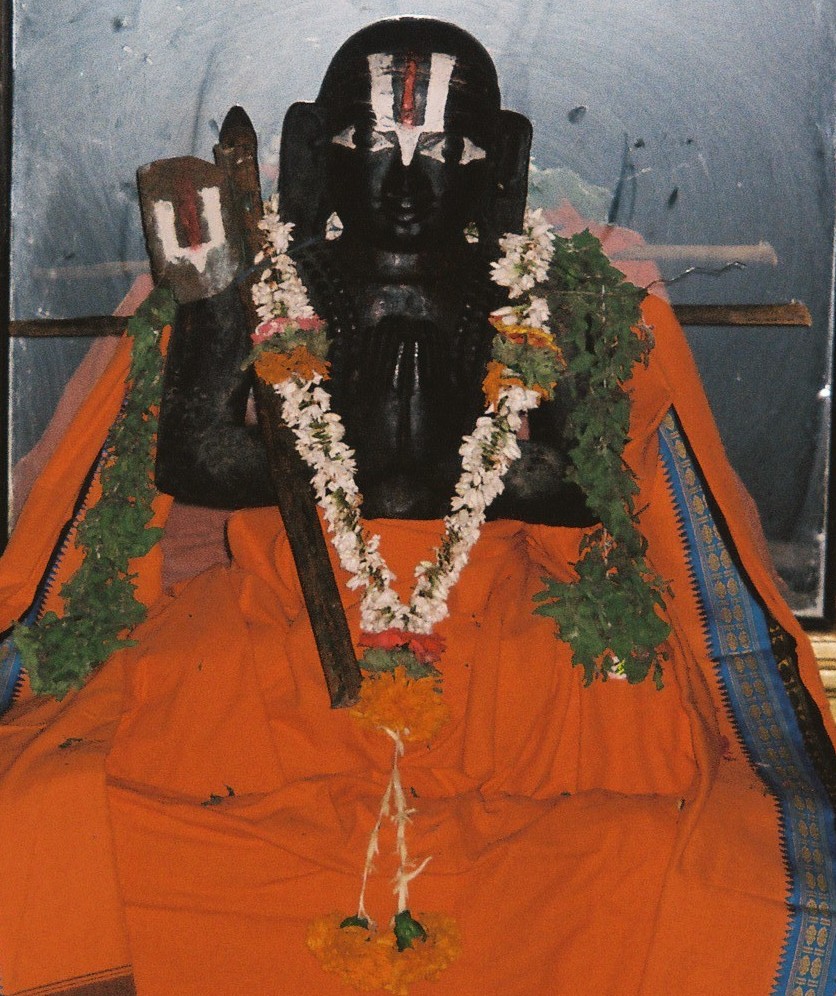
Ramanuja is the main proponent of Vishishtadvaita philosophy. Ramanuja continues along the line of thought of his predecessors while expounding the knowledge expressed in the Upanishads, the Brahma Sutras, and the Bhagavad Gita. Vedanta Desika and Pillai Lokacharya, disciples in the tradition of Ramanuja, had minor disagreements not on the philosophy, but on some aspects of the theology, giving rise to the Vadakalai and Tenkalai schools of thought.
Viśiṣṭa means most exclusive (not equal/different from the rest).
There are three key principles of Vishishtadvaita:
Hub AI
Vishishtadvaita AI simulator
(@Vishishtadvaita_simulator)
Vishishtadvaita
Vishishtadvaita (IAST Viśiṣṭādvaita; Sanskrit: विशिष्टाद्वैत) is a school of Hindu philosophy belonging to the Vedanta tradition. Vishishta Advaita means "non-duality with distinctions" and recognizes Brahman (ब्रह्म) as the promordial quality while also acknowledging its existential multiplicity. This philosophy can be characterized as a form of qualified monism, or a qualified non-dualism. It upholds the belief that all diversity ultimately stems from a fundamental underlying unity.
According to Vishishtadvaita vedanta, Vishnu (Narayana) is Brahman (Param Brahman), Supreme Lord (Ishvara), Supreme Person (Paramatman) and has noble attributes such as omniscience, omnipotence, omnipresence, and omnibenevolence. The universe depends upon God (Ishvara) for its being as well as for its qualities.
Ramanuja, the 11–12th century philosopher and the main proponent of Vishishtadvaita philosophy, contends that the Prasthanatrayi ("The three sources"), namely the Upanishads, the Bhagavad Gita, and the Brahma Sutras are to be interpreted in a way that shows this unity in diversity, for any other way would violate their consistency. Vedanta Desika, another major scholar who significantly helped expand the philosophy of Vishishtadvaita, defines Vishishtadvaita using the statement, Aseṣa Chit-Achit Prakāram Brahmaikameva Tatvam : Brahman, as qualified by the sentient and insentient modes (or attributes), is the Ultimate reality.
The earliest Vishishtadvaita works are no longer available. However, the earliest philosophers who are thought to have developed the system are named in Ramanuja's Vedarthasamgraha: Bodhayana, Dramida, Tanka, Guhadeva, Kapardi, and Bharuci.
Bodhayana is considered to have written an extensive vritti (commentary) on the Purva and Uttara Mimamsas. Tanka is attributed with having written commentaries on Chandogya Upanishad and Brahma Sutras. Nathamuni of the ninth century AD, the foremost Acharya of the Vaishnavas, collected the Tamil prabandhas, classified them, made the redaction, set the hymns to music, and spread them everywhere. He is said to have received the divine hymns straight from Nammalvar, the foremost of the twelve Alvars, by yogic insight in the temple at Alwar Thirunagari, which is located near Tirunelveli in South India. Yamunacharya renounced kingship and spent his last days in the service of the deity at Srirangam and in laying the fundamentals of the Vishishtadvaita philosophy by writing four basic works on the subject.
Ramanuja is the main proponent of Vishishtadvaita philosophy. Ramanuja continues along the line of thought of his predecessors while expounding the knowledge expressed in the Upanishads, the Brahma Sutras, and the Bhagavad Gita. Vedanta Desika and Pillai Lokacharya, disciples in the tradition of Ramanuja, had minor disagreements not on the philosophy, but on some aspects of the theology, giving rise to the Vadakalai and Tenkalai schools of thought.
Viśiṣṭa means most exclusive (not equal/different from the rest).
There are three key principles of Vishishtadvaita:
Recent media