Recent from talks
Nothing was collected or created yet.
Vitis vinifera
View on Wikipedia
| Vitis vinifera | |
|---|---|
| Scientific classification | |
| Kingdom: | Plantae |
| Clade: | Tracheophytes |
| Clade: | Angiosperms |
| Clade: | Eudicots |
| Clade: | Rosids |
| Order: | Vitales |
| Family: | Vitaceae |
| Genus: | Vitis |
| Species: | V. vinifera
|
| Binomial name | |
| Vitis vinifera | |
Vitis vinifera, the common grape vine, is a species of flowering plant, native to the Mediterranean region, Central Europe, and southwestern Asia, from Morocco and Portugal north to southern Germany and east to northern Iran.[2] As of 2012[update], there were between 5,000 and 10,000 varieties of Vitis vinifera grapes though only a few are of commercial significance for wine and table grape production.[3]
The wild grape is often classified as Vitis vinifera sylvestris (in some classifications considered Vitis sylvestris), with Vitis vinifera vinifera restricted to cultivated forms. Domesticated vines have hermaphrodite flowers, but sylvestris is dioecious (male and female flowers on separate plants) and pollination is required for fruit to develop.
Grapes can be eaten fresh or dried to produce raisins, sultanas, and currants. Grape leaves are used in the cuisine of many cultures. The fresh grapes can also be processed into juice that is fermented to make wine and vinegar. Cultivars of Vitis vinifera form the basis of the majority of wines produced around the world. All of the familiar wine varieties belong to Vitis vinifera, which is cultivated on every continent except for Antarctica, and in all the major wine regions of the world.
History
[edit]Prehistory
[edit]This section needs additional citations for verification. (June 2014) |
Changes in pip (seed) shape (narrower in domesticated forms) and distribution suggest that domestication occurred about 4100–3000 BC,[4] in southwest Asia, South Caucasus (Armenia[5][6] and Georgia), or the Western Black Sea shore region (Bulgaria, Romania). The earliest evidence of domesticated grapes has been found at Gadachrili Gora, near the village of Imiri, Marneuli Municipality, in southeastern Georgia; carbon-dating points to the date of about 6000 BC. The oldest winery in the world (dating to 4100BCE) was found in the Areni-1 cave, which lies in Areni, Armenia.[7][6] Grape pips dating back to the 5th–4th millennium BC were also found in Shulaveri; others dating back to the 4th millennium BC were also found in Khizanaant Gora. Wild grapes were harvested by neolithic foragers and early farmers. For thousands of years, the fruit has been harvested for both medicinal and nutritional value; its history is intimately entwined with the history of wine.[8]
Antiquity
[edit]Cultivation of the domesticated grape spread to other parts of the Old World in pre-historic or early historic times.[9] The first written accounts of grapes and wine can be found in the Epic of Gilgamesh, an ancient Sumerian text from the 3rd millennium BC. There are also numerous hieroglyphic references from ancient Egypt, according to which wine was reserved exclusively for priests, state functionaries and the pharaoh.[10]
The grapevine is referenced 55 times in the Hebrew Bible (Old Testament), along with grapes and wine, which are also frequently mentioned (55 and 19, respectively).[11] The Bible lists the grapevine as one of the Seven Species of the Land of Israel,[12][11] and frequently uses it as a symbol of the Israelites as the chosen people.[13] A detailed description of vineyard maintenance is provided in the Book of Isaiah (5:1–7).[14]

Hesiod in his Works and Days gives detailed descriptions of grape harvests and wine making techniques, and there are also many references in Homer. Greek colonists then introduced these practices in their colonies, especially in southern Italy (Magna Graecia), which was even known as Enotria due to its propitious climate.
The Etruscans improved wine making techniques and developed an export trade even beyond the Mediterranean basin.[15] The ancient Romans further developed the techniques learnt from the Etruscans, as shown by numerous works of literature containing information that remains valid: De Agri Cultura (around 160 BC) by Cato the Elder, De re rustica by Marcus Terentius Varro, the Georgics by Virgil and De re rustica by Columella.[citation needed]
During the 3rd and 4th centuries AD, the long crisis of the Roman Empire generated instability in the countryside which led to a reduction of viticulture in general, which was mainly sustained only close to towns and cities and along coastlines.[citation needed]
Medieval era
[edit]Between the 5th and 10th centuries, viticulture was sustained almost exclusively by the different religious orders in monasteries. The Benedictines and others extended the grape growing limit northwards and also planted new vineyards at higher altitudes than was customary before. Apart from 'ecclesiastical' viticulture, there also developed, especially in France, a 'noble' viticulture, practiced by the aristocracy as a symbol of prestige.[16][17] Grape growing was a significant economic activity in the Middle east up to the 7th century, when the expansion of Islam caused it to decline.[18]

Early modern period
[edit]Between the Low Middle Ages and the Renaissance, viticulture began to flourish again. Demographic pressure, population concentration in towns and cities, and the increased spending power of artisans and merchants gave rise to increased investment in viticulture, which became economically feasible once more.[citation needed] Much was written during the Renaissance on grape growing and wine production, favouring a more scientific approach. This literature can be considered the origin of modern ampelography.[citation needed]
Grapes followed European colonies around the world, coming to North America around the 17th century, and to Africa, South America and Australia. In North America it formed hybrids with native species from the genus Vitis; some of these were intentional hybrids created to combat phylloxera, an insect pest which affected the European grapevine to a much greater extent than North American ones and in fact managed to devastate European wine production in a matter of years. Later, North American rootstocks became widely used to graft V. vinifera cultivars so as to withstand the presence of phylloxera.[19]
Contemporary period
[edit]| NCBI ID | 29760 |
|---|---|
| Ploidy | diploid |
| Genome size | about 500 Mb |
| Number of chromosomes | 19 pairs |
| Year of completion | 2008 |
| Sequenced organelle | plastid |
In the second half of the 20th century there was a shift in attitude in viticulture from traditional techniques to the scientific method based on fields such as microbiology, chemistry and ampelography. This change came about also due to changes in economic and cultural aspects and in the way of life and in the consumption habits of wide sectors of the population starting to demand quality products.[citation needed]
In 2007, Vitis vinifera was the fourth angiosperm species whose genome was completely sequenced. These data contributed significantly to understanding the evolution of plants and also how the aromatic characteristics of wine are determined in part by the plant's genes.[20] This work was a collaboration between Italian researchers (Consorzio Interuniversitario Nazionale per la Biologia Molecolare delle Piante, Istituto di Genomica Applicata) and French researchers (Genoscope and Institut National de la Recherche Agronomique).
Also in 2007, scientists from Australia's Commonwealth Scientific and Industrial Research Organisation (CSIRO), working in the Cooperative Research Centre for Viticulture, reported that their "research suggests that extremely rare and independent mutations in two genes [VvMYBA1 and VvMYBA2 of red grapes] produced a single white grapevine that was the parent of almost all of the world's white grape varieties. If only one gene had been mutated, most grapes would still be red and we would not have the more than 3000 white grape cultivars available today."[21][22]
Description
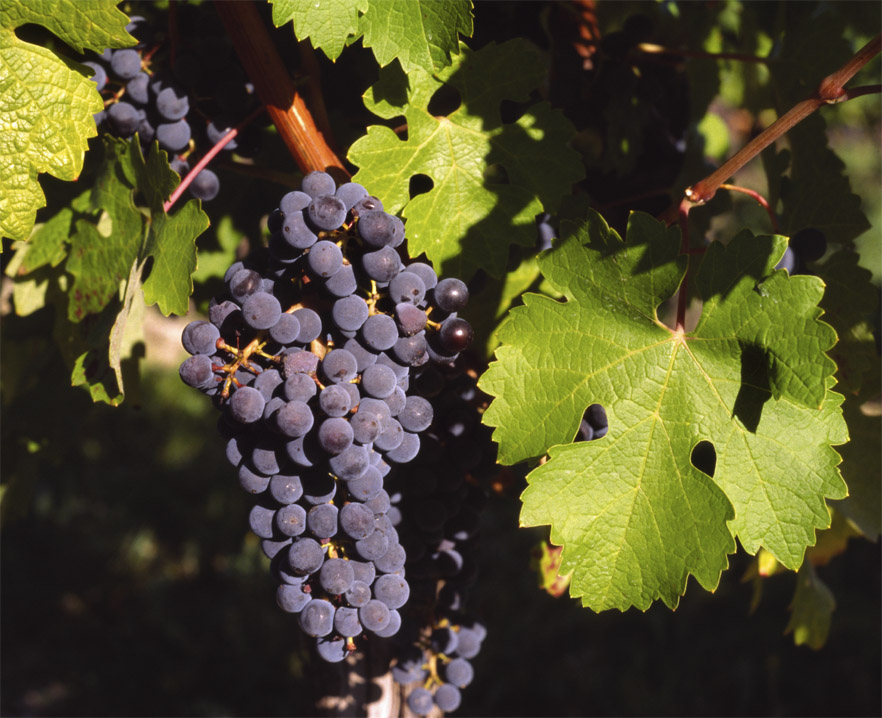
[edit]It is a liana growing 12–15 m (40–50 ft) tall at a fast rate.[23][24] Having a flaky bark, its leaves are alternate, palmately lobed, deciduous, with three to five pointed lobes, coarsely prickly-toothed leaf margins and a heart-shaped foot, 5–20 cm (2–8 in) long and broad. They are glossy dark green on top, light green below, usually hairless.
The vine attaches to supports by tendrils. The stems, called twigs, grow through their tip, the cauline apex. A branch consists of several internodes separated by knots, which grow the leaves, flowers, tendrils and between-core and where to train future buds. During their hardening, the twigs become woody branches that can reach a great length. Its roots usually sink to a depth of two to five meters and sometimes up to 12–15 meters or even more.
The species typically occurs in humid forests and streamsides.
Inflorescences
[edit]Their flowers, small and greenish to white, are grouped in inflorescences and their fruits, of different shapes depending on the subspecies, are berries grouped in clusters. The calyx is single-leaf with five short, deciduous teeth. The corolla consists of five petals, fused at the top and base, and then falls off in its entirety. Opposite the petals there are five stamens interspersed with glands. The upper ovary bears a very short style with a button-shaped stigma. The wild vine is a dioecious plant, the male and female flowers arise on different plants, but the cultivated forms are hermaphroditic, allowing self-pollination.
The fruit is a berry, known as a grape that is ovoid or globular, dark blue or greenish, usually two-locular with five seeds; in the wild species it is 6 mm (1⁄4 in) diameter and ripens dark purple to blackish with a pale wax bloom; in cultivated plants it is usually much larger, up to 3 cm (1+1⁄4 in) long, and can be green, red, or purple (black).
Distribution
[edit]V. vinifera accounts for the majority of world wine production; all of the most familiar grape varieties used for wine production belong to V. vinifera.[25]
In Europe, Vitis vinifera is concentrated in the central and southern regions; in Asia, in the western regions such as Anatolia, the Caucasus, the Middle East, and in China; in Africa, along the northern Mediterranean coast and in South Africa; in North America, in California and also other areas like Michigan, New Mexico, New York, Oregon, Virginia, Washington state, British Columbia, Ontario and Québec; in South America in Chile, Argentina, Uruguay, Peru and Brazil; and in Oceania in Australia and New Zealand.
Cultivation
[edit]
Use of grapes is known to date back to Neolithic times, following the discovery in 1996 of 7,000-year-old wine storage jars in present-day northern Iran.[26] Further evidence shows the Mesopotamians and Ancient Egyptians had vine plantations and winemaking skills. Greek philosophers praised the healing powers of grapes both whole and in the form of wine. Vitis vinifera cultivation and winemaking in China began during the Han dynasty in the 2nd century[27] with the importation of the species from Ta-Yuan (Syr Darya river valley, Uzbekistan). However, wild vine "mountain grapes" like Vitis thunbergii were being used for wine making before that time.[28] In traditional medicine of India Vitis vinifera is used in prescriptions for cough, respiratory tract catarrh, subacute cases of enlarged liver and spleen, as well as in alcohol-based tonics (Aasavs).[29]
In the Mediterranean Basin, leaves and young stems are traditionally used to feed sheep and goats after grapevine pruning.[30]
Using the sap of grapevines, European folk healers sought to cure skin and eye diseases. Other historical uses include the leaves being used to stop bleeding, pain and inflammation of hemorrhoids. Unripe grapes were used for treating sore throats, and raisins were given as treatments for consumption (tuberculosis), constipation and thirst. Ripe grapes were used for the treatment of cancer, cholera, smallpox, nausea, skin and eye infections as well as kidney and liver diseases.
Seedless grape varieties were developed to appeal to consumers, but researchers are now discovering that many of the healthful properties of grapes may actually come from the seeds themselves, thanks to their enriched phytochemical content.[31][32]
Grapevine leaves are filled with minced meat (such as lamb, pork or beef), rice and onions in the making of Balkan traditional dolma.
A popular cultivar in Australia, Vitis 'Ornamental Grape', derived from Vitis vinifera x Vitis rupestris, is used in gardens for its impressive foliage that turn brilliant red, scarlet, purple and/or orange in autumn. Originally bred in France, it thrives in a range of climates from hot and dry, to cool moist and subtropical, with different soil types benefitting the plant.[33]
Climate change
[edit]Grapevines are very responsive to their surrounding environment with a seasonal variation in yield of 32.5%.[34] Climate is one of the key controlling factors in grape and wine production,[35] affecting the suitability of certain grape varieties to a particular region as well as the type and quality of the wine produced.[36][37] Wine composition is largely dependent on the mesoclimate and the microclimate and this means that for high quality wines to be produced, a climate-soil-variety equilibrium has to be maintained. The interaction between climate-soil-variety will in some cases come under threat from the effects of climate change. Identification of genes underlying phenological variation in grape may help to maintain consistent yield of particular varieties in future climatic conditions.[38]
Of all environmental factors, temperature seems to have the most profound effect on viticulture as the temperature during the winter dormancy affects the budding for the following growing season.[39] Prolonged high temperature can have a negative impact on the quality of the grapes as well as the wine as it affects the development of grape components that give colour, aroma, accumulation of sugar, the loss of acids through respiration as well as the presence of other flavour compounds that give grapes their distinctive traits. Sustained intermediate temperatures and minimal day-to-day variability during the growth and ripening periods are favourable. Grapevine annual growth cycles begin in spring with bud break initiated by consistent day time temperatures of 10 degrees Celsius.[40] The unpredictable nature of climate change may also bring occurrences of frosts which may occur outside of the usual winter periods. Frosts cause lower yields and effects grape quality due to reduction of bud fruitfulness and therefore grapevine production benefits from frost free periods.
Organic acids are essential in wine quality. The phenolic compounds such as anthocyanins and tannins help give the wine its colour, bitterness, astringency and anti-oxidant capacity.[41] Research has shown that grapevines exposed to temperature consistently around 30 degrees Celsius had significantly lower concentrations of anthocyanins compared to grapevines exposed to temperatures consistently around 20 degrees Celsius.[42] Temperatures around or exceeding 35 degrees Celsius are found to stall anthocyanin production as well as degrade the anthocyanins that are produced.[43] Furthermore, anthocyanins were found to be positively correlated to temperatures between 16 – 22 degrees Celsius from veraison (change of colour of the berries) to harvest.[44] Tannins give wine astringency and a "drying in the mouth" taste and also bind onto anthocyanin to give more stable molecular molecules which are important in giving long term colour in aged red wines.[45] As the presence of phenolic compounds in wine are affected heavily by temperature, an increase in average temperatures will affect their presence in wine regions and will therefore affect grape quality.
Altered precipitation patterns are also anticipated (both annually and seasonally) with rainfall occurrences varying in amount and frequency. Increases in the amount of rainfall have will likely cause an increase in soil erosion; while occasional lack of rainfall, in times when it usually occurs, may result in drought conditions causing stress on grapevines.[46] Rainfall is critical at the beginning of the growing season for the budburst and inflorescence development while consistent dry periods are important for the flowering and ripening periods.[47]
Increased CO2 levels will likely have an effect on the photosynthetic activity in grapevines as photosynthesis is stimulated by a rise in CO2 and has been known to also lead to an increase leaf area and vegetative dry weight.[48] Raised atmospheric CO2 is also believed to result in partial stomatal closure which indirectly leads to increased leaf temperatures. A rise in leaf temperatures may alter ribulose 1,5-bisphosphate carboxylase/oxygenase (RuBisCo) relationship with carbon dioxide and oxygen which will also affect the plants' photosynthesis capabilities.[46] Raised atmospheric carbon dioxide is also known to decrease the stomatal density of some grapevine varieties.[49]
Cultivation variations
[edit]The gradually increasing temperatures will lead to a shift in suitable growing regions.[50] It is estimated that the northern boundary of European viticulture will shift north 10 to 30 kilometres (6.2 to 18.6 mi) per decade up to 2020 with a doubling of this rate predicted between 2020 and 2050.[51][needs update] This has positive and negative effects, as it opens doors to new cultivars being grown in certain regions but a loss of suitability of other cultivars and may also risk production quality and quantity in general.[52][50]
Adapting wine production
[edit]Systems have been developed to manipulate the temperatures of vines. These include a chamber free system where air can be heated or cooled and then blown across grape bunches to get a 10 °C (18 °F) differential.[53] Mini chambers combined with shade cloth and reflective foils have also been used to manipulate the temperature and irradiance.[54] Using polyethylene sleeves to cover cordons and canes were also found to increase maximum temperature by 5–8 °C (9.0–14.4 °F) and decrease minimum temperature by 1–2 °C (1.8–3.6 °F).[55]
Genome
[edit]There is great interest in the genetic diversity of the Vitis vinifera as it is the world's most important perennial horticultural crop, with an estimated value of approximately US$60 billion with more than 6000 cultivated forms. The species has a relatively small genomes of about 500 Mb, similar to species such as poplar (465 Mbp), Medicago (500 Mbp), and rice (430 Mbp). However, sequencing and assembly of their genomes is particularly challenging due to their high heterozygosity, that is, differences between sister chromosomes (Vitis sp. has 19 chromosome pairs).[56]
There is considerable variation among grape genomes. For instance, the genome of the Vitis vinifera cultivar Mgaloblishvili is much larger than that of V. vinifera ssp. vinifera, with a genome size of 986 Mbp, encoding 58,912 predicted protein-coding genes.[57] For comparison, the human genome only encodes about 20,000 protein-coding genes.
Chemistry
[edit]
Phenolics
[edit]V. vinifera contains many phenolic compounds.[58] Anthocyanins can be found in the skin of the berries, hydroxycinnamic acids in the pulp and condensed tannins of the proanthocyanidins type in the seeds. Stilbenoids can be found in the skin and in wood.
Stilbenoids
[edit]Trans-resveratrol is a phytoalexin produced against the growth of fungal pathogens such as Botrytis cinerea[59] and delta-viniferin is another grapevine phytoalexin produced following fungal infection by Plasmopara viticola.[60]
Anthocyanins
[edit]Vitis vinifera red cultivars are rich in anthocyanins that impart their colour to the berries (generally in the skin). The 5 most basic anthocyanins found in grape are:
- Cyanidin-3-O-glucoside
- Delphinidin-3-O-glucoside
- Malvidin-3-O-glucoside
- Petunidin-3-O-glucoside
- Peonidin-3-O-glucoside
Cultivars like Graciano[61][62] may also contain :
- acetylated anthocyanins
- Cyanidin-3-(6-acetyl)-glucoside
- Delphinidin-3-(6-acetyl)-glucoside
- Malvidin-3-(6-acetyl)-glucoside
- Petunidin-3-(6-acetyl)-glucoside
- Peonidin-3-(6-acetyl)-glucoside
- coumaroylated anthocyanins
- Cyanidin-3-(6-p-coumaroyl)-glucoside
- Delphinidin-3-(6-p-coumaroyl)-glucoside
- Malvidin-3-(6-p-coumaroyl)-glucoside cis
- Malvidin-3-(6-p-coumaroyl)-glucoside trans
- Petunidin-3-(6-p-coumaroyl)-glucoside
- Peonidin-3-(6-p-coumaroyl)-glucoside
- caffeoylated anthocyanins
Other chemicals
[edit]Monoterpenes are present in grape, above all acyclic linalool, geraniol, nerol, citronellol, homotrienol and monocyclic α-terpineol, mostly occurring as glycosides. Carotenoids accumulate in ripening grape berries. Oxidation of carotenoids produces volatile fragments, C13-norisoprenoids. These are strongly odoriferous compounds, such as β-ionone (aroma of viola), damascenone (aroma of exotic fruits), β-damascone (aroma of rose) and β-ionol (aroma of flowers and fruits). Melatonin, an alkaloid, has been identified in grape.[63] In addition, seeds are rich in unsaturated fatty acids, which helps lowering levels of total cholesterol and LDL cholesterol in the blood.[58]
See also
[edit]References
[edit]- ^ Participants of the FFI/IUCN SSC Central Asian regional tree Red Listing workshop, Bishkek, Kyrgyzstan (11-13 July 2006) (2007). "Vitis vinifera". IUCN Red List of Threatened Species. 2007 e.T63537A12687723. Retrieved 8 February 2024.
{{cite journal}}: CS1 maint: multiple names: authors list (link) CS1 maint: numeric names: authors list (link) - ^ "Vitis vinifera". Euro+Med Plantbase Project. Archived from the original on 28 September 2007.
- ^ Wine and Spirits: Understanding Wine Quality (Second Revised ed.). London: Wine & Spirits Education Trust. 2012. pp. 2–5. ISBN 978-1-905819-15-7.
- ^ Hotz, Robert Lee (11 January 2011). "Perhaps a Red, 4,100 B.C." Wall Street Journal. Retrieved 21 August 2016.
- ^ "6,000-year-old winery found in Armenian cave (Wired UK)". Archived from the original on 8 December 2015. Retrieved 1 November 2015.
- ^ a b James Owen (12 January 2011). "Earliest Known Winery Found in Armenian Cave". National Geographic News. Archived from the original on 12 January 2011. Retrieved 2 April 2019.
- ^ "Areni-1 Cave, Armenia: A Chalcolithic–Early Bronze Age settlement and ritual site in the southern Caucasus". Research Gate. 1 March 2012. Retrieved 10 April 2017.
- ^ Thurmond, David L. (8 December 2016). From Vines to Wines in Classical Rome: A Handbook of Viticulture and Oenology in Rome and the Roman West. BRILL, 2016. ISBN 978-90-04-33459-5.
- ^ Batiuk, Stephen D. (2013). "The fruits of migration: Understanding the 'longue dureé' and the socio-economic relations of the Early Transcaucasian Culture". Journal of Anthropological Archaeology. 32 (4): 449–477. doi:10.1016/j.jaa.2013.08.002.
- ^ Charters, Steve (2006). Wine and Society. Routledge. ISBN 978-1-136-34886-0.
- ^ a b Netzer, Yishai; Netzer, Nissan (2021). "Hebrew Vine and Wine Terms from Ancient Times to the Present". Judea and Samaria Research Studies. 30 (1): 127–145. doi:10.26351/JSRS/30-1/5. ISSN 2617-8737. S2CID 241465067.
- ^ Deuteronomy 8:8
- ^ Isaiah 5:7, Hosea 9:10
- ^ Walsh, Carey Ellen (1 January 2000), "The Cultivation of Grape Vines", The Fruit of the Vine, Brill, pp. 87–126, doi:10.1163/9789004369825_005, ISBN 978-90-04-36982-5, retrieved 22 July 2024
- ^ Haynes, Sybille (2005). Etruscan Civilization: A Cultural History. Getty Publications. ISBN 978-0-89236-600-2.
- ^ Steane, John (2014). The Archaeology of Medieval England and Wales. Vol. 47. Routledge. ISBN 978-1-317-59994-4.
- ^ Vaughan, John; Geissler, Catherine (2009). The New Oxford Book of Food Plants (2nd ed.). OUP Oxford. ISBN 978-0-19-160949-7.
- ^ Francoise, Anne; Blondon, Adam; Martinez-Zapater, Jose Miguel; Kole, Chittaranjan, eds. (2016). Genetics, Genomics, and Breeding of Grapes (illustrated ed.). CRC Press. ISBN 978-1-4398-7199-7.
- ^ "On roots, and time travel | Stanford Wine Society". Archived from the original on 11 October 2020. Retrieved 18 July 2017.
- ^ The French–Italian Public Consortium for Grapevine Genome Characterization (27 September 2007). "The grapevine genome sequence suggests ancestral hexaploidization in major angiosperm phyla". Nature. 449 (7161): 463–467. Bibcode:2007Natur.449..463J. doi:10.1038/nature06148. hdl:11577/2430527. PMID 17721507.
- ^ "Finding the white wine difference" (Press release). Commonwealth Scientific and Industrial Research Organisation. 2 March 2007. Retrieved 17 April 2011.
- ^ Walker, A.R.; Lee, E.; et al. (March 2007). "White grapes arose through the mutation of two similar and adjacent regulatory genes". The Plant Journal. 49 (5): 772–785. doi:10.1111/j.1365-313X.2006.02997.x. PMID 17316172.
- ^ Vitis vinifera grape vine by RHS.
- ^ vitis vinifera – L. Plants For A Future.
- ^ Robinson, Jancis. Concise Wine Companion. 2001, Oxford University Press.
- ^ Berkowitz, Mark, The Archaeological Institute of America (September–October 1996). "World's Earliest Wine".
{{cite web}}: CS1 maint: multiple names: authors list (link) - ^ Plocher, T; Rouse, G; Hart, M. (2003). Discovering Grapes and Wine in the Far North of China Archived 14 July 2011 at the Wayback Machine
- ^ Eijkhoff, P. (2000). Wine in China; its history and contemporary developments.
- ^ Wang, L; Waltenberger, B; Pferschy-Wenzig, EM; Blunder, M; Liu, X; Malainer, C; Blazevic, T; Schwaiger, S; et al. (2014). "Natural product agonists of peroxisome proliferator-activated receptor gamma (PPARγ): a review". Biochem Pharmacol. 92 (1): 73–89. doi:10.1016/j.bcp.2014.07.018. PMC 4212005. PMID 25083916.
- ^ Heuzé V., Thiollet H., Tran G., 2017. Grape leaves and vine shoots. Feedipedia, a programme by INRA, CIRAD, AFZ and FAO. https://www.feedipedia.org/node/512.
- ^ Shi J, Yu J, Pohorly JE, Kakuda Y (2003). "Polyphenolics in grape seeds-biochemistry and functionality". J Med Food. 6 (4): 291–9. doi:10.1089/109662003772519831. PMID 14977436.
- ^ Parry J, Su L, Moore J, et al. (May 2006). "Chemical compositions, antioxidant capacities, and antiproliferative activities of selected fruit seed flours". J. Agric. Food Chem. 54 (11): 3773–8. Bibcode:2006JAFC...54.3773P. doi:10.1021/jf060325k. PMID 16719495.
- ^ Ornamental Grape Yates, a division of DuluxGroup (Australia) Pty Ltd.
- ^ Chloupek O, Hrstkova P, Schweigert P (February 2004). "Yield and its stability, crop diversity, adaptability and response to climate change, weather and fertilisation over 75 years in the Czech Republic in comparison to some European countries". Field Crops Research. 85 (2–3): 167–190. Bibcode:2004FCrRe..85..167C. doi:10.1016/S0378-4290(03)00162-X.
- ^ Fraga H, Malheiro AC, Moutinho-Pereira J, Santos JA (February 2014). "Climate factors driving wine production in the Portuguese Minho region". Agricultural and Forest Meteorology. 15 (185): 26–36. Bibcode:2014AgFM..185...26F. doi:10.1016/j.agrformet.2013.11.003.
- ^ Gladstones JS (2016). Viticulture and Environment: a study of the effects of environment on grapegrowing and wine qualities, with emphasis on present and future areas for growing winegrape in Australia (Second ed.). Tanunda, S. Aust.: Trivinum Press. ISBN 978-0-9945016-1-5.
- ^ Fraga H, Santos JA, Malheiro AC, Oliveira AA, Moutinho-Pereira J, Jones GV (January 2016). "Climatic suitability of Portuguese grapevine varieties and climate change adaptation". International Journal of Climatology. 36 (1): 1–2. Bibcode:2016IJCli..36....1F. doi:10.1002/joc.4325. S2CID 140186551.
- ^ Grzeskowiak L, Costantini L, Lorenzi S, Grando MS (November 2013). "Candidate loci for phenology and fruitfulness contributing to the phenotypic variability observed in grapevine". Theoretical and Applied Genetics. 126 (11): 2763–76. doi:10.1007/s00122-013-2170-1. PMC 3825586. PMID 23918063.
- ^ Jones GV (2005). "Climate change in the western United States grape growing regions". In Williams LE (ed.). Proceedings of the Seventh International Symposium on Grapevine Physiology and Biotechnology. pp. 41–59.
- ^ Winkler A, Cook J, Kliewere W, Lider L (1974). General Viticulture. Berkeley: University of California Press.
- ^ Downey MO, Dokoozlian NK, Krstic MP (September 2006). "Cultural practice and environmental impacts on the flavonoid composition of grapes and wine: a review of recent research". American Journal of Enology and Viticulture. 57 (3): 257–268. doi:10.5344/ajev.2006.57.3.257. S2CID 97229221.
- ^ Yamane T, Jeong ST, Goto-Yamamoto N, Koshita Y, Kobayashi S (March 2006). "Effects of temperature on anthocyanin biosynthesis in grape berry skins". American Journal of Enology and Viticulture. 57 (1): 54–59. doi:10.5344/ajev.2006.57.1.54. S2CID 83726801.
- ^ Mori K, Goto-Yamamoto N, Kitayama M, Hashizume K (2007). "Loss of anthocyanins in red-wine grape under high temperature". Journal of Experimental Botany. 58 (8): 1935–45. doi:10.1093/jxb/erm055. PMID 17452755.
- ^ Nicholas KA, Matthews MA, Lobell DB, Willits NH, Field CB (December 2011). "Effect of vineyard-scale climate variability on Pinot noir phenolic composition". Agricultural and Forest Meteorology. 151 (12): 1556–1567. Bibcode:2011AgFM..151.1556N. doi:10.1016/j.agrformet.2011.06.010. S2CID 86734136.
- ^ Harbertson JF, Picciotto EA, Adams DO (January 2003). "Measurement of polymeric pigments in grape berry extract sand wines using a protein precipitation assay combined with bisulfite bleaching". American Journal of Enology and Viticulture. 54 (4): 301–306. doi:10.5344/ajev.2003.54.4.301. S2CID 87518358.
- ^ a b Schultz HR (April 2000). "Climate change and viticulture: a European perspective on climatology, carbon dioxide and UV-B effects". Australian Journal of Grape and Wine Research. 6 (1): 2–12. doi:10.1111/j.1755-0238.2000.tb00156.x.
- ^ Ramos MC, Jones GV, Martínez-Casasnovas JA (November 2008). "Structure and trends in climate parameters affecting winegrape production in northeast Spain". Climate Research. 38 (1): 1–5. Bibcode:2008ClRes..38....1R. doi:10.3354/cr00759.
- ^ Bindi M, Fibbi L, Gozzini B, Orlandini S, Seghi L (July 1995). Poni S, Peterlunger E, Iacono F, Intrieri C (eds.). "The effect of elevated CO2 concentration on grapevine growth under field conditions". Acta Horticulturae. 427 (Strategies to Optimize Wine Grape Quality): 325–330. doi:10.17660/ActaHortic.1996.427.38.
- ^ Moutinho-Pereira J, Gonçalves B, Bacelar E, Cunha JB, Countinho J, Correira CM (April 2015). "Effects of elevated CO2 on grapevine (Vitis vinifera L.): physiological and yield attributes". Vitis-Journal of Grapevine Research. 48 (4): 159–165.
- ^ a b Fraga H, García de Cortázar Atauri I, Malheiro AC, Santos JA (November 2016). "Modelling climate change impacts on viticultural yield, phenology and stress conditions in Europe". Global Change Biology. 22 (11): 3774–3788. Bibcode:2016GCBio..22.3774F. doi:10.1111/gcb.13382. PMID 27254813. S2CID 22810514.
- ^ Kenny GJ, Harrison PA (January 1992). "The effects of climate variability and change on grape suitability in Europe". Journal of Wine Research. 3 (3): 163–183. doi:10.1080/09571269208717931.
- ^ Kovacs E, Kopecsko Z, Puskas J (2014). "The Impact of Climate Change on Wine Regions of the Western Part of the Carpathian Basin". Proceedings of University of West Hungary Savaria Campus XX. Natural Sciences 15. Szombathely: 71–89.
- ^ Tarara JM, Lee J, Spayd SE, Scagel CF (September 2008). "Berry temperature and solar radiation alter acylation, proportion, and concentration of anthocyanin in Merlot grapes". American Journal of Enology and Viticulture. 59 (3): 235–247. doi:10.5344/ajev.2008.59.3.235. S2CID 87523932.
- ^ Petrie PR, Clingeleffer PR (April 2005). "Effects of temperature and light (before and after budburst) on inflorescence morphology and flower number of Chardonnay grapevines (Vitis vinifera L.)". Australian Journal of Grape and Wine Research. 11 (1): 59–65. doi:10.1111/j.1755-0238.2005.tb00279.x.
- ^ Bowen PA, Bogdanoff CP, Estergaard B (April 2004). "Impacts of using polyethylene sleeves and wavelength selective mulch in vineyards. I. Effects on air and soil temperatures and degree day accumulation". Canadian Journal of Plant Science. 84 (2): 545–553. doi:10.4141/P03-093.
- ^ Cantu, Dario; Massonnet, Mélanie; Cochetel, Noé (July 2024). "The wild side of grape genomics". Trends in Genetics. 40 (7): 601–612. doi:10.1016/j.tig.2024.04.014.
- ^ Ricciardi, Valentina; Minio, Andrea; Massonnet, Melanie; Wittenberg, Alexander H J; Figueroa-Balderas, Rosa; Maghradze, David; Toffolatti, Silvia Laura; Failla, Osvaldo; Cantu, Dario; De Lorenzis, Gabriella (20 February 2025). "The genome of Vitis vinifera cv. Mgaloblishvili reveals resistance and susceptibility factors to downy mildew in the Rpv29 and Rpv31 loci". Horticulture Research. 12 (6) uhaf055. doi:10.1093/hr/uhaf055. ISSN 2662-6810. PMC 12017795.
- ^ a b Aizpurua-Olaizola, Oier; Ormazabal, Markel; Vallejo, Asier; Olivares, Maitane; Navarro, Patricia; Etxebarria, Nestor; Usobiaga, Aresatz (1 January 2015). "Optimization of Supercritical Fluid Consecutive Extractions of Fatty Acids and Polyphenols from Vitis Vinifera Grape Wastes". Journal of Food Science. 80 (1): E101 – E107. doi:10.1111/1750-3841.12715. ISSN 1750-3841. PMID 25471637.
- ^ Favaron, F.; Lucchetta, M.; Odorizzi, S.; Pais da Cunha, A. T.; Sella, L. (2009). "The role of grape polyphenols on trans-resveratrol activity against Botrytis cinerea and of fungal laccase on the solubility of putative grape PR proteins" (PDF). Journal of Plant Pathology. 91 (3): 579–588. doi:10.4454/jpp.v91i3.549 (inactive 12 July 2025). Archived from the original (PDF) on 18 August 2020. Retrieved 13 April 2012.
{{cite journal}}: CS1 maint: DOI inactive as of July 2025 (link) - ^ Timperio, A. M.; d'Alessandro, A.; Fagioni, M.; Magro, P.; Zolla, L. (2012). "Production of the phytoalexins trans-resveratrol and delta-viniferin in two economy-relevant grape cultivars upon infection with Botrytis cinerea in field conditions". Plant Physiology and Biochemistry. 50 (1): 65–71. Bibcode:2012PlPB...50...65T. doi:10.1016/j.plaphy.2011.07.008. PMID 21821423.
- ^ Núñez, V.; Monagas, M.; Gomez-Cordovés, M. C.; Bartolomé, B. (2004). "Vitis vinifera L. Cv. Graciano grapes characterized by its anthocyanin profile". Postharvest Biology and Technology. 31: 69–79. doi:10.1016/S0925-5214(03)00140-6.
- ^ Monagas, María; Núñez, Verónica; Bartolomé, Begoña; Gómez-Cordovés, Carmen (2003). "Anthocyanin-derived Pigments in Graciano, Tempranillo, and Cabernet Sauvignon Wines Produced in Spain". Am. J. Enol. Vitic. 54 (3): 163–169. doi:10.5344/ajev.2003.54.3.163. S2CID 94025691.
- ^ Iriti, M; Faoro, F (May 2009). "Bioactivity of grape chemicals for human health". Natural Product Communications. 4 (5): 611–34. doi:10.1177/1934578X0900400502. PMID 19445314. S2CID 39638336.
Further reading
[edit]- Francesco Emanuelli; Silvia Lorenzi; Lukasz Grzeskowiak; Valentina Catalano; Marco Stefanini; Michela Troggio; Sean Myles; José M. Martinez-Zapater; Eva Zyprian; Flavia M. Moreira & M. Stella Grando (2013). "Genetic diversity and population structure assessed by SSR and SNP markers in a large germplasm collection of grape". BMC Plant Biology. 13 (1): 39. Bibcode:2013BMCPB..13...39E. doi:10.1186/1471-2229-13-39. PMC 3610244. PMID 23497049.
- Manzi Luigi, La viticoltura e l'enologia al tempo dei romani, Er. Botta, Roma 1883.
- Marescalchi Arturo, Dalmasso Giovanni, Storia della vite e del vino in Italia, 3 voll., Unione Italiana Vini, Milano 1931-33-37.
- Daniel Zohary; Maria Hopf (2000). Domestication of plants in the Old World. Oxford: Oxford University Press. ISBN 978-0-19-850356-9.
Vitis vinifera
View on GrokipediaTaxonomy and Etymology
Botanical Classification
Vitis vinifera belongs to the domain Eukaryota, kingdom Plantae, phylum Tracheophyta, class Magnoliopsida, order Vitales, family Vitaceae, genus Vitis, and species V. vinifera.[11] The binomial nomenclature Vitis vinifera was formally established by Carl Linnaeus in his Species Plantarum published on May 1, 1753.[12] This classification aligns with the Angiosperm Phylogeny Group (APG) IV system, which places the species within the rosid clade of eudicots based on molecular and morphological evidence.[11] The genus Vitis comprises approximately 79 species of deciduous, woody vines, primarily distributed in temperate regions of North America and East Asia, with V. vinifera being the sole Old World species domesticated for fruit production.[13] The family Vitaceae includes around 950 species across 18 genera, characterized by tendril-bearing vines with alternate, palmately veined leaves and small, greenish flowers in paniculate inflorescences.[13] Within Vitis, V. vinifera is distinguished by its hermaphroditic flowers, in contrast to the dioecious or functionally unisexual flowers of many American Vitis species.[1] Two subspecies are recognized: V. vinifera subsp. vinifera, the cultivated form with larger, sweeter berries and hermaphroditic reproduction, and subsp. sylvestris, the wild progenitor with smaller, acidic fruits and dioecious sexual system.[12] Genetic studies confirm the domesticated subspecies originated from the wild form through selective breeding for seedlessness and berry size, though the exact divergence timeline remains under investigation via archaeogenetic data.[14]| Taxonomic Rank | Name | Authority/Notes |
|---|---|---|
| Kingdom | Plantae | Multicellular photosynthetic eukaryotes[11] |
| Phylum | Tracheophyta | Vascular plants with xylem and phloem[11] |
| Class | Magnoliopsida | Flowering plants (dicots)[11] |
| Order | Vitales | Includes Vitaceae and relatives[11] |
| Family | Vitaceae | Tendril-climbing lianas[13] |
| Genus | Vitis | ~79 species of grapevines[13] |
| Species | V. vinifera | L., 1753; common grapevine[12] |
Etymology and Nomenclature
The binomial name Vitis vinifera was authored by Carl Linnaeus and published in the first volume of Species Plantarum on May 1, 1753, at page 202.[15][16] This description drew from cultivated specimens observed in temperate regions across multiple continents, establishing it as the accepted scientific designation under the International Code of Nomenclature for algae, fungi, and plants.[17][18] The genus name Vitis derives directly from the Latin word for "vine," reflecting its classical usage to denote woody, climbing plants in the ancient Roman lexicon.[19] The specific epithet vinifera combines the Latin vīnum ("wine") with ferō ("to bear" or "to carry"), signifying the plant's propensity to yield fruit processed into wine, a trait central to its domestication and economic value.[3] In modern taxonomy, Vitis vinifera is recognized as the type species of the genus Vitis, with no conserved synonyms altering its basionym status.[15]Morphology and Physiology
Plant Structure and Growth Habits
Vitis vinifera is a deciduous woody liana in the Vitaceae family, native to the Mediterranean region, characterized by its vigorous climbing habit facilitated by spirally curling tendrils that arise opposite leaves at nodes and coil around supports. The vine features woody shoots emerging from the perennial structure.[20] The vine develops a perennial trunk that provides structural support, from which cordons or arms extend in cultivated forms, often trained horizontally against walls using iron wires in espalier or cordon systems, though in natural settings it sprawls irregularly over supports or ground. Shoots emerge annually from compound buds, consisting of primary, secondary, and sometimes tertiary buds formed during the previous season's growth; these buds typically break dormancy in spring, initiating new vegetative growth.[20][21] The root system is extensive and fibrous, with primary roots extending deeply—up to 2-3 meters or more in well-drained soils—to access water and nutrients, while fine lateral roots spread widely near the surface for absorption.[5] Above ground, leaves are simple, alternate, and typically palmately lobed with serrated margins, measuring 5-20 cm across depending on variety and conditions; they perform photosynthesis and transpire, with stomata primarily on the abaxial surface.[22] Tendrils, modified sterile inflorescences, coil around supports to anchor the vine, enabling it to reach heights of 10-20 meters in arboreal or trellised environments.[23] Growth habits follow a seasonal cycle tied to temperate climates: dormancy persists from late autumn leaf fall through winter, with pruning often performed during this period to manage vigor and fruiting potential in cultivation.[24] In spring, shoots elongate rapidly from bud burst, achieving growth rates of several centimeters per day initially, before tapering as maturity sets in by late summer; this apical dominance drives upward and outward expansion until environmental cues like shortening days induce senescence. Without intervention, the vine exhibits rampant, irregular proliferation, forming dense canopies that prioritize vegetative over reproductive development, though selective breeding and training systems in viticulture channel this habit for optimal yield.[25]Reproductive Biology
Vitis vinifera displays distinct reproductive systems between its wild and cultivated forms. The wild subspecies V. vinifera subsp. sylvestris is dioecious, producing unisexual flowers on separate male and female plants; male flowers feature functional stamens with aborted gynoecia, while female flowers possess a functional pistil and aborted stamens.[26] In domesticated cultivars, hermaphroditism predominates, with flowers containing both functional stamens and pistils, facilitating self-pollination and enhanced fruit set yields compared to dioecious wild forms.[27] [28] This transition to hermaphroditism arose during domestication through selective breeding for reproductive efficiency.[29] Flower development initiates in leaf axils during the previous growing season, forming compound buds that overwinter before differentiating into panicle-like inflorescences the following spring.[30] Each flower is minute, typically 1-2 mm in diameter, with a fused calyptra of sepals and petals that abscises at anthesis to expose five stamens surrounding a bicarpellate, superior ovary bearing two styles and four ovules total.[31] Anthesis occurs rapidly over 1-3 days under favorable conditions, with pollen release and stigma receptivity synchronized for effective pollination.[32] Pollination is primarily anemophilous, relying on wind dispersal of lightweight pollen grains, though self-pollination in hermaphroditic flowers minimizes dependence on external vectors.[32] Successful pollen germination on the stigma triggers pollen tube growth to the ovules, enabling double fertilization that develops the endosperm and embryo; unfertilized ovules abort, contributing to seedlessness in certain parthenocarpic cultivars.[33] Berry development ensues post-fertilization, with fruit set rates influenced by pollen viability, which varies by cultivar and environmental factors, often ranging from 20-50% in field conditions.[33] Genetic regulators, such as the VviPLATZ1 transcription factor, control stamen abortion in female flowers and promote hermaphroditic morphology in cultivated vines.[27]Inflorescences, Flowering, and Fruit Development
The inflorescences of Vitis vinifera develop from lateral meristems known as anlagen or uncommitted primordia located in the leaf axils within compound buds, with formation spanning two growing seasons.[30] Inflorescence initiation begins during shoot growth in the previous season, influenced by light exposure and vine physiology, followed by flower initiation after the development of 4-5 leaf primordia around the time of véraison, and floral differentiation that completes organ formation pre-dormancy.[30] These inflorescences are determinate panicles consisting of a main rachis with branching pedicels bearing small, greenish-white flowers enclosed initially by a calyptra (fused petals).[34] Flowering, or anthesis, typically occurs 6-8 weeks after budbreak, with the calyptra detaching to expose the stamens and stigma, allowing self-pollination in the hermaphroditic flowers predominant in commercial cultivars.[34] Optimal conditions include mean daily temperatures of 16-20°C at the onset, with pollen germination favored at 26-32°C and fertilization completing in 12 hours at 25-30°C but extending to 48 hours at 15°C; suboptimal factors such as rain, high humidity, cold below 15°C, or excessive nitrogen can impair pollen tube growth and reduce set.[35] The process is highly temperature-sensitive, with budbreak to flowering durations ranging from 30-40 days in hot regions to 100 days in cooler climates.[35] Fruit development follows successful pollination and fruit set, where fertilized ovaries expand into berries via initial cell division and elongation in the pericarp, forming small, hard, green fruits during the herbaceous phase.[34] Berry growth exhibits a double-sigmoid pattern: Phase I (herbaceous growth) involves rapid volume increase driven by water influx and hormone regulation (e.g., auxins, cytokinins); a lag phase follows seed maturation; and Phase III (ripening) initiates at veraison, marked by skin softening, pigmentation, sugar accumulation, organic acid degradation, and aroma development, spanning up to 150 days total from flowering to harvest.[36] Environmental factors like sunlight, temperature, and carbohydrate reserves critically influence berry number, size, and quality, with low reserves or shading reducing fruitfulness.[34]Native Habitat and Distribution
Wild Origins and Evolutionary History
Vitis vinifera subsp. sylvestris, the wild progenitor of cultivated grapevines, is a dioecious, forest-climbing liana adapted to riparian and woodland edges, characterized by small, globular seeds with short beaks, thin-skinned berries, and male/female dimorphism requiring cross-pollination. This subspecies exhibits high genetic diversity, with nucleotide diversity (π) approximately 3.80 × 10⁻³, reflecting ancient adaptation to diverse Eurasian environments.[37][38] Native to a broad range spanning southeastern Central Europe, the Mediterranean Basin, Near East, Caucasus, and extending eastward to Central Asia and northern Iran, its distribution fragmented during Pleistocene climate shifts, forming eastern and western refugia that influenced subsequent human selection.[39][40] Evolutionary history traces the genus Vitis to Tertiary origins, with V. vinifera diverging in Eurasia as the sole native species there, distinct from North American congeners. Domestication syndrome emerged through selective pressures favoring hermaphroditism, larger pyriform seeds with elongated beaks, increased berry size (evident in archaeological records from ~500 BCE onward), and enhanced sugar content, transforming wild foragers into propagatable crops. Archaeobotanical data from French sites spanning 10,000 BCE reveal wild morphotypes dominating until the Iron Age, with domesticated traits intensifying during Roman expansion due to gene flow and breeding.[38][37] Genomic analyses of over 200 accessions confirm a primary domestication origin in Western Asia—likely the South Caucasus or Levant—around 8,000–6,000 years ago from eastern sylvestris populations, followed by a single dispersal event westward with Neolithic farmers, accompanied by introgression from western wild vines reducing cultivated diversity (π = 7.29 × 10⁻³). This model aligns with phylogeographic patterns showing highest allelic richness in eastern refugia and admixture events post-dispersal, such as during Greco-Roman eras ~2,600 years ago. Alternative hypotheses, based on ~3,500 accession datasets, propose dual origins ~11,000 years ago for wine (muscat-like) and table grape lineages in the Western Asia-Caucasus, diverging from Pleistocene ecotypes before European admixture diversified traits like berry color and palatability; however, these remain debated against evidence for a unified eastern progenitor with secondary gene flow.[37][41][42]Current Native and Introduced Ranges
The wild form of Vitis vinifera, classified as subsp. sylvestris, maintains remnant populations in its native Eurasian range spanning the Mediterranean Basin, from the Iberian Peninsula and southern France eastward through the Balkans, Anatolia, and the Caucasus to northern Iran and adjacent Central Asian areas.[43] These dioecious vines favor riparian woodlands, forest edges, and humid streamside habitats at elevations primarily between 400 and 900 meters, with documented clusters in regions like Andalusia (94 populations identified from 1989–2013) and the Black Sea basin.[44][45] Current wild distribution has contracted significantly from historical extents due to deforestation, urbanization, phylloxera outbreaks since the 19th century, and genetic swamping via pollen flow from cultivated plants, rendering many populations fragmented and vulnerable.[46][40] The cultivated subspecies V. vinifera subsp. vinifera—responsible for over 99% of global wine, table, and raisin production—has been introduced and extensively propagated in temperate to subtropical climates worldwide since antiquity, now covering approximately 7.2 million hectares of vineyard as of 2023.[47] Primary introduced ranges include expanded cultivation in native-overlapping European nations (e.g., Spain at 945,000 hectares, France at 792,000 hectares, Italy at around 700,000 hectares), non-native hemispheres such as the Americas (United States' California with 370,000 hectares, Argentina's Mendoza, Chile's Central Valley), Oceania (Australia's Barossa Valley and Riverland, New Zealand's Marlborough), Africa (South Africa's Western Cape), and Asia (China's Ningxia and Shandong provinces, India).[48] In these areas, it thrives in diverse terroirs but remains dependent on human management, with occasional feral escapes in places like California and Australia forming limited self-sustaining stands.[3] Global shifts show vineyard contraction in traditional Europe (-0.5% annually) offset by expansion in emerging markets like China.[47]History of Domestication and Cultivation
Prehistoric Domestication in the Near East
The domestication of Vitis vinifera subsp. vinifera from its wild progenitor V. vinifera subsp. sylvestris is traced to the Neolithic period in the South Caucasus region, extending into the broader Near East, where human selection favored traits such as larger berries, reduced seed bitterness, and hermaphroditic flowers for improved pollination and yield.[9] Archaeological evidence indicates that early cultivation involved propagating vines through cuttings, enabling controlled propagation absent in wild forms that rely on seeds.[41] Genetic analyses reveal two concurrent domestication events approximately 11,000 years ago—one in the Western Asia/Black Sea area and another in the Caucasus—yielding lineages for table and wine grapes, though archaeological confirmation lags behind due to preservation challenges.[41] The earliest direct evidence of grape processing for wine comes from Neolithic sites in Georgia, within the Shulaveri-Shomu culture, where chemical residues of tartaric acid (a grape-specific biomarker) were identified in pottery jars dated to 6000–5800 BCE at sites like Gadachrili Gora and Shulaveri Gora.[49] These findings surpass prior records from Hajji Firuz Tepe in Iran's Zagros Mountains (ca. 5400–5000 BCE), where similar jar residues confirmed winemaking.[49] Carbonized grape pips from these Georgian contexts exhibit morphologies transitional to domesticated forms—larger and rounder than wild sylvestris seeds, with length-to-width ratios below 1.9—suggesting selective pressures for enhanced fruit size and palatability had begun.[50] Paleoethnobotanical remains, including rachis fragments and pips, from contemporaneous Near Eastern sites like those in the Levant and Anatolia show wild grape exploitation predating domestication, but shaped seeds indicative of cultivation appear by the late 6th millennium BCE, coinciding with the spread of viticulture via trade and migration.[9] Domestication likely proceeded gradually, driven by empirical advantages in fermentation for storage and social rituals, rather than abrupt genetic shifts, as wild vines' parthenocarpic tendencies and dioecious reproduction limited yields without human intervention.[41] By 5000 BCE, domesticated grape dissemination is evident in Mesopotamian and Levantine contexts, marking the transition from foraging to systematic horticulture.[9]Cultivation in Ancient Civilizations
Cultivation of Vitis vinifera expanded from its Near Eastern origins into organized practices across ancient Mesopotamia, Egypt, and the broader Mediterranean by the early Bronze Age, supported by textual records and archaeological residues of grape processing. In Mesopotamia, cuneiform tablets from Sumerian sites dating to approximately 3000 BCE reference viticulture and winemaking, often linked to temple economies where wine served ritual and elite consumption purposes, with evidence of grape presses and storage jars yielding tartaric acid traces indicative of fermented grape juice.[51][52] Trade networks facilitated vine propagation, as wild and early domesticated forms were transplanted southward, adapting to irrigated floodplains despite challenges like salinity.[53] In ancient Egypt, viticulture flourished from around 3000 BCE following introduction from the Levant, with royal estates in the Nile Delta producing wines documented in tomb inscriptions and paintings depicting vine training on pergolas, harvesting, and foot-treading in vats.[54] Jar sealings preserved vintage years, kingly names, and estate origins, evidencing systematic cultivation of cultivars suited to delta soils, yielding up to 10-15% alcohol wines stored in amphorae for pharaonic offerings and elite banquets.[51] Archaeological analyses confirm widespread grape cultivation by the Old Kingdom, integrated into state-controlled agriculture alongside cereals, though limited by arid conditions requiring Nile irrigation.[55] Greek viticulture advanced by the late third millennium BCE, with archaeobotanical remains of V. vinifera seeds from Mycenaean sites indicating domesticated groves trained on stakes or trees, enabling export via colonies to Sicily and southern Italy.[56] Texts like Hesiod's Works and Days (c. 700 BCE) describe pruning and grafting techniques to enhance yield and resilience, while amphorae stamped with production details from Chios and Lesbos attest to commercial scaling, with annual outputs supporting symposia and trade volumes exceeding thousands of hectoliters.[57] This period saw selective breeding for disease resistance and flavor, foundational to later Hellenistic oenology.[55] Roman cultivation systematized these practices empire-wide from the second century BCE, with Cato the Elder's De Agri Cultura (c. 160 BCE) detailing vine propagation via cuttings, soil preparation, and varietal selection for terroirs from Campania to Gaul, prioritizing economic viability over marginal crops.[58] Columella's De Re Rustica (c. 65 CE) further codified trellising, fertilization with manure, and pest control using sulfur, enabling yields of 20-50 hectoliters per hectare in favorable provinces like Narbonensis.[59] DNA analysis of ancient seeds confirms continuity with modern cultivars like those in southern France, underscoring Roman diffusion of V. vinifera clones via military and civilian plantations, though phylloxera precursors posed unrecognized threats.[60][61]Medieval to Early Modern Expansion
During the early Middle Ages, viticulture in Europe contracted following the collapse of the Roman Empire, but monastic communities preserved the practice amid broader agricultural decline. Benedictine monks, guided by the Rule of St. Benedict established around 529 CE, integrated grape cultivation into their regimen of manual labor to supply wine for the Eucharist, maintaining Roman-era techniques in regions like Italy, France, and Germany.[62][63] Cistercian orders, emerging in 1098 CE, further advanced the craft in the 12th century by clearing forested lands and establishing vineyards such as Clos de Vougeot in Burgundy around 1336 CE, where they pioneered site-specific planting based on soil and microclimate variations.[64][65] By the central Middle Ages (circa 11th–13th centuries), viticulture expanded markedly across Western Europe, driven by population growth, feudal land clearance, and ecclesiastical influence, with archaeological evidence from France indicating increased grapevine presence in both ecclesiastical and secular contexts.[66] In Al-Andalus under Islamic rule, grape cultivation persisted from the 8th century, focusing on table grapes and raisins rather than fermented wine due to religious prohibitions, though techniques influenced reconquered Christian regions in Iberia.[67] Monastic orders refined propagation methods, such as layering and grafting, and contributed to distillation innovations by the 12th century, enhancing wine preservation and spirits production.[68] In the early modern period (15th–18th centuries), Renaissance agricultural revival in Italy promoted "vites maritate" systems, training vines on trees for support and frost protection, sustaining yields in northern climates until the 19th century.[69] European expansion via colonization introduced Vitis vinifera to the Americas, beginning with Spanish settlers under Hernán Cortés in Mexico around 1524 CE, followed by plantings in Chile (1554 CE) and Peru for mission and sacramental purposes.[70] British colonists imported vines to Virginia in 1619 CE under Lord Delaware, though initial efforts struggled against native pests and soils, marking the onset of New World adaptation challenges.[71] Portuguese introductions to Brazil in the 1530s CE paralleled this, embedding viticulture in colonial economies despite phylloxera-free environments initially favoring growth. These transatlantic transfers, part of the Columbian Exchange, relied on cuttings from Iberian and French stock, laying foundations for global diversification amid variable success rates due to climatic mismatches and diseases.[72]Industrialization and 20th-21st Century Developments
The widespread adoption of grafting Vitis vinifera scions onto phylloxera-resistant rootstocks derived from North American Vitis species, initiated in the late 19th century, enabled the large-scale replanting of vineyards in Europe and beyond by the early 1900s, restoring production to pre-epidemic levels and facilitating industrialized cultivation through uniform, resilient planting material.[73][74] This recovery was interrupted by World War I, which damaged infrastructure and labor supplies, and by U.S. Prohibition (1920–1933), which curtailed domestic V. vinifera expansion despite California's emerging dominance in varietal wine production.[75] Post-repeal resurgence in the U.S., coupled with post-World War II economic growth, spurred global vineyard acreage increases, with new plantings in Australia, Argentina, and Chile emphasizing V. vinifera cultivars for export-oriented wine industries.[76] Mechanization accelerated in the mid-20th century, starting with mechanical grape harvesters prototyped in California during the 1950s and commercialized by the 1960s, which by the 2000s accounted for over 80% of wine grape harvests there, reducing labor costs and enabling year-round operations on expansive trellised vineyards.[77][78] Complementary innovations in pruning, hedging, and training systems—such as machine-compatible vertical shoot positioning—emerged from U.S. and European research in the 1970s–1980s, optimizing yields and adapting to high-density planting for industrial-scale output.[79] These shifts coincided with chemical interventions like synthetic fungicides and fertilizers, boosting productivity but prompting later scrutiny over environmental impacts. In the 21st century, precision viticulture has integrated GPS, drones, and sensor-based monitoring to optimize irrigation, fertilization, and pest control, minimizing inputs while maximizing V. vinifera quality in mechanized systems.[80] Breeding programs have yielded disease-resistant V. vinifera varieties, such as those from France's INRAE released in 2021, which reduce fungicide applications by over 90% against downy and powdery mildews, supporting sustainable industrialization amid regulatory pressures.[81] Climate-driven challenges, including earlier harvests—advanced by 10–20 days since 1988 in regions like Burgundy—have necessitated northward shifts in suitable terroirs and adaptive rootstocks tolerant to heat and drought, with U.S. premium wine production projected to decline in traditional areas by mid-century without intervention.[82][83]Cultivation Practices
Major Cultivars and Breeding Strategies
Vitis vinifera encompasses over 10,000 cultivars, though a small fraction dominates global cultivation, with the top 13 varieties accounting for more than one-third of the world's 7.1 million hectares of vineyard area as of 2024.[84] [85] Among these, wine production cultivars prevail, including red varieties like Cabernet Sauvignon (approximately 340,000 hectares planted globally), Merlot (266,000 hectares), and Tempranillo, alongside whites such as Airén and Chardonnay.[84] [86] Table and raisin grapes, including Sultana (Thompson Seedless, around 273,000 hectares), represent significant non-wine uses, particularly in regions like California and Turkey.[87]| Rank | Cultivar | Color | Primary Use | Global Area (hectares, approx.) |
|---|---|---|---|---|
| 1 | Cabernet Sauvignon | Red | Wine | 340,000 |
| 2 | Merlot | Red | Wine | 266,000 |
| 3 | Airén | White | Wine | ~200,000 (estimated from OIV data) |
| 4 | Sultana | White | Table/Raisin | 273,000 |
| 5 | Tempranillo | Red | Wine | ~200,000 |
| 6 | Chardonnay | White | Wine | ~180,000 |
| 7 | Syrah/Shiraz | Red | Wine | ~150,000 |
| 8 | Grenache | Red | Wine | ~130,000 |
| 9 | Sauvignon Blanc | White | Wine | ~120,000 |
| 10 | Pinot Noir | Red | Wine | ~110,000 |
Viticultural Techniques and Management
Viticultural management of Vitis vinifera emphasizes balanced vine growth to optimize yield and fruit quality, primarily through pruning, training systems, canopy manipulation, and water control. Pruning occurs during dormancy, removing 80-90% of prior year's growth to direct energy toward fruiting wood. Common methods include spur pruning, where canes are cut back to 2-3 buds along a permanent cordon, suitable for vigorous sites, and cane pruning, selecting 6-10 bud canes replaced annually, preferred in cooler climates to delay budburst and mitigate frost risk.[96][21] Training systems integrate pruning with trellising to support canopy structure and expose clusters to sunlight. Vertical Shoot Positioning (VSP), widely used for premium wine grapes, employs a single curtain with catch wires to position upright shoots, enhancing air circulation and reducing fungal diseases like powdery mildew. In contrast, Guyot systems, common in regions like Bordeaux, utilize single or double canes trained horizontally before vertical shoot growth. These systems typically feature end posts 5-6 feet tall spaced 20-24 feet apart, with wires at 2-3 feet for cordons and higher for shoots.[97][21] Canopy management refines microclimate by adjusting shoot density to 4-6 per linear foot of row, achieved via early shoot thinning when shoots reach 5-12 inches. Techniques such as leaf removal near clusters post-bloom improve light interception for phenolic maturation, while hedging tops limits excessive vigor and hedging sides enhances airflow. These practices reduce disease incidence by 20-50% in humid areas and promote even ripening.[98][99] Irrigation, often via drip systems, applies regulated deficit irrigation (RDI) to restrict water during berry development, curbing vegetative growth while maintaining yield; deficits of 50-70% evapotranspiration can elevate berry skin phenolics without yield loss. In arid regions, supplemental water post-veraison supports ripening, increasing berry weight by 10-20% compared to dry-farmed vines. Soil moisture monitoring via tensiometers guides applications to avoid waterlogging, which exacerbates root diseases.[100][101]Environmental Requirements and Terroir
requires a temperate to Mediterranean climate for optimal growth, featuring hot, dry summers and mild, wet winters to facilitate budburst, flowering, and fruit ripening without excessive humidity that promotes fungal diseases. Daytime temperatures during the growing season ideally range from 21 to 29°C to support photosynthesis, sugar accumulation, and phenolic development in berries.[102] The vine maintains activity above a minimum temperature of 10°C but experiences halted growth below this threshold and risks winter bud mortality at around -18°C, necessitating site selection that avoids late spring frosts damaging tender shoots.[103] [104] Precipitation patterns critically influence yield and quality, with annual totals of 500-800 mm often sufficient when concentrated in winter to recharge soil moisture reserves, while excessive summer rainfall dilutes berry flavors and heightens disease pressure. In cooler regions, irregular precipitation distribution can reduce vinifera viability compared to more resilient hybrids.[83] Soils must provide good drainage to avert waterlogging and root asphyxiation, favoring loamy or gravelly textures over heavy clays; moderate fertility limits excessive vigor, channeling resources toward fruit rather than foliage.[105] Shallow or rocky soils, by imposing mild water deficits, enhance stress responses that elevate secondary metabolites like polyphenols.[106] Terroir refers to the holistic environmental matrix—encompassing mesoclimate, geology, pedology, and topography—that modulates vine physiology and imparts site-specific signatures to grape composition and resultant wines. Soil temperature regulates phenological timing, with warmer profiles accelerating ripening, while water and nitrogen availability dictate berry size, acidity retention, and aroma precursor synthesis.[107] Empirical studies confirm terroir's causality in varietal expression, as variations in soil depth and mineral flux correlate with differential phenolic profiles and ripening kinetics across proximate vineyards.[108] [109] Topographic aspects, such as slope orientation, further refine microclimatic gradients, with south-facing exposures in the Northern Hemisphere maximizing solar interception for even maturation.[110] These factors interact synergistically, underscoring why empirical zoning via pedological and climatic mapping aids in replicating quality terroirs amid shifting conditions.[106]Pest, Disease, and Pathogen Control
Grape phylloxera (Daktulosphaira vitifoliae), a root-feeding aphid-like insect native to North America, poses the most devastating threat to Vitis vinifera root systems, leading to vine decline and death in ungrafted European cultivars; the primary control method involves grafting V. vinifera scions onto resistant rootstocks such as Vitis riparia or V. rupestris hybrids, which have been standard practice since the late 19th-century phylloxera epidemics.[111][112] Foliar forms of phylloxera, less common in V. vinifera but damaging to leaves, can be suppressed with targeted insecticides like fenpropathrin (Danitol) or spirotetramat (Movento), applied during early infestation stages, though these do not address root infestations.[113] Other insect pests, including grape leafhoppers (Erythroneura spp.), mites (e.g., Pacific spider mite), and cutworms, are managed through monitoring thresholds, biological agents like predatory mites or parasitic wasps, and selective insecticides to preserve natural enemies.[114][115] Fungal pathogens dominate disease challenges, with powdery mildew (Erysiphe necator) controlled via protectant fungicides such as sulfur or potassium bicarbonate applied preventively before bloom, combined with cultural practices like leaf removal to enhance canopy airflow and UV exposure, reducing disease incidence by up to 50%.[116][117] Downy mildew (Plasmopara viticola), favored by wet conditions, requires systemic fungicides like phosphorous acids (e.g., Phostrol) or mancozeb for curative action on young clusters, alongside sanitation to remove overwintering inoculum from debris and soil drainage improvements to limit spore germination.[118][119] Gray mold (Botrytis cinerea) and black rot (Guignardia bidwellii) are mitigated through cluster thinning, fungicide rotations (e.g., captan or ziram), and post-harvest sprays to protect foliage, emphasizing resistance-breaking strategies due to pathogen fungicide resistance risks.[120][121] Bacterial and viral pathogens further complicate control; crown gall, caused by Agrobacterium vitis, spreads via wounds and contaminated tools, managed by bactericides like streptomycin at pruning and hot-water treatment of propagation material to eliminate latent infections.[122] Viral diseases such as grapevine leafroll-associated virus (GLRaV) and fanleaf virus, transmitted by mealybugs or dagger nematodes, are prevented through certified virus-free nursery stock, vector control with insecticides or nematicides, and rogueing of infected vines, as no direct cures exist and losses can reach 30-40% in yield.[123] Nematodes (e.g., root-knot, Meloidogyne spp.) are addressed via resistant rootstocks, soil fumigation pre-planting, or cover crops like mustard for biofumigation.[114] Integrated pest management (IPM) frameworks underpin these controls, prioritizing scouting for early detection, economic thresholds (e.g., 5-10% cluster infestation for Botrytis), and multi-tactic integration to minimize chemical inputs while sustaining yields; for instance, UC IPM guidelines recommend rotating fungicide modes of action to combat resistance, with biological controls enhancing resilience in organic systems.[124][125] Wildlife damage from deer or birds is deterred using netting or repellents, integrated with habitat management to avoid broad-spectrum sprays that disrupt pollinators.[114] Emerging biotechnological approaches, including RNA interference for phylloxera or CRISPR-edited resistance, show promise but remain experimental as of 2023.[112]Genetic and Genomic Aspects
Genome Structure and Sequencing
Vitis vinifera exhibits a diploid genome structure with 2n=38 chromosomes, consisting of 19 pairs, and an estimated haploid genome size of approximately 500 megabases (Mb).[126] The genome is marked by substantial repetitive content, including a high abundance of transposable elements that constitute over one-third of the sequence, alongside gene families involved in secondary metabolism such as flavonoids and terpenoids.[127] These features contribute to the species' genetic complexity, with tandemly arrayed gene clusters observed in biosynthetic pathways relevant to berry development and stress response.[127] The initial draft genome sequence of Vitis vinifera cultivar Pinot Noir (assembly PN40024) was published in 2007 by a French-Italian consortium, achieving 8.4-fold coverage and assembling 477.1 Mb into 2,093 metacontigs anchored to pseudomolecules representing the 19 chromosomes.[126] This effort identified around 26,346 protein-coding genes, marking the first complete genome sequence for a fruit crop and enabling early insights into polyphenol biosynthesis genes absent in Arabidopsis.[128] Subsequent refinements, including a 12-fold assembly in 2009, improved contiguity and annotation, revealing approximately 29,585 genes.[129] Advancements in long-read sequencing technologies have yielded chromosome-scale reference assemblies, such as the 2023 PN12x54 assembly for Pinot Noir, spanning 986 Mb across haplotypes with enhanced resolution of heterozygous regions and structural variants.[128] These updates have facilitated pangenome analyses across cultivars, uncovering domestication bottlenecks and adaptive alleles, while haplotype-resolved assemblies for varieties like Shiraz (2022) highlight introgressions from wild relatives influencing traits such as disease resistance.[130] Ongoing resequencing of over 200 accessions confirms a single Western Asian domestication origin, with reduced diversity in cultivated lines compared to wild progenitors.[131]Genetic Diversity and Conservation Efforts
Vitis vinifera subsp. vinifera, the domesticated form of the species, originated from the wild progenitor V. vinifera subsp. sylvestris through a domestication event in the Near East around 8,000 years ago, followed by human-mediated dispersal across Eurasia.[6] Genome-wide analyses reveal that this process imposed only a weak genetic bottleneck, preserving nucleotide diversity levels in cultivated vines comparable to those in wild populations, with π values around 0.006–0.007 across Eurasian accessions.[131][6] This retention of diversity contrasts with stronger bottlenecks observed in many other crops and is attributed to multiple localized domestication events and ongoing gene flow from wild relatives, resulting in structured populations divided into Western Eurasian and Eastern clades with limited admixture.[6] However, regional reductions in diversity occurred due to historical events like the phylloxera epidemic in the 19th century, which prompted widespread replanting with fewer cultivars, particularly in Europe.[132] Modern genomic tools, including SNP arrays and whole-genome sequencing of over 200 accessions, have further elucidated this diversity, identifying signatures of selection for traits like berry size and seedlessness while highlighting untapped variation in landraces and heirloom varieties.[131] Microsatellite (SSR) and SNP markers consistently demonstrate higher heterozygosity in vinifera than expected under severe bottlenecks, with polymorphic information content (PIC) values often exceeding 0.7 in diverse collections.[133] Despite this, cultivated gene pools show reduced allelic richness compared to wild sylvestris in some loci, underscoring the value of wild forms for breeding resilience against climate change and pathogens.[134] Conservation efforts prioritize ex situ germplasm banks to safeguard this diversity, with repositories like the USDA's National Clonal Germplasm Repository maintaining over 1,500 Vitis accessions, including vinifera cultivars, through cryopreservation, in vitro propagation, and digital mapping initiatives completed as of 2020.[135] European programs, coordinated via networks such as the European Vitis Database, focus on characterizing and duplicating collections of rare landraces and sylvestris populations, with core subsets designed for efficient preservation across borders.[136] In situ strategies complement these by protecting remnant wild habitats in regions like the Caucasus and Mediterranean, where sylvestris serves as a genetic reservoir for traits like phylloxera resistance.[137] International collaborations emphasize sustainable utilization, integrating conserved material into breeding for drought tolerance and disease resistance, though challenges persist from inadequate funding and fragmented national networks.[138] These initiatives have facilitated the recovery of ancient varieties, ensuring access to adaptive alleles amid intensifying agricultural pressures.[139]Modern Breeding and Biotechnological Interventions
Modern breeding programs for Vitis vinifera have increasingly incorporated genomic tools to accelerate the development of cultivars with enhanced disease resistance, climate resilience, and quality traits, addressing limitations of traditional cross-breeding that often require 20-30 years per cycle due to the perennial nature of grapevines.[140] Marker-assisted selection (MAS) enables early identification of seedlings carrying resistance loci, such as Run1 and Ren2 for powdery mildew or Rpv3 for downy mildew introgressed from wild Vitis species, reducing breeding timelines and costs in programs like VitisGen2 and INRAE-ResDur.[93][141] For seedlessness in table grapes, MAS targets alleles like VvAGL11, allowing efficient pyramiding of traits while minimizing backcross generations to retain elite V. vinifera flavor profiles.[142] Genomic prediction models further refine selection by estimating breeding values from high-density SNP data, outperforming phenotypic selection for complex traits like berry quality under abiotic stress.[143] Biotechnological interventions complement MAS by enabling precise genetic modifications, though challenges persist in regeneration efficiency from transformed tissues in this recalcitrant species. Agrobacterium-mediated transformation, refined since the 1990s, introduces transgenes for traits like virus resistance via RNA interference, but stable integration rates remain low (often <5%) without optimized protocols using embryogenic callus.[144] CRISPR/Cas9 genome editing has advanced rapidly, with protoplast-based, DNA-free methods achieving transgene-free knockouts; for instance, mutagenesis of VvMLO3 in 2020 conferred enhanced powdery mildew resistance in edited V. vinifera lines without foreign DNA.[145][146] Similarly, editing VvDXS1 in 2024 restored muscat flavor in non-aromatic cultivars by altering terpenoid pathways, demonstrating potential for sensory trait enhancement.[147] However, off-target effects and regulatory barriers limit widespread adoption, with edited plants often requiring extensive validation for field performance.[148] These approaches prioritize empirical validation over unproven hype, focusing on causal links between genotypes and phenotypes, such as reduced pathogen susceptibility via targeted gene disruption rather than broad-spectrum pesticides. Ongoing efforts integrate epigenomic data for stress memory inheritance, potentially yielding cultivars adapted to warming climates without yield penalties observed in some wild introgressions.[149] Despite successes, biotechnological outputs lag behind annual crops due to V. vinifera's heterozygosity and long juvenility, necessitating hybrid strategies combining MAS with editing for sustainable viticulture.[150]Chemical Composition
Primary Metabolites and Nutritional Basics
The berries of Vitis vinifera are composed predominantly of water (70-85% by fresh weight), with primary metabolites including carbohydrates, organic acids, amino acids, and minor amounts of proteins and lipids forming the nutritional foundation. Carbohydrates, chiefly glucose and fructose, accumulate substantially during the ripening phase known as véraison, comprising the bulk of soluble solids at maturity (typically 18-25° Brix or 180-250 g/L). Sucrose is present in low quantities (<10% of total sugars) in most cultivars.[151][152] Organic acids, essential for acidity and pH balance (around 3.0-4.0 in ripe berries), are dominated by tartaric acid (0.5-1.0% of fresh weight) and malic acid (0.2-0.5%), with minor contributions from citric, succinic, and fumaric acids; levels vary by cultivar and region, such as higher tartaric and malic in Alvarinho grapes from cooler appellations. Amino acids total 1.4-4.4 mg/g dry weight, with arginine and proline as the most abundant (e.g., arginine often exceeding 50% of free amino acids), supporting nitrogen metabolism and serving as precursors for aroma compounds during fermentation.[151][152] Proteins constitute less than 1% of fresh berry weight, primarily soluble pathogenesis-related types like chitinases and thaumatin-like proteins (accounting for ~50% of soluble protein content), which accumulate post-véraison and influence haze stability in derived products. Lipids are minimal in pulp (<0.2% fresh weight) but higher in seeds and skins, including essential fatty acids like linoleic acid.[152] Nutritionally, 100 g of raw V. vinifera grapes yields approximately 69 kcal, mainly from 18 g carbohydrates (15-16 g sugars), 0.7 g protein, and 0.2 g fat, alongside dietary fiber (0.9 g) and low sodium. Key micronutrients include vitamin C (3-10 mg, varying by cultivar and ripeness), vitamin K (14-15 μg), vitamin B6 (0.1 mg), potassium (191 mg), copper (0.1 mg), and manganese (0.1 mg), positioning grapes as a hydrating, low-fat fruit with moderate antioxidant support from these basics, though secondary metabolites contribute more prominently to bioactivity claims. Composition fluctuates with maturity, terroir, and variety; for example, table grapes may retain higher malic acid than wine cultivars optimized for sugar-acid balance.[153][151]Secondary Metabolites: Phenolics and Antioxidants
Vitis vinifera berries contain a diverse array of phenolic compounds, primarily flavonoids and non-flavonoids, which function as secondary metabolites for defense against biotic and abiotic stresses, including UV radiation and pathogens.[154] These phenolics accumulate predominantly in the skins, seeds, and to a lesser extent the pulp, with flavonoids concentrated in vacuoles of dermal cells and non-flavonoids distributed in the mesocarp.[154] Biosynthesis occurs via the phenylpropanoid pathway, starting from phenylalanine, leading to compounds like stilbenes through stilbene synthase activity.[154] Flavonoids, the most abundant class, include anthocyanins (e.g., malvidin-3-O-glucoside, peonidin-3-O-glucoside), which impart red, purple, and blue pigmentation to skins of colored cultivars and reach concentrations translating to 20–500 mg/L in derived red wines.[155] Flavonols such as quercetin and kaempferol glycosides (up to 45 mg/L equivalents in wines) and flavan-3-ols like (+)-catechin and (−)-epicatechin, along with their polymers (proanthocyanidins), predominate in seeds and contribute to astringency and bitterness.[155] Non-flavonoid phenolics encompass hydroxycinnamic acids (e.g., caftaric acid, 7–200 mg/L in wines) and hydroxybenzoic acids (e.g., gallic acid, 2–130 mg/L), while stilbenes like trans-resveratrol (0.5–7 mg/L in wines, induced by fungal stress) occur in trace amounts in skins.[155][154] These phenolics exhibit antioxidant properties by scavenging reactive oxygen species, chelating metals, inhibiting lipid peroxidation, and upregulating enzymes such as superoxide dismutase (SOD) and glutathione peroxidase (GPX).[155] In vitro assays demonstrate high radical-scavenging capacity, particularly from proanthocyanidins and resveratrol, correlating with reduced oxidative stress in cellular models.[156] Concentrations and profiles vary significantly by cultivar (e.g., higher anthocyanins in teinturier varieties like Cabernet Sauvignon), ripeness stage, and environmental factors such as light exposure and water deficit, which can elevate stilbene synthesis.[154][156] Red-skinned cultivars generally yield higher total phenolics than white ones, with pomace retaining substantial amounts post-winemaking.[156] While these compounds show promise in mitigating inflammation and oxidative damage in preclinical studies, human bioavailability remains limited, necessitating cautious interpretation of health claims.[156][155]Other Bioactive Compounds
Vitis vinifera berries contain carotenoids such as β-carotene, lutein, neoxanthin, and violaxanthin, which contribute to antioxidant activity and serve as precursors for aroma compounds during ripening. β-carotene and lutein constitute approximately 85% of total carotenoids in grape skins, with levels varying by cultivar and cultivation method; for instance, organic systems may yield higher concentrations compared to conventional ones due to reduced pesticide interference. These pigments exhibit provitamin A activity and protect against oxidative stress in human cells, though their bioavailability from grapes is limited by food matrix interactions.[157][158] Terpenoids, including monoterpenes like linalool, geraniol, and nerol, are present in grape berries, particularly in aromatic varieties such as Muscat, where they impart floral aromas and demonstrate antimicrobial and anti-inflammatory properties. These compounds originate from glycosylated precursors in the berry skin and mesocarp, with concentrations peaking pre-ripening and influencing postharvest quality. Studies indicate terpenoids from V. vinifera suppress tumor cell proliferation and modulate immune responses in vitro, though in vivo evidence remains preliminary.[159][160] Melatonin, an indoleamine hormone, occurs naturally in V. vinifera tissues, with highest levels in berry skins pre-véraison (up to 160 ng/g) and shifting to seeds at véraison. This compound regulates grape ripening by enhancing ethylene signaling and phenolic accumulation, while exogenous application (e.g., 10–100 µM) boosts endogenous levels 2.5–3.9-fold, improving postharvest firmness and antioxidant capacity. In human contexts, grape-derived melatonin exhibits neuroprotective and circadian-regulating effects, persisting in wines at detectable concentrations.[161][162][163]Uses and Economic Significance
Wine Production and Varietal Contributions
Cultivars of Vitis vinifera constitute the primary source for global wine production, accounting for the vast majority of the approximately 260 million hectoliters produced annually in recent years.[47] Over 90% of cultivated grapes worldwide belong to this species, enabling a diverse array of wines distinguished by regional terroirs and varietal characteristics.[164] Wine production commences with selective harvesting of mature clusters, typically when soluble solids reach 22-25° Brix, followed by destemming and gentle crushing to yield must comprising juice, skins, seeds, and pulp. For red wines, extended skin contact during fermentation extracts anthocyanins for color and tannins for structure; white wines undergo immediate pressing to minimize phenolic extraction. Alcoholic fermentation, driven by Saccharomyces cerevisiae yeast, converts hexose sugars into ethanol (yielding 11-15% alcohol by volume) and carbon dioxide, with temperatures controlled at 25-30°C for reds and 15-20°C for whites to preserve aromas. Post-fermentation, malolactic conversion by lactic acid bacteria reduces malic acid, softening mouthfeel, before racking, fining, and aging in oak barrels or stainless steel to integrate flavors.[165] Varietal diversity among V. vinifera cultivars underpins the organoleptic spectrum of wines, with genetic differences influencing sugar accumulation, acidity, phenolic content, and volatile compounds that define flavor profiles. International varieties like Cabernet Sauvignon dominate due to adaptability and market demand, while autochthonous grapes sustain regional identities. The top ten varieties by global planted area, based on 2015 data, represent key contributors, covering about 25% of the world's 7.5 million hectares of vineyards.[84]| Variety | Planted Area (ha) | Key Contributions to Wine Production |
|---|---|---|
| Cabernet Sauvignon | 341,000 | Provides robust tannins and black fruit notes, essential for structured red blends and long-aging varietals in Bordeaux-style wines.[84] |
| Merlot | 266,000 | Offers softer tannins and plum flavors, often blended for balance or as a supple standalone red.[84] |
| Tempranillo | 231,000 | Yields medium-bodied reds with cherry and leather aromas, central to Spanish Rioja and Ribera del Duero appellations.[84] |
| Airén | 218,000 | Produces high-volume white wines with neutral profile, used in Spanish brandy distillation and light varietals.[84] |
| Chardonnay | 210,000 | Versatile for oaked (buttery, tropical) or unoaked (crisp, apple) whites, dominating Burgundy and New World Chardonnays.[84] |
| Syrah/Shiraz | 190,000 | Delivers spicy, peppery reds with dark fruit, key in Rhône, Australia, and California wines.[84] |
| Garnacha/Grenache | 163,000 | Contributes high-alcohol, strawberry-scented reds for rosés, blends, and fortified wines in Spain and France.[84] |
| Sauvignon Blanc | 123,000 | Imparts herbaceous, citrus aromas to aromatic whites, prominent in Loire, Bordeaux, and New Zealand styles.[84] |
| Pinot Noir | 112,000 | Yields elegant, red-fruited Pinot Noirs with earth and silk tannins, iconic in Burgundy and sparkling bases.[84] |
| Trebbiano/Ugni Blanc | 111,000 | Neutral white for distillation (Cognac, Armagnac) and light, acidic table wines in Italy and France.[84] |
