


Community hub
Recent from talks
Contribute something to knowledge base
Content stats: 0 posts, 0 articles, 1 media, 0 notes
Members stats: 0 subscribers, 0 contributors, 0 moderators, 0 supporters
Subscribers
Supporters
Contributors
Moderators
Hub AI
Volvo Aero AI simulator
(@Volvo Aero_simulator)
Hub AI
Volvo Aero AI simulator
(@Volvo Aero_simulator)
Volvo Aero
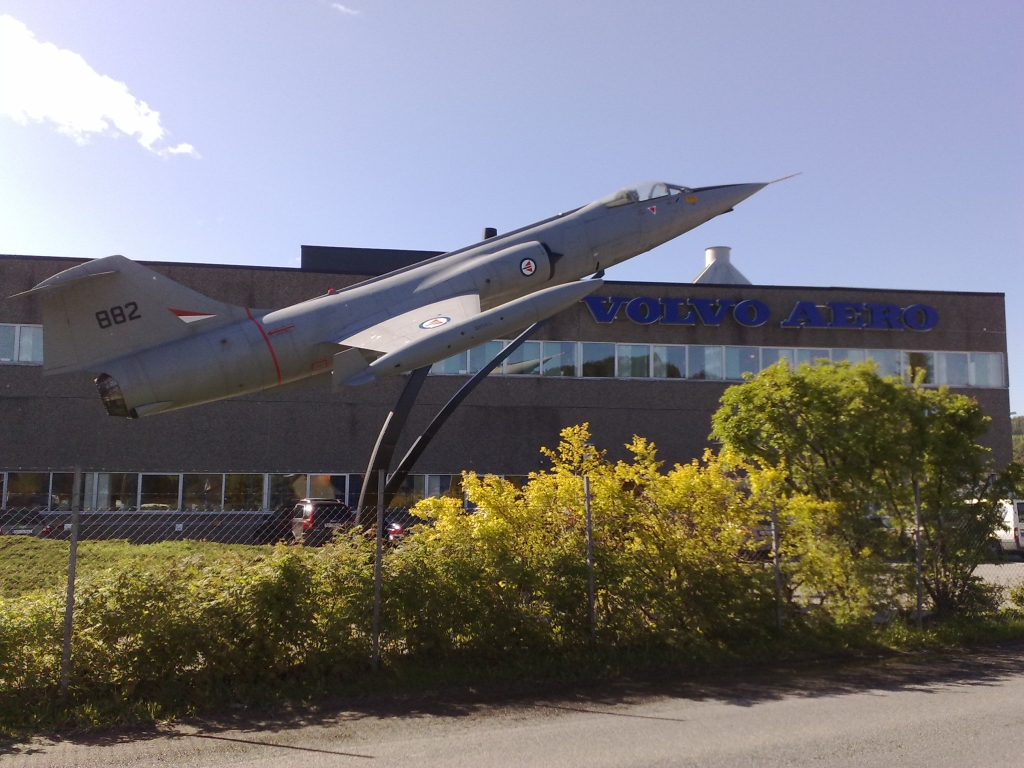
Volvo Aero was a Swedish aircraft, guided missiles and rocket engine manufacturer. It became GKN Aerospace Engine Systems following the company's acquisition by British engineering conglomerate GKN during 2012.
It was originally established as Nohab Flygmotorfabriker AB in 1930 to produce aero engines. The firm became a part of SAAB during 1937; Volvo later purchased most of the stock, thus it was renamed Svenska Flygmotor AB (SFA) and later Volvo Flygmotor. It became the major engine supplier of the Swedish Air Force during the post-war period. During the 1970s, Volvo Flygmotor branched into the commercial aerospace sector, offering overhauls and subcomponent production for several international engine manufacturers, as well as into the European space sector.
During the 2000s, Volvo Aero focused on cooperative ventures with various partner companies around the globe. As a result of the Great Recession, Volvo Aero experienced a sustained downturn in business, resulting in layoffs and contributing to the firm's sale. Parent company Volvo decided to sell their aerospace division amid the economic downturn; GKN emerged amongst several bidders as the frontrunner, finalising its purchase of Volvo Aero during 2012.
Nohab Flygmotorfabriker AB was founded in Trollhättan, Sweden, in 1930 to produce aircraft engines for the Swedish Board of Aviation. As reflected in the name of the company, it was a subsidiary of the Swedish manufacturing and railway locomotive specialist NOHAB. In 1937, the firm became a part of the newly founded SAAB; however, during 1941, Volvo acquired a majority of the stock. Accordingly, the company's name was changed to Svenska Flygmotor AB (SFA), and later on Volvo Flygmotor.
During the 1950s, the company leveraged partnerships with foreign engine manufacturers, helping it to acquire expertise in the recently developed turbojet engine. It undertook the licensed manufacture of several engines, such as the Rolls-Royce Avon (referred to in Swedish Air Force service as the RM5 and RM6) and the Pratt & Whitney JT8D (RM8). Throughout the post-war period, the company has served as the major engine supplier of the Swedish Air Force.
During the 1970s, the firm decided to apply the experience it had gathered on the production and service of military aircraft engines towards the commercial aerospace sector. The first overhaul services it offered were for the JT8 engine. Volvo Flygmotor soon expanded its activities into the manufacture of subcomponents for several international engine manufacturers, including General Electric, Pratt & Whitney, and Rolls-Royce Plc.
Seeking to further growth of its commercial operations, Volvo Flygmotor became involved in the European Space Program, producing a number of components for the rocket engines that power the Ariane of heavy launch vehicles. The firm successfully expanded significantly beyond its domestic market. Recognised that that its name needed to be easily recognised internationally, the company changed its name to the Volvo Aero Corporation during the early 1990s.
By the late 1990s, Volvo Aero's component range included fan cases, fan-compressor structures, compressor rotors, shafts, combustor structures, vanes, low-pressure turbine (LPT) cases, turbine structures, rocket nozzles, combustion chambers, and rocket engine turbines for both civilian and military purposes. By 2003, the firm's workforce comprised 3,600 employees, it also recorded total sales of 0.9 billion euros during that year. Presently, Volvo Aero is a partner in more than ten commercial engine programmes and components produced by the company are installed in more than 90% of all large commercial aircraft engines sold.
Volvo Aero
Volvo Aero was a Swedish aircraft, guided missiles and rocket engine manufacturer. It became GKN Aerospace Engine Systems following the company's acquisition by British engineering conglomerate GKN during 2012.
It was originally established as Nohab Flygmotorfabriker AB in 1930 to produce aero engines. The firm became a part of SAAB during 1937; Volvo later purchased most of the stock, thus it was renamed Svenska Flygmotor AB (SFA) and later Volvo Flygmotor. It became the major engine supplier of the Swedish Air Force during the post-war period. During the 1970s, Volvo Flygmotor branched into the commercial aerospace sector, offering overhauls and subcomponent production for several international engine manufacturers, as well as into the European space sector.
During the 2000s, Volvo Aero focused on cooperative ventures with various partner companies around the globe. As a result of the Great Recession, Volvo Aero experienced a sustained downturn in business, resulting in layoffs and contributing to the firm's sale. Parent company Volvo decided to sell their aerospace division amid the economic downturn; GKN emerged amongst several bidders as the frontrunner, finalising its purchase of Volvo Aero during 2012.
Nohab Flygmotorfabriker AB was founded in Trollhättan, Sweden, in 1930 to produce aircraft engines for the Swedish Board of Aviation. As reflected in the name of the company, it was a subsidiary of the Swedish manufacturing and railway locomotive specialist NOHAB. In 1937, the firm became a part of the newly founded SAAB; however, during 1941, Volvo acquired a majority of the stock. Accordingly, the company's name was changed to Svenska Flygmotor AB (SFA), and later on Volvo Flygmotor.
During the 1950s, the company leveraged partnerships with foreign engine manufacturers, helping it to acquire expertise in the recently developed turbojet engine. It undertook the licensed manufacture of several engines, such as the Rolls-Royce Avon (referred to in Swedish Air Force service as the RM5 and RM6) and the Pratt & Whitney JT8D (RM8). Throughout the post-war period, the company has served as the major engine supplier of the Swedish Air Force.
During the 1970s, the firm decided to apply the experience it had gathered on the production and service of military aircraft engines towards the commercial aerospace sector. The first overhaul services it offered were for the JT8 engine. Volvo Flygmotor soon expanded its activities into the manufacture of subcomponents for several international engine manufacturers, including General Electric, Pratt & Whitney, and Rolls-Royce Plc.
Seeking to further growth of its commercial operations, Volvo Flygmotor became involved in the European Space Program, producing a number of components for the rocket engines that power the Ariane of heavy launch vehicles. The firm successfully expanded significantly beyond its domestic market. Recognised that that its name needed to be easily recognised internationally, the company changed its name to the Volvo Aero Corporation during the early 1990s.
By the late 1990s, Volvo Aero's component range included fan cases, fan-compressor structures, compressor rotors, shafts, combustor structures, vanes, low-pressure turbine (LPT) cases, turbine structures, rocket nozzles, combustion chambers, and rocket engine turbines for both civilian and military purposes. By 2003, the firm's workforce comprised 3,600 employees, it also recorded total sales of 0.9 billion euros during that year. Presently, Volvo Aero is a partner in more than ten commercial engine programmes and components produced by the company are installed in more than 90% of all large commercial aircraft engines sold.
Recent media
Recent media